
Three Years of Open Data with Dryad
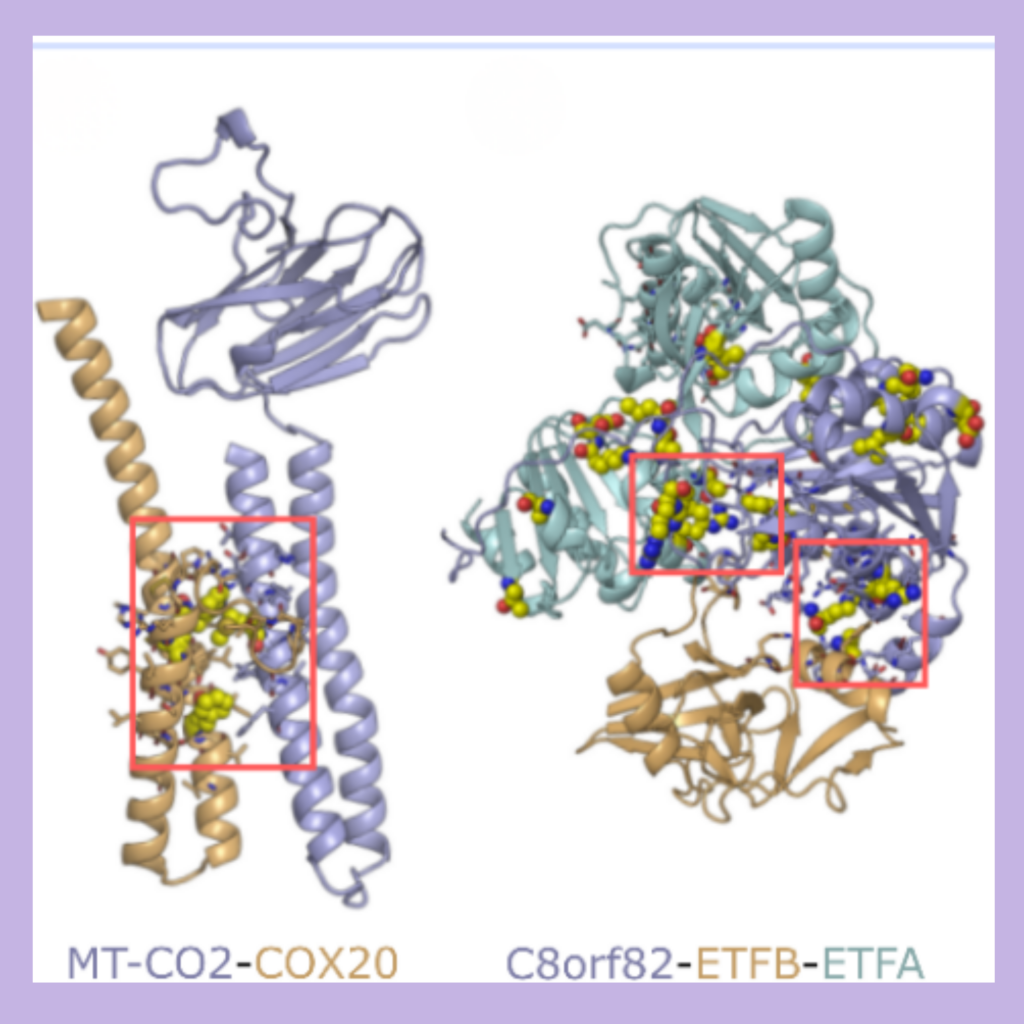
J. Zhang et al., Science
10.1126/science.adt1630 (2025).
Dryad is an open data publishing platform available to UW users in alignment with the increasing advocacy of public research universities to provide for the open sharing of research data and outputs.
As the UW Libraries enters our third year of our partnership with Dryad, we’re excited to reflect on continued engagement from UW researchers and the broader research community. Over the past year, UW researchers have kept up a steady pace of data deposits that continue to see downloads and reuse at UW and beyond. Below are a few highlights from our ongoing membership:
In 2025, UW data deposits in Dryad had over 1,000 downloads and 3,600 views! You can view the top datasets by journal, downloads and views for 2025, and to date (since UW Libraries implemented the service) below in this post.
Why deposit your data into Dryad?
- As a generalist repository, it accepts data of most types, formats, and disciplines, making it a flexible option for researchers.
- The National Institutes of Health (NIH) supports Dryad as a generalist repository that meets the requirements outlined in their 2023 Data Management and Sharing Policy.
- The UW Libraries covers the full cost of membership, so UW researchers can deposit data into Dryad at no cost.
- Dryad serves as a companion data repository to the UW Libraries ResearchWorks repository.
- Dryad provides basic curation support to strengthen metadata quality and make sure data is usable and accessible.
- Dryad provides Digital Object Identifiers (DOIs), which are required by a growing number of publishers and allow data to be easily related to associated publications.
TOP 10 Datasets in Dryad 2025
Top DOWNLOADS
| Dataset | Downloads |
|---|---|
| A dataset for predicting protein-protein interactions in humans | 113 |
| RefAHL: A curated quorum sensing reference linking diverse Luxl-type signal synthases with their acyl-homoserine lactone products | 85 |
| Data from: Interactions among nutrients govern the global grassland biomass, precipitation relationship | 79 |
| Data from: Online prenatal trial in mindfulness sleep management (OPTIMISM) | 41 |
| Data from: The impact of aid sanctions on maternal and child mortality, 1990-2019: A panel analysis | 34 |
| Higher levels of cardiovascular biomarkers following hypertensive compared to normotensive pregnancy | 32 |
| A deep learning and digital archaeology approach for mosquito repellent discovery | 25 |
| Marine mammal recovery is associated with the resurgence of a nematode parasite | 23 |
| Data from: Insect size responses to climate change vary across elevations according to seasonal timing | 21 |
| Data from: Movement-responsive deep brain stimulation for Parkinson’s Disease using a remotely optimized neural decoder | 20 |
Top VIEWS
| Dataset | Views |
|---|---|
| A dataset for predicting protein-protein interactions in humans | 527 |
| RefAHL: A curated quorum sensing reference linking diverse Luxl-type signal synthases with their acyl-homoserine lactone products | 186 |
| Data from: Interactions among nutrients govern the global grassland biomass, precipitation relationship | 186 |
| Alaska compendium of ocean profile data [ACOD]: Archival CTD and nutrient hydrography from NOAA’s EcoFOCI, EMA, and predecessor programs | 151 |
| Data from: The impact of aid sanctions on maternal and child mortality, 1990-2019: A panel analysis | 108 |
| Data for: Lessons learned from the design and operation of a small-scale cross-flow tidal turbine | 79 |
| A deep learning and digital archaeology approach for mosquito repellent discovery | 76 |
| Marine mammal recovery is associated with the resurgence of a nematode parasite | 73 |
| Data from: Insect size responses to climate change vary across elevations according to seasonal timing | 66 |
Growth in UW Submissions
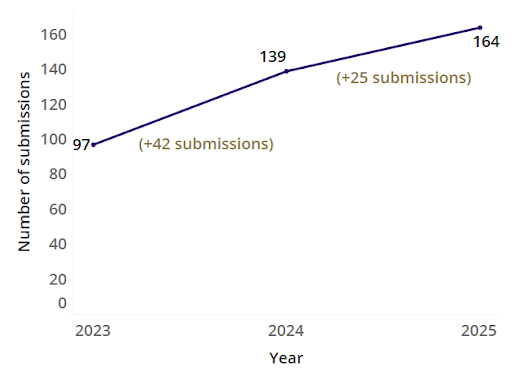
UW submissions have grown nearly 60% (97 to 164) from February 2023- December 2025.
Top 3 Journals Represented in Data Deposits
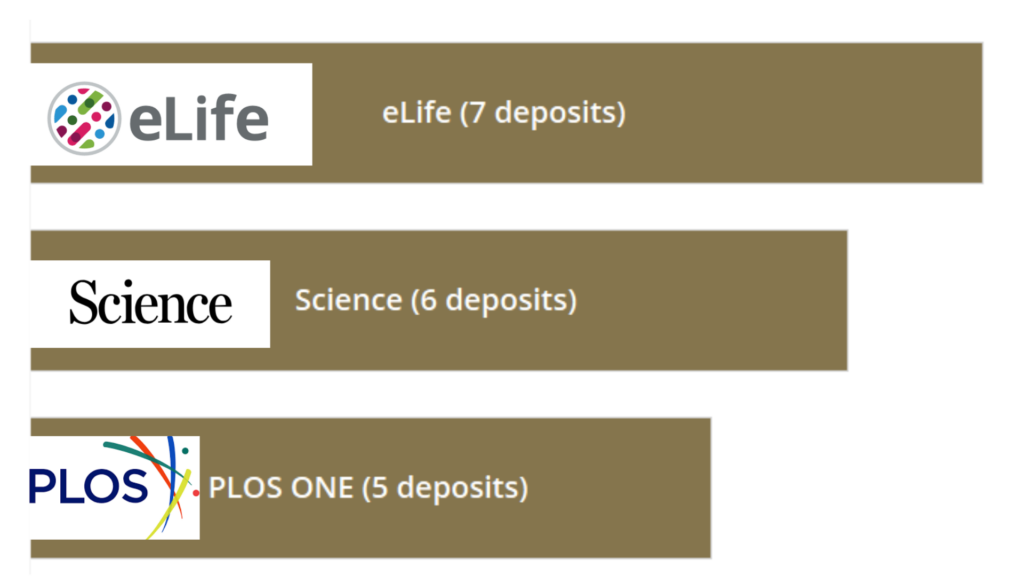
The top 3 journals represented in Dryad data deposits from 2025 were eLife (7 deposits); Science (6 deposits); and PLOS ONE (5 deposits).
For More Information
To learn how you can get started with Dryad, see our guide. If you have any questions, reach out to our Data Services Team at [email protected].
###