
Podcasting for Archives
As podcasts have become an increasingly ubiquitous part of our everyday content intake, it is no surprise that more educators – including Librarians and archivists – have been using the format in a variety of ways. Podcasts can be a great tool for sharing research, introducing or expanding on a specific topic as part of coursework, and as a source of community for students, faculty, and researchers alike, untethered to their physical location.
You might say there is a podcast for just about anything, even historical archives! Archives in Context, launched in 2019, is produced by a committee of producers, editors, and co-hosts from across the country, including UW Libraries’ Conor Casey, head of the Labor Archives of Washington at the University of Washington.
Archives in Context is the official podcast of the Society of American Archivists (SAA), associated with the Publications Board, American Archivist Editorial Board, and Committee on Public Awareness. The impetus for the podcast was to reflect change and trends in a profession that is constantly evolving by highlighting those who are pushing the profession in new directions, and to explore different types of archives in different contexts, locations, and collecting areas. Archives focuses on personal stories about collections, the many ways that archivists bridge the past and present, unique approaches to current challenges, and the often moving and important work of memory-keeping.
Casey first joined the hosting crew in December of 2024.
“I volunteered/applied to be part of the board and to co-host because I thought it would be a great way to contribute to the profession, meet interesting colleagues, and inspire my own research and learning in the field,” says Casey.
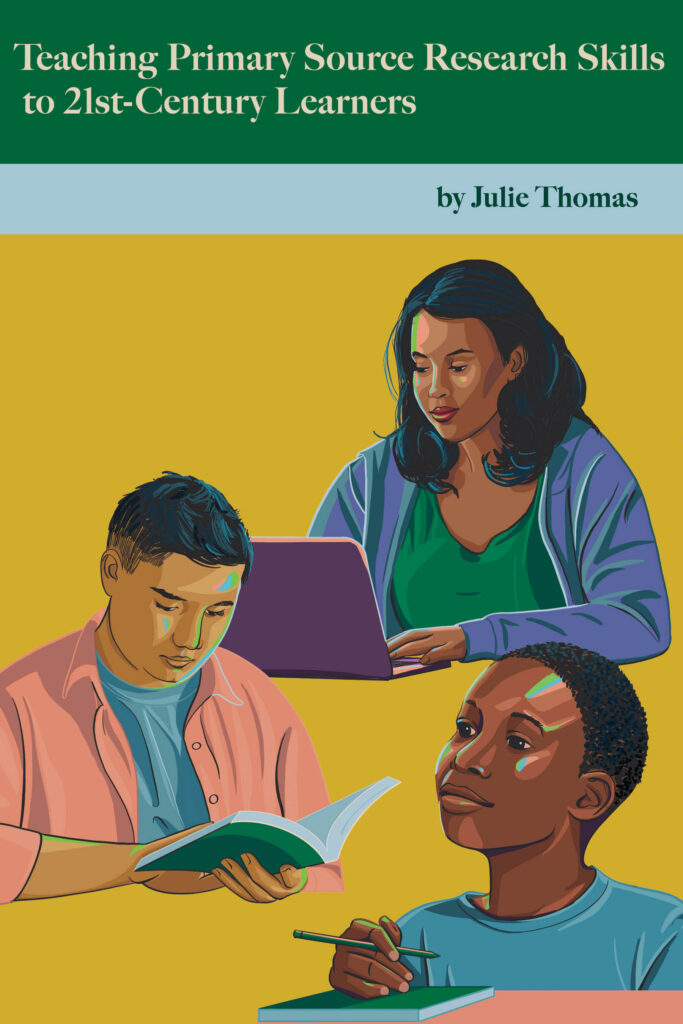
In the latest episode, Casey and his co-host Adreonna Bennett, the community engagement archivist at UNC Charlotte’s J. Murrey Atkins Library, interviewed author, instructor and archivist Julie Thomas about her new book, Teaching Primary Source Research Skills to 21st-Century Learners.
“The inspiration for this episode came from a deep personal interest in primary source instruction modalities,” says Casey. “After reading Thomas’ book, I knew I wanted to volunteer to co-host an episode on her work. ”
During the episode, Thomas discusses theories and pedagogies for teaching primary source research skills in the classrooms of today.
The conversation touches upon active learning strategies, effective methods of incorporating archival materials into instruction, and the importance of adapting our teaching approach to the learning styles of today’s students.
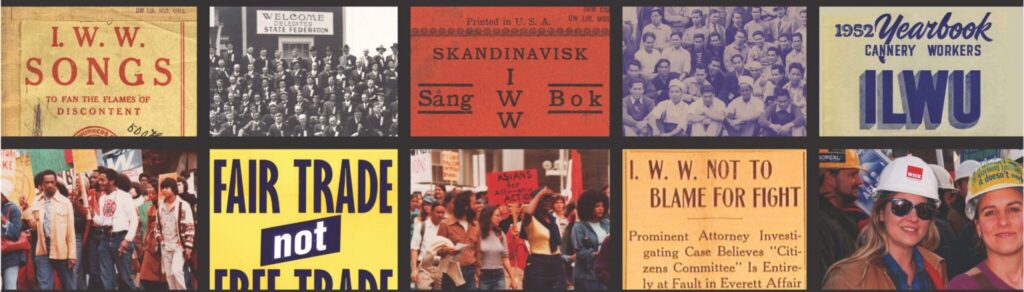
About the Labor Archives of Washington:
A part of the Special Collections of the University of Washington Libraries, the Labor Archives of Washington (LAW) began as a collaborative project of the Harry Bridges Center for Labor Studies and the University of Washington Libraries and has grown into an ongoing program. Initial funding for the Archives came largely from the labor movement; the contributions of dozens of unions and hundreds of individuals made this possible. A dedicated state budget now supports LAW activities.
Casey summarizes his learning from the podcast and what he thinks is important for audiences to know:
What are some of the key lessons from this episode?
Whether you are teaching directly about primary sources or using them to support other learning outcomes, her frameworks provide clear guidance. Julie has done the vital work of synthesis and analysis. She has woven together competencies from history, archives, libraries, and related fields into something entirely new and useful.
What stands out is how she makes theory actionable. The learning rubrics she developed are a prime example. They are steeped in intense, cross-disciplinary research, yet they remain remarkably practical. That is what I admire most about her book: it builds a bridge between complex theory and real-world application. Her work isn’t meant to sit on a shelf—it is ready to be used.
How do you use archival materials in the classroom?
My work with primary sources is fundamentally collaborative. I partner with faculty to bring archival materials directly into their curriculum, tailoring the approach to their specific instructional goals.
Sometimes that means providing historical sources for personal or group projects. Other times, it involves transforming Special Collections into a hands-on “teaching lab” for classes, like those in the iSchool. And in many cases, it means working alongside community members—especially labor groups—to show them how to navigate our collections for their own research or collaborative projects.
What words of advice would you give to students interested in the field?
We are all archivists. Every day, the communities we belong to and the lives we lead are quietly building a record for the future. I encourage students to think not only about the history they are creating, but also about the hidden histories around them—the stories that might otherwise be lost; and consider, whose voices are being represented?
Who can access Special Collections?
Everyone is welcome. You don’t need to be a student or faculty member to use the collections, all you need is curiosity. Our collections are more than just old documents and boxes. They are one-of-a-kind, irreplaceable fragments of memory, connecting us to our ancestors in both a literal and an intellectual, symbolic, way. They are the physical proof of those who came before us.
If you are interested in learning more about the podcast, archiving profession, UW Special Collections, or how UW Libraries can contribute to your teaching, learning and research:
- UW Libraries Teaching and Learning
- Contact Head, Labor Archives of Washington, Conor Casey
- About Archives in Context and episodes co-hosted by Conor Casey:
- Season 8, Episode 4 – A conversation with historians Krista McCracken and Skylee-Storm Hogan-Stacey about their book, Decolonial Archival Futures
- Season 9, Episode 1 – A conversation with Maigen Sullivan and Joshua Burford of Invisible Histories, a community-based archive dedicated to documenting the diverse history of LGBTQ life in the US South.