Tateuchi East Asia Library: 2025-2026 Year in Review
Director’s Message
by Hyokyoung Yi
As we reflect on academic year 2025-2026 (AY25-26), I am proud of the many ways the Tateuchi East Asia Library continued to advance its mission of supporting research, teaching, learning and community engagement, despite ongoing financial and operational challenges. This year’s accomplishments demonstrate the dedication, creativity and resilience of our librarians, staff, students and partners.
The highlights shared in this report represent only a portion of Tateuchi East Asia Library’s work during the year. I encourage readers to explore the individual reports from all contributors, including Tateuchi East Asia Library librarians, Branch Operations Services, and student employees. In these reports, you will learn more about subject-specific collection development, instructional and outreach activities, digital scholarship initiatives, special collections projects, operational improvements, student-led programming, and the many collaborative efforts that support Tateuchi East Asia Library’s mission. Together, these contributions provide a fuller picture of the Library’s impact across research, teaching, learning and community engagement.
At the heart of Tateuchi East Asia Library’s work remains the development of world-class East Asian collections. Through state funding, grants, gifts and the generous support of the Tateuchi Endowment, our librarians continued to build and sustain collections that meet the evolving needs of researchers and students across disciplines and formats. We also strengthened our international collaborations with the National Central Library of Taiwan, Keio University, the National Library of Korea, and the Korea Foundation. These partnerships helped to expand opportunities for access to East Asian print and digital resources, reinforcing Tateuchi East Asia Library’s role as a global partner in East Asian librarianship.
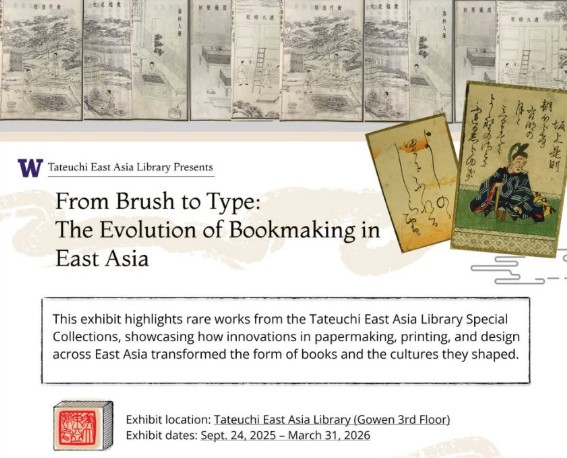
Our Special Collections program continued to serve as a bridge between collections, teaching, and public engagement. The major exhibition, From Brush to Type: The Evolution of Bookmaking in East Asia, highlighted rare materials from Tateuchi East Asia Library’s collections and attracted broad interest from faculty, students, and the wider community. Accompanying workshops provided participants with hands-on experiences examining manuscripts, woodblock prints, and movable-type books. The success of these programs inspired additional collaborations, including a customized instructional session for a new Asian Languages and Literature course on manuscript culture in East Asia and a special workshop for members of the Book Club of Washington.
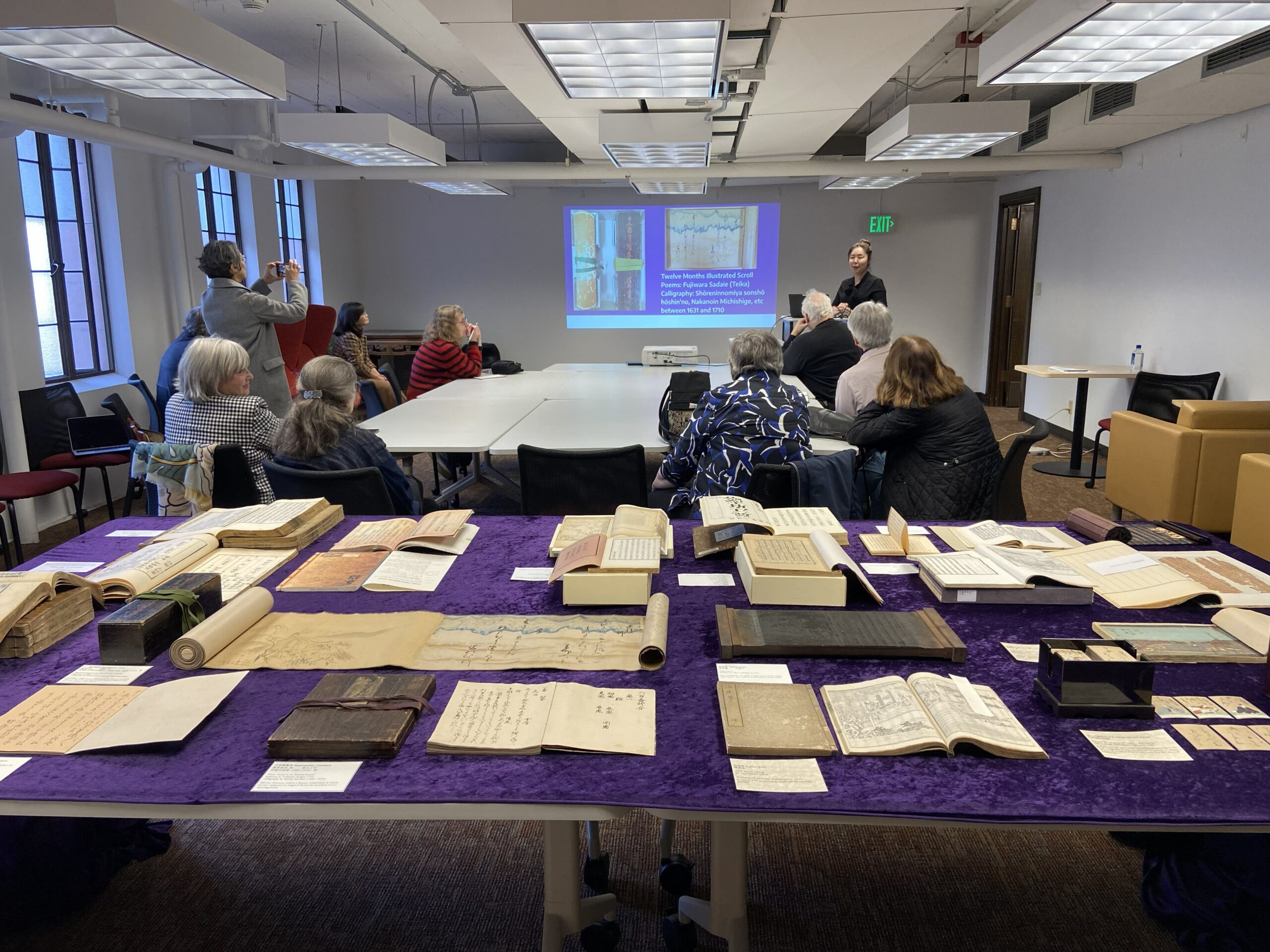
We also collaborated with an Information School graduate student to establish a new Omeka platform for preserving and sharing Tateuchi East Asia Library exhibition archives digitally, laying the groundwork for future student projects and expanded access to our collections. These initiatives reflect our commitment to experiential learning and meaningful student collaboration.
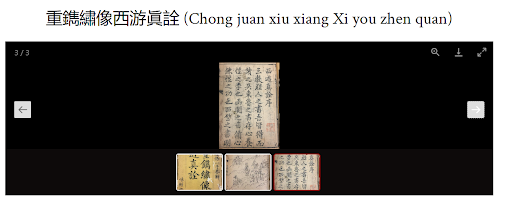
A major accomplishment this year was the completion of Tateuchi East Asia Library’s Special Collections storage shift and reorganization, led and carried by Branch Operations Services. This significant year-long project involved relocating and inventorying approximately 5,000 items, improving catalog records, and moving materials into a more secure and environmentally-controlled storage. The project strengthened preservation, improved discoverability and positioned the collections for future growth and access.
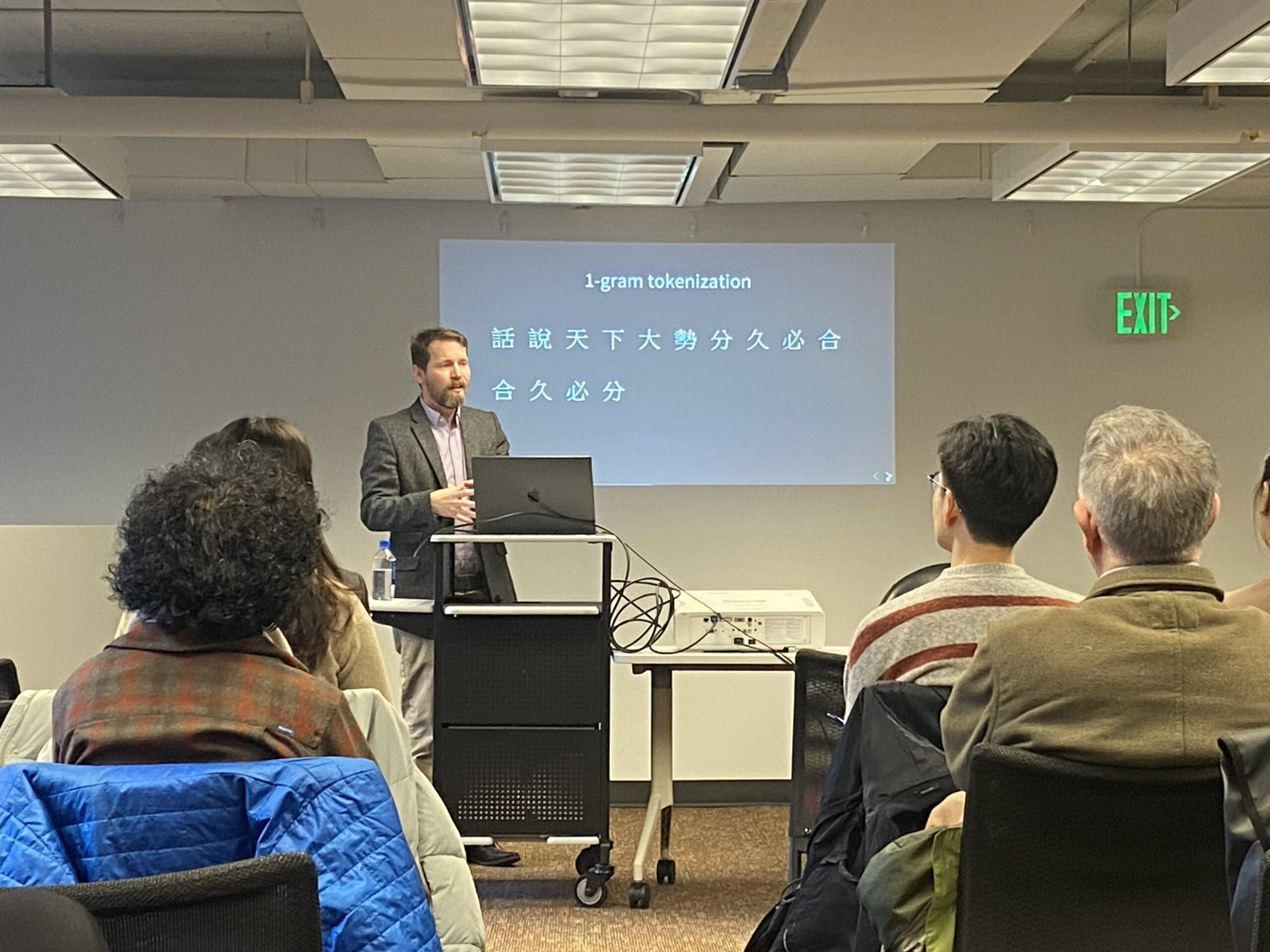
Tateuchi East Asia Library also continued to strengthen its role in digital scholarship. The 2026 Digital Scholarship Series brought together scholars and practitioners to explore innovative research methods involving artificial intelligence, digital humanities, computational linguistics and natural language processing. Through partnerships with the Department of Asian Languages and Literature, the Simpson Center for the Humanities, Textual Studies, and UW Libraries’ Open Scholarship Commons (OSC), the series fostered interdisciplinary conversations and strengthened connections among faculty, students and librarians.
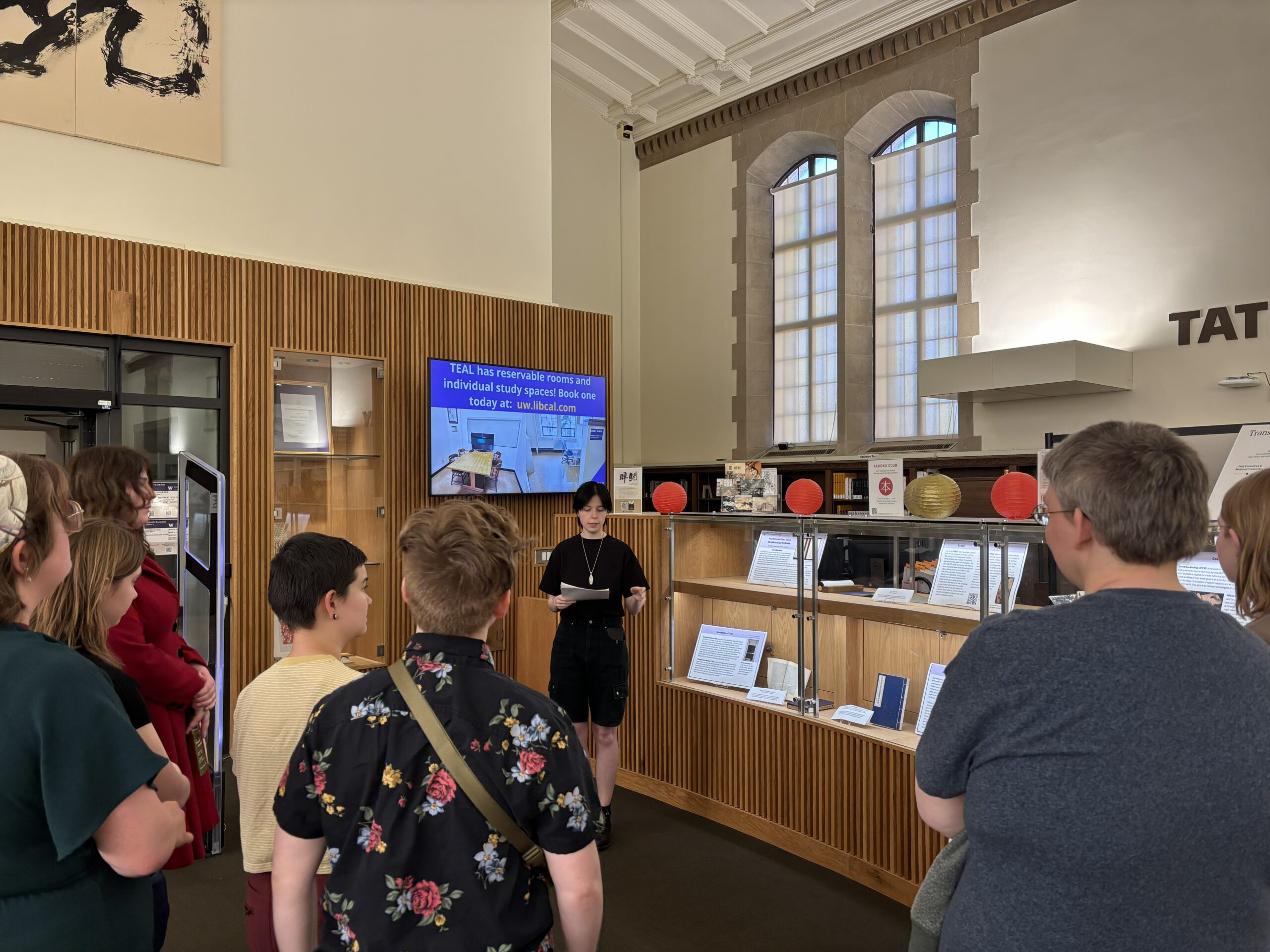
Student engagement remained a central priority throughout the year. Tateuchi East Asia Library launched its first Textual Studies (TXTDS) undergraduate capstone partnership project, resulting in a student-curated exhibition focused on East Asian bookbinding traditions.
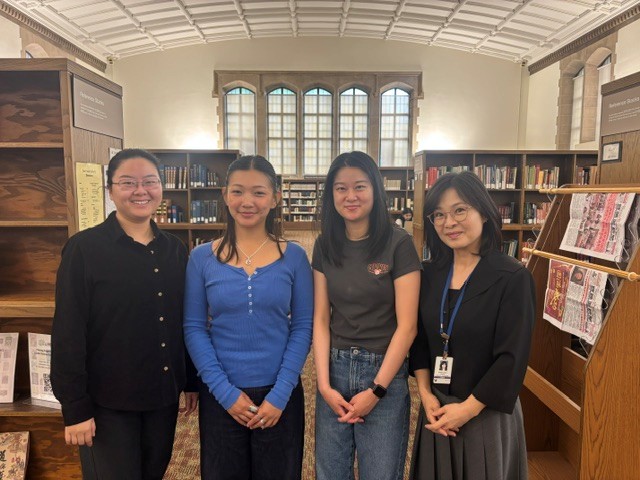
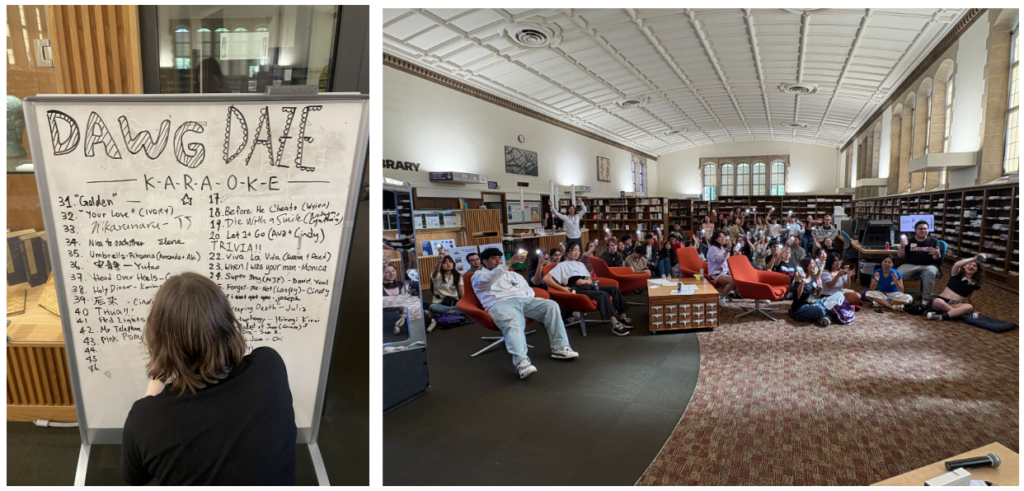
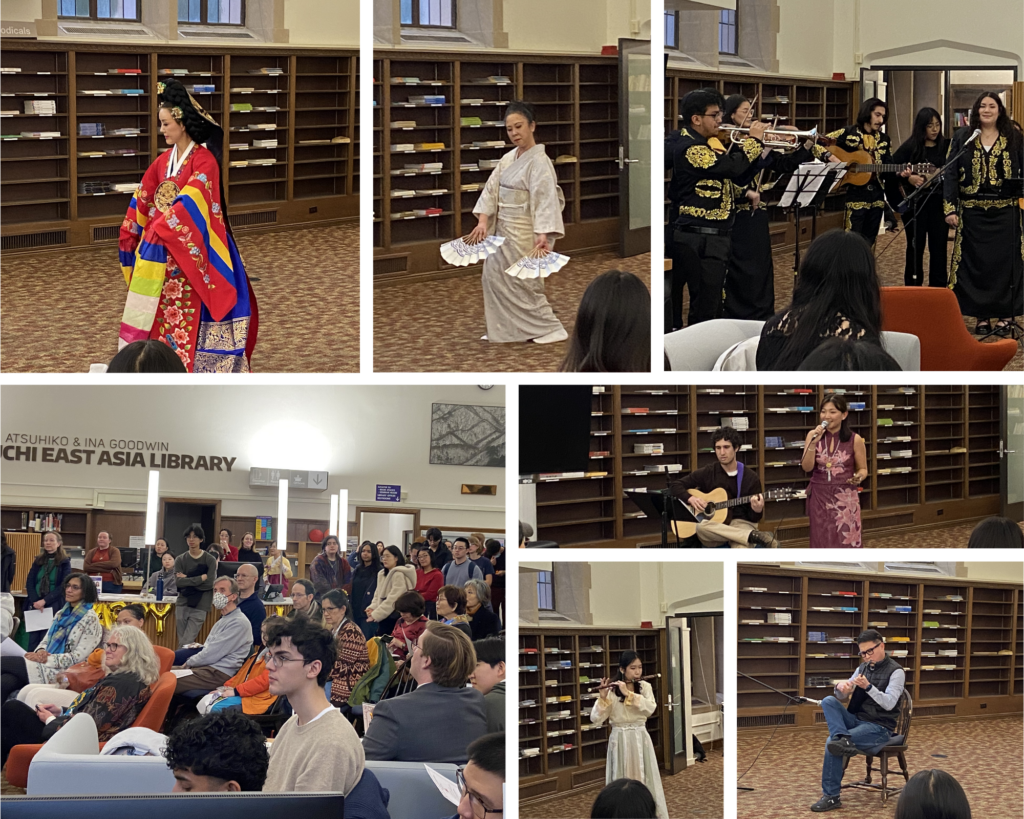
Our library continued to serve as a vibrant gathering place for learning, creativity and community. The annual New Year Celebration expanded to include cultural performances representing a broader range of communities, while student-led programs such as Cherry Blossom Bookmark Making and Dawg Daze Karaoke welcomed hundreds of participants and introduced new audiences to Tateuchi East Asia Library. At the same time, our study spaces, seminar room and reading room remained in high demand for classes, workshops, lectures, meetings and individual study.
AY25–26 also brought important progress in organizational stability and sustainability. We successfully appointed Lucy Li as China and Taiwan Studies Librarian following a national search and welcomed back Japan Studies Librarian Azusa Tanaka from research leave. We also held Tateuchi East Asia Library’s first retreat bringing together librarians and student employees to reflect on the year’s accomplishments, review student-led initiatives, welcome new team members, and plan for the year ahead, further strengthening collaboration and workplace culture. We continued to improve accessibility for East Asian electronic resources and databases while strategically using endowment and gift funds to support collections, digital scholarship, student programming, and facility improvements. These efforts helped offset budget reductions and strengthen Tateuchi East Asia Library’s long-term sustainability.
These accomplishments reflect the dedication and teamwork of Tateuchi East Asia Library librarians, staff, and student employees, as well as the generous support of our donors, campus partners, faculty collaborators, students and community members. Together, they continue to make Tateuchi East Asia Library an exceptional place for discovery, learning and connection.
Thank you for your continued support of the Tateuchi East Asia Library. We look forward to building on these successes in the coming year.
China & Taiwan

by Lucy Li
Collection Building
The Chinese collection continued to expand this academic year to support China and Chinese language studies. Over 500 print and electronic monographs in Chinese and English were ordered with Tateuchi East Asia Library funds. More than 100 print titles were received as gifts from the National Central Library in Taiwan. Most of this year’s major acquisitions were made with recommendations from our faculty to add currency of topic to our collections, including several large sets of publications on bamboo and silk manuscripts, language learning materials, and databases.
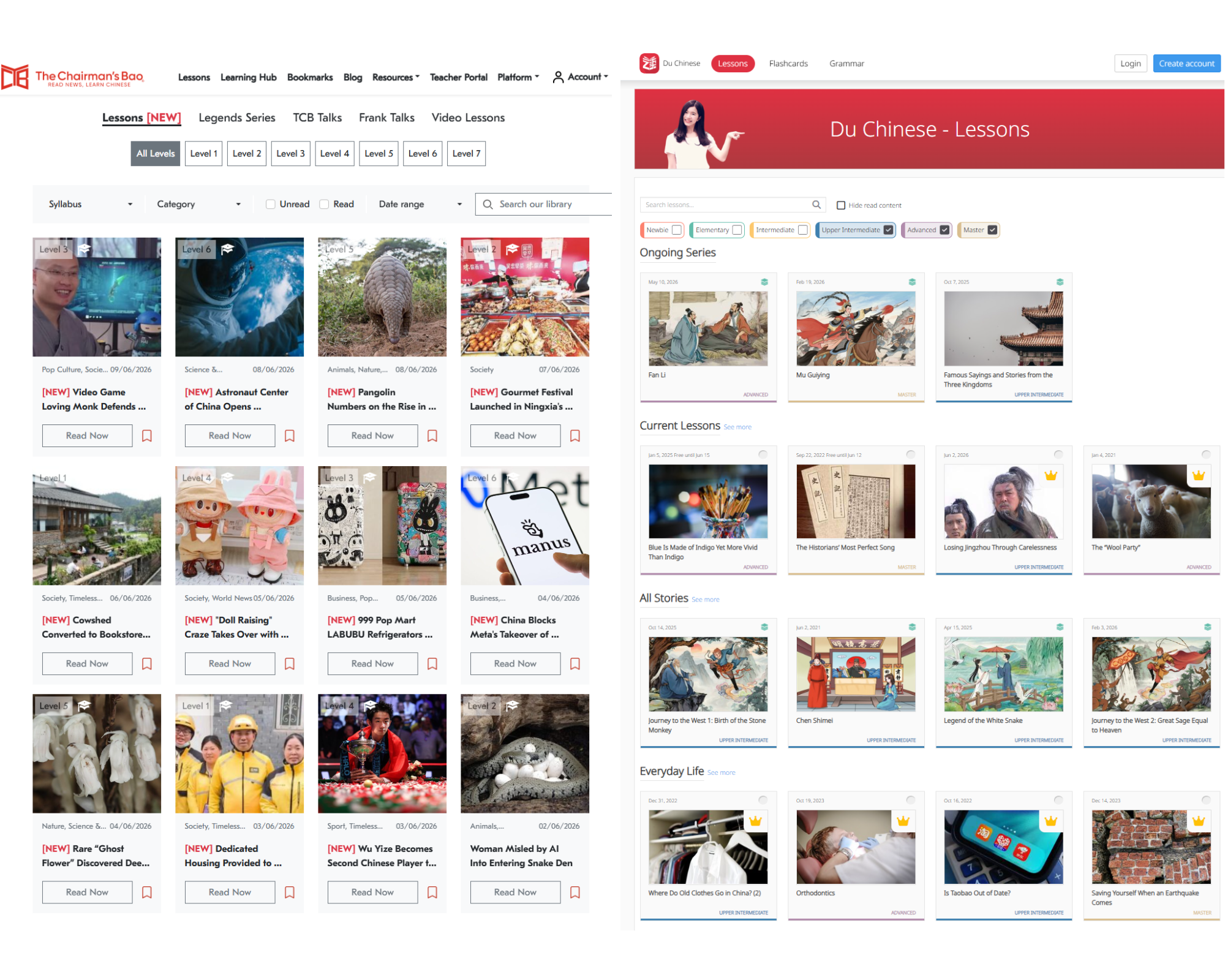
To support Chinese language learning, Tateuchi East Asia Library provided access to the Du Chinese platform to 180 Chinese class students, adding daily conversations, folk stories, and cultural readings to news reading in The Chairman’s Bao, a Chinese learning platform also provided by the library. Furthermore, Tateuchi East Asia Library updated its Chinese language learning shelf with faculty-recommended leveled reading series, Chinese Breeze 汉语风 and Home China 家园中国 that supported the Chinese Reading Club every Thursday in our seminar room.
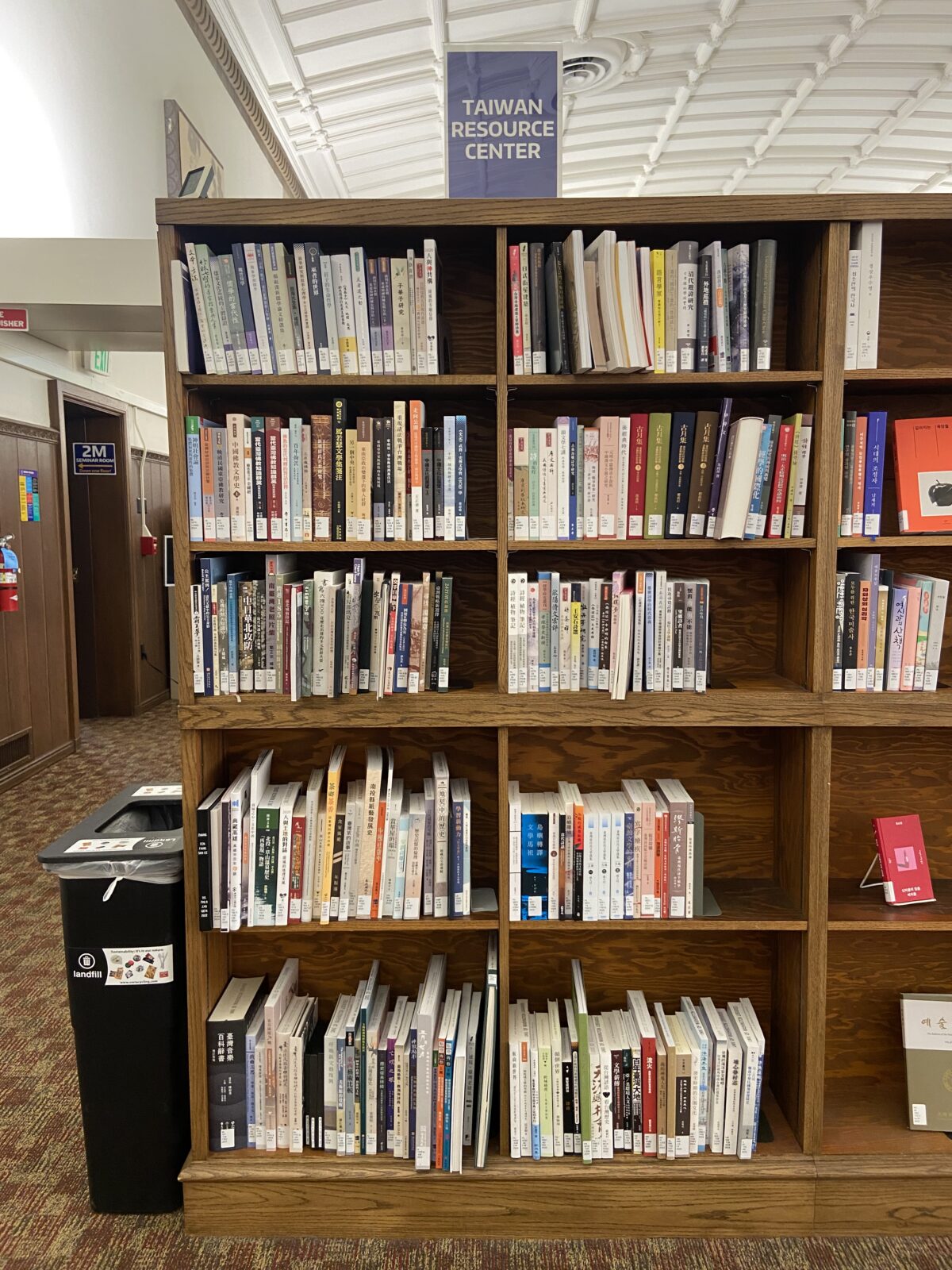
The Chinese collection is also increasing investment in digital resources to enhance access, improve accessibility and relieve space constraints. We expanded access to all published titles in the National Population Census of China (NPCC) 中国人口普查数据库 with funding from the UW Libraries Allen Endowment Funding for Collections & Information Resources.. We also increased subscriptions from 20,000 to more than 65,000 volumes of Chinese local gazetteers in Wanfang Data New Gazetteer (post-1949)万方 – 新方志. We acquired two archives, The Chinese Soviet Republic and South China Sea Island Disputes: 1877-1988 with more historical primary sources. We are continuing license negotiations and digital accessibility testing on additional Chinese digital resources that will be available starting next academic year.
Liaison and Community Outreach
It was a lot of team work for this year’s orientation and instruction sessions. At the beginning of the academic year, I joined Tateuchi East Asia Library and international studies librarians to co-instruct orientation sessions to Jackson School and Asian Literature and Languages programs. As Tateuchi East Asia Library’s special collection exhibit opened, Tateuchi East Asia Library librarians offered in-class sessions and library workshops connecting users with these unique items. From the Chinese collection, I brought large sets of excavated bamboo and silk manuscripts, and traditionally bound and printed ancient texts to make the connection between students’ reading and learning with materials.
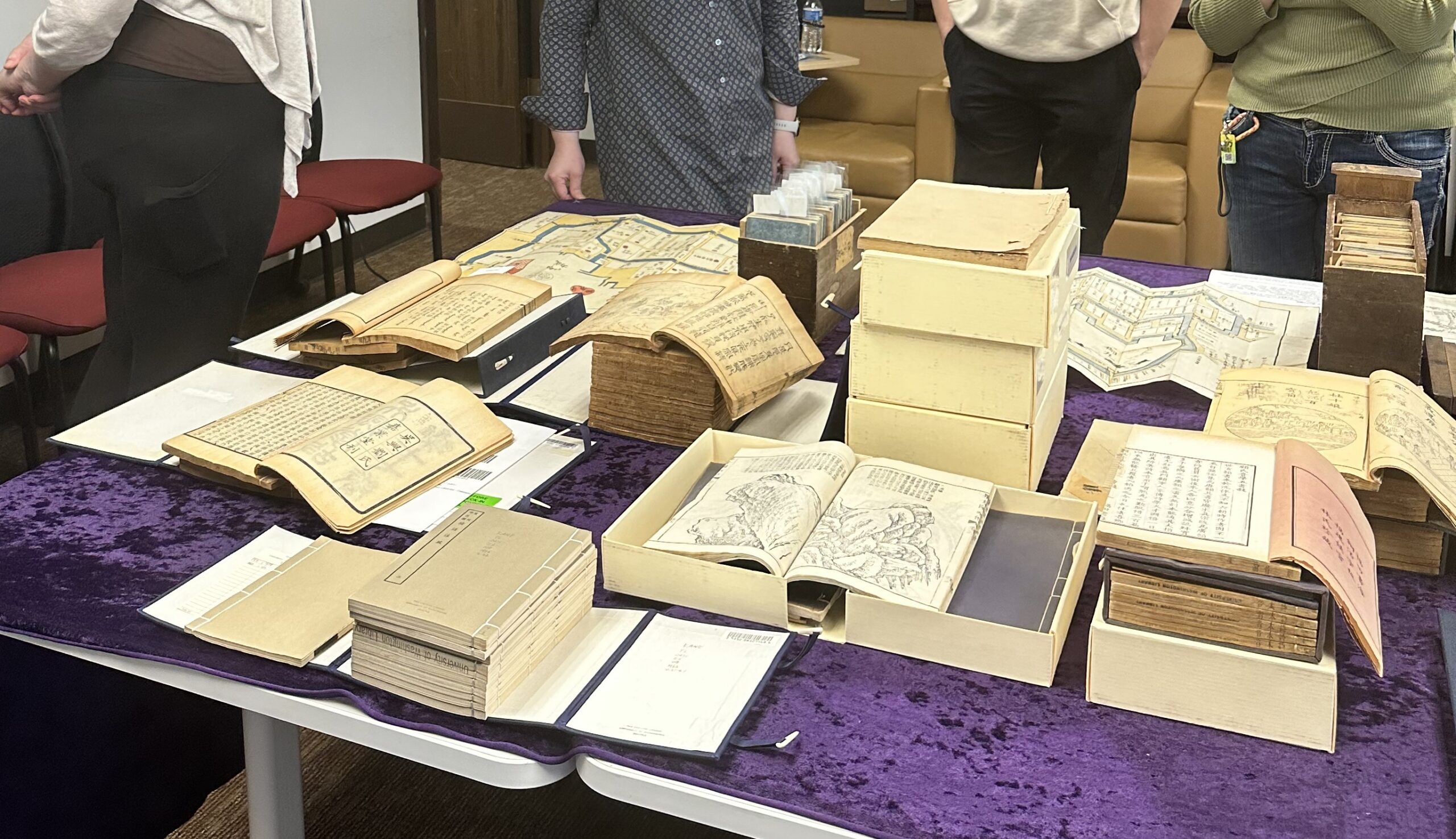
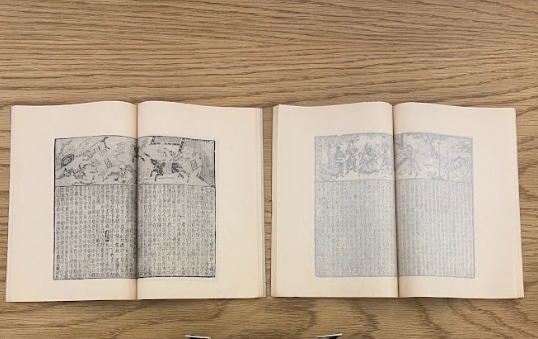
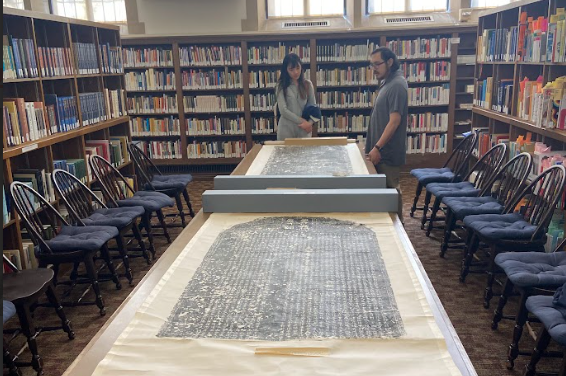
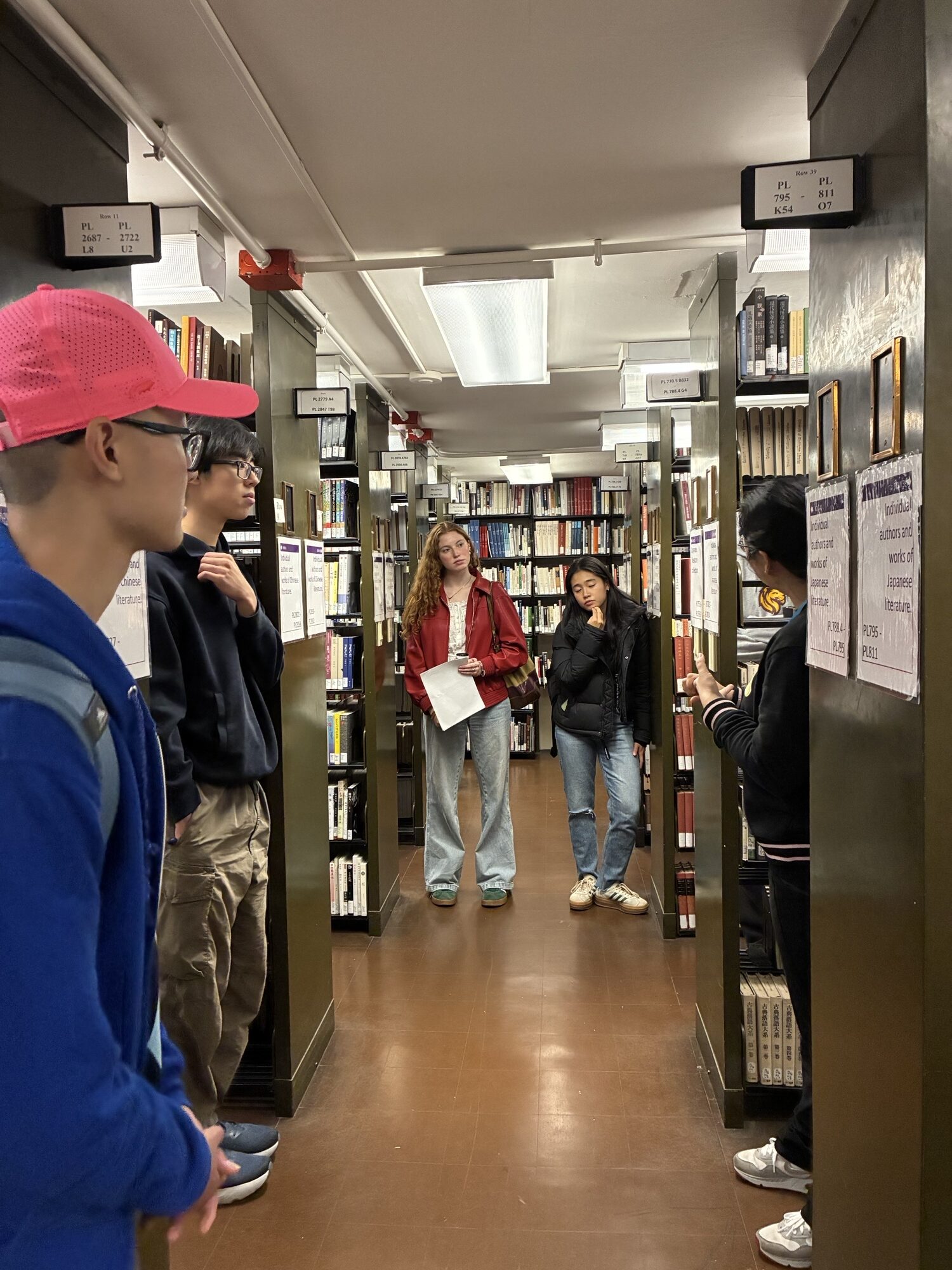
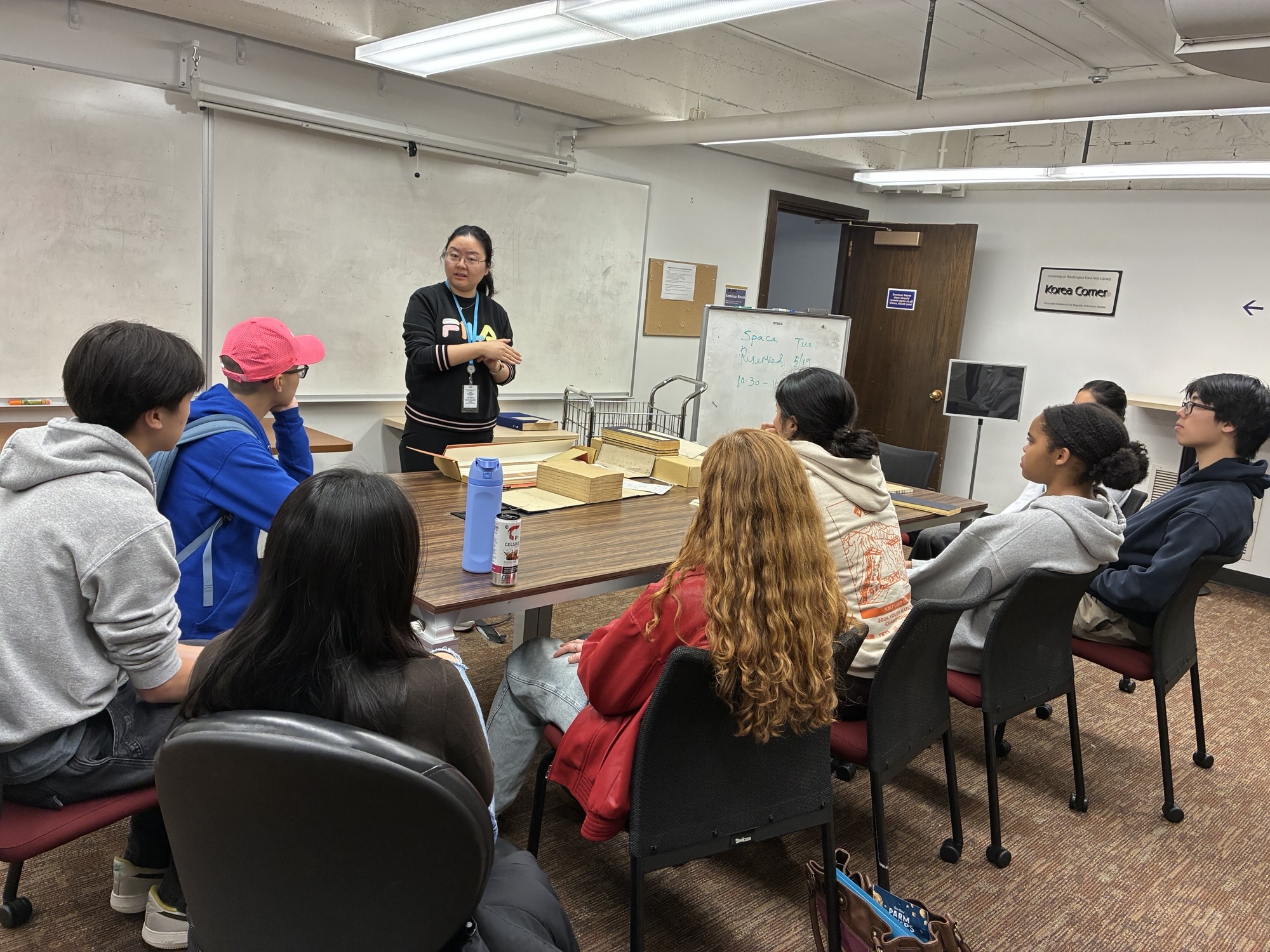
I also led library tours for on-campus and community groups. It was the second year the senior Chinese class from Lakeside Upper School visited our library. I presented items from East Asia printing history sessions and offered a brief history on Chinese bookmaking. I have also shown the library to international students from Japan and Taiwan who were in UW’s Language and Culture Short Term English Program in the summer and advanced learners in UW Transition School in the spring. Students were surprised to find large collections of non-English language books in their library.
Scholarly and Professional Exchange
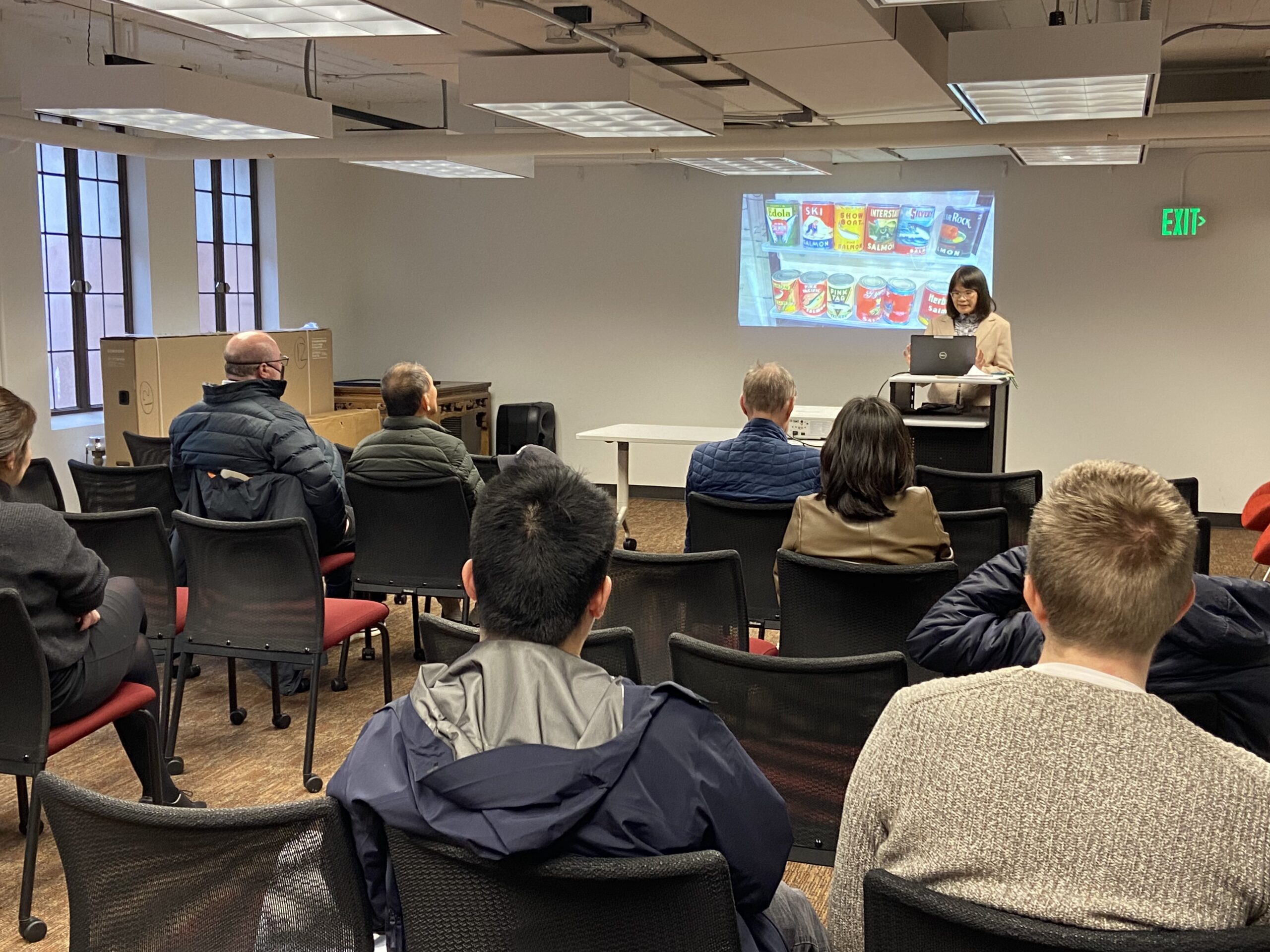
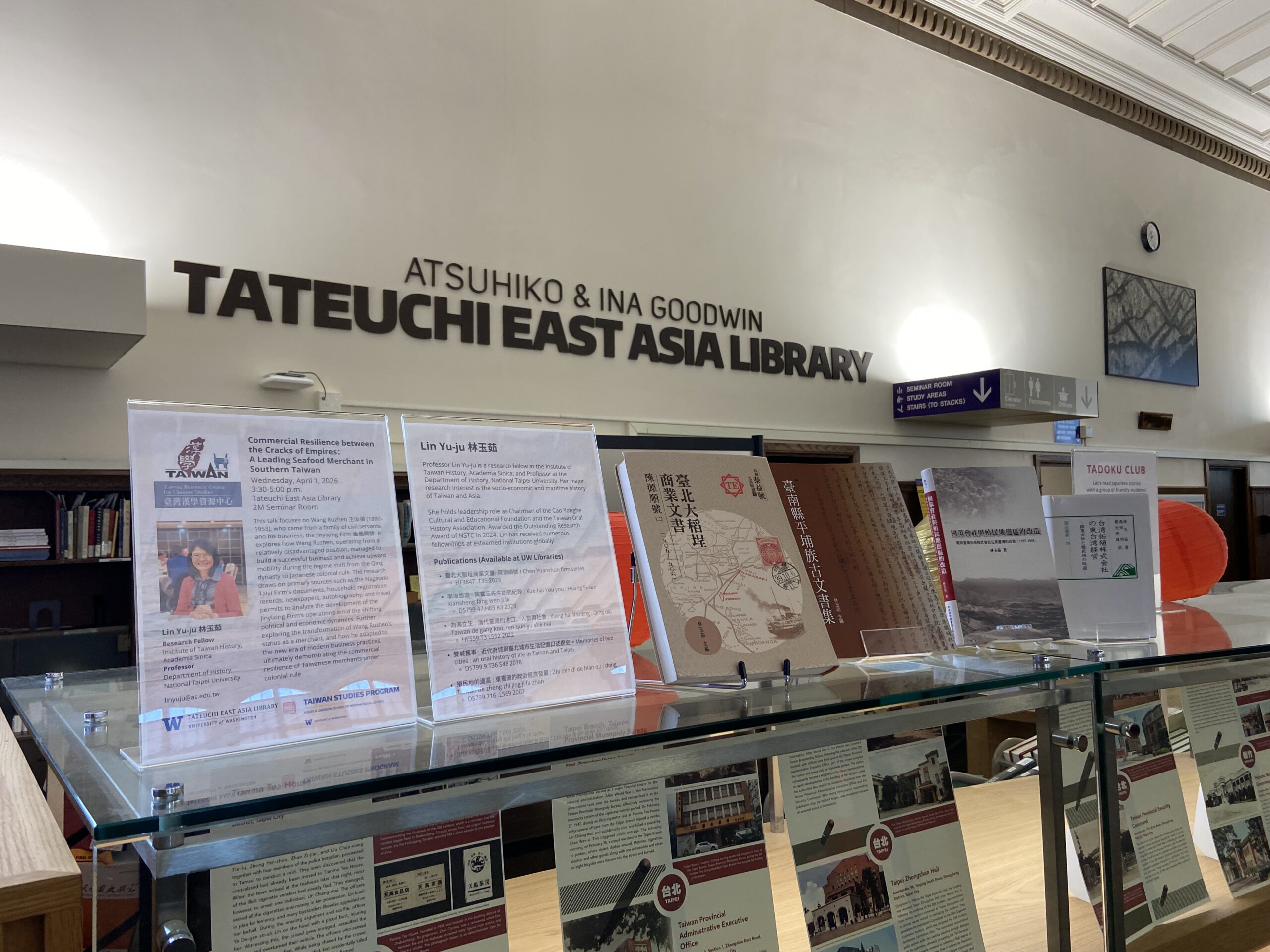
We hosted Professor Lin Yu-ju 林玉茹 from Academia Sinica for a week of scholarly exchange this year. The National Central Library sponsored Lin’s visit to Tateuchi East Asia Library as part of Taiwan Resource Center for Chinese Studies academic programs. During her visit, Professor Lin met with UW Taiwan and China Studies programs faculty and PhD students. Lin and I also examined UW Special Collections materials, faculty papers, news clippings, and photos of Taiwan together. On April 1, Professor Lin gave a talk on the history of Jinyixing Firm ⾦義興號, a leading seafood merchant in Southern Taiwan during Qing and Japanese colonial rules.
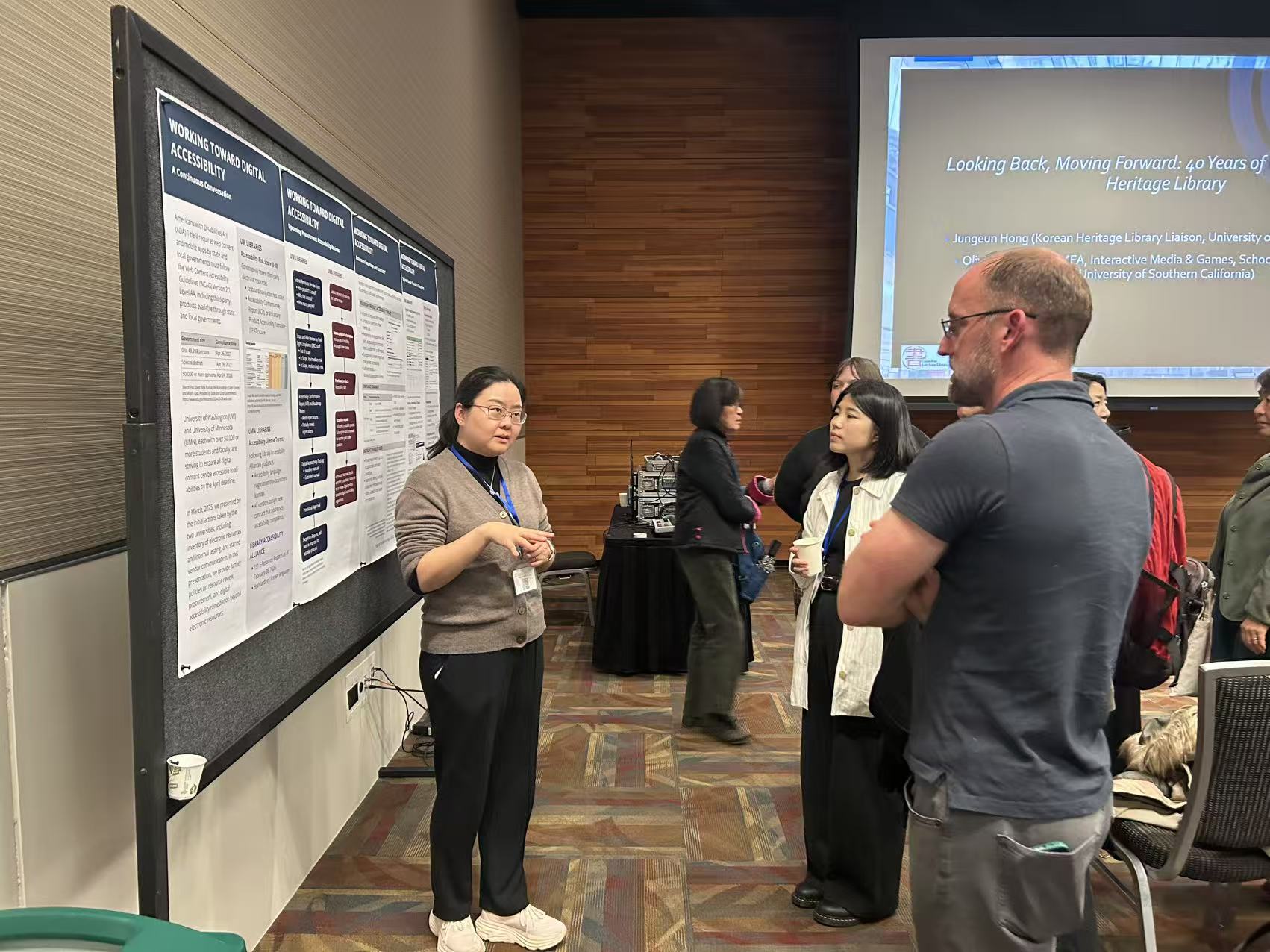
I attended this year’s Council of East Asia Libraries conference in Vancouver and learned about unique collections, projects and exhibits at different institutions; also trends in East Asia librarianship, especially the applicable and ethical use of AI in cataloging and public service. Partnering again with University of Minnesota Asian Studies Librarian, Shuqi Ye, we continued to present each institute’s effort in curating digitally accessible electronic resources from East Asian vendors. My part showed more extensive test and evaluation standards UW Libraries will adopt in the upcoming years. In the following Society of Chinese Studies Librarians meeting at University of British Columbia, I was elected one of the board members to chair the general affairs committee for the next two-year term.
Japan
 by Azusa Tanaka
Collection Building
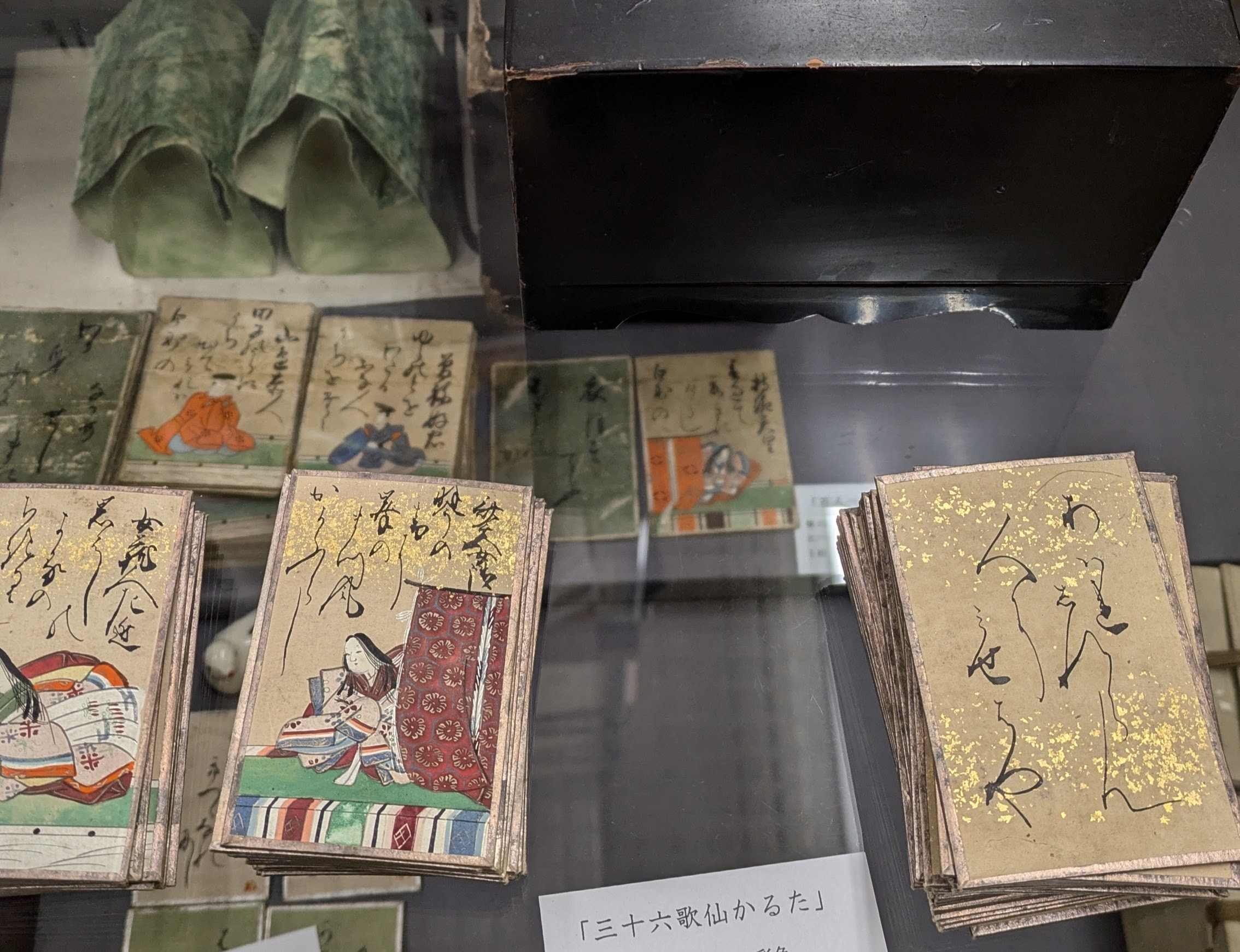
Over the year, I continued to strengthen the Japanese Studies collection by acquiring materials across premodern books, reference works, politics and economics, literature, history, and performing arts and cultural studies. Notably, I acquired several sets of karuta, traditional Japanese playing cards, often based on classical poetry, literary works, or historical and cultural themes, including Sanjūrokkasen karuta (三十六歌仙かるた), Ise monogatari karuta (伊勢物語かるた) and Hyakunin isshu karuta (百人一首かるた). These were purchased in person from antiquarian bookstores in Jinbōchō, Tokyo, with guidance from Professor Takahiro Sasaki of Keio University. They show how Japanese classical literature was received through play and visual culture, while also conveying traditions of poetry, calligraphy, printing and illustration. They have already been used multiple times this year in exhibitions and instruction.
I also acquired updated editions and newly published reference works, including biographical dictionaries, bibliographies, statistical yearbooks, and subject-specific reference books, strengthening the foundational research environment for Japanese Studies. Additional acquisitions on Okinawa, diplomacy, war and occupation, colonial rule, social welfare, migration, contemporary politics, economic history, literature, film, theater, manga, and journalism further expanded the collection’s support for teaching and research from traditional culture to contemporary society.
In addition, I evaluated Japanese-language eBooks, newspaper and magazine databases, and other digital resources, with attention to usability, accessibility, and off-campus access. In line with UW Libraries’ broader accessibility efforts, our student specialist, Ricky, and I investigated access issues affecting Japanese-language electronic resources, and worked with vendors and campus partners to improve platform functionality.
Finally, I began conversations with vendors and Japanese library professionals about corpus-based datasets and other resources that could support emerging research needs in Japanese Studies, East Asian Studies, digital humanities, and text and data mining. Examples include machine-readable newspaper archives, article-level metadata, historical text corpora, and bibliographic datasets that could support computational analysis, language research, and large-scale text mining.
Liaison and Community Outreach
Throughout the year, I connected students, faculty, and community members with Japanese and East Asian Studies collections through orientations, course-integrated instruction, and special collections sessions. These included graduate orientations for the Jackson School and Asian Languages and Literature, JSIS 555: Introduction to Japanese Studies, JSIS A/HSTAS 432: History of the Japanese Empire, and sessions introducing rare books and primary sources for premodern Japanese classes.
I also brought my sabbatical research into the classroom through ASIAN 498/TXTDS 403B: Archives, Data, and Databases, where I discussed how AI and microscopic imaging can support the study of premodern Japanese publications and digital methods in East Asian Studies.
Scholarly and Professional Exchange
This year, I shared the outcomes of my sabbatical research on AI-assisted dating of premodern Japanese publications through presentations and publications. This project analyzes the fiber structure of premodern Japanese paper through microscopic imaging and machine learning to explore the possibility of estimating publication years for undated materials.
I presented this research at the Washi Bunka Kenkyūkai [Japanese Washi Paper Culture Study] in July 2025 and at the Pacific Rim Research Libraries Alliance Annual Meeting in October 2025. In November, I shared the project through Tateuchi East Asia Library’s Digital Scholarship for East Asian Studies Series. I also submitted an article based on this research for publication in the June 2026 issue of Washi Bunka Kenkyū [Japanese Washi Paper Culture Study].
In addition, I traveled to Japan to continue my sabbatical research, meet with vendors, and discuss licensing for corpus-based data products. This visit connected my research with electronic resource evaluation, vendor engagement, and future collection development, and helped explore support for AI-enabled Japanese Studies, East Asian Studies, digital humanities, and text and data mining.
Korea
by Hyokyoung Yi
Collection Building
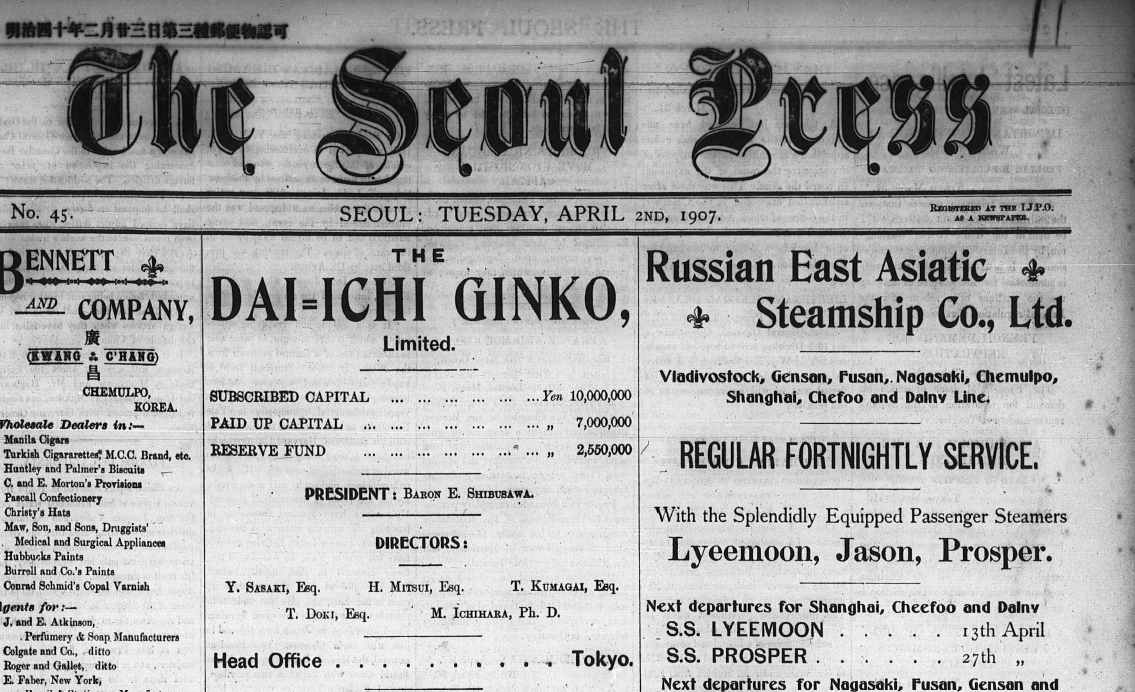
This year saw significant growth in Korean Studies collections, strengthening access to primary sources and contemporary materials for research and teaching. Through Allen Endowment funding, the library acquired The Seoul Press Online, an important digital archive of the English-language newspaper published between 1907 and 1937. As Japan’s principal news outlet representing colonial Korea to international audiences, The Seoul Press offers critical insight into Japanese imperial discourse, colonial governance, and modern East Asian history. The resource significantly expands opportunities for scholarship in Korean history, media studies, and colonial studies, with additional missing issues to be incorporated as they become available.
Access to Korean-language materials also expanded substantially through the growth of Kyobo e-book holdings, which now include more than 3,300 titles, broadening support for language learning, teaching, and interdisciplinary research.
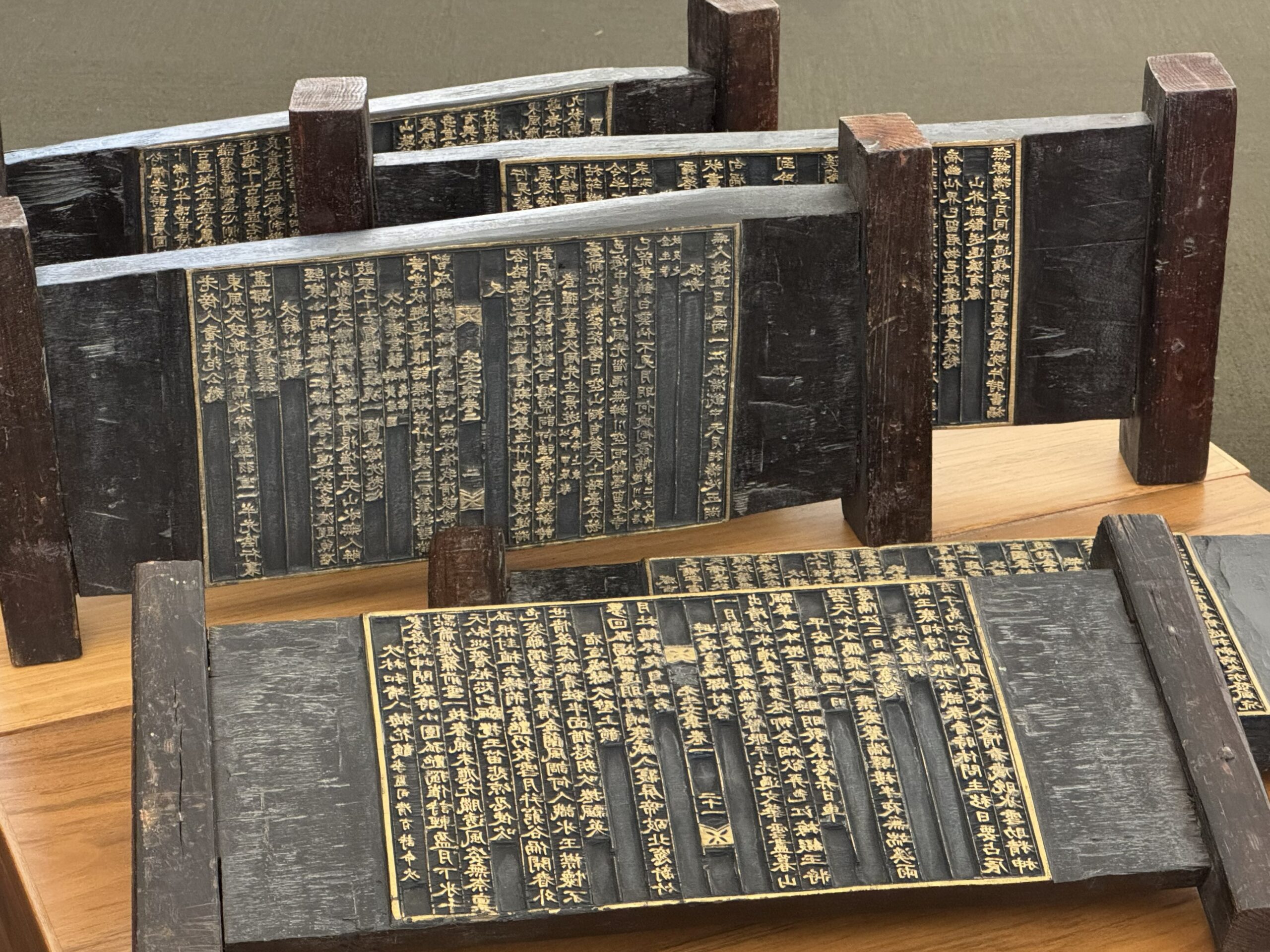
One of the most significant acquisitions this year was a set of five original woodblocks for Kumgye chip (錦溪集), presumed to have been produced by Ugyang Sowon (郁陽書院) in 1755. Kumgye chip is an anthology of writings by Hwang Jun-ryang (黃俊良, 1517-1563), a prominent scholar and disciple of Yi Hwang (李滉) during the early Joseon dynasty. Painted black with the engraved text highlighted in gold gilt for display purposes, the woodblocks are both visually striking and historically significant. As a unique and rare addition to the Korean special collections, they will serve as an important resource for teaching, learning, and research for students and faculty.
The woodblocks were also introduced during a special “Books Unbound” class session in the Textual Studies course, where they provided students with a rare opportunity for hands-on engagement with original historical materials.
Instruction and Research Support
Instructional collaboration continued to connect students directly with rare and meaningful primary sources. In support of a Modern Korean History course, special collections materials—including U.S. Army Korean War leaflets—were incorporated into classroom learning, allowing students to engage firsthand with historical artifacts and deepen their understanding of war, propaganda, and historical memory.
Public Programming and Exhibits
Public programming and exhibitions brought Korean culture, history, and artistic expression to wider campus and community audiences through collaborative and visually engaging installations.
In the Allen Library Lobby, artist Lucia Hwang’s Perpetuate invited viewers to reflect on the persistence of human history and memory through discarded media, such as DVDs and film reels, alongside ancient symbolism. The installation explored how fragments of the past—both material and cultural—continue to shape collective memory, transforming overlooked objects into a meditation on continuity, remembrance, and resilience.
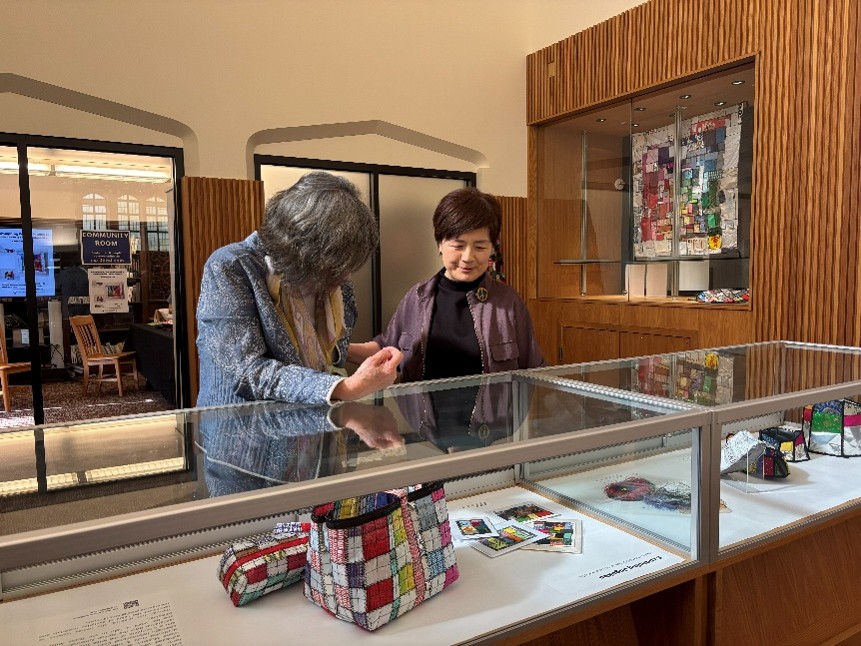
In the Tateuchi East Asia Library Reading Room, artist Bella Yongok Kim’s Reimagining Korean Jogakbo: From Tradition to Sustainability introduced jogakbo, a traditional Korean wrapping cloth created from small fabric remnants by women in the household. Rooted in resourcefulness, care, and the beauty of everyday materials, jogakbo reflects a long-standing tradition of sustainability in Korean culture. Inspired by this practice, Kim reinterpreted jogakbo through contemporary art using recycled plastic packaging and fabric, stitching together discarded materials to transform what was once overlooked into new patterns and forms.
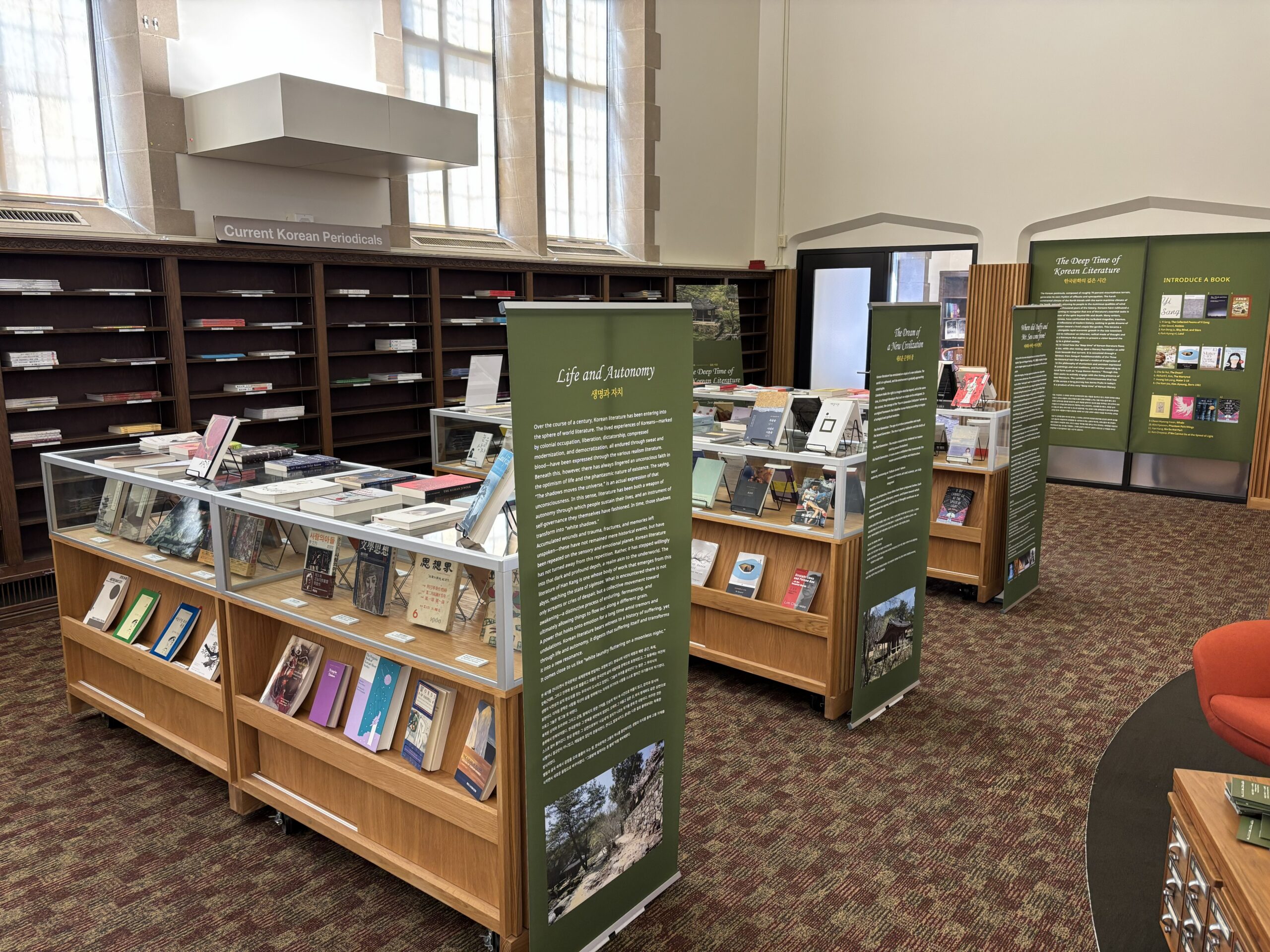
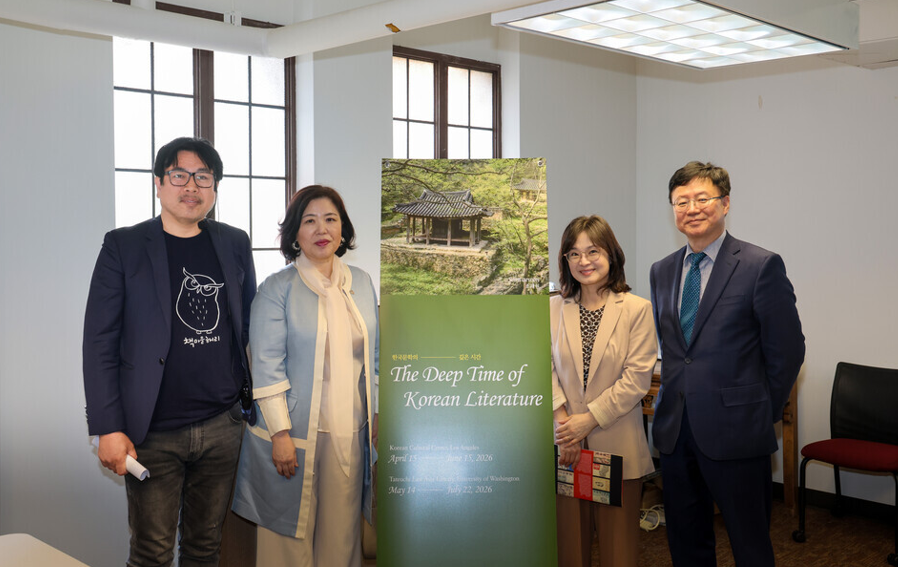
In collaboration with the Korean Cultural Center in Los Angeles, the library also hosted The Deep Time of Korean Literature, an exhibition celebrating the breadth and continuity of Korean literary traditions. The exhibit highlighted literary works across historical periods, including contemporary writings by Nobel laureate Han Kang, underscoring the global significance and enduring vitality of Korean literature.
Professional Engagement
Professional engagement focused on strengthening Korean collections collaboration across North America and advancing access to Korean literary scholarship. As chair of the Korean Collections Consortium of North America (KCCNA), a successful grant renewal proposal secured the consortium’s final funding cycle of $10,000 annually for FY26–29, supporting all fourteen member institutions. The annual business meeting, hosted during the Council on East Asia Libraries conference in Vancouver, BC, also provided an opportunity to discuss long-term strategies and possible paths forward for collaborative Korean collections work beyond FY29.
Supported by a travel grant from the Center for Korea Studies, a research visit to the Literature Translation Institute of Korea (LTI Korea) in Seoul contributed to the continued expansion of the English Translation Database of Korean Literature. Additional entries were added to strengthen access to translated Korean literary works and support research, discovery, and teaching in Korean literary studies.
Access and Public Services
By Melissa, Rebecca, Sarah, and everyone from Branch Operations Services
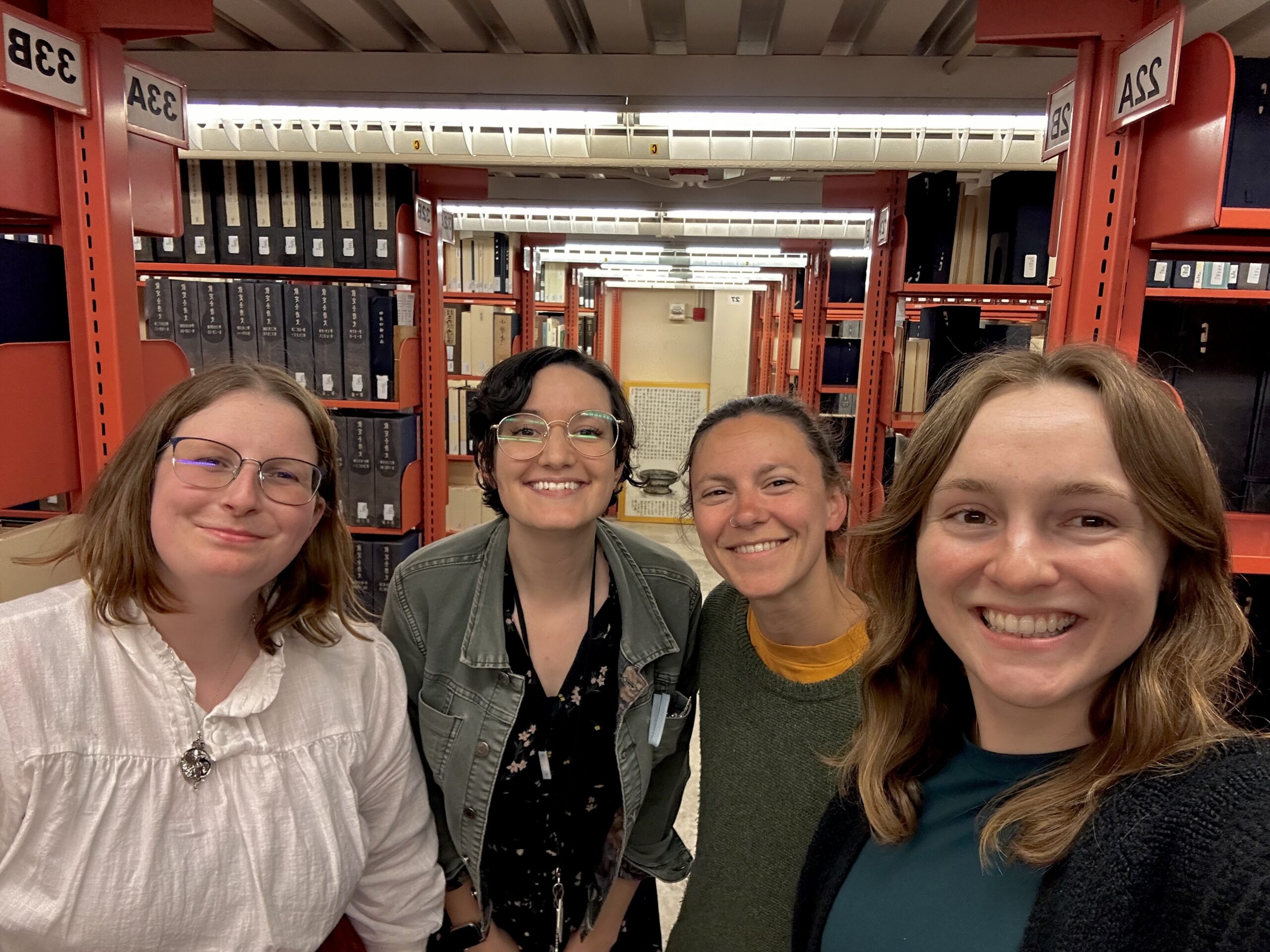
The Branch Operations Services team supports circulation, public services, and collection maintenance across eight libraries on the Seattle campus, including the Tateuchi East Asia Library. Rebecca Cavanaugh and Melissa Fallon are the two Public Services Technicians on the Branch Operations team who primarily support the Tateuchi East Asia Library, alongside several other staff members and over 25 student employees.
This year, in addition to daily operations supporting circulation and collection maintenance, highlights included supporting visiting researchers with Special Collections materials, relocating the Manhwa/Manga Cafe to the third floor, and preparing hundreds of library items for displays and events.
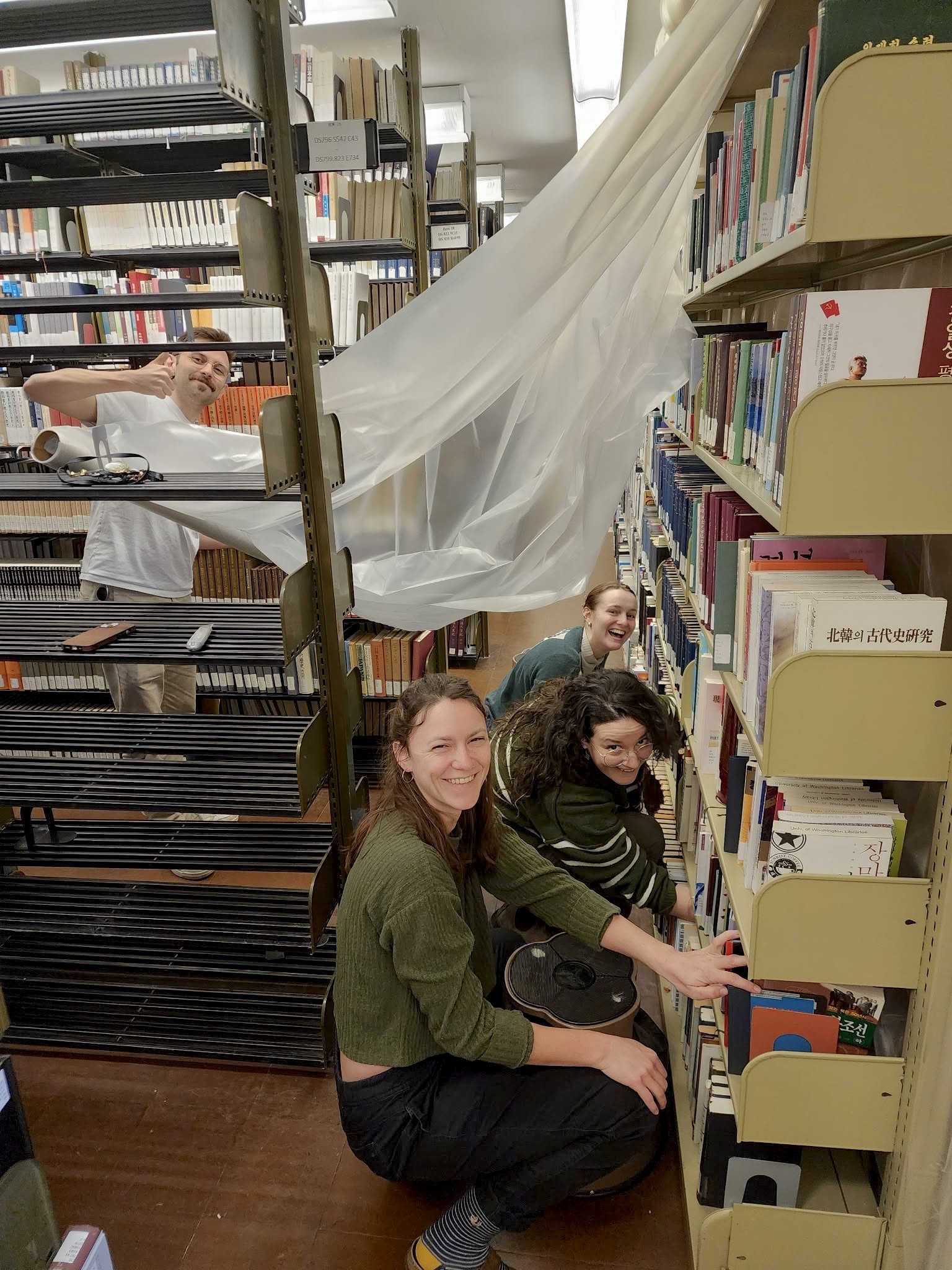
While Branch Operations Services provides support for public-facing library projects and events, there have also been big things happening behind the scenes in the library. Rebecca and Melissa have been running an ongoing reintegration project, to make better use of the space available in the stacks for items that are currently in our storage location.
Furthermore, the shift in Tateuchi East Asia Library’s Special Collections storage location is almost complete. In this space, these items are secure and protected in a more temperature-controlled environment. The project has been a huge undertaking and has involved integrating around 5,000 items into the Special Collections stacks, inventorying all of the material in Special Collections item by item, and completing record cleanup so that the Tateuchi East Asia Special Collections are more discoverable in the catalog.
This reorganization has taken almost a year. Rebecca, Melissa, and Emily Klemkow, the Public Services Technician primarily based at the Drama Library, have managed the project, but it is thanks to the entire Branch Operations Services Team that this project has been a success – each of the nine technicians in Branch Operations has put in many hours to make this project a reality. This shift also creates further room to redistribute items in the public stacks in the near future.
Dan Halligan, Daily Operations Supervisor, has contributed a lot of work towards updating the space, making study spaces and zoom pods available for users in addition to updating signage. Furthermore, the Branch Operations student supervisors have collaborated with Tateuchi East Asia Library Librarians to run several reference trainings so that student staff on desk are better equipped to connect users with the resources they need. The student staff provide invaluable support in daily operations and in project work around the library.
The Branch Operations Services team is delighted to be able to work with Hyokyoung, Azusa, Lucy, and all the other library staff who work tirelessly to connect users with the invaluable resources in this beautiful space. We value our positive collaboration across departments to support the Tateuchi East Asia Library and the community who uses it.
Melissa: I have been a branch technician primarily based at the Tateuchi East Asia Library for over two years now and it is truly a joy to be involved in the work for this space. As a technician my job involves ensuring public access to the library and the collections housed here. The Tateuchi East Asia Library always has an endless supply of interesting puzzles and pieces to parse out. There is truly never a dull moment. In addition to the work, the opportunity to engage with the knowledge housed here, from the collection materials, the events, and the people, cannot be understated. It is such a privilege to work with the wonderful librarians, students, and staff that make this library a fulfilling place to be everyday.
Rebecca: As Melissa’s branch technician counterpart, I assist in all the same ways she does and we often collaborate to ensure our work is consistent across this collection. In the two and a half years I’ve worked here, I have broadened my understanding of East Asian history and academics and developed a deep respect for this collection I help to maintain. I love participating in the many events the Tateuchi East Asia Library hosts throughout the year and highly value the opportunity to work so closely with these incredible librarians.
From Student Supervisors (Carissa, Cody, and Charlie): Hyokyoung, Azusa, and Lucy are endlessly supportive of our student workers, working with them to serve the UW and beyond. The events happening at Tateuchi East Asia Library make it one of the most vibrant spaces on campus, and we are so happy to do our part to support that! We look forward to continuing to work with the librarians to make the Tateuchi East Asia Library a cherished place for students, staff, and the community.
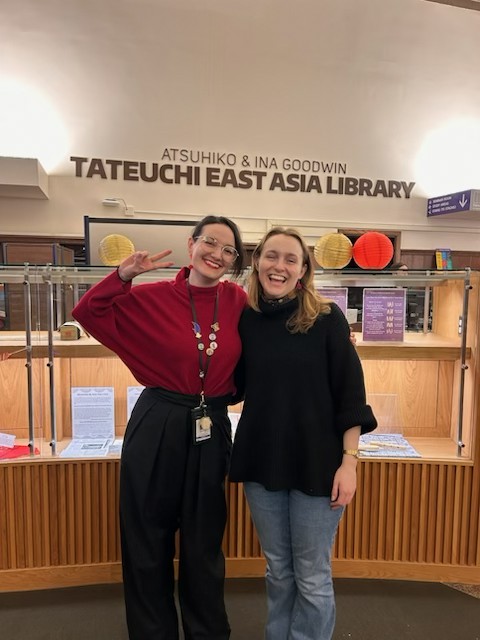
Student Employees
From Stacks to Stages: 2023-2026 Working At Tateuchi East Asia Library
By Elene Liu
When I first began working at the Tateuchi East Asia Library as the Chinese Language Collection Student Specialist, I did not anticipate how a part-time role would become a space where my academic interests took on tangible forms. As I write my third and last year-in-review as a graduating senior, I came to realize how working at Tateuchi East Asia Library shaped my professional development, concluding my college experience on an unforgettable note.
My Tateuchi East Asia Library journey started by closely working with the China Studies Librarian on the collection, such as rearranging over 2,000 books in Tateuchi East Asia Library’s closed stacks, reviewing our collection of the Cantonese lyric books Mu Yu Shu 木鱼书 against online copies, and helping with curating exhibitions with Tateuchi East Asia Library’s special collection items. As a student of ethnomusicology and linguistics, my academic focus centers on intangible cultural heritage and cultural sustainability, fields that often remain theoretical within coursework. At Tateuchi East Asia Library, however, student-led initiatives are encouraged, allowing me to explore these interests through practice. The first library activity I led independently was the Dawg Daze Karaoke in 2024, where I oversaw every stage of execution, designing physical flyers and online promotions to facilitate the event and energizing the crowd. This experience marked my first step into leadership in event coordination at Tateuchi East Asia Library, inspired me to draw directly on my knowledge of language, culture, and music to create genuine connections within an official campus setting.
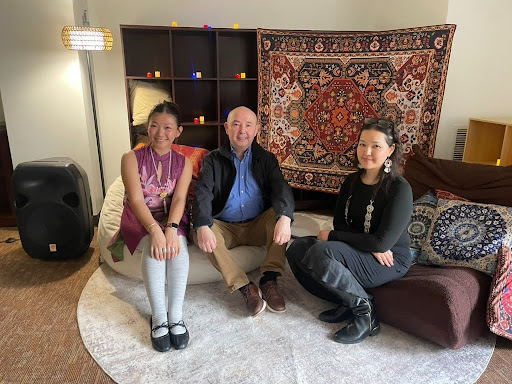
Encouraged by the positive responses received from activities I led with my fellow student workers in the past two academic years (2024 & 2025 Tateuchi East Asia Library Dawg Daze Karaoke, the 2025 New Year’s Celebration, and the 2025 Cherry Blossom Bookmark DIY Sessions), I was trusted with an expanded role in library programming. As Tateuchi East Asia Library’s signature event, the New Year Celebration showcases East Asian values through both traditional and contemporary cultural performances. This year, I was entrusted with fully planning and leading the event, from recruiting student organization performers and the broader community, structuring and promoting the two-hour program, and actively emceeing the event. Through this experience, I saw how my academic training and event planning mutually reinforced one another: I had designed a public program that actively practiced cultural sustainability rather than merely discussing it. Over time, the programming work at Tateuchi East Asia Library inspired me to develop an interest in arts administration—a field that would allow me to continue this work professionally.
To enhance my knowledge in this area, I practiced through initiating and leading more events at or sponsored by Tateuchi East Asia Library, such as the 2026 Silk Road Music Concert and 2026 Cherryblossom Bookmark DIY. Since promoting these events are equally important as hosting them, I further developed my social media marketing skills through learning to edit short-videos, one of which gained 159k views and 6.7k likes. This process also led me to keep up with the Tateuchi East Asia Library instagram account I started two years ago, gaining a total of 565 followers.
By trusting me with meaningful responsibilities, Tateuchi East Asia Library truly supported my growth at UW, built my confidence as a leader, and revealed a viable career path I had never previously considered. As I graduate this June and begin my career in Arts Administration, I am deeply grateful to this library, for it is where I first discovered my passion and learned to lead with purpose.
Mapping Memory: My Time at Tateuchi East Asia Library
By Ricky Chen
Working as a student assistant at the Tateuchi East Asia Library (Tateuchi East Asia Library) has been a formative chapter in my time at UW, one that has deepened my understanding of East Asian history, library science, and community engagement in ways I could not have anticipated.
At the heart of my work was the Naikokuzu and Guihozu (domestic and imperial territories Japanese military captured maps) Collection Inventory Project. It is a painstaking but profoundly meaningful effort to verify and document one of the library’s most historically significant holdings. These maps, produced by the imperial Japanese Army from the Meiji era through the end of World War II, bear silent witness to the imperial military’s ambitions across Asia, from Taiwan and Korea to Manchuria and the South Pacific Islands. Working through each entry, cross-referencing details, and ensuring the accuracy of the inventory gave me a deep appreciation for the weight that archival work carries. Behind every map and every data point lies a layered history of colonialism, cartographic power, and contested territory. This project taught me that careful, methodical scholarship is itself a form of historical stewardship.
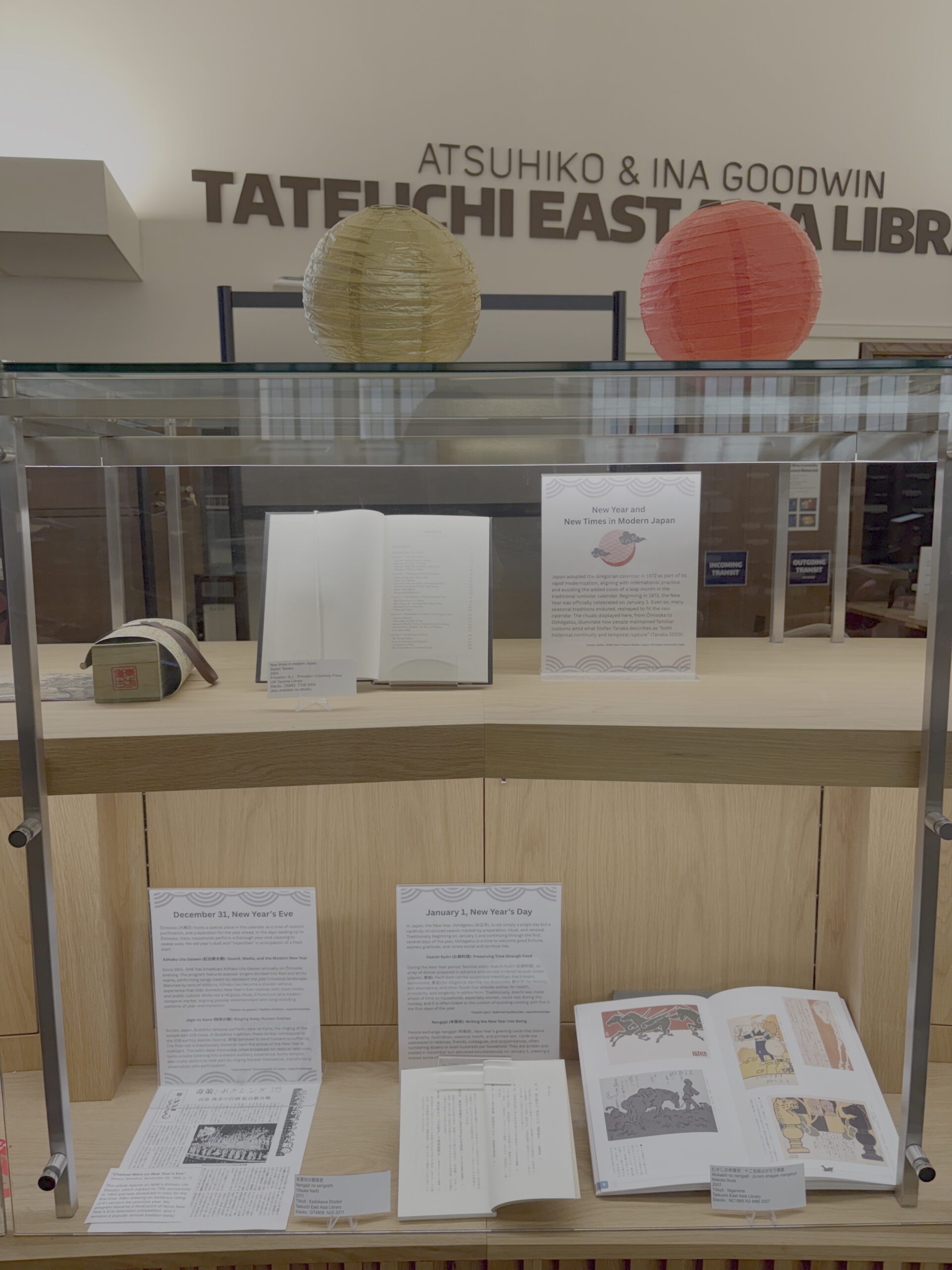
Alongside this work, I had the privilege of collaborating with our Japanese librarian Azusa Tanaka on the accessibility check of the UW Japan Studies Research Guides pages. This experience introduced me to a dimension of library work I had not previously considered. Together, we try our best to ensure that knowledge resources are genuinely usable and equitable for all patrons. It was a reminder that access to information is not only an intellectual value but an ethical one. Meanwhile, with Azusa’s guidance, I also contributed to the curation of the exhibition New Year and New Times in Modern Japan, which explored how Japan’s adoption of the Gregorian calendar in 1872 reshaped the country’s relationship with time and tradition. Curating content around seasonal rituals, from Ōmisoka (Japanese New Year’s Eve) to Oshōgatsu (first month of the New Year), and grounding them in Stefan Tanaka’s scholarship. This was a rare opportunity to bring together my scholarly sensibilities and a public-facing curatorial voice. Seeing abstract academic concepts translated into an accessible, visually engaging exhibition was one of the most rewarding moments of my time here.
Beyond research and curation, I also supported the library’s community life through event preparation, including the Tateuchi East Asia Library New Year Celebration and a DIY Cherry Blossom Bookmark event. These moments of gathering reminded me that a library is not merely a repository of materials but a living space for connection and cultural celebration. As I continue my work at Tateuchi East Asia Library, I look forward to deepening my contributions to both the library and the broader UW community. There is still much to learn, and much to give, and I am grateful for the opportunity to do both.
Between Beginning and End: My Journey at Tateuchi East Asia Library
By Seo Young Bai
Looking back on my six months at the Tateuchi East Asia Library, the time passed quickly, yet it was filled with meaningful and memorable experiences. As a Library and Information Science graduate student, my work here, assisting the Korean Studies librarian and director, Hyokyoung Yi, provided me with valuable hands-on experiences and practical skills. I gained a deeper understanding of how librarians manage information and support patrons.
Learning about the special collections already at Tateuchi East Asia Library was especially fascinating. Before joining the LIS program and working at Tateuchi East Asia Library, I had little knowledge of special collections. This position gave me the opportunity to work directly with unique and rare Korean materials. Many of these collections date back to before the 1910s and consist largely of texts written in Hanja (Chinese characters) and printed with different tools such as woodblocks, and metal movable types. Not only the physical books, but also the printing tools, such as Kŭmgye chip ch’aekp’an (금계 집 책판), a set of woodblocks deepened my understanding of Korea’s history of book printing. In addition to the printed books, I was also inspired by printing tools, stories from donors, and former and current librarians dedicated to building these collections, who have traveled from bookstore to bookstore to acquire rare and unique items.
Beyond gaining a general understanding of special collections, my experience also demonstrated how the library can support research in Korean studies. While adding translated Korean literary works to the English Translation of Korean Literature database, I expanded my knowledge of English translated Korean literature and learned how actively these publications have been published. This process showed me how such efforts have contributed to the growing international recognition of Korean literature and how this database can contribute to translation studies by accumulating the citations in one place.
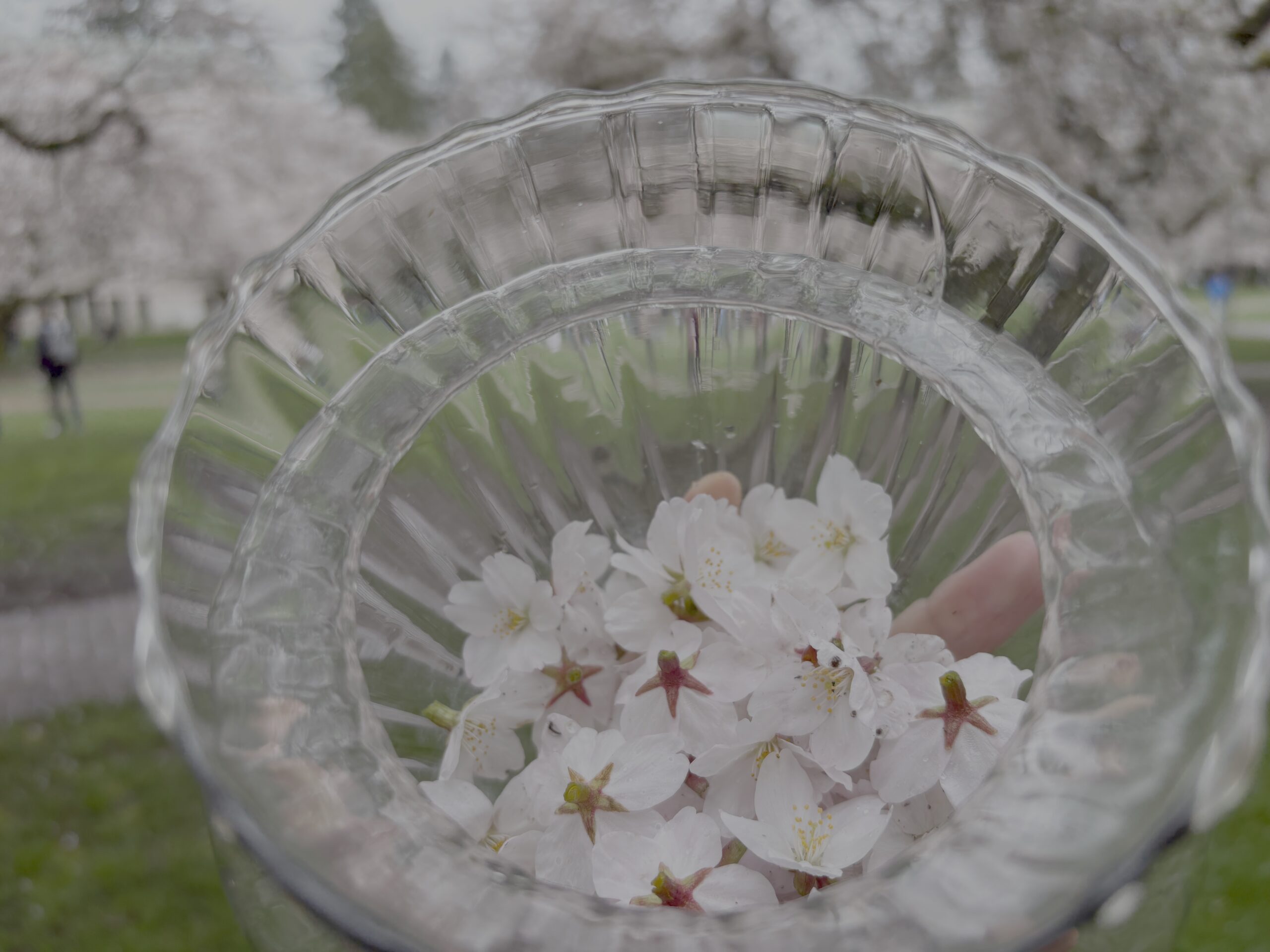
I assisted Korean exhibitions, including Reimagining Korean Jogakbo, which provided me with the opportunity to meet Korean artists who reimagine traditional Korean art into contemporary contexts. I also supported my coworkers with the student-ran event, helping Cherry Blossom Bookmark DIY to life again for the second time. This became one of the most valuable and memorable moments for me, as I had the chance to meet members of the UW community and watch them create meaningful memories of their own at Tateuchi East Asia Library.
As I continue pursuing my studies in Library and Information Science as a doctoral student, the experiences and time I spent at Tateuchi East Asia Library inspired me to learn more about the Libraries. The time I spent here will also remain unforgettable.