
Student Spotlight: Working in UW Libraries Preservation Services
Reflections on my work as the 2026 James Leland Dirks, Jr. Library Preservation Intern
By Michelle LaCrosse, Masters Degree in Library and Information Science, Class of 2026
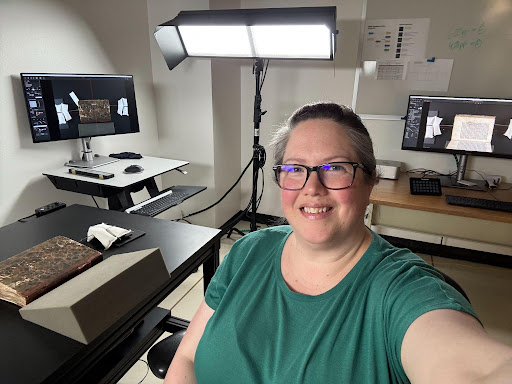
Library preservation is more than just fixing torn pages or reattaching covers; it is a broad array of preventative and restorative work by dedicated librarians. Caring for objects throughout their lifecycle so they can be safely accessed and exhibited for as long as possible is at the heart of collections stewardship.
One of the main things I learned during my time as the 2026 James Leland Dirks, Jr. Library Preservation Intern is that Preservation Services is a vital bridge between users and collection materials. Their main goal is to balance the care an object needs for longevity and its availability for user access needs, or circulation.
From learning about how different cultures developed papermaking technologies and the different fibers that make up paper today, to monitoring insect and pest activity in the stacks, I have been privileged to experience a broad overview of what goes into preservation care from experts in the field, who have taken time to teach me about what they do and how it benefits the collection materials and provides access for our students.
My interest in stewarding collections for long-term stability and use has increased exponentially as my understanding of its importance has increased during my time at UW. I was interested to learn about the challenges of managing a library system of this size such as the strategic nature of combining budget, space, user needs, and other elements to create a dynamic circulating collection that responds to and anticipates evolving user needs.
During my internship, I learned about the main aspects of collections care, including the many types of conservation work that can be done on-site; environmental monitoring and pest management; disaster preparedness; and digitizing books, large movie posters, and audio and video. I have also learned about the importance of collaboration and relationship building through the process of condition assessment and treatment recommendations we research and provide for subject librarians.
Each intern creates a final independent project during the second half of the year after learning more about the areas of specialization and what their specific interests are. My overall project was based on understanding existing workflows and creating new ones as an extension of understanding the scope and context of preservation needs. I was able to split the work into two areas that I’m especially interested in: Integrated Pest Management (IPM) and Digitization.
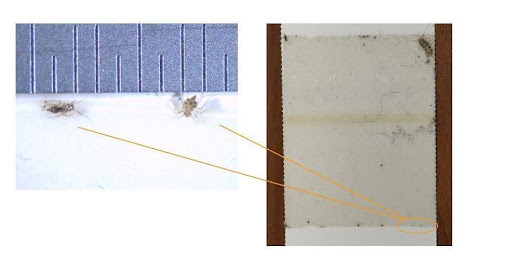
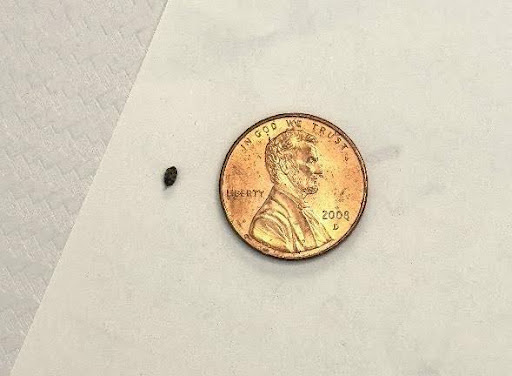
Pest management, or pest damage mitigation, is an important aspect of collections care. Pests are attracted to organic material like cloth covers, wood and linen paper fibers, glues, and leather. And, in a very short amount of time, pests can permanently damage or destroy collections; especially those in long-term storage or very fragile books that are housed in storage containers. Boxing old and fragile books is important for their protection, but if a pest makes its way into the container, they can do a lot of damage before anyone notices. It is important to monitor any pest activity so we can take action as soon as possible and minimize the damage.
“When I applied to the MLIS program at the University of Washington, I didn’t think there was one job that combined everything I love to do, but, thanks to the Dirks Internship, I know that library preservation and collections stewardship are where I have found my true calling.”
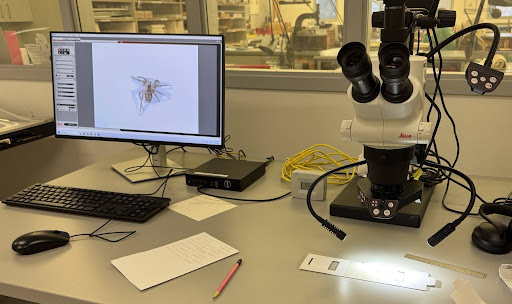
Image: the microscope view is projected onto the monitor. Digital images can be taken of magnified insects like this to be identified later.
There are several parts to pest management; firstly, gathering and recording data and, secondly, analyzing and identifying insects. I created multi-modal maps to show the trap locations, updated the spreadsheet to support analysis, researched a variety of microscopes and made recommendations based on usability and cost, and introduced the iNaturalist app that will greatly increase accurate identification and analysis. My goal was to create a system that can be easily learned and performed, even by someone who hates bugs!
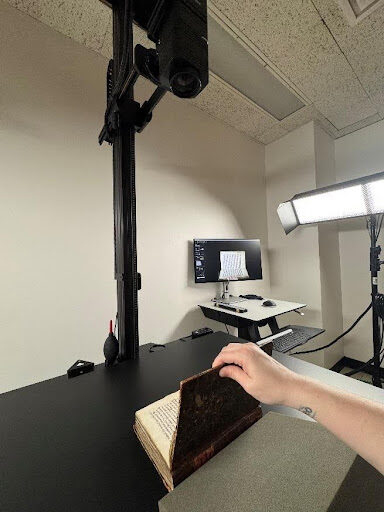
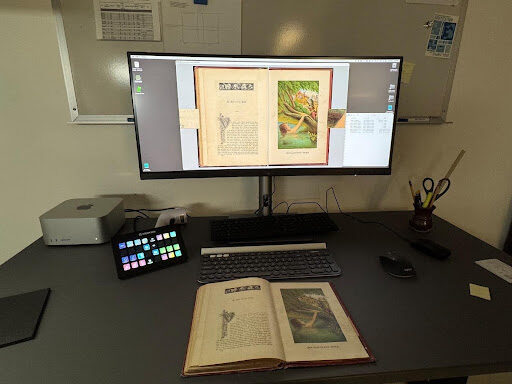
During my internship, the Preservation Services department acquired new equipment for digitizing still and moving images. For the second part of my final project, I was able to document workflows for the new imaging equipment. In addition to creating and testing workflows for VHS and cassette tapes, I also digitized several books including a children’s book with color plates from 1880 and a rare 14th-century Latin manuscript, both of which are now available via HathiTrust and support the UW Library’s commitment to accessibility.
“The hands-on experience I’ve gained through this internship is invaluable and has given me the precise direction I was looking for to plan my future career.”
Going back to school for a library science degree represents a huge career change for me, and I spent a lot of time before I applied making many pro and con lists to decide if this was the right step for me. I thought about my hobbies and what about them appealed to me the most.
I enjoy knitting and embroidery, small-scale model building, as well as nature photography and digital design, and I’m a citizen scientist who enjoys using iNaturalist to observe and identify the natural world around me. These hobbies use the same tactile skills, research, concentration, attention to detail, patience and steady hand that are required in preservation when handling rare, damaged, and fragile materials.
When I applied to the MLIS program at the University of Washington, I didn’t think there was one job that combined everything I love to do, but, thanks to the Dirks Internship, I know that library preservation and collections stewardship are where I have found my true calling.
About the Author
Michelle LaCrosse grew up in the Puget Sound area and spent her time climbing trees at Point Defiance and growing temporarily numb in the icy waters of the Pacific Ocean. Still, she loves the snow and cold and is often found outside on long splashy walks in the rain with her bogs and umbrella. Michelle has a bachelor’s degree from the University of Montana in anthropology with a minor in history and, in 2020, received a master of fine arts degree in creative writing from Colorado State University. A life-long reader, she especially enjoys science fiction and urban fantasy novels. After graduating with her MLIS in June 2026, Michelle’s career goal is to work in library preservation and continue digitizing collections and identifying bugs for as long as possible.