Skip to content
Stories

UW Press and Libraries Collaborate on Open-Access Books

Reposted from UW Press Blog 10/21/2019

From October 21st to 27th, the University of Washington Press will be highlighting its open-access publications and partnerships as part of International Open Access Week.

UW Press and Libraries Collaborate on Open-Access Books

photos of open access books from UW press

Thanks to a new partnership between UW Press and Libraries and a grant from the Kenneth S. and Faye G. Allen Library Endowment Transformation Fund, many books in the press’s long-standing and award-winning series Studies on Ethnic Groups in China (SEGC) are now openly available.

UW Libraries’ support for the initiative is part of its larger commitment to open and emerging forms of scholarship. Betsy Wilson, Vice Provost for Digital Initiatives and Dean of University Libraries, explained that “the UW Libraries’ strategic plan prioritizes the advancement of research for the public good. We are living this commitment by investing in infrastructure and developing publishing resources to support open-access scholarship in all forms. Our staff are constantly working to expand support for all UW authors who publish openly and to assist students and faculty in navigating open-access opportunities.”

Edited by UW professor of anthropology Stevan Harrell, SEGC presents research from a wide variety of disciplines on ethnic groups and ethnic relations in China. Anthropologists, historians, geographers, political scientists, and literary scholars have contributed works on minority ethnic groups from various regions of China, as well as on the majority Han and their relationships with other groups. Works are both historical and contemporary and cover topics ranging from identity, local relations, folk literature, and religion to medicine, governance, education, and economic development.

“I’m delighted that UW Press has selected Studies on Ethnic Groups in China as its first book series to go online in open-access format,” said Harrell. “This makes our books available to a wider public. In addition, using the Manifold platform gives authors, editors, and readers the opportunity to publish supplementary material, make comments, and see some of our authors’ gorgeous photographs in full color.”

Manifold is a new publishing platform developed by the University of Minnesota Press, CUNY GC Digital Scholarship Lab, and Cast Iron Coding and funded by the Andrew W. Mellon Foundation. In addition, SEGC books will be hosted on several other platforms including the UW Libraries ResearchWorks, JSTOR, MUSE Open, HathiTrust, and OAPEN.

UW Press Director Nicole Mitchell commented on the project’s early success: “We’ve been pleased to see that readers have accessed the open editions from at least 105 countries so far, from Afghanistan to Zimbabwe. We’re grateful for the support of the Allen Transformation Fund and fortunate that in launching our first open-access books, we’ve been able to draw on services like JSTOR and Project MUSE that have built strong global networks for scholarship, as well as the work of colleagues at Minnesota and other university presses involved in developing new infrastructure, processes, and standards for open-access monograph publishing.”

What Is International OA Week?

This year’s OA Week theme, “Open for Whom? Equity in Open Knowledge,” builds on the groundwork laid by last year’s focus, “Designing Equitable Foundations for Open Knowledge,” which highlighted the importance of making a central commitment to equity as we develop new systems for sharing knowledge.

The Allen Transformation Fund grant, awarded to “facilitate the transition towards open publishing models,” promotes equitable access not only by making the SEGC books available to readers across the globe, but also by enabling all authors in the series to make their books openly available regardless of their institutional affiliations or resources.

In addition, UW Libraries works with providers like Manifold to address the accessibility of open-access tools for all users. Working collaboratively with UW Libraries and UW Accessible IT, the Manifold team significantly improved accessibility features in the platform, helping to ensure open access for all.

OA Week on Campus

UW Libraries is hosting special events and information sessions during Open Access Week. This year’s theme, “Open for Whom?,” invites us to consider equity in open access.

 Accessibility Pop-Up Tables – Explore your favorite websites using assistive technologies to better understand the everyday experiences of disabled members of our community.

  • Tuesday, Oct. 22, noon–2:00 p.m. outside the HUB if the weather is good, inside the HUB if the weather is bad
  • Wednesday, Oct. 23, noon–2:00 p.m. in the Allen Library Research Commons

 Copyright and Creative Commons Licenses – If you need photos, music, or other media for a project and are unsure about copyright restrictions, join us for this one-hour primer. Learn how the Creative Commons helps creators share and use media.

  • Tuesday, Oct. 22, 3:00–4:00 p.m. in the Allen Library Research Commons
  • Wednesday, Oct. 23, 3:00–4:00 p.m. in the Allen Library Research Commons

 Open Media – This Guide to Open Resources will connect you with media you can use without charge.

 Open Educational Resources (OER) – See this Guide to OER to learn how to find and create open textbooks and courses.

Open Access at UW Press – Finally, be sure to check out the open editions of SEGC books as well as the Digital Projects page of the UW Press website for more information about the press’s open-access work.

Stories

“Open for Whom?” – Accessibility and Open Access

At UW we’ve been thinking about OA Week’s theme of “Open for Whom?” in the context of our efforts to increase the accessibility of our resources and services. We’re pleased that the latest version release of the Manifold digital book publishing platform included substantial accessibility improvements, largely due to a partnership between Cast Iron Coding, the web development firm building Manifold, and UW’s Accessible Technology Services (ATS) Office. 

We spoke with Ava Cole, a Student Accessibility Assistant in ATS, about their experience working on this project.

What is your role in ATS?

I support Hadi Rangin [Information Technology Accessibility Specialist] in his endeavors to evaluate, advocate, and ensure the accessibility of software used on campus. Ideally we’d have five Hadis, but since we only have one he has a number of students as his henchmen. I’m a full-time student, and I work part time. Right now there are two students, but we’re hoping to add more.

How does an ATS evaluation typically play out?

Usually it starts when the manager / owner of a new, software-related service at the university comes to us and says “we want to adopt this new software, but we want to make sure it’s accessible.” Spoiler: it’s never accessible.

We collaborate with that person to do a full evaluation, testing the functional tasks the software is designed to perform, and the workflows that people will typically use it for. We use different techniques, including a static review of the code, testing the software with different evaluation tools, and also using assistive technologies to try to complete each of the tasks. We compile a big list of issues, put them in a spreadsheet, and write an accompanying report describing the overall status of accessibility. When we are done we hand off our findings to the service owner / manager who then uses it to advocate for accessibility in the purchasing process. Usually UW-IT is surprised but supportive, and the company is defensive.

Ideally this is then the start of a collaboration with the company. With good projects they will assign us a liaison, and we’ll work with them to fix the accessibility issues. Sometimes it’s great, and they’re strong advocates within the company for the changes to be made. But sometimes we spend a lot of time “talking to the hand.” In every collaboration it’s a process of educating them and doing our best to help them help themselves, but it can be hard.

What was it like working on the Manifold evaluation?

It was the same process of Elliott Stevens [English Studies & Research Commons Librarian], who is, by the way, a fantastic collaborator and leader, approaching us about Manifold. The Libraries had already begun using the software, which isn’t unusual. So we looked at the platform, and immediately saw that it had a lot of issues. 

What was really different with this project was that after the initial evaluation, instead of handing it off to execs and having it trickle down to the developers, we met with Matt Gold and Terence Smyre [two of the principal investigators on the Manifold grant project]. They were immediately receptive, saying they hadn’t realized there were so many holes. And because Manifold is open source software, hosted on GitHub, instead of waiting for the spreadsheet to get in the right hands, we started filing issues directly into their GitHub. 

Within five minutes of filing the first issue, Zach Davis [Cast Iron’s Principal and Chief Technologist] replied and said “thank you, I’m putting it in the workflow.” This is exponentially faster than how it usually happens. So as we continued to put the findings on GitHub, we were getting fixes back really fast. That cycle of us doing the testing and them doing the fixes has been totally different than other projects we’ve worked on. 

Another change, and this is something I think about a lot, is the way this project is letting us share our own work. We put all this publicly funded time into researching how to fix software accessibility issues, and some of it is really bleeding edge. Like for one project, the software had these interactive data grids that were really functional and powerful, and looked great visually, but were horribly inaccessible. It took a month of ruminating and talking and brainstorming and research, including bringing it up in Hadi’s monthly Explore with Hadi meetup, to come up with a suggested design pattern for the company and provide them with the solution. However, that application is proprietary – so all the work is now hidden. The knowledge created from that discourse is effectively gone.

But with Manifold, it’s all open. We’ve been doing the same kind of discussion and research around Manifold’s highlighting and annotation functions. And the good news is that the findings are now available in GitHub – it’s public knowledge. It’s cool when it’s publicly funded work, and the work is actually public. 

So, it’s been a good collaboration?

It’s definitely stood out, people-wise. In some collaborations it feels like we have to convince people of why accessibility is important – having to hold their hand. Sometimes the only reason the company incorporates our feedback is because it’s a selling point; we tell them “making it accessible will increase your market share.” With the Manifold team, as soon as we mentioned it they were really excited. They were really open to the feedback and motivated on their own to make accessibility a priority.

What’s the current status of the project?

Right now we meet with Terence and Matt on a regular basis, continuing to test new features as they put them out. We’re starting a new push on the authoring side; the way content is managed in Manifold doesn’t make sure that the content itself is accessible. Manifold isn’t an authoring tool – it ingests existing content. So if the ingested content isn’t accessible, it doesn’t matter if the application is accessible. We’re encouraging them to add an accessibility checker for uploading content. It would be great if it actually enforced accessibility of the content, but that would be very ambitious.

What lessons can the Open Access and Accessibility communities share? 

We live in a world that isn’t set up to be open or accessible; our position as advocates are similar, in that we’re the underdogs. Accessibility, privacy, security, and equity are always neglected until someone tells people they have to pay attention. Usually it has to happen using policy or law; without the ADA our office wouldn’t exist. 

They also all have to be part of the development process from start to finish, otherwise it won’t be a good outcome. Hadi always says accessibility can’t be an afterthought – something you tack on to the end of the software development process. If you do it that way it’s never going to be functionally accessible, letting people use it in a meaningful way without a lot of pain.

Higher education is a great launching pad for this work, but I want to emphasize that these have to be community efforts. With accessibility, it can’t just be our office who’s worried about it – we do a lot of work but we can’t cover everything. Any institution that has buying power needs to consider the agency they have to advocate for access, privacy, and accessibility. This means UW as a whole, or divisions like the Libraries and UW Medicine. Often people think they don’t have power, but they really do. People look up to the Libraries; how can that power be leveraged?


Stories

Top 5 Open Access Resources at UW

At UW Libraries, every week is #OpenAccessWeekopen access week logo

Each October, institutions and individuals around the world celebrate Open Access (OA) Week by highlighting the many benefits of sharing information openly, without legal restrictions or fees. OA is especially important to the academic community where sharing knowledge in an open, timely and accessible way is key to advancing research for the public good. OA policies are spreading on campuses globally, and in May 2018, the UW Faculty Senate adopted an OA Policy. This policy is also informing other efforts to implement more equitable and sustainable models for scholarly publishing in contrast to some publishers’ “big deal” bundles and restrictive contracts.

This year’s OA Week theme, “Open for Whom?,” invites us to consider OA and equity in all forms. This year, UW librarians in Seattle are highlighting OA on campus through accessibility “pop up” events and Creative Commons workshops. Tacoma librarians are hosting two faculty panels to talk about how they share their scholarship openly and lead efforts to adopt open resources in their courses. Meanwhile, Bothell librarians are creating a display to illustrate the financial impact of licensing materials that are not openly available.

Top 5 OA Resources 

UW librarians work throughout the year to support students and faculty as they navigate the many resources that facilitate open access. They connect our campus community with a wide range of resources to support openness in teaching, learning and research, including:

  1. ResearchWorks. The open repository of scholarship by University of Washington faculty and students.
  2. Guide to Open Resources. This user-centric tool helps faculty and students find openly available resources for research, projects, teaching, or creative fun.
  3. Guide to Open Educational Resources (OER). OER, particularly open textbooks, save students money while empowering faculty by giving them more control over their course content. This is your source to find and create open textbooks and course materials.
  4. Guide to the Creative Commons. The OA movement puts its principles into practice by enabling a “digital commons.” Anyone can contribute to it or take what they need from it. If you need images, music, or sounds for a project, search the Creative Commons, a collective source for digital media that can be used immediately at no cost. Need help? Take one of our Creative Commons workshops or ask me!
  5. Instructor Toolkit. Find out how our UW Librarians can help design and teach lessons on OA resources – or any research topic.

These are just a few of the ways librarians at all three campuses work each day to advance open access discovery and to connect people with knowledge. After all, it’s our mission.

Don’t miss out on these UW Seattle Libraries OA Events:

Accessibility Pop Ups: Learn more about the role accessibility plays in the open creation and dissemination of knowledge. Try the #NoMouseChallenge or see how a screen reader would interact with your favorite website. Stop by our pop up table for an informal chat or to pick up a flyer on campus accessibility resources.no mouse challenge sign

    • Tuesday, October 22, 12-2pm Husky Union Building
    • Wednesday, October 23, 12-2pm Research Commons

Copyright & Creative Commons Licenses: Drop in for a workshop on how the Creative Commons helps creators share and use media without rights headaches. It’s simple and empowering.

    • Tuesday, October 22, 3-4pm, Research Commons, Green A
    • Wednesday, October 23, 3-4pm, Research Commons, Green A
Stories

UW Tacoma Library Welcomes Oral History Project Manager

Reposted from UW Tacoma Libraries Blog by Justin Wadland 10/14/2019

The Library is pleased to announce that Joan Hua joined its staff this autumn as the Oral History Project Manager. In the next 12 months, she will be working to develop a new collection of digital oral histories for the UW Tacoma Oral History: Founding Stories project. The collection aims to capture the memories and perspectives of individuals who played significant roles in the shaping of the campus community and identity. In her role, Joan will conduct interviews and research, process and describe digital objects, facilitate the discovery and long-term access to the collection, and develop a workflow to comprehensively manage a digital oral history collection.

Joan comes to us with a range of experiences in areas like music publishing, cultural heritage research and sustainability, digital content production, and instructional design. She has previously worked at the Smithsonian Institution (primarily at the Smithsonian Center for Folklife and Cultural Heritage) and American University Library in Washington, D.C., before returning to Tacoma. She is currently pursuing a master’s degree in Library and Information Science at the University of Washington Information School, which she expects to complete in June 2020. She is an Association of Research Libraries Diversity Scholar (2018–2020), ALA Spectrum Scholar (2019), and ARL+DLF Forum Fellow (2019).

For the Founding Stories project, she is particularly interested in diverse perspectives that show the rich and multifaceted history of UW Tacoma. She believes oral history is an excellent medium to tell nuanced stories and amplify underrepresented voices. Beyond scholarly research, Joan hopes the Library’s oral history practice and resources will have connections with learners and educators. She looks forward to exchanging ideas and connecting with members of this campus community. You can reach her at joanhua(at)uw.edu.

Stories

An iterative approach to space planning

In the Foster Business Library, we were excited to recently welcome the first students into our newly developed Business Research Commons. Modeled (very modestly) on the UW Research Commons, the new space allows us to offer topical events and programs, separate from classroom visits, for all business researchers — whether or not they are business majors. Our first session was an introduction to citation management tools, with about a dozen highly engaged business Ph.D. students in attendance.

Library graduate assistant delivering an information session to business Ph.D. students.
Library graduate assistant Mariah McGregor teaches business Ph.D. students about citation management tools.

While we business librarians had long aspired to carve out space to expand our business instruction offerings, making the case and articulating our vision became clear by aligning our efforts with the Libraries Strategic Plan. Developing this venue marks the beginning of our contribution toward key strategic goals in “evolving library spaces” and “investing in sustainable teaching endeavors.”

Right now, the Business Research Commons is small but utilitarian. The space includes a new instructor’s podium, TV monitors on wheels and 30 new chairs. But with pilot programming underway, we aim to launch a fall series bringing together business students and campus-wide business researchers to discuss information resources, software and tools, and hear from related speakers. Our objective is to sustainably expand Foster Business Library’s outreach and impact through this designated venue.

Launching the Business Research Commons has required a systems-thinking approach and a budget. Our Libraries Information Technology Services (ITS) colleagues helped us understand the challenges and opportunities of creating a new technology-enabled space, but our talks with ITS also built connections with UW Classroom Technologies and secured collaborative funding from the UW Student Technology Fee. (Other funding came from Libraries operations budget and the business library’s designated gift fund.)

While our next steps will focus on creating a series of engaging events and programming, we are only getting started. As we bring more people into the space to see what works and what is missing, we plan to develop a longer-term vision for expanding the footprint—offering more seating and set-up options, adding videoconferencing and installing a divider wall to preserve the quiet that our patrons appreciate.

For now, though, we are fortunate and excited to have begun. If our first students in attendance were an indication, we anticipate an active new learning space that contributes to our Libraries-wide effort in helping students reach their full potential as learners.

Stories

Strategic progress, and some waiting

Where developing the Strategic Plan was something of an exercise in visioning of an ideal state, implementation has proven to be more of a reality check. Where I had assumed the transition between development and implementation would be a simple baton pass, I have instead come to better understand the oft-repeated business trope: “Culture eats strategy for breakfast.”

Six months into our new planning cycle, I observe that UW Libraries sustains a culture of waiting: top-level administrators waiting to hear from their directorates; staff waiting to hear from leadership; campus liaisons waiting to hear from external stakeholders; waiting for new hires, new programs, new resources… Unquestionably there are benefits to a “waiting” approach that connotes patience, caution and certainty. But I’m still waiting for someone to grab this baton!

Tempering my personal tendency toward impatience, I can report a significant amount of good work on advancing our strategic goals:

  • Some level of strategic goal-setting has happened in nearly every area of the Libraries, including Research & Learning Services, Distinctive Collections, Administrative Services, Collections & Content, the Health Sciences Library, UW Bothell, UW Tacoma and various tri-campus committees.
  • Libraries Cabinet has prioritized near-term goals related to IT infrastructure, communication and equity, diversity and inclusion.
  • All Libraries portfolios are in the process of articulating near-term strategic actions to achieve in 2019.
  • Across the organization, we are pursuing opportunities to insert strategic-goal language into accountability documentation like project proposals, performance evaluations and annual reports.
  • Cabinet will build out specific actions with definitive leads, milestones, timelines and success measures—and will establish new channels to sustain communication on our progress.

As much as has been happening, I still feel like we could do more. My amateur organizational-behaviorist perspective is that we haven’t yet completely embraced our aspirations toward becoming a learning organization, one that continuously transforms itself and values exploration, experimentation and even failure in the face of a waiting culture.

Stories

For the public good: our values in a changing scholarly communication landscape

This is a collaborative post by Lizabeth (Betsy) A. Wilson, Vice Provost for Digital Initiatives and Dean of University Libraries; Denise Pan, Associate Dean for Collections & Content; Chelle Batchelor, Interim Associate Dean, Research and Learning Services; Director of Access Services; Tania P. Bardyn, Associate Dean & Director, Health Sciences Library; Corey Murata, Director, Collection Analysis & Strategy; Gordon J. Aamot, Director, Scholarly Communication & Publishing; and Elizabeth Bedford, Scholarly Publishing Outreach Librarian.

Like many of you, we have been following the negotiations between the University of California (UC) and the giant commercial scholarly publisher, Elsevier. UC’s announcement that they have broken off talks with Elsevier has sparked a wave of interest and commentary reaching beyond the walls of the academy. In a blog post by our colleagues at Duke and Iowa State University, they called this a movement, “closer to a tipping point in the ongoing struggle to correct asymmetries in the scholarly information ecosystem.”

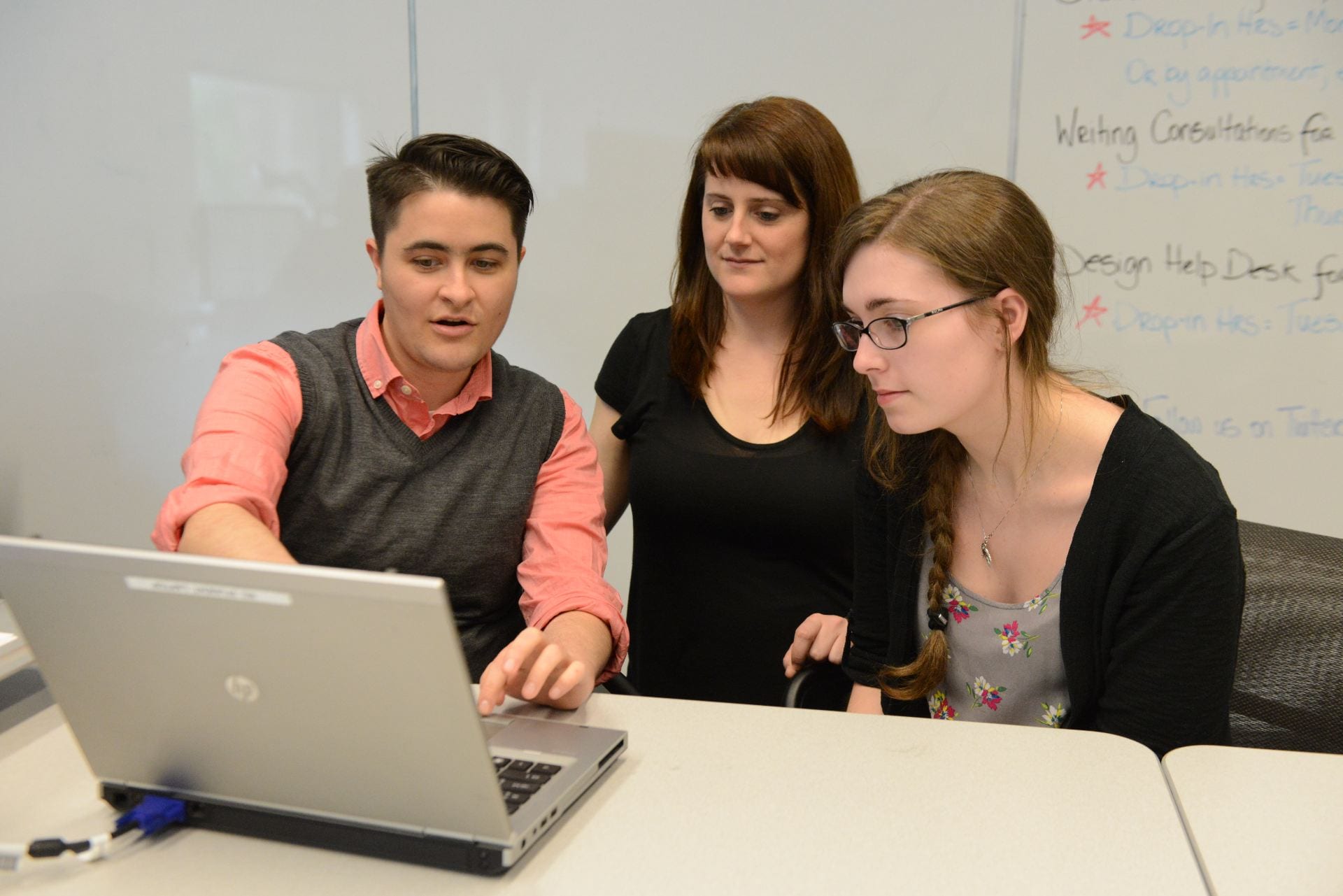
Librarian consulting with students, looking together at a laptop computer.
Librarian Reed Garber-Pearson (left) consults with UW students in the Research Commons.

There is a disconnect in the scholarly publishing ecosystem between the creators of scholarship and the ownership and distribution of scholarship, especially with mega-publishers like Elsevier. Researchers publish their findings without the expectation of additional compensation in the interest of advancing human knowledge and building careers. Researchers also evaluate each other’s work for free by doing peer review. But the results of this scholarly output are almost always controlled by publishers and usually hidden behind paywalls.

While the breakdown of the UC/Elsevier negotiation is big news, it is just the latest in a growing list of cancellations by our peer institutions of publisher “big deal” journal packages. In its Big Deal Cancellation Tracking list, the Scholarly Publishing and Academic Resources Coalition (SPARC) provides the names of institutions and the packages they have recently cut. These cancellations are a reflection of the widening gulf between for-profit publishers’ demands to continually increase package cost well beyond the rate of inflation, and the ongoing erosion of support for higher education. In her annual address to the University of Washington last fall, President Ana Mari Cauce highlighted the unsustainability of the funding model for higher education in our state. While UW Libraries has been fortunate to receive strong support from the faculty and University, we can see that gulf forming.

With the Libraries in the implementation phase of our recently developed 2018-2021 Strategic Plan, it is valuable to step back and reflect on our values as we think about this changing landscape of scholarly communication and our future negotiations with publishers. Among these values are a focus on sustainability, equity and user-centeredness.

  • Sustainability: While we are committed to providing collections and resources  for our students, faculty and researchers, we are unwavering in the knowledge that we must be good stewards of allocated funding to support research and teaching at the University of Washington. In our negotiations with publishers, we continually balance researchers’ needs with fiscal responsibility. Working collaboratively with our campus community to build collections can accelerate scholarship and learning through responsive collections.
  • Equity: We believe the current proprietary, closed, for-profit scholarly information ecosystem is broken, exclusionary and undermines the democratic ideals of liberal education. We view access to information as a social justice issue, and for-profit publishers’ unsustainable pricing models, demand for nondisclosure agreements and insistence on paywalls hinders the pursuit of knowledge, impedes our support of an informed citizenry and restricts research for the public good.
  • User-centeredness: Our commitment to users remains at the forefront of our collections strategy and decision-making. We know that scholarship is a conversation — and that research progresses only when scholars have an understanding of what has come before and are able to share new knowledge. Because our library collections form the lifeblood of this conversation, we are keenly concerned with ensuring UW scholars have access to the materials they need to progress their research.

The negotiations between UC and Elsevier are part of an accelerating, worldwide movement to transform scholarly communication, to ensure knowledge is shared broadly and without barriers, and to further enhance inquiry and discovery. We applaud UC’s attempt to explore new and different models for providing access to scholarship. And we stand in support of finding new pathways to build and negotiate transformative models that create collaborative and sustainable long-term solutions. As stated in our Strategic Plan, UW Libraries works to advance research for the public good because we believe that “UW research attains its greatest impact on our most pressing global challenges when we advocate for open, public and emerging forms of scholarship.”

Stories

Change the title, change the work

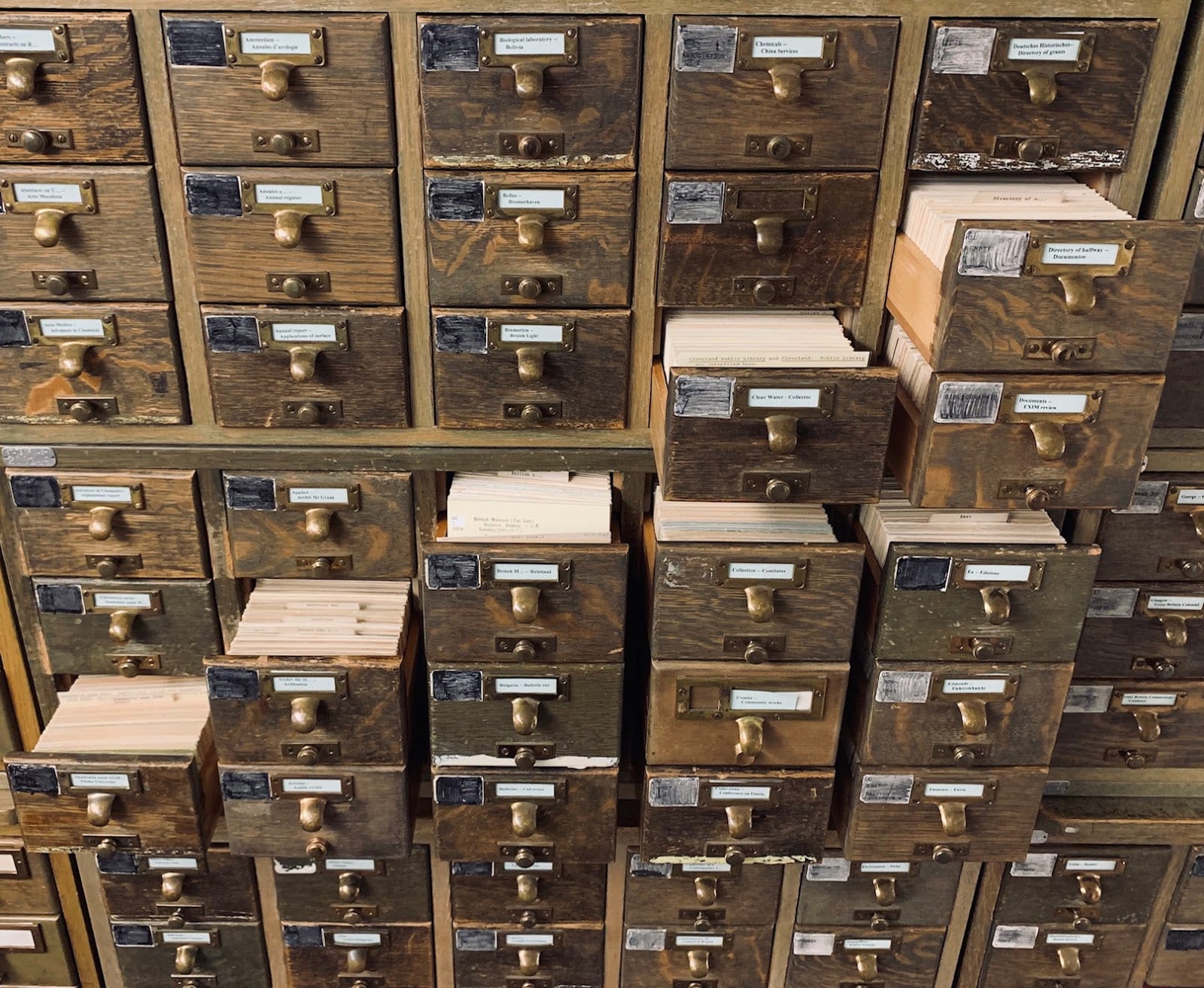
card catalogWith cataloging work essential to strengthening our users’ ability to find information, catalogers have begun exploring new ways of working to meet the challenges of evolving university needs. With seemingly one small naming tweak to a standing committee, we have established a new venue for staff development that will directly inform our ability to improve user access and discovery of our collections.

The new Cataloging Policy and Practice Committee (CPPC) was convened last fall to holistically address Libraries cataloging practice. Formerly only a policy committee, the restructuring group now serves as a forum for discussing our work and priorities. What we are we doing and why? Where are we spending our time ? And what are we not doing? The CPPC will serve as the forum for these considerations as we balance the need to manage backlogs, maintain quality, and participate in national cooperative programs.

Restructuring the new committee involved a new charge, new membership and stakeholders, and new guidelines for collaboratively working. With feedback from former committee members and Libraries catalogers—and a shared understanding of what it means to be a learning organizationwe moved set our sights on long-term impact and without fear of failing along the way.

CPPC’s first endeavor has been the development of a Cataloger Training Checklist that anticipates the recruitment of cataloging librarians and specialists in East Asia Library and in Cataloging & Metadata Services, and prepares for the possibility of other future staffing needs. Developing the checklist so far has involved CPPC member collaboration on an initial outline, pulling together existing training materials, and identifying trainers and methods, and articulating future needs.

By providing a common cataloging training plan that may be reused by multiple Libraries departments, implementing the training checklist advances the goal of investing in staff development to provide new skills in support of changing university needs. We also aim to make our checklist available to the professional cataloging community beyond the the UW, demonstrating our commitment to collaboration and sustainability, two key Libraries values.

Following the implementation of this training plan, CPPC will be better positioned to take on other pressing issues that will allow us to further strengthen our users’ ability to efficiently find and use Libraries collections. Cataloging backlog strategies, retrospective enhancement of existing records to add faceted data, and discussing strategic application of minimum and maximum cataloging standards, are among the issues we will engage.

Stories

A team-based approach to supporting UW research and learning needs

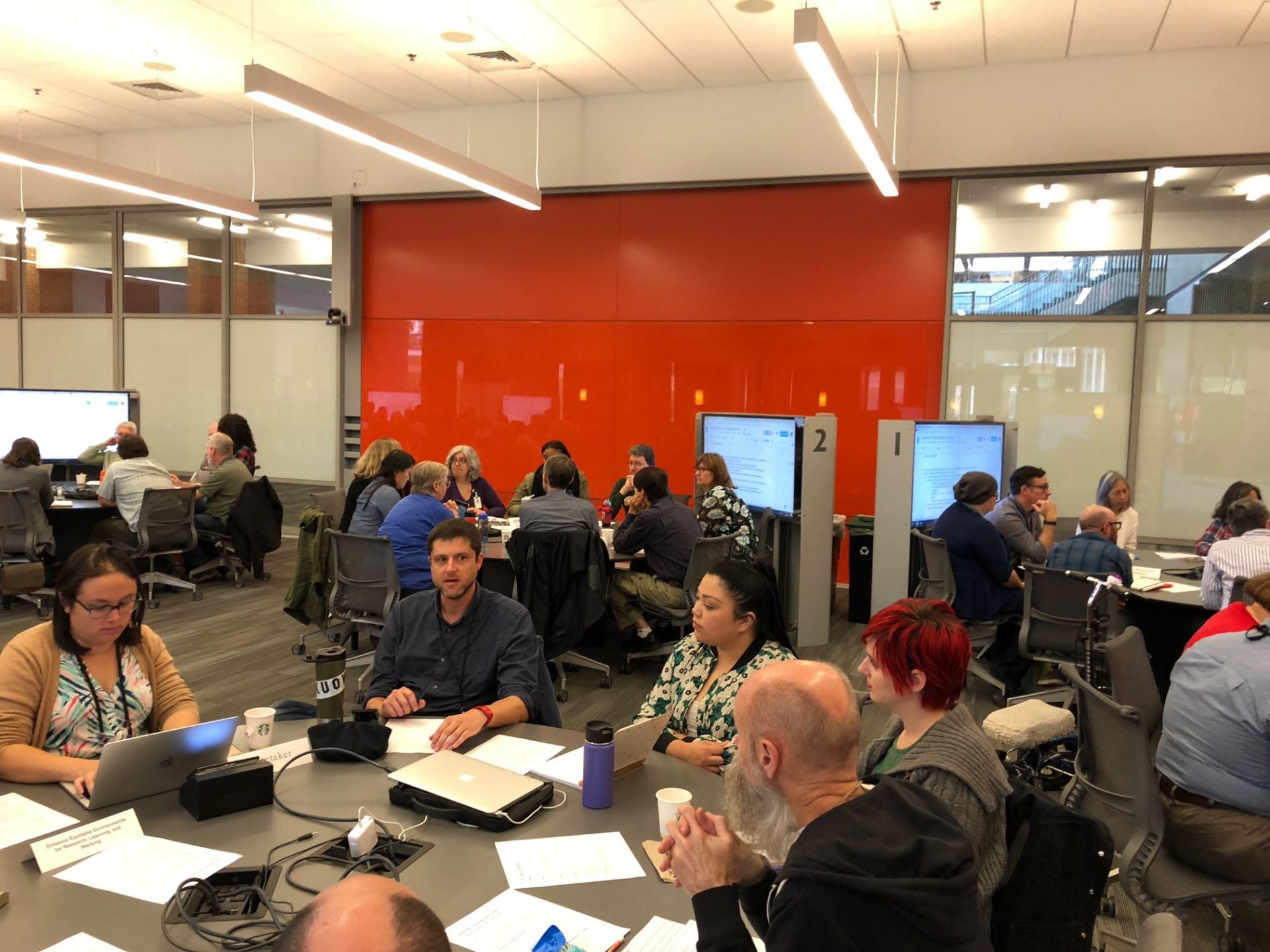
Research & Learning Services staff discuss Libraries Strategic Plan
Strategic Plan discussions at the Research and Learning Services All-Staff meeting, September 13, 2018

To enhance our support for faculty and student research, teaching, and learning, UW Libraries Research & Learning Services embarked in 2018 on a significant restructuring of staff reporting relationships. Directly aligned with the Libraries strategic goal of transforming working practices to enable collaboration and efficiency, the portfolio now functions across 5 departments:

  • Responsible for circulation services, library accounts, interlibrary loan and document delivery, Access Services now also directly involves branch libraries staff to share in the staffing and operations at the Art, Built Environments, Drama, Engineering, Foster Business, Music, and Math Libraries. The move has expanded opportunities for branch staff to gain experience in other libraries, to collaborate across campus, and to share the work of scheduling, training, and communication.
  • With the newly defined Research Services department, the Seattle upper-campus humanities, social sciences, and sciences librarians now convene in teams to improve collections and services that align with interdisciplinary needs. The newly defined department also encompasses physical and virtual information and reference services, Friday Harbor Library, Government Publications, Maps, Microforms and Newspapers, the Media Arcade, and the Research Commons.
  • Learning Services brings together the Libraries’ student success endeavors, curricular instruction and basic research-help functions, instructional design and outreach for professional and continuing education programs, and Odegaard Undergraduate Library’s access and building services.
  • With nearly two years in operation, Scholarly Communication & Publishing is responsible for copyright, electronic theses and dissertations, open access initiatives, research data, digital scholarship, and outreach to Libraries staff and the University on matters relating to scholarly publishing.
  • The form and function of Information Technology Services & Digital Strategies hasn’t changed as a result of the recent reorganization, but the department has embarked on key priority projects that will establish more predictability and sustainability for delivering IT support and facilitating Libraries projects.

While the new RLS structure has been in place for some time, we still feel like we are in the early stages, getting acclimated to new reporting relationships and refocusing on new and emerging student and faculty needs. Through these new ways of working, we aim to expand our support for student learning, emerging forms of scholarship, and researcher workflows.

Stories

Learning new skills through collaboration

Less than a year after our first meeting, the Staff Learning Opportunities for Technical Services (SLOTS) working group is proud of what we have accomplished to date. Comprised of staff members representing divisions of the Libraries Collections & Content portfolio who are collectively responsible for the development, discovery, and management of the Libraries resources, SLOTS was issued a somewhat vague charge with an open-ended timeline to organize learning and sharing events that would advance two key Libraries strategic goals:

  • developing sustainable models of collection development and technical services operations;
  • improving working practices to enable collaboration and holistic perspectives.

Luckily, our group has been enthusiastic, enjoying the freedom to find a variety of methods for sharing information. Aligned particularly with the Libraries’ “Creativity” and “Collaboration” values statements, we have begun to engage in exploration, experimentation, and reflection to refine our work practices in a way that will strengthen our users’ ability to navigate our collections.

Much of our first year has been a learning experience while we lay the groundwork for how this group will operate in the years to come. While we initially established guidelines for selecting hosted events, we have been open to trying as many ways as possible to reach as much of the Collections & Content Portfolio as possible and determining what is received well. Some of our activities so far:

  • We created a list of educational links to improve communication about new-skills and professional-development opportunities.
  • We will introduce a blog of tips and tricks for making our jobs a little bit easier.
  • We have hosted and co-hosted webinars, and coordinated “edutainment” sessions at portfolio staff potlucks
  • We are collaborating with our peers at Cornell University Library on videoconferencing meeting series that compare and contrast the ways we do similar work.

While our goals are broadly defined and our activity is somewhat experimental, SLOTS acknowledges the need to measure the success of our ventures. So far, we have solicited feedback from participants in the UW-Cornell sessions (unanimously positive), but we realize that mere attendance and responsiveness may not be sufficient. Ultimately, along with staff interest and buy-in, we will will measure success by the impact that our learning collaborations have on work—work that corresponds with our users’ evolving needs.