Skip to content
Stories

Congratulations Husky 100: Students Making an Impact with UW Libraries

Established in 2015, the Husky 100 recognizes 100 outstanding undergraduate, graduate and professional students each year from all three UW campuses who are making the most of their time at the UW. This recognition celebrates UW students who actively connect what happens inside and outside of the classroom and apply what they learn to make a difference on campus, in their communities and for the future. 

The 2026 Husky 100 class includes two amazing students who have made significant contributions to UW impact and student success through their work with UW Libraries. 

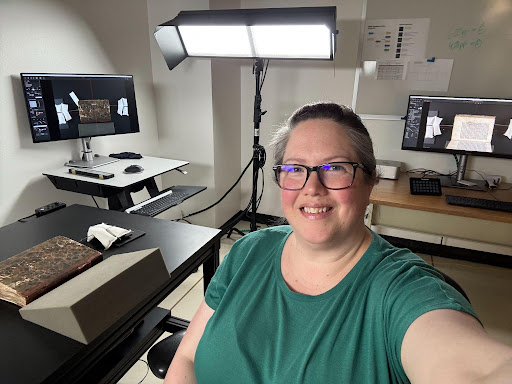
Leo Freedman, ‘26

Leo Freedman will graduate this spring with Bachelor of Arts degrees in Ethnomusicology and International Studies and a minor in Environmental Studies. Leo works in the UW Libraries’ Ethnomusicology Archives. Throughout his time working with the Archives, Freedman led the restructuring of the Archives’ physical space, increased access to fragile archival materials, and developed social media campaigns to promote the Archives.

Photo: Leo Freedman

“I use global research, music and sound to connect the UW to the world, while connecting its own communities from within. From Brazil to Greenland to India, my experience navigating challenges faced by international communities has prepared me to support my communities at home with enthusiasm and humility. Music often serves as a powerful tool for fostering belonging and uplifting voices, whether through research into music-based memory care, the creation of place-based soundscapes, stewarding the UW Ethnomusicology Archives, or performing in the U District with my band.” – Leo Freedman

“What distinguishes Leo is his rare ability to integrate scholarship, leadership, creativity, and service into a coherent and deeply impactful UW experience. Many students excel in one area; he consistently bridges disciplines and communities in ways that extend the University’s mission far beyond campus. His academic work in ethnomusicology and international studies is exceptional, but what truly sets him apart is how he applies his learning to real-world contexts—locally and globally.”  

 John Vallier

Curator, Ethnomusicology Archives, University Libraries; Adjunct Assistant Professor, Comparative History of Ideas; Faculty Affiliate, Ethnomusicology Program, School of Music

In addition to his work with the Ethnomusicology Archives, Leo has led innovative projects around music-based memory care, international policy research, and created artistic soundscapes. Beyond his own research, he has dedicated much of his Husky experience to using music as a tool for community connection through performances, radio programming, and also working to build an inclusive, internationally diverse fraternity community.

Freedman is currently working on prototyping a product where individuals in late-stage dementia receive personalized soundscapes that document the sounds of their hometown, “bringing a sense of reassurance and reconnection with their identity.” 

While considering graduate programs in international studies, Freedman’s future goals center on a career in marketing and/or communications for a business, NGO, or nonprofit oriented around cooperative international aid and development. 

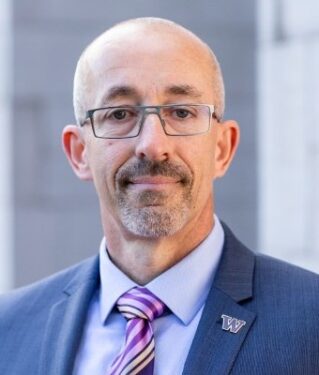
 Junseo Park, ‘26

Photo: Junseo Park

Junseo is an interdisciplinary honors student graduating with a Bachelor of Science in Real Estate and two minor degrees in Entrepreneurship and Architecture. 

Throughout his Huksy experience, Junseo has built an extensive network via his participation in, and high-impact contributions to, numerous professional and student organizations on and off campus including  

ASUW, the UW Real Estate Club, the Entrepreneurship & Venture Capital Club , Urban Land Institute, NAIOP-WA Corenet Global.  UW Korean Student AssociationUW Center for Korea Studies among others.  

When I first arrived at the University of Washington as a first-generation immigrant, I did not have a clear roadmap or the networks that often guide students toward opportunity. Through classes, mentors and leadership experiences across campus, I gradually discovered that the work that matters most to me is creating spaces and systems that connect people and expand opportunity for others. Those experiences taught me resilience, communication and empathy, and ultimately shaped my path toward venture investing, where I hope to support people and ideas that create lasting impact.” – Junseo Park 

While interning at the start-up  JIGO, he helped launch an AI-enabled commercial real estate platform.  In 2025, Junseo was awarded the Mary Gates Leadership Scholarship for demonstrating innovation, cross-cultural engagement and impact on campus community-building while working at the UW Tateuchi East Asia Library. Collaborating with staff and students, he established the Manhwa (Korean Graphic Novel) Café, a collaborative pop-up space developed in partnership with the Libraries, Korean Student Association and Associated Students of the University of Washington (ASUW) that celebrates East Asian graphic literature. 

Junseo demonstrated remarkable initiative and leadership through the Graphic Novel Café, transforming an underutilized strength of our collection into an engaging, student-centered experience. His thoughtful collaboration, adaptability, and persistence ensured the project’s success and lasting impact on our community.”

Hyokyoung Yi, 

Director of the Tateuchi East Asia Library; Korea Studies Librarian 

After graduation, Junseo plans to continue working at GIGR, a San Francisco-based startup where he is currently building an AI-enabled ad generation and automation pipeline. 

Read the full profile of Jenseo Park on the BSRE blog. 

Congratulations to Leo and Junseo on all of their incredible work , well-deserving of the Husky 100 honor!  

See all 2026 Husky 100 recipients

Stories

2026 Student Scholarship Recipients

UW Libraries recognizes the achievements of our outstanding student employees during Student Employee Appreciation Week, and an annual scholarship award, generously sponsored by UW Libraries donors.  On April 8, we celebrated this year’s 55 new scholarship recipients with a reception honoring their amazing contributions.

Photo: 2026 UW Libraries Scholarship recipients at the reception on April 8, 2026.
2026 UW Libraries Scholarship recipients at the reception on April 8, 2026.

Library and UW Press student workers represent undergraduates and graduate students from many different areas of study across all three UW campuses.

Only 25% of student employees are focusing their studies on libraries and information science. Students who work at the Libraries come different academic interests across all schools and departments.

As one of the largest employers of student workers on campus, our student employees are essential to Libraries’ operations – while they literally keep the doors open, lights on and books on shelves,  they are also peer mentors, writers, designers, engineers, technicians and instructors! UW Libraries’ student employees are truly amazing, and this year’s scholarship class exemplifies the dedication, creativity and joy that our students bring to their jobs every day. 

A linked graphic encouraging students to apply for student positions

Contributions of the 2026 class of student scholarship recipients include:

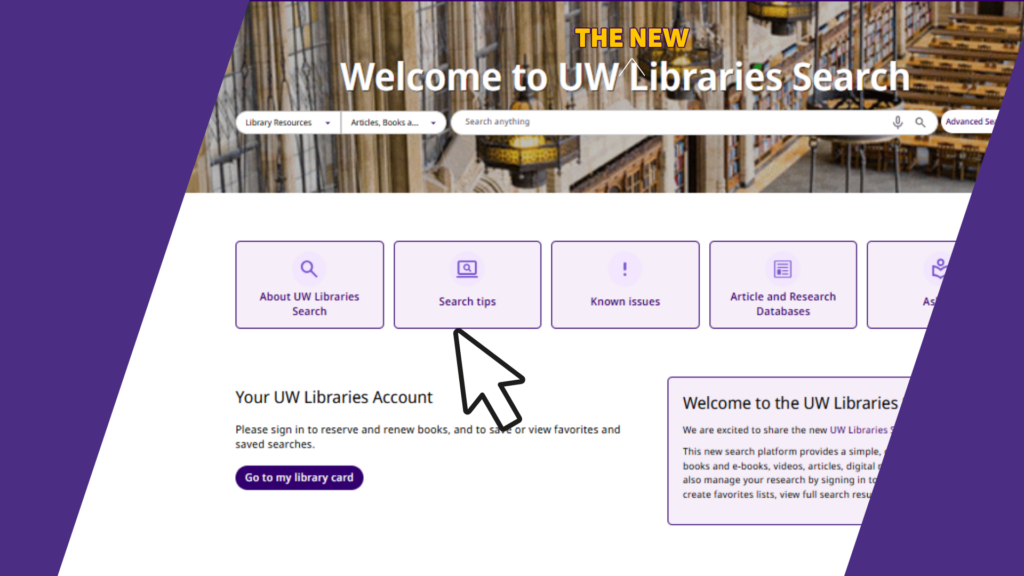
  • Contributed significantly to the redesign of the Libraries new web site
  • Processed the personal papers of a renowned UW scholar making them accessible to future researchers
  • Co-curated a new collection and design of a new physical reading space at the Tateuchi East Asia Library 
  • Helped students create online museums for an art history class
  • Worked with international colleagues to help edit an artist’s ethnography for a documentary film studio 
  • Facilitated course-wide updates and accessibility features for the Graduate Student Research Institute 
  • Created lesson plans and taught research workshops for first year students
  • Facilitated student assessments and co-design of a new wellness space in Odegaard Library
  • Worked with Preservation Services to identify fragile books in need of repair 
  • Designed curriculum kits for middle and high school classes teaching labor history and archival literacy skills
  • Re-designed workflows resulting in more user-friendly printing services 
  • Wrote code for an international project transforming bibliographic records
  • AND SO MUCH MORE…

Video TBD: UW Libraries Student Reception featuring remarks from Dean of University Libraries,  Simon Neame; keynote by Dwight Johnson ’84 and stories from student scholarship recipients Tynan Challenor and Teresa Li.

Img 0735
Scholarship recipient, Teresa Li, reads her essay at the celebration event

In their own words: how has working at UW Libraries & Press supported your personal, academic, or professional growth?

Scholarship recipients are asked to answer this question in their application essay. Common themes across all applicants included improving communication skills and confidence, finding direction and preparing for their future career path, building community, and satisfaction in helping the diverse community of UW Libraries users.

The following are excerpts* from some of this year’s student essays:

“Working in Special Collections has given me the foundation for my education and life. From providing me with mentors who help put ambiguous post-grad life into perspective to research patrons from around the world who inspire me to find my thread of passion and never stop learning, the position has been the foundation and support system of my collegiate experience.” – Cadence

“Being trusted with my own project, in which I oversee the planning and execution, has shown me that I am capable of this work, and that the people I work with trust me to do it well. I am grateful to have such support for my professional growth in a student employee position.”  – Lilly

“I learned to slow down, look closely, and understand how small decisions affect the longevity of an entire collection. This mindset naturally carried over into my academic life. I read more thoughtfully, organize my work more carefully, and approach projects with a stronger sense of responsibility. Seeing up close gives me a sense of connection to histories I never would have encountered in my daily classes.” – Lois

“I have been more intentional about how I consume knowledge, thanks to my time at UW libraries. Having served at all eight UW library branches, I have witnessed the countless intellectual paths these libraries make possible.”- Chloe

“Our responsibilities as student assistants, with all the nuances, technicalities, and discipline, encompass the robust hard skillsets that I firmly believe are valuable at any future job I may find.” – Vincent

“This experience has helped me grow…as my first, big “real world” UX collaboration, and it taught me how to work with a diverse team, communicate respectfully, and turn messy human observations into actionable design decisions. It also confirmed for me that UX is what I want to do, because I care about making systems feel easier, kinder, and more human.”- Angelita

“Guiding faculty to books in the stacks, helping a student avoid exorbitant textbook costs by pointing her towards the Interlibrary Loan system, pulling an ancient economics journal from auxiliary stacks – and seeing the patron’s face light up as he found an article written by his great-grandfather; all these were rewarding moments that truly made me feel like I was serving the community. Working in the circulation department gave me a taste of library work, and with it, the realization that it was what I wanted to do for the rest of my life. I’m incredibly grateful for my time thus far working for UW libraries, because, above all, it’s given me a real vision for my future, and a career I hope to pursue.” -Tom

Graphic: Did You Know Uw Libraries Student Employees Are One Of The Largest Student Employee Teams At Uw!

“I have been able to actively develop skills essential to becoming a more well-rounded researcher such as adaptability, critical thinking, problem-solving, and effective communication with individuals who have diverse needs.” – Vannary

“In learning to protect the stories of books, I have begun to understand my own: growth is not something I chase forward, but something I inherit, preserve, and eventually pass on. Working at UW Libraries has taught me that we do not merely process books, we extend their lives. Whether stamping new arrivals or digitizing old ones, we are all participating in the same mission: preserving stories so they may outlive us, and perhaps someday, let our fingerprints be found, too.” – Teresa

“This job has allowed me to grow my social skills, make connections, and gain perspectives that I would have never otherwise gotten. Talking to so many upperclassmen, in such a diverse set of fields, has given me great perspective about those fields, and I feel that I can make better career choices. Most important to me, I’ve made great relationships with my coworkers.” – Sidarth

“Working at the library has renewed my excitement for learning. Just from my conversations with patrons and fellow employees, I have discovered research topics that have expanded my own research interests in psychology and music.” – Polina

” What I appreciate most is how this job connected my childhood love of libraries with the person I am becoming. Working at UW Libraries & Press has helped shape my growth in ways I will carry long after I graduate.” – Mofe

“Working at the Libraries has shown me how engineering can make a tangible difference in spaces built for everyone.” -Nirnkaar

“…most of all it has given me the opportunity to build the most supportive and giving professional network I’ve ever had.” – Michell

“I the diversity of backgrounds has helped me learn a lot about what is possible, and has increased my confidence in all facets of my life.” – Grace

“Working at the library, I have learned more than I thought possible and I feel lucky to have become a member of this empowering community. I am deeply grateful for the amazing people I have found and the skills I have built along the way, which I will take with me for the rest of my life.” – Indigo

“The job has shaped my confidence, not only in a professional sense but has helped me bloom into an independent, excited, and curious individual. As I move closer to my graduation in spring 2026, I know that the community I have been a part of in the Libraries will help me succeed.”– Cole 

I can proudly share the work I’ve done in my portfolio and transfer these skills to any future endeavors. These opportunities and processes have grown my artistic skillset and given me a platform which I can professionally grow.” – Elena

*some quotes have been edited slightly for length and clarity.

About the Fund

The Libraries Student Employee Scholarship Program was established in 1998. Since its inception, with the support of more than 750 donors, the program has QUADRUPLED its impact from 5 students in 1998 to 55 students today! Each student is awarded a $1,000 scholarship. To date, more than $545,500 has been awarded to 570 students!

Our sincere thanks to all who have contributed to this special initiative. TOGETHER, you have made a lasting impact for each awardee. 

If you would like to make a gift to support UW Libraries student employee scholarships, visit the giving page, or contact Libraries Advancement to discuss ways of including the Libraries in the landscape of your philanthropy.

Congratulations to all 2026 UW Libraries Student Employee Scholarship Recipients!!

Stories

Libraries in the Classroom: The History of Recorded Information

…and What Typewriters Can Teach Us About Modern Communication

For more than twenty years, UW Librarians have co-taught LIS 508, the History of  Recorded Information as a course for the UW Information School’s MLIS program. With the retirement of longstanding instructors  David Levy and Sandra Kroupa, UW Libraries Associate Dean for Distinctive Collections, Julie Tanaka, was asked to take over as the instructor of record. Tanaka redesigned the course to align with current MLIS Student Learning Outcomes and taught the course this past Winter. Through a series of guest lectures and hands-on learning, the course explores the global history of recorded information, analyzing diverse formats and cultural contexts from preliterate to digital eras. The course is intended to equip students to critically analyze how recorded information is created, shaped,  preserved, and used and to develop ethical, nuanced approaches to acquiring, preserving, and stewarding recorded information as an information professional.

Students have the opportunity to observe and engage with a variety of formats of recorded information and the methods used to create them, including 

  • Manuscripts (clay and wax tablets, scrolls, codices, maps) with styluses, pencils, pens, chalk, brushes
  • Printed works (scrolls, codices, maps) created by printing presses, typewriters, computers
  • Audio-visual recordings (wax cylinders, reel-to-reel, digitized, born-digital) recorded with phonographs, tape recorders, mobile phones, webcams
  • Online media (digital newspapers, news, images, multimedia) with software, digital recorders

Students also have the opportunity to produce their own records using a variety of methods they examine in class.

One of the guest lectures, “Slow Media: Typewriters”, was taught by Richard Lewis, Associate Dean of University Libraries, UW Bothell & Cascadia College. Lewis has collected typewriters as a hobby for many years, cultivating a diverse collection as well as extensive expertise. He became interested in the machine and its history while living overseas in Brussels, working on his PhD in the philosophy of technology and media, & communication studies.

“It began with a 1938 Italian typewriter with a French keyboard. I even started writing my dissertation on that machine,” says Lewis.  

Headshot of Richard S Lewis
Richard Lewis

Lewis is a guest lecturer for several courses, bringing his typewriters to classes such as creative poetry and textual studies. He enjoys sharing his knowledge with students, and seeing how interaction with such a humble machine (by today’s standards) can elicit such thought-provoking insights from his students, which he shares with us here. 

How did students respond to the “Typewriter Assignment”?

As one of the assignments, students were asked to write a personal letter on one of the 24 typewriters brought to the classroom. 

“Writing on a typewriter is immediately physical in ways that digital writing is not. Striking the keys takes a specific motion to ensure the type bars don’t get entangled with each other and enough force is used to transfer the ink to the paper. The carriage return uses a deliberate gesture at the end of every line to both return the carriage and advance the paper. Most of my typewriters do not have the number “1” or an exclamation mark (though both can be typed). 

Students noticed the sound filling the room, the smell of ink and metal, the way they had to commit to each word because there was no delete key waiting to rescue them

After warming up with typing exercises, they each composed a letter to someone who would be happy to hear from them. I brought envelopes and stamps to ensure the letters would be mailed, and I asked them to reflect on a simple question: how are you a different writer on this machine?

That question was the point of the session. The first hour had been spent building the philosophical scaffolding to make it meaningful. Drawing on existing research, including my book, I walked students through the idea that communication technologies are never neutral instruments we simply pick up and use. Every medium transforms both the writer and the reader. The ancient Greek philosopher Plato worried about this with writing itself, arguing that words on a page strip away the lived context of the speaker. Walter Ong, a renowned priest, scholar, and educator, traced how the shift from oral to literate culture reorganized human cognition. I extended that trajectory through the typewriter, asking students to consider how each change in communication technology reconstitutes who we are as thinkers and writers. By the time they sat down at the typewriters, they had a framework for paying attention to their physical and cognitive experience in writing, not just to the words they were producing.”

video: Students in LIS 508 working with typewriters in the Special Collections classroom. Julie Tanaka talks with students, while a vintage printing press can be seen on the left side of the classroom.

What were some of the surprising discoveries students made while typing? 

Students didn’t type with the same speed as they would on a digital device. Any mistake was not easily fixed. And, when students typed too quickly or without the precise finger movement, the typebars could get stuck and tangled, forcing them to work at a much slower pace. One student sat down to a typewriter with a cursive font, a surprise that required a bit of adjustment, but resulting in a beautiful, all-cursive letter that feels especially unique today given the decline of hand-written communication.

What do you enjoy most about teaching, and this course in particular?

I love how students get swept up in the embodied experience of writing with typewriters. Their cell phones are forgotten for an hour, and they become enchanted with the experience of writing.

The typewriters cut through the typical way we communicate and students suddenly see the medium of communication for what it is. It is a wonderful experiential learning moment

I am also happy that students don’t rush through the exercise to get it done and leave. They took advantage of the full hour of typing and seemed to really enjoy the experience.  Those who finished their assignment started another letter and others moved to try out different typewriters to see how those typed.

And, teaching gives me a good reason to collect typewriters!

Beyond the typewriter: A range of perspectives

Lewis is one of many Librarians who teach nearly 700 instruction sessions annually including their own classes like the History of  Recorded Information, and as guest lecturers covering a wide range of topics across disciplines. In this course, students had the opportunity to learn from many different experts and explore a wide range of topics including: 

  • Indigenous community archives (Filipino American National Historical Society community archive), presented by Digital Preservation Librarian, Mariecris Gatlabayan
  • “From Oracle Bones to Print–History of Information Recording in China”, presented by Lucy Li, China Studies Librarian
  • Recording Information in Art, presented by  Juliet Sperling, Assistant Professor, Art History; Kollar Endowed Chair in American Art
  • Western Codex, presented by Geoff Turnovsky, Professor of French and Co-Director, Textual Studies Program
  • Sound recordings on various formats and equipment for recording, presented by  John Vallier, Ethnomusicology Archives Curator
  • Intellectual property, rights and protections pertaining to recorded information, presented by Maryam Fakouri Copyright Librarian
  • Working with Indigenous materials
    • The roles of information professionals working with Indigenous materials, Indigenous data sovereignty, negotiating western archival principles and practices with Indigenous protocols and understandings of knowledge, presented by Assistant Professor, Information School, Sandy Littletree 
    • Practical examples of stewarding and caring for recorded information created by Indigenous peoples, work at UWB with their collections of Indigenous materials) presented by Sena Crow,  DEIA (Diversity, Equity, Inclusion, and Accessibility) and Student Engagement Librarian at UW Bothell 

The course LIS 508 is offered once per academic year, during winter quarter. If you are an MLIS student interested in taking this course, bookmark it here for next winter quarter.

Related Resources:

Stories

Preparing for Finals Week: UW Libraries 10 Tips for Success

While many students think of libraries primarily as places to study and access research materials, UW Libraries provides many services and support for students year-round!  Be sure to bookmark this page and learn more about these time-saving resources to help you succeed and stress less during finals!

Extended Hours and Events:

  • Extended hours March 13-15: Odegaard Library will extend hours during end-of- quarter and finals week! See hours.
  • Study Sprints March 11-13: Odegaard will host timed study sprints check the calendar for all dates and times.
  • De-Stress Activities– TBD
  • Fuel n’ Fun – March 13, 6PM-11PM: FREE hot drinks and buttons!

Top Ten Tips:

Graphic: Alarm clock, text: Sprints 7-pm-12am
Odeegard Page (21)

1. Ask Us

Librarians (humans) can help you find things that Google can’t.  Really. We’re online and ready to answer any question to help you find the resources you need. Chat online, meet virtually, or email us. No question is too big or too small.  If you are interested in a specific topic or toolset, you can  search by subject or specialty and get connected to personalized help in person or online.

Odeegard Page (23)

2. Find a place to study, and plan ahead

If you have never explored more than one or two libraries on campus, find a hidden gem! Browse for study spaces across all the UW Libraries and reserve a study space that’s right for you.

Odeegard Page (26)

  3. Utilize the Odegaard Writing and Research Center

Not sure where to start your research? Need some advice on how to organize your ideas? Writer’s block? Don’t wait until the day before your paper is due–set up an appointment now with the OWRC.

Research Consultant


UW students can get 1:1 libraries assistance with all types of research projects and assignments. Meet with a librarian one-on-one to discuss:

  • Focusing a research topic
  • Identifying & evaluating sources
  • Searching library databases effectively
Odeegard Page (31)

4. Get help creating and publishing digital  projects:

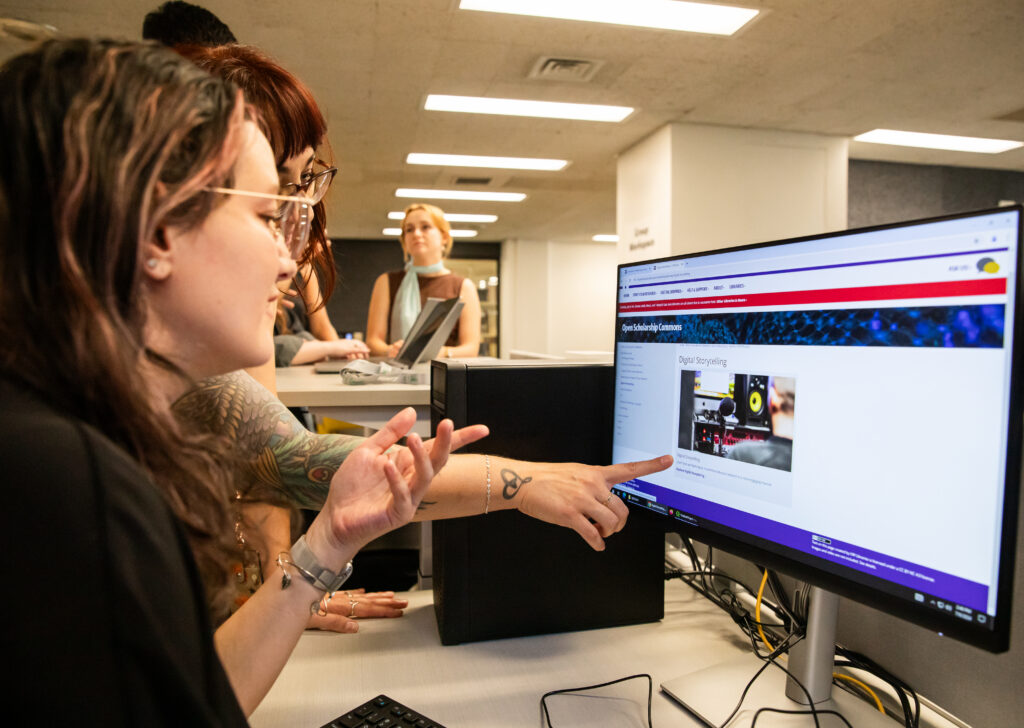
Open to faculty and students, UW Libraries Open Scholarship Commons (OSC) offers office hours the first Tuesday of the month to advise on a wide range of digital scholarship topics and tools– digital publishing, data visualization, digital exhibits, data research management, audio and video production, copyright, and more!

Odeegard Page (24)

5. Connect Google Scholar.

Connect Google Scholar with your UW Libraries account to see which results can be accessed through UW Libraries with a direct link to the resource in the catalog!

Odeegard Page (32)

 6. Bookmark Academic Search Complete

ASC is a great database for pretty much any topic. Find it under A-Z databaseshere.

Odeegard Page (33)

 7. Don’t forget about Interlibrary Loan.

If there are articles or book chapters that you’re not able to get immediate digital access to in our UW databases, Interlibrary Loan may be able to get them for you.

Odeegard Page (30)

8. Read 7 essential tips for Research

To learn about some of our most helpful search tools and best practices – whether you are a new student, or a PhD grad, this post has helpful advice for all students. 

Odeegard Page (34)

  9.Discover the Undergraduate Researcher Tutorial

Students told us what they wished they knew their very first year at UW, and we listened. Your feedback helped us to create an online tutorial for all levels of student research expertise. Don’t wait until the end of your UW journey to hone your research skills. Learn more.

Odeegard Page (35)

 10. Be good to yourself. Take Breaks. Get Inspired. 

We know it’s not easy to eat right, get rest, and find ways to reduce stress, but it is essential! Check out these resources to help you take care of yourself and find that balance during stressful times: 

We hope these tips and resources will help you find what you need to succeed in preparation for finals week and throughout the year. You’ve got this, Huskies! 🙂 

###
Stories

March Update

photo: tree in bloom
This blooming tree, right outside UW Libraries’ Government Publications, Maps, Microforms & Newspapers, was planted in commemoration of Glenda Pearson’, the former head of the department, 
in honor of her career, retirement, and emeritus status.

Shall we call it “Sprinter”? It’s the time of year when spring is almost here, and the end of winter quarter is upon us. Think of it as a great time to get ready for finals – bookmark the best online tips in this month’s “Featured Resources” and learn about extended hours and Study Sprints hosted at Odegaard March 11-13. In between study sessions, save some time for UW Libraries concerts, exhibit talks,  learning events and more that may inspire your next research project! Happy Sprinter to all!

News and Stories

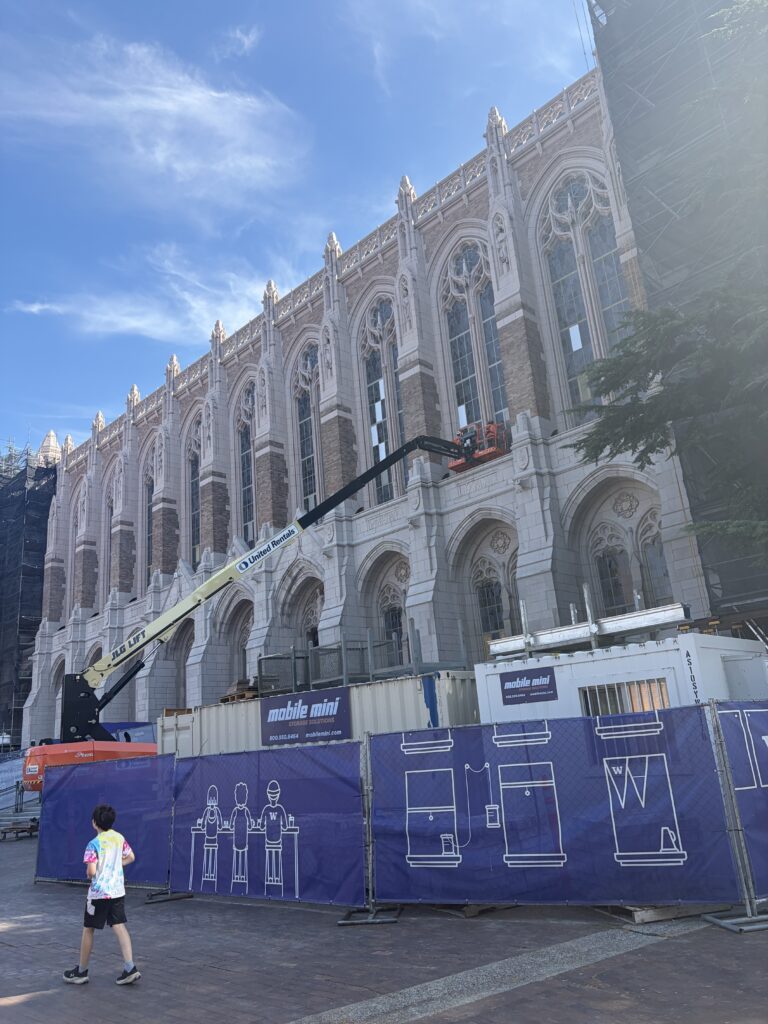
  • Operations Update –Smith Room hiatus: As the Suzzallo Façade and Seismic project is moving along, noise impacts are becoming more regular. Due to unpredictable noise disruption and an inability to guarantee a quiet environment for events, the room will be closed from August 1, 2025, through September 30, 2026. Reservations will resume sooner if the work is completed earlier than expected. 
  • Three Years of Open Data with Dryad: Dryad is an open data publishing platform available to UW users in alignment with the increasing advocacy of public research universities to provide for the open sharing of research data and outputs. In 2025, UW data deposits in Dryad had over 1,000 downloads and 3,600 views! Read the UW Libraries 2025 Dryad summary to see which data sets had the most views.
  • The Daily: ‘The Mountain is Out’a story on the current exhibit featuring Mount Rainier photography, books, and historical materials now on display in Special Collections. 
graphic: Archives in Context logo
  • On air: Podcasting for ArchivesArchives in Context, is produced by a committee of producers, editors, and co-hosts from across the country, including UW Libraries’ Conor Casey, head of the Labor Archives of Washington! Dive into a recent episode that explores teaching primary source research skills in today’s classroom. Read the blog.

“My work with primary sources is fundamentally collaborative. I partner with faculty to bring archival materials directly into their curriculum, tailoring the approach to their specific instructional goals.” – Conor Casey, head of the Labor Archives of Washington in the recent blog post  Podcasting for Archives

Suzzallo Library was recently featured in American Stories: A Reading Road Trip, produced by PBS Books and the Library of Congress.  If you missed the debut episode, you can still watch online and hear from local literary legends, Nancy Pearl and Timothy Egan on why Suzzallo Library is so special to our community. View episode 


Fun Fact Trivia

image: photo with Top Ten trophy and Dryad icon

Which of these were one of the top 3 UW research datasets downloaded via the open data publishing platform, Dryad?

  1. Interactions among nutrients govern the global grassland biomass, precipitation relationship
  2. A dataset for predicting protein-protein interactions in humans
  3. A curated quorum sensing reference linking diverse Luxl-type signal synthases with their acyl-homoserine lactone products

*Answer at bottom of post.


Sprints

Featured Resources

Top Tips for Finals – a great list of popular research guidance and support from UW Libraries- including Odegaard study sprints. These resources are helpful when you are getting ready for finals, or anytime!

UW Libraries Student Guide – with finals coming up, refresh your understanding of this popular UW Libraries all-in-one resource for students of all levels of experience.

Community Events and Exhibits

Music in the Libraries:

  • March 4: First Wednesday Concert Series Allen Library – this month features School of Music faculty in collaboration with Stephen Price, UW Head of Organ Studies. Pala Garcia (Violin), John Popham (Cello), Michael Partington (Guitar), and John-Carlos Perea (Ethnomusicologist – Cedar Flute) will perform in the concert. Prior to and following the program, the Seattle Chapter of the American Guild of Organists has offered an interactive demonstration of an Orgel Kit, showcasing the inner workings of a pipe organ.
  • March 5: Silk Road Concert in Gowen Hall/Tateuchi East Asia Library: feature musicians representing Kazak, Kyrgyz, Persian, Turkmen, Uzbek, and other cultural traditions. Please enjoy live music accompanied by a selection of snacks.  

Wednesday, Mar 4 – Scholar’s Studio Virtual Edition. Tune in for this fun, informal, interdisciplinary event features rapid-fire lightning talks by students doing Master’s and Doctoral level projects and research.  

Thursday, Mar 19   EXHIBIT TALK: Out of Scope: UW Artifacts in Special Collections Join us for an exhibit talk with University Archivist John Bolcer, as he discusses some of the objects on display related to the University of Washington’s history and the student experience, and shares additional items not included in the exhibit. 

Monday, March 30: [Exhibition Tour] Seeing Beyond the Island — A Lens into the 228 Sites《島內之外鏡行事 — 二二八遺址展》導覽 Seeing Beyond the Island: presented in partnership with the Memorial Foundation of 228 (Taiwan) and the UW Tateuchi East Asia Library, A Lens into the 228 Sites explores locations across Taiwan connected to the February 28 Incident and its aftermath. Through photographs and historical context, the tour reveals how ordinary streets and public spaces carry layered histories of violence, memory, and resilience. Exhibit/Event details.

Learning Workshops and Office Hours

Tuesday, Mar 10-  Introduction to Text Mining:  Join us for a hands-on introduction to text mining. Using Python and Orange Data Mining, we will explore practical techniques for collecting, cleaning, and analyzing textual data.

Friday, Mar 13–  Computing With Classics 5: DICES Case Study Computing With Classics is a returning five-workshop series exploring how computing has affected classical scholarship. In the fifth and final workshop, we will engage in a hands-on activity involving programming and working with the Digital Initiative for Classics: Epic Speeches (DICES) database. No prior experience expected or required!

Save the Date

Submissions Open April 1, 2026 / Applications due April 30, 2026- Undergraduate Research Award (URA):  Specifically for undergraduates, the URA is open to both individuals and teams who collaborate on group research work. The award (with cash prizes ranging from $500-$1,000!!) honors outstanding ability to find, evaluate, and synthesize library and other information resources in the creation of an original course project. Award details.

UW Press 

Book cover: drawing of locks

Tuesday, Mar 24- Book launch: MOHAI Mercantile hosts the official launch event for Seattle’s Locks and Ship Canal with local historians David B. Williams and Jennifer Ott. Hear from the authors about the tumultuous history of one of Seattle’s defining projects, an  introduction to the engineering marvel of the Ballard locks, and a primer on the history of the ship canal. Book launch event details.

Fun Fact Answer: ALL OF THEM! See the full “Top 10” list of the most downloaded and most viewed UW datasets for 2025.

###
Stories

Podcasting for Archives

As podcasts have become an increasingly ubiquitous part of our everyday content intake, it is no surprise that more educators – including Librarians and archivists – have been using the format in a variety of ways. Podcasts can be a great tool for sharing research, introducing or expanding on a specific topic as part of coursework, and as a source of community for students, faculty, and researchers alike, untethered to their physical location. 

graphic logo

You might say there is a podcast for just about anything, even historical archives!  Archives in Context, launched in 2019, is produced by a committee of producers, editors, and co-hosts from across the country, including UW Libraries’ Conor Casey, head of the Labor Archives of Washington at the University of Washington. 

Archives in Context is the official podcast of the Society of American Archivists (SAA), associated with the Publications Board, American Archivist Editorial Board, and Committee on Public Awareness. The impetus for the podcast was to reflect change and trends in a profession that is constantly evolving by highlighting those who are pushing the profession in new directions, and to explore different types of archives in different contexts, locations, and collecting areas. Archives focuses on personal stories about collections, the many ways that archivists bridge the past and present, unique approaches to current challenges, and the often moving and important work of memory-keeping.

Casey first joined the hosting crew in December of 2024. 

Teaching Primary Source Research Skills to 21st-Century Learners.

“I volunteered/applied to be part of the board and to co-host because I thought it would be a great way to contribute to the profession, meet interesting colleagues, and inspire my own research and learning in the field,” says Casey.  

In the latest episode, Casey and his co-host Adreonna Bennett, the community engagement archivist at UNC Charlotte’s J. Murrey Atkins Library,  interviewed author, instructor and archivist Julie Thomas about her new book, Teaching Primary Source Research Skills to 21st-Century Learners.

“The inspiration for this episode came from a deep personal interest in primary source instruction modalities,” says Casey. “After reading Thomas’ book, I knew I wanted to volunteer to co-host an episode on her work. ”

During the episode, Thomas discusses theories and pedagogies for teaching primary source research skills in the classrooms of today.

The conversation touches upon active learning strategies, effective methods of incorporating archival materials into instruction, and the importance of adapting our teaching approach to the learning styles of today’s students.

Image: a collage of photos and materials from the labor archives

About the Labor Archives of Washington:

A part of the Special Collections of the University of Washington Libraries, the Labor Archives of Washington (LAW) began as a collaborative project of the Harry Bridges Center for Labor Studies and the University of Washington Libraries and has grown into an ongoing program. Initial funding for the Archives came largely from the labor movement; the contributions of dozens of unions and hundreds of individuals made this possible. A dedicated state budget now supports LAW activities.

Casey summarizes his learning from the podcast and what he thinks is important for audiences to know:

What are some of the key lessons from this episode? 

Whether you are teaching directly about primary sources or using them to support other learning outcomes, her frameworks provide clear guidance. Julie has done the vital work of synthesis and analysis. She has woven together competencies from history, archives, libraries, and related fields into something entirely new and useful.

What stands out is how she makes theory actionable. The learning rubrics she developed are a prime example. They are steeped in intense, cross-disciplinary research, yet they remain remarkably practical. That is what I admire most about her book: it builds a bridge between complex theory and real-world application. Her work isn’t meant to sit on a shelf—it is ready to be used.

How do you use archival materials in the classroom? 

My work with primary sources is fundamentally collaborative. I partner with faculty to bring archival materials directly into their curriculum, tailoring the approach to their specific instructional goals.

Sometimes that means providing historical sources for personal or group projects. Other times, it involves transforming Special Collections into a hands-on “teaching lab” for classes, like those in the iSchool. And in many cases, it means working alongside community members—especially labor groups—to show them how to navigate our collections for their own research or collaborative projects.

What words of advice would you give to students interested in the field?

We are all archivists. Every day, the communities we belong to and the lives we lead are quietly building a record for the future. I encourage students to think not only about the history they are creating, but also about the hidden histories around them—the stories that might otherwise be lost; and consider, whose voices are being represented? 

Who can access Special Collections?

Everyone is welcome. You don’t need to be a student or faculty member to use the collections, all you need is curiosity. Our collections are more than just old documents and boxes. They are one-of-a-kind, irreplaceable fragments of memory, connecting us to our ancestors in both a literal and an intellectual, symbolic, way. They are the physical proof of those who came before us.


If you are interested in learning more about the podcast, archiving profession, UW Special Collections, or how UW Libraries can contribute to your teaching, learning and research: 

Stories

Three Years of Open Data with Dryad

graphic image: illustration of Mitochondrial PPIs from A dataset for predicting protein-protein interactions in humans, the top dataset in Dryad by views and downloads
ABOVE: illustration of Mitochondrial PPIs from A dataset for predicting protein-protein interactions in humans, the top dataset in Dryad by views and downloads in 2025.
J. Zhang et al., Science
10.1126/science.adt1630 (2025).

Dryad is an open data publishing platform available to UW users in alignment with the increasing advocacy of public research universities to provide for the open sharing of research data and outputs.

As the UW Libraries enters our third year of our partnership with Dryad, we’re excited to reflect on continued engagement from UW researchers and the broader research community. Over the past year, UW researchers have kept up a steady pace of data deposits that continue to see downloads and reuse at UW and beyond. Below are a few highlights from our ongoing membership: 

In 2025, UW data deposits in Dryad had over 1,000 downloads and 3,600 views! You can view the top datasets by journal, downloads and views for 2025, and to date (since UW Libraries implemented the service) below in this post.

Why deposit your data into Dryad? 

  • As a generalist repository, it accepts data of most types, formats, and disciplines, making it a flexible option for researchers. 
  • The National Institutes of Health (NIH) supports Dryad as a generalist repository that meets the requirements outlined in their 2023 Data Management and Sharing Policy
  • The UW Libraries covers the full cost of membership, so UW researchers can deposit data into Dryad at no cost. 
  • Dryad serves as a companion data repository to the UW Libraries ResearchWorks repository. 
  • Dryad provides basic curation support to strengthen metadata quality and make sure data is usable and accessible. 
  • Dryad provides Digital Object Identifiers (DOIs), which are required by a growing number of publishers and allow data to be easily related to associated publications.

TOP 10 Datasets in Dryad 2025

Top DOWNLOADS

Dataset Downloads
A dataset for predicting protein-protein interactions in humans 113
RefAHL: A curated quorum sensing reference linking diverse Luxl-type signal synthases with their acyl-homoserine lactone products 85
Data from: Interactions among nutrients govern the global grassland biomass, precipitation relationship 79
Data from: Online prenatal trial in mindfulness sleep management (OPTIMISM) 41
Data from: The impact of aid sanctions on maternal and child mortality, 1990-2019: A panel analysis 34
Higher levels of cardiovascular biomarkers following hypertensive compared to normotensive pregnancy 32
A deep learning and digital archaeology approach for mosquito repellent discovery 25
Marine mammal recovery is associated with the resurgence of a nematode parasite 23
Data from: Insect size responses to climate change vary across elevations according to seasonal timing 21
Data from: Movement-responsive deep brain stimulation for Parkinson’s Disease using a remotely optimized neural decoder 20

Top VIEWS

Dataset Views
A dataset for predicting protein-protein interactions in humans 527
RefAHL: A curated quorum sensing reference linking diverse Luxl-type signal synthases with their acyl-homoserine lactone products 186
Data from: Interactions among nutrients govern the global grassland biomass, precipitation relationship 186
Alaska compendium of ocean profile data [ACOD]: Archival CTD and nutrient hydrography from NOAA’s EcoFOCI, EMA, and predecessor programs 151
Data from: The impact of aid sanctions on maternal and child mortality, 1990-2019: A panel analysis 108
Data for: Lessons learned from the design and operation of a small-scale cross-flow tidal turbine 79
A deep learning and digital archaeology approach for mosquito repellent discovery 76
Marine mammal recovery is associated with the resurgence of a nematode parasite 73
Data from: Insect size responses to climate change vary across elevations according to seasonal timing 66

Growth in UW Submissions

Line Chart.2png

UW submissions have grown nearly 60% (97 to 164) from February 2023- December 2025.

Top 3 Journals Represented in Data Deposits

Image: A bar chart representing the top 3 journals in Dryad deposits.

The top 3 journals represented in Dryad data deposits from 2025 were eLife (7 deposits); Science (6 deposits); and PLOS ONE (5 deposits).

For More Information

To learn how you can get started with Dryad, see our guide. If you have any questions, reach out to our Data Services Team at [email protected]

###
Stories

February Update

February can sometimes feel like the longest month of the year– be it the weather, lack of daylight, exams, etc. Maybe UW Libraries resources and events will help brighten your month with new resources, workshops and events. Learn new skills, meet others, and get inspiration for that next research project. Special events like a curator talk in Special Collections, and events highlighting LOVE DATA WEEK and Black History Month–be sure to check our calendar for the full list of current events!

News and Stories

image: Sandra Kroupa
Sandra Kroupa

Celebrating 57 Years of Service: Sandra Kroupa: Celebrating the legendary career us UW Libraries Books Arts and Rare Books Curator.

What does Seattle labor history say about the success of “general strikes”? Labor Archivist and Head, Labor Archives of Washington, Conor Casey is part of an expert panel on KUOW’s Sound Politics podcast.

UW Libraries’ query service helps students, UW community 24/7 UW’s The Daily shares insights about one of the the Libraries most- used services

Dean Neame Joins Hathi Trust Board of Governors 

Looking for Valentines Day Date Ideas? Whether you’re with your best friends or that someone special, visiting UW Libraries Special Collections exhibits is always a fun, FREE and completely unique experience, especially on Tuesday, February 24 – tour the exhibit with Curator of the Pacific Northwest Collection, Anne Jenner, as she discusses some of the objects on display and shares additional items not included in the exhibit.  Check Libraries hours for exhibit dates/times.

image: Dubs with heart headband

Featured Resources

UW Labor and regulatory history: Through UW Libraries UW students, faculty and staff now have access to several new resources:

ProQuest history vault. Labor unions in the U.S.: offers important documentation on the growth, transformation, successes, and failures of one of the important American social movements of the 19th and 20th centuries, the modern American labor movement, with emphasis on four major national organization.

image" screenshot of Proquest search page

ProQuest Regulatory Insight: U.S. federal administrative law histories beginning in 1936, organized by federal statute and Executive Order. Includes Guidance and Policy documents.

ProQuest history vault. Workers, labor unions , and the American left in the 20th century: This module emphasizes the interaction between workers and the federal government documenting labor relations during the World War I era. Government surveillance files including U.S. Military Intelligence Reports on radicals and Department of Justice investigations of the Industrial Workers of the World, the Communist Party, and the use of military force. Other collections cover unemployment relief, farm tenancy, labor strife during World War II, and migratory labor in the 1950s and 1960s.

Community Events

Tuesday, Feb 10, 2026, 6:30 – 8 p.m. Katz Distinguished Lecture: Emily M. Bender, “Resisting Dehumanization in the Age of “AI”: The View from the Humanities” Emily M. Bender,  Thomas L. and Margo G. Wyckoff Endowed Professor in Linguistics and an Adjunct Professor in the School of Computer Science and the Information School, will explore processes of dehumanization and the vital role that the humanities have in resisting AI-related trends by painting a deeper and richer picture of what it is to be human.

Wednesday, Feb 11, 2026, 3:30 – 5 p.m. TEAL Digital Scholarship Series 2025-26: Detecting Shifts in Linguistic Register in Late Imperial Chinese Fiction The Tateuchi East Asia Library (TEAL) is proud to present the 2025-2026 TEAL Digital Scholarship Series, a dynamic program showcasing cutting-edge research by scholars in the fields of Chinese, Japanese and Korean studies. This series highlights how innovative digital tools and methodologies are transforming East Asian scholarship, fostering interdisciplinary dialogue, and broadening the impact of research within and beyond academia.

Tuesday, Feb 24, 2026, 11 a.m. – 12 p.m. EXHIBIT TALK: Out of Scope: PNW Artifacts in Special Collections Explore unexpected artifacts that have made their way into Special Collections along with Curator of the Pacific Northwest Collection, Anne Jenner, as she discusses some of the objects on display and shares additional items not included in the Out of Scope exhibit, highlights unique and intriguing items found in Special Collections.

Matthew Alexander Randolph
Matthew Alexander Randolph,

Celebrate Black History

Thursday, Feb 12, 2026, 2:30 – 4 p.m. Walking with Frederick Douglass: Research, Identity, and Joy in Black Scholarship Prelude to Douglass Day.  Join Digital History and Open Scholarship Librarian Aubrey Williams for a conversation with Matthew Alexander Randolph, Associate Professor in American Ethnic Studies and a Frederick Douglass scholar to discuss Randolph’s his research of Frederick Douglass and how his scholarly journey both mirrors and has been shaped by his personal relationship to Douglass’s life and work and more. 

Friday, Feb 13, 2026, 9 a.m. – 12 p.m. Douglass Day Transcribe-a-thon Douglass Day is an annual transcribe-a-thon program that marks the birth of Frederick Douglass. Each year, sites across the country gather thousands of people to help create new & freely available resources for learning about Black history. A transcribe-a-thon is an event in which a group of people work together to transcribe a collection of digitized historical materials. No previous experience with transcription is required to join us.

Learning Workshops and Office Hours

LOVE DATA WEEK February 9-13

Love data week logo

From February 9-13, 2026, the international community will celebrate Love Data Week, exploring critical questions about data ownership and origins. This year’s theme, “Where’s the Data?” challenges us to examine where data comes from and who owns it before we use it in our work.

BTAA Events – Sign up now for FREE virtual events all week long – open to all Big Ten Academic Alliance member universities. Love Data Week Events (online)

Friday, Feb 13, 2026, 11 a.m. – 12 p.m. Accessible Data Visualization Workshop (online) with UW Libraries Data visualization best practices and tools do not always discuss accessibility, which can exclude many groups of people. This workshop will review ways to make your visualizations more accessible.


Computing With Classics – Open Scholarship Event Series

Computing With Classics is a returning five-workshop series exploring how computing has affected classical scholarship.

Friday, Feb 13, 2026, 3:30 – 4:30 p.m. Computing With Classics 3: Languages In the third workshop, we will investigate design values and philosophy behind programming languages, and the similarities and differences between programming and ancient language instruction. No prior experience expected or required!

Friday, Feb 27, 2026, 3:30 – 4:30 p.m.Computing With Classics 4: Humanistic Computing In the fourth workshop, we will discuss the role of humanities in computing, digital sustainability, and responsible computing. No prior experience expected or required!


Pressbooks Accessibility Office Hours Wednesday, Feb 18, 2026, 10 – 11 a.m. Drop in at any time during our office hours to get help checking and resolving accessibility issues on your UW Libraries Pressbooks project. 

ORCID 101: The ORCID iD and Record (Online)  Wednesday, Feb 18, 2026, 12 – 1 p.m. ORCID 101: The ORCID iD and Record (Online)  Are you applying for a grant? Submitting a manuscript for publication? Want to make your professional activities and contributions visible? With research organizations increasingly requiring and using ORCID, knowing how to get and use your free ORCID iD and ORCID record will help you save time and get recognition for your work and contributions.

UW Press Book Talks

Image- book cover, Wrecked: Unsettling Histories from the Graveyard of the Pacific by Coll Thrush

The University of Washington Press, a part of UW Libraries,  is the oldest and largest publisher of scholarly and general interest books in the Pacific Northwest!  We regularly host author talks and events each month. Join us for these upcoming events: 

February 5: UW China Studies Program and Department of Asian Languages and Literature Present: Ping Wang discussing “The Poetic Way of Xie Lingyun”

February 23: Pacific Lutheran University Presents: Banu Subramaniam discussing “Botany of Empire” | Rachel Carson Science, Technology, and Society Lecture 

February 26: KUOW and Seattle Public Library Present: Coll Thrush discussing “Wrecked” | KUOW Book Talks

Exhibits

Nohchantbook

From Brush to Type: The Evolution of Bookmaking in East AsiaFrom Brush to Type: The Evolution of Bookmaking in East Asia

This exhibit highlights rare works from the Tateuchi East Asia Library Special Collections, showcasing how innovations in papermaking, printing, and design across East Asia transformed the form of books and the cultures they shape. Through March 31, 2026, Location: Gowen Hall (GWN)

graphic logo for exhibit "Federal Agencies"

 Federal Agencies: History & Highlights

This two-part exhibit is a celebration of the United States constitution’s 250th founding anniversary in 2026. Winter Quarter 2026 features agencies centered around the arts, humanities, and social sciences. Spring Quarter 2026 features departments and agencies focused on science and technology.

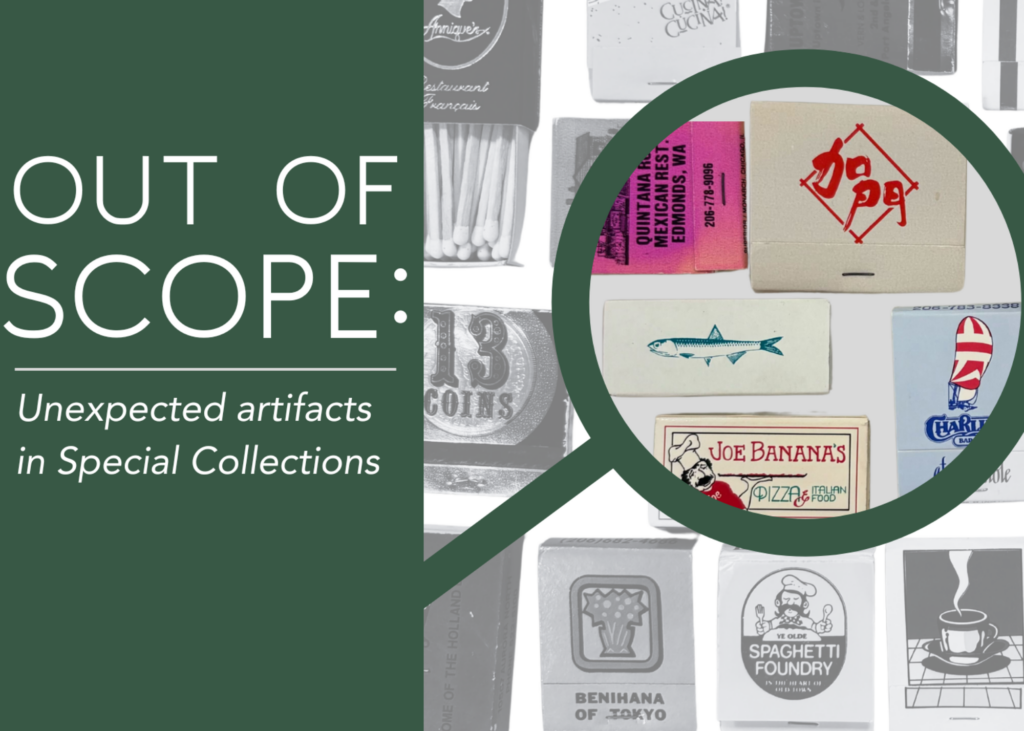
image: exhibit poster for out of scope

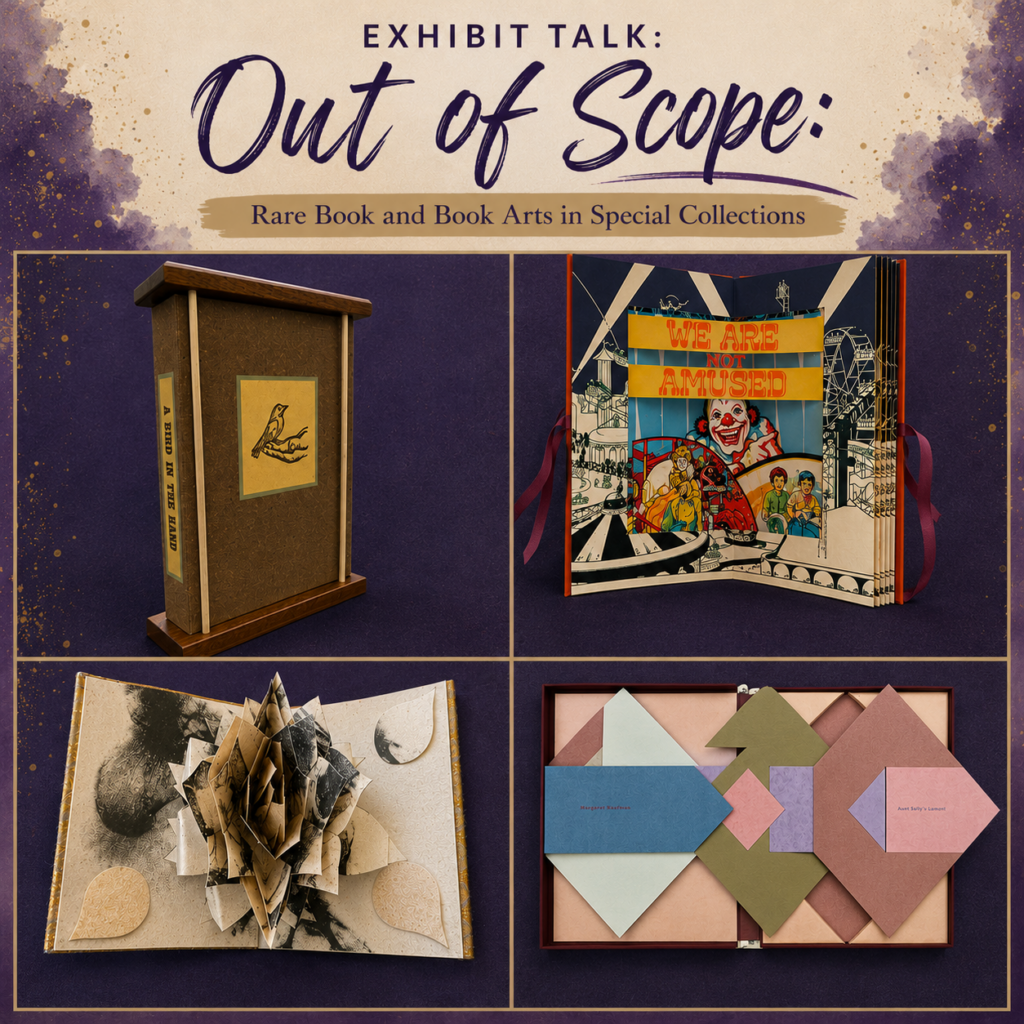
Out of Scope: Unexpected Artifacts in Special Collections

Learn how archivists define the scope of their collections, and see some of the fascinating, unexpected artifacts have made their way into Special Collections! Read more about the exhibit and check the calendar for curator talks and tours. Through Sep 18, 2026 Location: Allen Library (ALB), Special Collections (Basement level)

Mountain

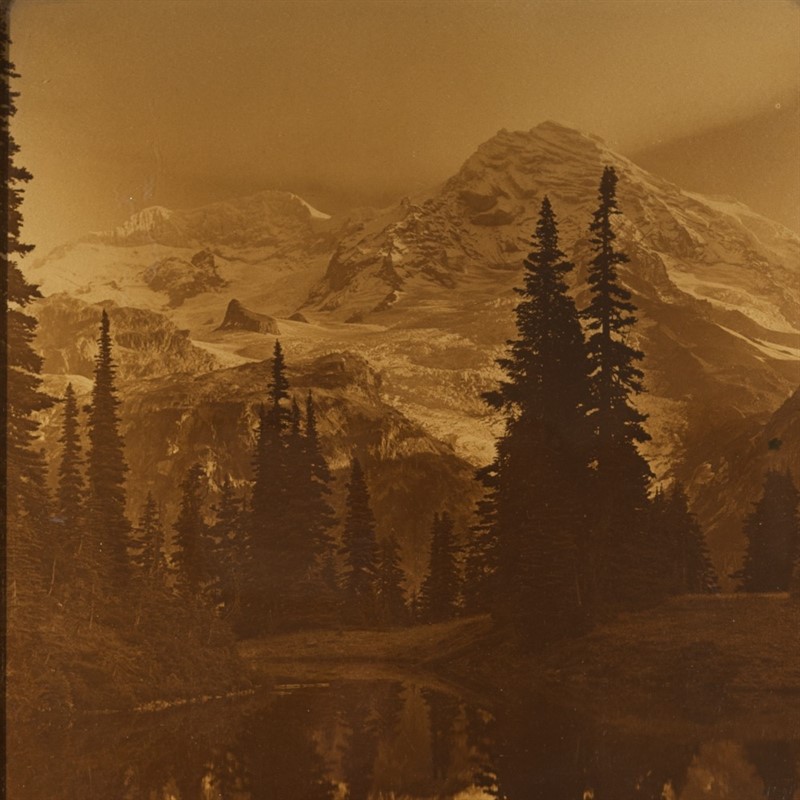
The Mountain is Out!

Rainier, Tahoma, Nutselip… the mountain is known by many names. A Pacific Northwest icon, Mount Rainier holds a unique place in the region’s culture and lore. Its massive peak is the dominant land form on the horizon for more than a hundred miles in any direction, rising far above the surrounding Cascade Mountains. Beginning in the late 19th century, European and American visitors explored the area, and activism led to the establishment of Mount Rainier National Park in 1899. Through Friday, Aug 28, 2026, Allen Library (ALB), Special Collections (Basement level)

Image black and white sketch of lighthouse

Display: Sentinels of the Sea: Pacific Northwest Lighthouses

Stories of these beacons of light can be found throughout Special Collections. Stop by and check out Sentinels of the Sea, featuring selections from Special Collections offering a glimpse into the Pacific Northwest’s rich maritime history. Through Mar 2, 2026, Allen Library lobby

Save the Date

March 19th- EXHIBIT TALK: Explore UW Artifacts in Special Collections Join us for an exhibit talk with University Archivist John Bolcer, as he discusses some of the objects on display related to the University of Washington’s history and the student experience, and shares additional items not included in the exhibit. 

Stories

What does Seattle labor history say about the success of “general strikes”?

Stories

Celebrating 57 Years of Service: Sandra Kroupa

Sk
UW Librarian Sandra Kroupa holds up a rare artists’ book. (Aileen Imperial/KCTS9)

Following a distinguished and unparalleled career spanning seven decades and two centuries, Sandra Kroupa, Book Arts and Rare Books Curator, retired prior to the start of fall quarter 2025, and was awarded the status of Librarian Emerita by Provost Serio and Dean Simon Neame. 

Sandra was celebrated at a special event on February 3, 2026 in Kane Hall, surrounded by many friends, colleagues, and connections from the UW and book arts community.

As Book Arts and Rare Books Curator, Sandra managed a breadth of responsibilities including collection development, instruction, reference, and service to both the campus and the profession. In each of these areas she achieved remarkable success and has had significant impact on student success, gained recognition for UW Libraries’ collections, and provided distinguished service at UW and in the profession. 

Along her illustrious career, Sandra earned national and international recognition in Book Arts and is recognized as a leading authority on book history. She built UW’s Book Arts Collection into one of the largest, most respected public collections in the United States. Her impressive portfolio of work includes numerous publications, exhibits and presentations.

Despite her tenacity and passion for the work, Sandra’s path to librarianship was not necessarily intentional. In the summer of 1968, Sandra was on the cusp of finishing her undergraduate degree in creative writing and aspired to move to San Francisco with no specific plan at the time, other than to find a way to fund the trip. A friend mentioned an opening in UW Libraries, and the rest is history. 

Initially, she worked as an indexer in Special Collections, reading newspapers and typing 3×5 file cards for the Special Collections’ Pacific Northwest Regional Index. Working alongside Special Collections Director Robert (Bob) Monroe, Sandra began to expand her knowledge of books, their history and production, and over time became more and more involved with rare books. Following Bob’s retirement, Sandra pursued her Master of Library Science degree, while continuing to oversee the Collection.

Bob was very intuitive about collecting books, posters, and ephemera, such as William Morris, before they became highly sought after. Sandra developed the same knack of recognizing material with intrinsic value ahead of others in the profession. With a unique endowment to collect 19th-century American literature, Sandra built a broad collection while other libraries focused primarily on English literature. Historical children’s literature, decorated cloth bindings, atlases and travel guides, and more, were all collecting areas where Sandra was on the pulse of what was both valuable and part of a larger impact of Special Collections in the curriculum.

Concurrently, Sandra became increasingly involved with modern book arts – creative practices and craft focused on the book as an art form – and began building what is now recognized as one of the premier artist’s book collections in the country. By establishing direct relationships with artists to acquire their work, Sandra gradually grew a diverse collection including many one-of-a-kind works by now-renowned artists. Her eventual title, Book Arts and Rare Books Curator, reflects this broader responsibility. A founding member of the Book Arts Guild, a local collective formed in 1979, Sandra brought the work of many artists to the attention of collectors and educators alike.

Sandra worked closely with faculty to develop the interdisciplinary Textual Studies minor, which brings numerous capstone students to Special Collections to pursue work in digital humanities, book arts and rare books.

ABOVE: In her element: Sandra gives a presentation at the Henry as part of the 2011 Shelf Life exhibit. “as a generous and wonderful teacher, she is more than happy to share her wisdom and experience with visitors and students… (the past) exhibitions have elicited gasps of delight from audience members as well as furious note-taking”  – Excerpt from blog post This Sunday at Shelf Life: Book Arts Performance Exhibition with Sandra Kroupa

Image
Image (left): UW Book Arts and Rare Books Curator Sandra Kroupa, center, discusses a book from the collection with students Alex Seo (right) and Leah Teague in the “Text, Publics, and Publication” course. All photos for this article are by Mark Stone/University Photography.

Sandra was a sought-after instructor, often teaching upwards of 75 sessions each quarter, sharing rare books, maps, book arts and more with faculty across the spectrum of disciplines including Architecture, Art, Asian Literature, Classics, Communications, Comparative Literature, Creative Writing, Design, Drama, English, French, German, History, Italian, Marine Biology, and Textual Studies.

In 2023-24, Sandra taught 133 sessions that reached 237 students, engaging them with over 4,800 items.

These numbers are not just statistics but countless opportunities Sandra has provided for students to engage with rare and unique materials in order to discover, connect with history, and be inspired by the very texture of the paper to produce their own creative works. Sandra has also taught credit courses including ENG 586 Graduate Writing with Maya Sonenberg in 2018 and for more than 20 years co-taught LIS 508 History of Recorded Information with David Levy until his retirement in 2023. Her impact on student learning over her career is immeasurable. 

She has inspired generations of students by introducing them to rich and varied material, matching their interests and passions by drawing upon her extensive wealth of knowledge, not only of the UW’s collection, but the history, trends, and practices in book arts and rare books. It’s not hyperbole that students consider her a local legend.  She will be missed greatly by all those who knew her and had the benefit of gleaning even a fraction of her encyclopedic knowledge, expertise and dedication to her work and craft.


Dictionary

To commemorate Sandra’s contributions, UW Libraries Special Collections has purchased Mare Blocker’s My Beloved Community Dictionary to be added to the Book Arts Collection. The collaborative dictionary features 144 linoleum block prints by 98 contributing artists and poets. 52 of the blocks were carved by Mare, who also printed the edition and bound this copy. The linked blanket stitch binding, handsewn in red, symbolizes the thread of fate that forever connects the important people in our life.  


It is impossible to convey Sandra’s impact in such a brief summary of her career, or to reach all those who may want to express their gratitude and appreciation, but those want to send Sandra a celebratory message can do so online by Feb 10, 2026.

If you would like to make a donation in Sandra’s honor, you may do so through the Library Book Arts Gift Fund.

Learn more about Sandra’s career:

A Salute to Sandra Kroupa!– Book Club of Washington, August 2025

A Digital Life for Print Texts  UW Arts and Science Perspectives, April 2022

UW Libraries’ book arts and rare books curator — and local legend  – UW Daily, January 18, 2021. 

Meet the UW Libraries’ keeper of rare books and artifacts – Seattle Times, August 22, 2018.

The keeper of 155K extraordinary books – Cascade PBS, March 1, 2018.