Libraries in the Classroom: The History of Recorded Information
…and What Typewriters Can Teach Us About Modern Communication
For more than twenty years, UW Librarians have co-taught LIS 508, the History of Recorded Information as a course for the UW Information School’s MLIS program. With the retirement of longstanding instructors David Levy and Sandra Kroupa, UW Libraries Associate Dean for Distinctive Collections, Julie Tanaka, was asked to take over as the instructor of record. Tanaka redesigned the course to align with current MLIS Student Learning Outcomes and taught the course this past Winter. Through a series of guest lectures and hands-on learning, the course explores the global history of recorded information, analyzing diverse formats and cultural contexts from preliterate to digital eras. The course is intended to equip students to critically analyze how recorded information is created, shaped, preserved, and used and to develop ethical, nuanced approaches to acquiring, preserving, and stewarding recorded information as an information professional.
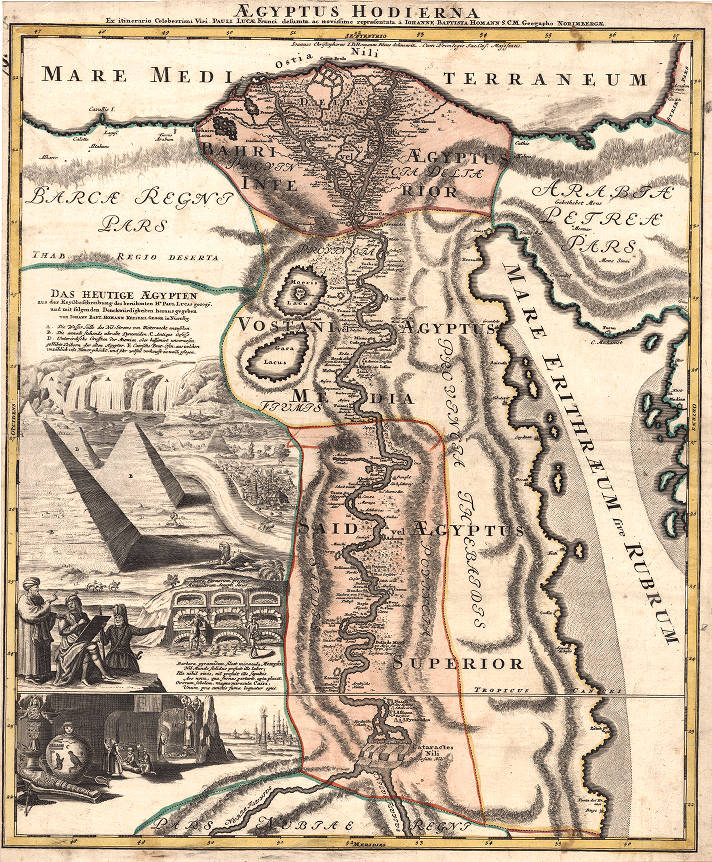
Students have the opportunity to observe and engage with a variety of formats of recorded information and the methods used to create them, including
- Manuscripts (clay and wax tablets, scrolls, codices, maps) with styluses, pencils, pens, chalk, brushes
- Printed works (scrolls, codices, maps) created by printing presses, typewriters, computers
- Audio-visual recordings (wax cylinders, reel-to-reel, digitized, born-digital) recorded with phonographs, tape recorders, mobile phones, webcams
- Online media (digital newspapers, news, images, multimedia) with software, digital recorders
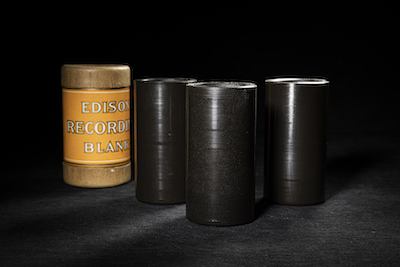
Students also have the opportunity to produce their own records using a variety of methods they examine in class.
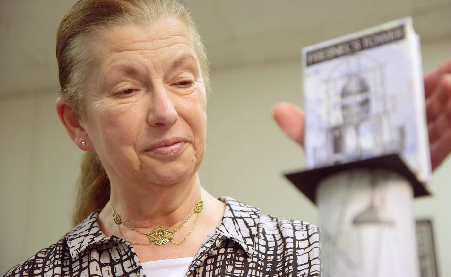
One of the guest lectures, “Slow Media: Typewriters”, was taught by Richard Lewis, Associate Dean of University Libraries, UW Bothell & Cascadia College. Lewis has collected typewriters as a hobby for many years, cultivating a diverse collection as well as extensive expertise. He became interested in the machine and its history while living overseas in Brussels, working on his PhD in the philosophy of technology and media, & communication studies.
“It began with a 1938 Italian typewriter with a French keyboard. I even started writing my dissertation on that machine,” says Lewis.
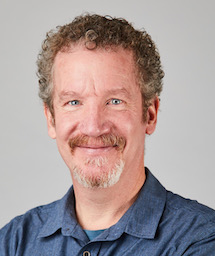
Lewis is a guest lecturer for several courses, bringing his typewriters to classes such as creative poetry and textual studies. He enjoys sharing his knowledge with students, and seeing how interaction with such a humble machine (by today’s standards) can elicit such thought-provoking insights from his students, which he shares with us here.
How did students respond to the “Typewriter Assignment”?
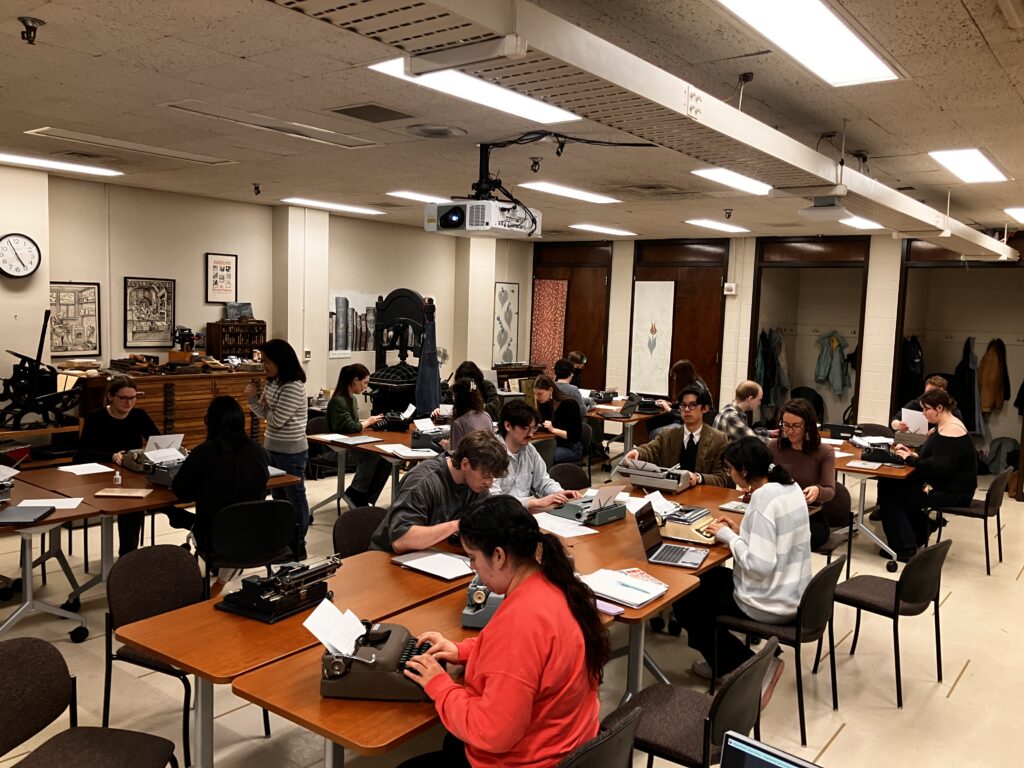
As one of the assignments, students were asked to write a personal letter on one of the 24 typewriters brought to the classroom.
“Writing on a typewriter is immediately physical in ways that digital writing is not. Striking the keys takes a specific motion to ensure the type bars don’t get entangled with each other and enough force is used to transfer the ink to the paper. The carriage return uses a deliberate gesture at the end of every line to both return the carriage and advance the paper. Most of my typewriters do not have the number “1” or an exclamation mark (though both can be typed).
Students noticed the sound filling the room, the smell of ink and metal, the way they had to commit to each word because there was no delete key waiting to rescue them.
After warming up with typing exercises, they each composed a letter to someone who would be happy to hear from them. I brought envelopes and stamps to ensure the letters would be mailed, and I asked them to reflect on a simple question: how are you a different writer on this machine?
That question was the point of the session. The first hour had been spent building the philosophical scaffolding to make it meaningful. Drawing on existing research, including my book, I walked students through the idea that communication technologies are never neutral instruments we simply pick up and use. Every medium transforms both the writer and the reader. The ancient Greek philosopher Plato worried about this with writing itself, arguing that words on a page strip away the lived context of the speaker. Walter Ong, a renowned priest, scholar, and educator, traced how the shift from oral to literate culture reorganized human cognition. I extended that trajectory through the typewriter, asking students to consider how each change in communication technology reconstitutes who we are as thinkers and writers. By the time they sat down at the typewriters, they had a framework for paying attention to their physical and cognitive experience in writing, not just to the words they were producing.”
video: Students in LIS 508 working with typewriters in the Special Collections classroom. Julie Tanaka talks with students, while a vintage printing press can be seen on the left side of the classroom.
What were some of the surprising discoveries students made while typing?
Students didn’t type with the same speed as they would on a digital device. Any mistake was not easily fixed. And, when students typed too quickly or without the precise finger movement, the typebars could get stuck and tangled, forcing them to work at a much slower pace. One student sat down to a typewriter with a cursive font, a surprise that required a bit of adjustment, but resulting in a beautiful, all-cursive letter that feels especially unique today given the decline of hand-written communication.
What do you enjoy most about teaching, and this course in particular?
I love how students get swept up in the embodied experience of writing with typewriters. Their cell phones are forgotten for an hour, and they become enchanted with the experience of writing.
The typewriters cut through the typical way we communicate and students suddenly see the medium of communication for what it is. It is a wonderful experiential learning moment.
I am also happy that students don’t rush through the exercise to get it done and leave. They took advantage of the full hour of typing and seemed to really enjoy the experience. Those who finished their assignment started another letter and others moved to try out different typewriters to see how those typed.
And, teaching gives me a good reason to collect typewriters!
Beyond the typewriter: A range of perspectives
Lewis is one of many Librarians who teach nearly 700 instruction sessions annually including their own classes like the History of Recorded Information, and as guest lecturers covering a wide range of topics across disciplines. In this course, students had the opportunity to learn from many different experts and explore a wide range of topics including:
- Indigenous community archives (Filipino American National Historical Society community archive), presented by Digital Preservation Librarian, Mariecris Gatlabayan
- “From Oracle Bones to Print–History of Information Recording in China”, presented by Lucy Li, China Studies Librarian
- Recording Information in Art, presented by Juliet Sperling, Assistant Professor, Art History; Kollar Endowed Chair in American Art
- Western Codex, presented by Geoff Turnovsky, Professor of French and Co-Director, Textual Studies Program
- Sound recordings on various formats and equipment for recording, presented by John Vallier, Ethnomusicology Archives Curator
- Intellectual property, rights and protections pertaining to recorded information, presented by Maryam Fakouri Copyright Librarian
- Working with Indigenous materials
- The roles of information professionals working with Indigenous materials, Indigenous data sovereignty, negotiating western archival principles and practices with Indigenous protocols and understandings of knowledge, presented by Assistant Professor, Information School, Sandy Littletree
- Practical examples of stewarding and caring for recorded information created by Indigenous peoples, work at UWB with their collections of Indigenous materials) presented by Sena Crow, DEIA (Diversity, Equity, Inclusion, and Accessibility) and Student Engagement Librarian at UW Bothell
The course LIS 508 is offered once per academic year, during winter quarter. If you are an MLIS student interested in taking this course, bookmark it here for next winter quarter.






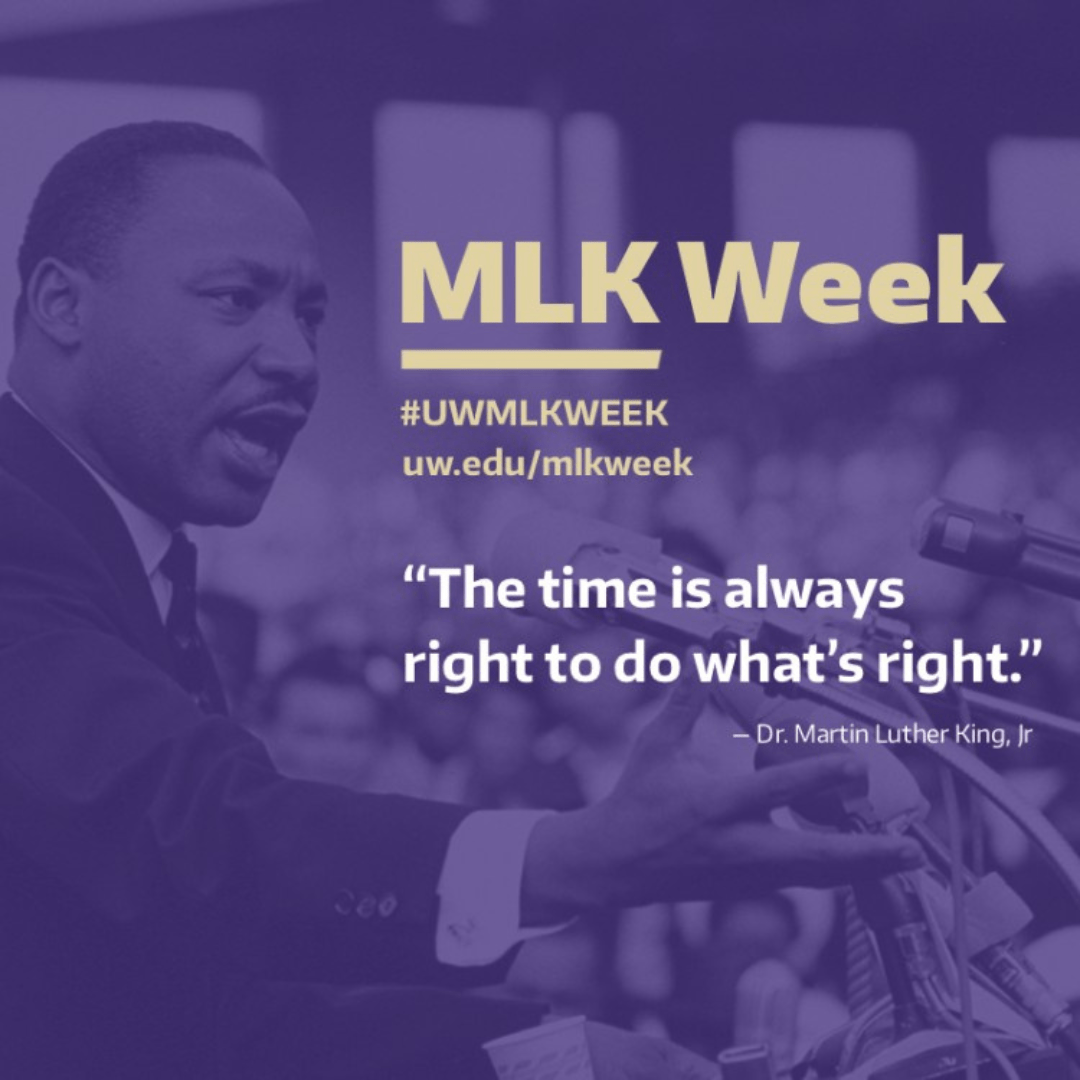 In honor of Martin Luther King Jr. day, UW Libraries encourages you to explore resources within our collections and across campus that reflect Dr. King’s work and collective efforts to combat racism, inequality, and injustice in our community and beyond.