Skip to content
Stories

The Secret Life of UW Libraries Catalogers and Metadata Specialists

Student Spotlight Series

Learn more about UW Libraries student employees impact!

You may be surprised to hear that before you can access a library resource when you need it, a lot of work must be done to get that resource into the UW Libraries catalog. A whole department of librarians, staff, and students are quietly working away behind the scenes to get new resources into the catalog and to find innovative ways to enhance the Libraries’ metadata. This series of blog posts will highlight our brilliant student employees and the work they do to make your tasks of searching, identifying, selecting, and obtaining library resources easier and more effective.  

Student Spotlight #1: Melissa Morgan

When Melissa Morgan was accepted into the MLIS program at the University of Washington Information School, she expressed interest in volunteering with the University of Washington Libraries. Melissa’s undergraduate work at the UW demonstrated that she was an exceptional student, having earned a Bachelor’s of History with honors and won the UW Libraries’ Library Research Award Grand Prize in 2018. In April 2019, she joined the University of Washington Libraries Linked Data Team, an informal group within the Cataloging and Metadata Services Department (CAMS) focused on semantic web projects, with the aim of gaining some linked data experience. Linked data (or semantic web data, or RDF (Resource Description Framework)) is structured data which is interlinked with other data so it becomes more useful through semantic queries.

Linked data is exciting for libraries because it makes relationships between things described on the web computer-readable and more shareable and discoverable across information repositories through integration with the open web. Once she joined the Linked Data Team, Melissa hit the ground running. She began participating in the Libraries’ Linked Data for Production (LD4P2) Mellon Foundation subgrant project and familiarizing herself with linked data analysis, application profile development, and collaboration using GitHub.

Melissa’s remarkable ability to learn new skills quickly and on-the-fly earned her a paid student position as a Linked Data Specialist for the duration of her MLIS study. Under the supervision of Theo Gerontakos and Benjamin Riesenberg, Melissa proactively took responsibility for several areas of highly technical work, much of which involved designing innovative workflows using programming languages she was not yet familiar with. She quickly became one of the most technically skilled members of the Linked Data Team and began contributing at a professional level. One example of Melissa’s outstanding work was a large-scale data conversion project, described below by Benjamin Riesenberg, Metadata Librarian:

“Melissa wrote thousands of lines of Python code to implement ontology mappings and convert data, developing expertise in the mapping language specification and communicating directly with developers to improve the open source specification. Another of her significant contributions to this project was the creation of Python code for parsing human-readable mappings and converting these to RML syntax.” 

-Benjamin Riesenberg, UW Libraries Metadata Librarian 

Melissa collaborated with the Linked Data Team on several such projects, picking up programming languages and learning linked data ontologies quickly in order to solve practical problems in creative ways. Melissa showed herself to be a capable workflow designer and project leader during her time as a student employee.

What is ontology mapping and linked data conversion?

Ontology mapping and linked data conversion sound technical, but they bear resemblance to processes most people are already familiar with. Linked data is expressed in RDF (Resource Description Framework) using well-defined vocabularies called ontologies. These ontologies can be thought of as similar to languages. Humans use languages to communicate information. In a less-sophisticated but similar way, the semantic web uses linked data ontologies to express information in a way that computers and software applications can understand. There are several ontologies currently being used to describe library resources. Two important ones are the Resource Description and Access ontology and the BIBFRAME ontology. In order for computers (and users) to understand data from multiple sources which use different ontologies, these ontologies must be mapped to one another and large batches of data must be machine-converted from one ontology to another. This work is complex, and in a human language context resembles the act of translating a work of literature from one language into another.

After assessing project goals, identifying and learning the skills required to solve problems, and learning them quickly, Melissa designed effective workflows and patiently taught new skills and workflows to other Linked Data Team members. She is a skilled writer, and wrote a blog post on her RML project that helped us explain the work to colleagues in non-technical positions. Melissa’s work as a student employee was so helpful to the Linked Data Team that the Libraries kept her on as a temporary library technician after her graduation from the MLIS program. During that time, Melissa continued her linked data work and also studied traditional cataloging with Crystal Yragui, a science cataloger in CAMS. Melissa learned to create catalog records using national cataloging standards and controlled vocabularies.

As with Melissa’s other work, her cataloging was superb. The experience and skills developed as a student employee were foundational to forging her career in the field of librarianship. She is now the full-time Cataloging & Metadata Specialist at Pacific Lutheran University. We are proud of Melissa and grateful for the time she spent at the UW Libraries!

Join Us! 

We are currently hiring for a similar student position – Cataloging and Metadata Services – Linked Metadata Student Specialist! If jobs like Melissa’s sound interesting to you, or you are just curious about other student jobs in the Libraries, visit our Student Jobs page! 

###

Stories

International Open Access Week 2023: Celebrating Open Scholarship

See all UW Libraries Open Access Week Events

International Open Access Week, observed each October since 2008, is an opportunity to learn about and celebrate our collective momentum in building a more open and equitable system for sharing knowledge.

The theme for this year’s Open Access Week (October 23–27) is “Community over Commercialization.” Rooted in ongoing professional and public concerns about consolidation within the scholarly publishing industry and publishers’ continued efforts to monetize scholarly outputs by extending their control of all aspects of the scholarly publishing ecosystem, the theme “encourages a candid conversation about which approaches to open scholarship prioritize the best interests of the public and the academic community—and which do not.”

Open Scholarship

What is “Open Scholarship?” Also referred to as “Open Science,” “Open Research,” and “Digital Scholarship,” Open Scholarship is an expansive worldwide, interdisciplinary, and inclusive movement among researchers, scholars, learners, universities, libraries, and funders intended to ensure that research results and scholarly works of all kinds are shared openly as soon as possible for the benefit of the public good. 

  • On the one hand it encompasses rapid, unrestricted, and open access to scholarly works in all formats, open research data, the ability to reproduce and verify research results, and encourages an open infrastructure that values community over commercialization.
  • Open Scholarship also integrates traditional scholarly methods with new and emerging technologies to question and investigate traditional scholarly paradigms and utilize new methods of working.  Examples of this aspect of Open Scholarship include open publishing, community-engaged research, text analysis, data mining, visualization, modeling and simulation, geospatial analysis and mapping, multi-modal storytelling, network analysis, and mark-up.

Open Scholarship at UW

“These changes in federal policy will require federally funded authors to share their research articles and supporting research data freely and publicly upon publication. This will be especially important for a research-intensive institution like UW, which in FY23 was awarded $1.52 billion in federal funding. The work funded by the grants, in turn, resulted in thousands of peer-reviewed articles and underlying data sets.”

The University of Washington community has long embraced and exemplified the principles of Open Scholarship. In 2018 the faculty of the University of Washington adopted an Open Access Policy intended to make their peer-reviewed scholarly articles freely and widely available to the people of Washington and the broader research community. In the fall of 2022 the University joined a growing body of peers in the Higher Education Initiative for Open Scholarship (HELIOS), a coordinated effort to align higher education practices with open scholarship values. This strategic decision not only aligns with local institutional values and open initiatives, but also helps position the University to respond to upcoming federal research funding policy changes requiring immediate public access to published research results and the data supporting them, especially those from the National Institutes for Health and the Office of Science, Technology, and Policy. These changes in federal policy will require federally funded authors to share their research articles and supporting research data freely and publicly upon publication. This will be especially important for a research-intensive institution like UW, which in FY23 was awarded $1.52 billion in federal funding. The work funded by the grants, in turn, resulted in thousands of peer-reviewed articles and underlying data sets.

The Libraries’ 2023-2026   Strategic Plan affirms that “UW research attains its greatest impact on our most pressing global challenges when we advocate for open, public and emerging forms of scholarship.” The UW Libraries has centered and integrated the importance of Open Scholarship as a guiding principle into our strategic thinking and practice, helping to influence and shape our programs and initiatives over the past decade.  

Open Scholarship Commons

 OSC Tech and Work Spaces:

  • multiple group work spaces with large screens and seating for 5-9 with laptop hook-ups and reservable speakers, cameras and microphones 
  • presentation spaces with movable tables and seating for up to 24 – available via reservation. 
  • mobile laptop cart with 25 Windows laptops
  • mobile whiteboards 
  • 8 tables for individual study, including 2 adjustable height tables
  • counter and café style tables and soft seating for individual or group work

One of the most successful and visible examples of how the Libraries is supporting Open Scholarship is our new Open Scholarship Commons (OSC) space and its supporting services

The OSC’s mission is to be “an interdisciplinary set of spaces and services intended to advance open, public, and emerging forms of scholarship.  It provides opportunities for scholars, creators, and learners from diverse backgrounds to learn from each other and build the skills necessary to co-create, share, translate, and make the impact of their research visible to the world.” One of its primary goals is to serve as a campus hub to help build community and capacity. In its first year, nearly 1,000 people attended OSC events that explored trends and perspectives around different aspects of open scholarship and its importance to sharing research for the public good.

Initially begun as a virtual space and service in the fall of 2020, this past summer the Libraries was able to create a physical space to complement our online presence with the help of funding from UW’s Programmatic Renewal Fund and the Libraries Catalyst Fund for Innovation.

Located on the first floor of Suzzallo Library, the Open Scholarship Commons is an attractive and interdisciplinary set of spaces and hybrid services dedicated to knowledge creation and digital and open scholarship. The OSC offers a wide range of in-person and online workshops, events, and consultation services to build skills and inspire our UW community to co-create, share, translate, and make the impact of UW scholarship visible to the world.

We’re very excited to welcome new students, faculty, and staff into the space this fall! 

Open Access Week at UW

We invite everyone to join us during the week of October 23-29 to celebrate Open Access Week and Open Scholarship.  You can find a schedule of UW Libraries events with descriptions and registration information on the newly redesigned Open Scholarship Commons webpage

Here’s a preview of what we have planned:

Hacking the Academy: The Adoption of Open
Monday, October 23, 2023
10-11am
Online

UW Theses and Dissertations
Tuesday, October 24
2-3pm
Online

Open Education Resources 101: Find and Create Affordable Course Materials
Wednesday, October 25, 2023
2-3:00pm
Online

Reading the Fine Print: a Workshop + Hackathon on Privacy and Terms of Service for Common Research and Classroom Tools
Thursday, October 26, 2023
1-2:30pm
Hybrid – OSC and Online

Seattle Research Software Engineer Meetup
Thursday, October 26, 2023
3-5:00pm
Hybrid – OSC Space and Online

Creative Commons Workshop
Friday, October 27, 2023
10-11:00am
Online

###

Stories

Exploring Library Careers: Conservation

UW Libraries Welcomes New Senior Conservator

Did you know? 

Each year, Conservation staff repair, bind or make enclosures for an estimated 10,000 items in the UW Libraries.  This care helps to preserve, stabilize or restore the usability of book, paper, and photograph materials. 

See also:

How the UW Libraries bring damaged, rare books back to life

The Paper Protector

VIDEO: UW Libraries New Conservation Center

Are you interested in art, history, science and working in a library or museum? You may want to explore a career in conservation, just like Leith Calcote, the newest member of UW Libraries Conservation Center team.

What is a conservation?

In a library or museum setting, conservation includes all the actions taken to preserve library or museum collections. 

What is a conservator?

A conservator has the skills and training to provide conservation support. This includes the treatment or repair of individual library or museum materials. It also includes preventive care or reducing damage to collections through careful handling, storage, emergency planning, and collection management. 

Conservators focus on a specific type of material or “specialty” during their training such as books and paper, photographic materials, electronic media, objects, or textiles. Most conservators have a background in studio art, art history, science, or other related fields. This allows them to have a thorough understanding of the materials in their care, the context in which they were made, and their scientific make-up to help prevent deterioration. You can learn more about becoming a conservator from the American Institute for Conservation

Leith Calcote joined the Conservation Center team as Senior Conservator for Books & Paper on August 28, 2023. They worked most recently as the Collections Conservator at The Newberry Library in Chicago.

Leith’s work focuses primarily on planning and performing complex conservation treatment for rare books. This involves a wide variety of skills to repair and restore delicate and aging materialsin order to preserve as much of the original structure and materials as possible while making the items safe to handle. This requires a knowledge of historical bookbinding techniques and how the original and new components interact chemically.  

One of the things that attracted Leith to the UW Libraries was the breadth of collections. “I am excited to work with the diversity of the UW Libraries’ collections from early printed books and manuscripts to modern artist books and everything in between.”


“I am looking forward to introducing students to the conservation field and helping them move towards applying to graduate school,” says Calcote.  The summer conservation internship is typically posted in early winter on the UW Library Jobs page.


Photo: Leith conserving a rare music score.

Leith is currently working on mending torn pages in some newly cataloged rare 19th century music scores and reattaching a partially detached board for a popular travel book by author Anne Newport Royall.  The book is an interesting example of a temporary binding that ended up being not so temporary. Leith says, “It was common during this period for printers or publishers to sell books in temporary bindings, or without any binding, so the owner could bind it to match other books in their library. These temporary bindings rarely survive so long, making it important to preserve the binding as evidence of practices at that time.”

Leith will also provide support for the Mellon Sustainable Collaborative Conservation Services grant by leading the summer conservation internship program and providing additional planning and support for collections conservation projects as needed. 

“I am looking forward to introducing students to the conservation field and helping them move towards applying to graduate school,” says Calcote.  The summer conservation internship is typically posted in early winter on the UW Library Jobs page.

Prior to working at The Newberry Library, Leith held professional and intern positions at The Boston Athenaeum, University of Michigan, and Iowa State University. They completed a Master of Arts and Certificate of Advanced Study in Art Conservation at Buffalo State College and a Bachelor of Arts in Chemistry at Carleton College. Leith also received a Certificate in Bookbinding from North Bennet Street School in Boston, MA.

To hone their practice, Leith also enjoys creating historical bookbinding structures in their own time.  These sometimes evolve into more creative work. One of Leith’s pieces, Araneus liberius, was chosen for the Guild of Book Workers exhibition, WILD/LIFE. This very diminutive piece is a traditional leather binding sewn on raised cords, but the traditional structure is used as a base to create a book in the form of a spider.

Created in 2012 with support from the Andrew W. Mellon Foundation and many Friends of the Libraries, the  Senior Conservator position has dramatically increased the Libraries capacity to care for the fragile rare books and manuscripts in our special collections by allowing the Libraries to perform more complicated conservation treatments in-house. 

Learn more about UW Libraries Preservation and Conservation Work

###

Stories

My Time Working with the Gaihozu  

Benjamin Narkmon (class of 2024) is a senior undergraduate student of Japanese and Linguistics.

Benjamin Narkmon (‘2024)

During my junior year at UW, I had the privilege of working  at Tateuchi East Asia Library as the Japanese Collection Student Specialist. A good deal of my time there was spent working on the Gaihozu collection. Gaihozu are essentially World War II maps created or stolen by the Japanese military. As my time here comes to a close, I wanted to reflect on my experience working with the Gaihozu. 

The Gaihozu maps at UW Libraries were found by chance in 2014 when Map Collection Librarian, Matt Parsons, was moving the Seattle Times’ subject files from the Map Collection to the Microform & Newspaper Collections. One of the student assistants, a native Japanese speaker, recognized the value of this Gaihozu collection and brought it to the attention of Japanese Studies Librarian, Azusa Tanaka.[1] The maps were added to UW’s collection through either the Library of Congress or the Army Map Service between 1954 and 1979. 

…this project was one of the most rewarding experiences as a student I have had.  

Shin Koga Ryuiki (新黄河流域図) = Yellow River Basin Map

When my supervisor, Japanese Studies Librarian, Azusa Tanaka, brought up the possibility of onsite work for the Gaihozu project, I was excited. The idea of working with historical documents had always been of interest to me, and I knew that it would be a great experience. At the start of winter quarter 2023, my days in the map room of Suzzallo and Allen Libraries thus began. At first, I was nervous about handling the maps. Was there a special protocol for preserving them? How do I make sure I don’t accidentally damage one? Or so I fretted.

Fortunately, I received excellent training from Azusa and Matt on how to properly work with these special and rare maps. After I became accustomed to handling them, the next thing was deciphering the maps. A large part of my job involved inventorying the Gaihozu, which meant knowing where to find the relevant information on the map. This included the map title, series title(s), organizations that surveyed, printed, or created the map, the years in which these were done, etc. At the beginning, I was always running into problems and was constantly asking Azusa questions. With her help, I eventually found my rhythm and was able to inventory a few hundred Gaihozu and Naikokuzu (Japanese domestic maps). After working on the Gaihozu for so long, I can say that this project was one of the most rewarding experiences as a student I have had.  

The Gaihozu mapped out places across the world in excruciating detail. They came in a wide range of scales from as small as 1:3,000 to 1:6,000,000, with units including Japanese ri, Chinese li, and American meters. They were also in a variety of different conditions, some mylar-wrapped, some thin but surprisingly sturdy, and some so torn that I was afraid that, if handled poorly, I would accidentally rip them. The sheer scale of the Gaihozu, numbering thousands of maps, was chilling. I found myself struck with something akin to awe mixed with horror. These were maps made for the deadliest war in human history.  

Often, I would run a quick search of the place name just to make sure that I got it correct. These searches brought me to places I had never heard of. There were small villages in Mongolia, trading port towns in China, and uninhabited areas in the Kuril Islands, to name a few. It was also common for places to exist with a different status, or no longer exist at all. When looking at places in Japan on the Naikokuzu, many times villages and towns would become incorporated into cities. This is, in my opinion, is one of the most interesting things about maps—that they are constantly changing, with borders, statuses, and names always being redefined.  

Examining each weathered map helped me understand the idea that history is alive, that it is breathing. I remember reading the handwritten notes, seeing the hastily crossed out corrections, and following the brushstrokes of someone who I assume to be a Japanese soldier or military instructor. One map in particular left an impression on me, as I noticed something resembling a coffee spill across it. Immediately, I could vividly imagine a scene in which a groggy Army Map Service worker, tired from reviewing hundreds of maps, accidentally knocks over his coffee mug and panics to clean it up. To think that more than half a century later these maps would make their way through the hands of so many people to end up being worked on by a student here at the UW.  

Examining each weathered map helped me understand the idea that history is alive, that it is breathing.

All this being said, the Gaihozu do not by any means have a commendable origin. They were maps used by Imperial Japan for the purpose of war. However, that does not mean that we cannot learn something from them. They made their way from the hands of the cartographers to the printing press, to the military schools, to the Army Map Service, and to us at UW Libraries. Students and faculty from inside and outside UW use these maps for their research , including several active research projects that have not been published yet.

I enjoyed working on this project with the support of my supervisor, Asuza Tanaka, and I hope that the Gaihozu continue to find their way into the hands of library users as a tool for research, learning and teaching at UW. 

###


Stories

Fall Update: Welcome to the Libraries 2023

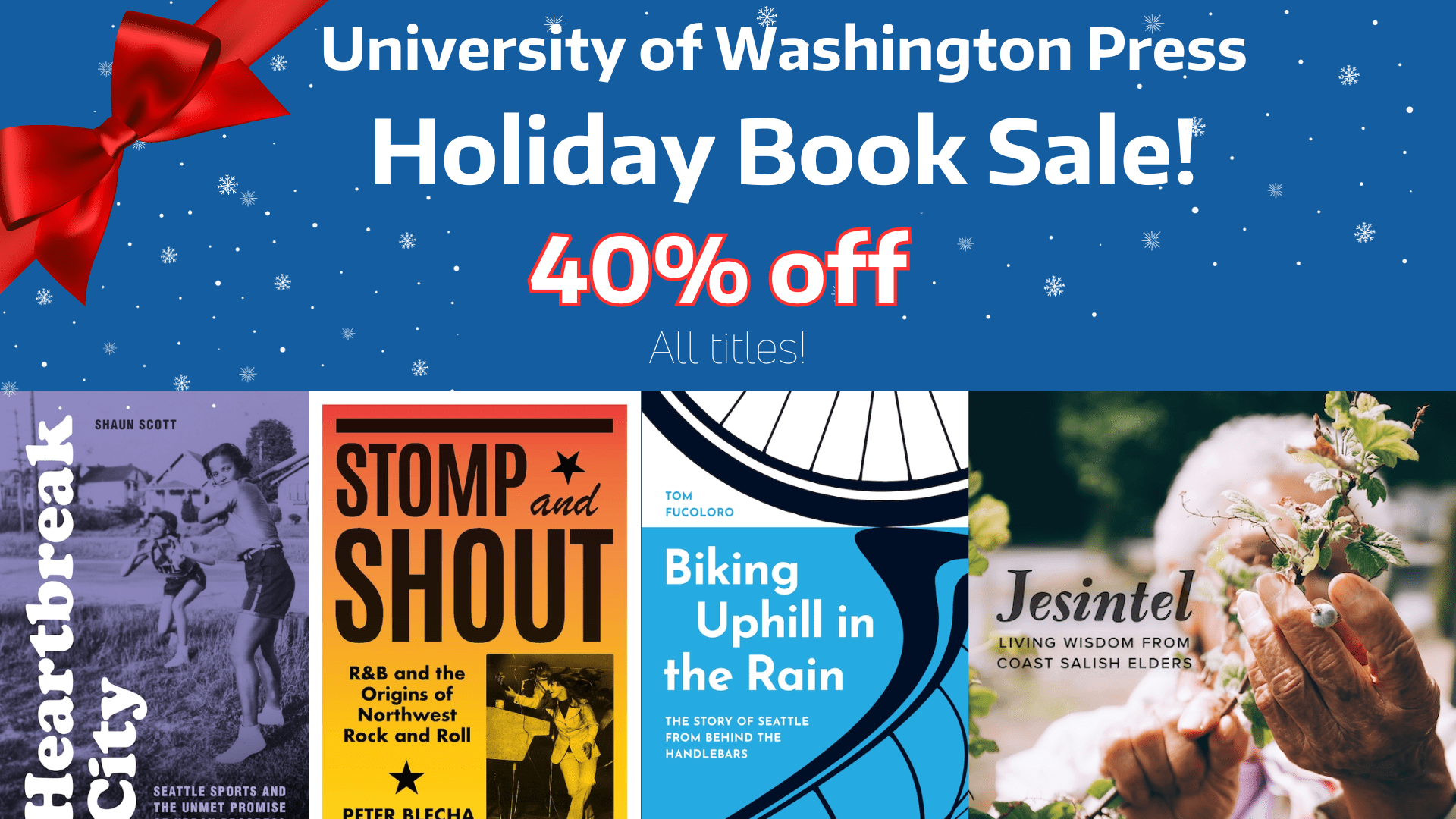
Did you know? University of Washington Press is part of UW Libraries? Check out all of the amazing books you can get – now at a special back-to-school discount! (Makes a great gift for friends and family!)

updated 10/2/23

Welcome, Huskies!

Whether this is your first year or twenty-first year, welcome back to UW and UW Libraries! We hope you enjoyed all of the amazing Libraries Dawg Daze events — and if you missed them, be sure to check out our student guides for helpful links all year long! There is a lot going on this month – our annual US Constitution Read-Aloud, Podcasting workshops, Open Access Week,  Tarot Card lessons (in conjunction with our newest exhibit Magic and Mystery– just in time for Halloween fun) ! Be sure to explore our new and remodeled spaces at the Tateuchi East Asia Library and the Open Scholarship Commons and all of the free workshops, offices hours, new exhibits and events! UW Libraries are here for you in person and online, so get to know us and all the ways we can support your journey of teaching, learning and research at UW!

Operations Updates

  • NEW HOURS FOR Odegaard Library:  Sundays – Thursdays, now open until midnight AND Fridays, until 8pm!

Essential Guides

Be sure to bookmark these “one stop shop” web pages for quick reference and access to all of the services, tools and resources provided to you by UW Libraries.

Welcome to the Libraries: UW Family Weekend

Enter the UW Libraries Family Weekend Trivia Contest now- October 31!

We are excited to welcome Husky family members to the libraries throughout the year, and especially on UW Family Weekend Oct. 20–21 If you plan a visit to UW Libraries, be sure to “know before you go” and check hours first (note: Suzzallo Libraries will be open special hours 9am-1PM on Parents Weekend SATURDAY 10/21 and be sure to enter our UW Libraries Family Trivia contest open to all UW students, family members and alumni through October 31st! Read our Family Weekend Welcome blog.

News and Stories

The new seating and collaboration space at the OSC!

Visit the Open Scholarship Commons in Suzzallo!

After 18 months of planning and construction, a new space for collaboration and open scholarship support is here! Come check out this attractive new technologically-rich space on the ground floor of Suzzallo Library. The OSC is designed to help you learn about open scholarship, create projects, and share research using a host of UW-Libraries open, digital tools and resources. Learn more. Learn more. 

Suzzallo Library featured in Seattle Time’s “most stunning architectural details” feature. We are excited to be included in this special “sampling of wow-worthy architectural details from downtown and surrounding neighborhoods, arranged chronologically within each area” (Hint: Suzzallo is toward the end of the story). Read the story by Lawrence Kreisman.

The Research Communication and Equity Fellowship showcase at the UW Libraries’ Research Commons celebrates the academic and creative work of Black, Indigenous, and People of Color (BIPOC) graduate students. Learn more.

Events

First Wednesday Concert Oct 4, 12:30 – 1:30pm – Students of the UW School of Music perform in this lunchtime concert series co-hosted by UW Music and UW Libraries.

Open Access Week

International Open Access Week, observed each October since 2008, is an opportunity to learn about and celebrate our collective momentum in building a more open and equitable system for sharing knowledge. Read our blog post on OA Week.

UW Libraries 2023 OW Week Events include:

  • Hacking the Academy: The Adoption of Open – October 23; This year’s Open Access Week focuses on the theme of “community over commercialization” and provides an opportunity to examine the successes and challenges of adopting open practices in software development, open education, open data, and new funding models to support this work. Join our panelists as they converse around their work to support the adoption of open. This program will take place fully online through Zoom. Learn more. 
  • Open Educational Resources 101: Find and Create Affordable Course Materials – October 25;  learn about Open Educational Resources (OER), free and openly licensed materials that you can use in your teaching. OER, particularly open textbooks, save students money while empowering faculty by giving them more control over their course content. We’ll cover the difference between Open Access and Open Educational Resources, how to find OER for your course, and tools for authoring and publishing your own openly licensed materials. Learn more.
  • Reading the Fine Print: a Workshop + Hackathon on Privacy and Terms of Service for Common Research and Classroom Tools- October 26. Do you click accept without fully reading the terms of service for research or classroom tools? Have you tried to understand the privacy policies of tools you use for research/courses but get lost in the legalese? If so, this workshop is for you! Designed for students, instructors, and researchers alike, this online workshop will help you navigate common language used in Terms of Service and Privacy Policies and will offer a framework for reviewing agreements. Learn more.
  • Creative Commons Workshop – October 27: Creative Commons (CC) licenses are an important tool in the Open Access movement. They signal that a work can be freely used and shared in ways the copyright holder allows. Join us for this fully online workshop to review how the CC licenses work and find out where to find CC licensed media. Learn more.
  • Seattle Research Software Engineer Meetups 10/26 and 10/27: These networking events provide a great opportunity for Research Software Engineers, developers, and scientists to connect, network, and build a community. It brings opportunities for conversation around open source infrastructure and community adoption tactics to support software products in the service of open science. Sponsored in partnership with the  University of Washington’s eScience Institute and hosted by the UW Libraries’ Open Scholarship Commons.

Recurring/Monthly Workshops and Office Hours

Metadata Support for UW Libraries Digital Scholarship Platforms – multiple days: High-quality descriptive metadata can make your work more findable and meaningful for users, but platform requirements and related standards aren’t always easy to understand. Metadata support office hours at the OSC are a place to ask questions about describing your digital project and get support for integrating metadata effectively into your work in Libraries-supported platforms. Learn more.

Digital Scholarship Project Help Office Hours- Thursdays: Learn about getting started with digital projects at UW. We offer consultations for research and course related projects. Examples include support for digital publishing, building digital exhibits, and more! We can help you find the right tools, resources and instruction whether you’re just getting started or are working on an on-going project. Learn more

Pressbooks

  • Advanced Pressbooks Publishing Webinar- October 17: This training session is open to all users on hosted Pressbooks. EDU networks (including the University of Washington) and is designed for users who have some familiarity with Pressbooks and are ready to engage in more complex activities, like adding interactive elements or integrating Pressbooks with supported third-party tools. Learn more

New Exhibits and Displays

Section 504 at 50: 50th Anniversary of Section 504 of the Rehabilitation Act: This Libraries exhibit highlights the history of disability rights and advocacy in the U.S., Washington State, and on campus in conjunction with UW’s year-long disability awareness campaign in celebration of the anniversary of provision 504, laying the foundation for equal access and opportunities for individuals with disabilities.

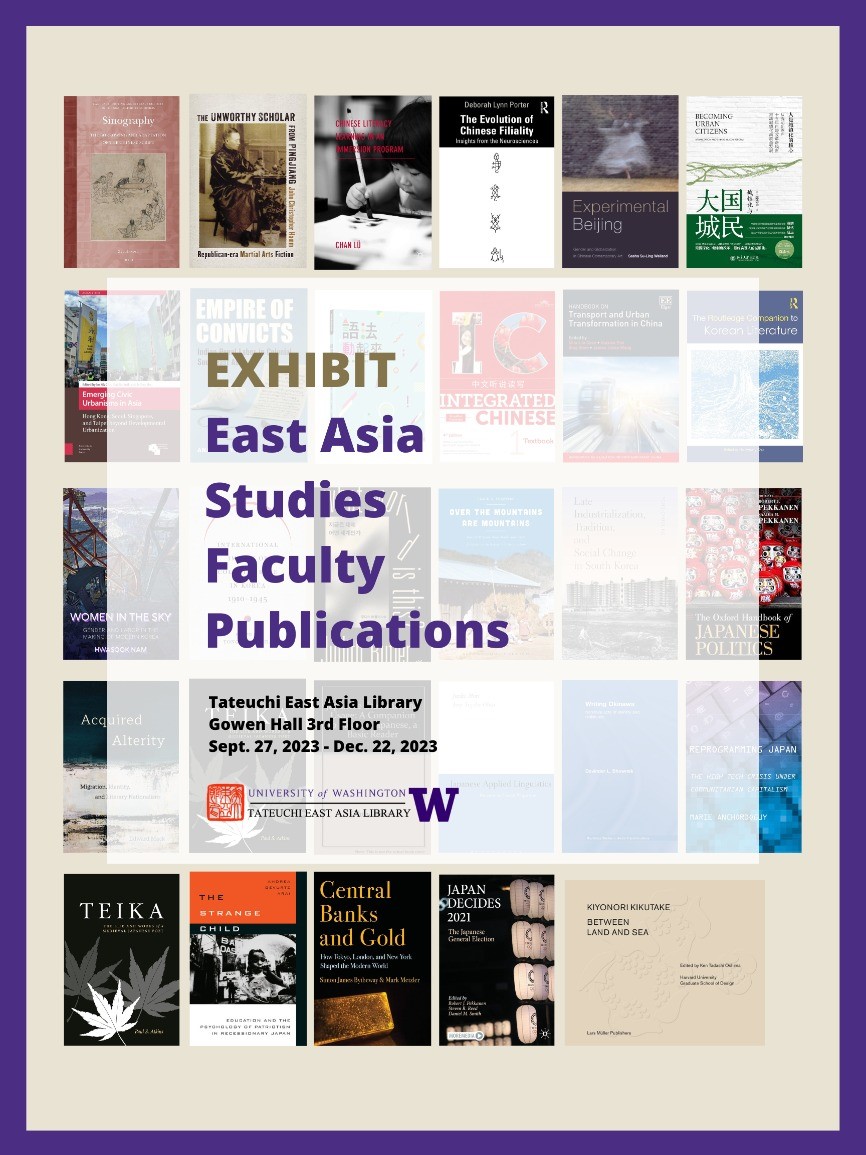
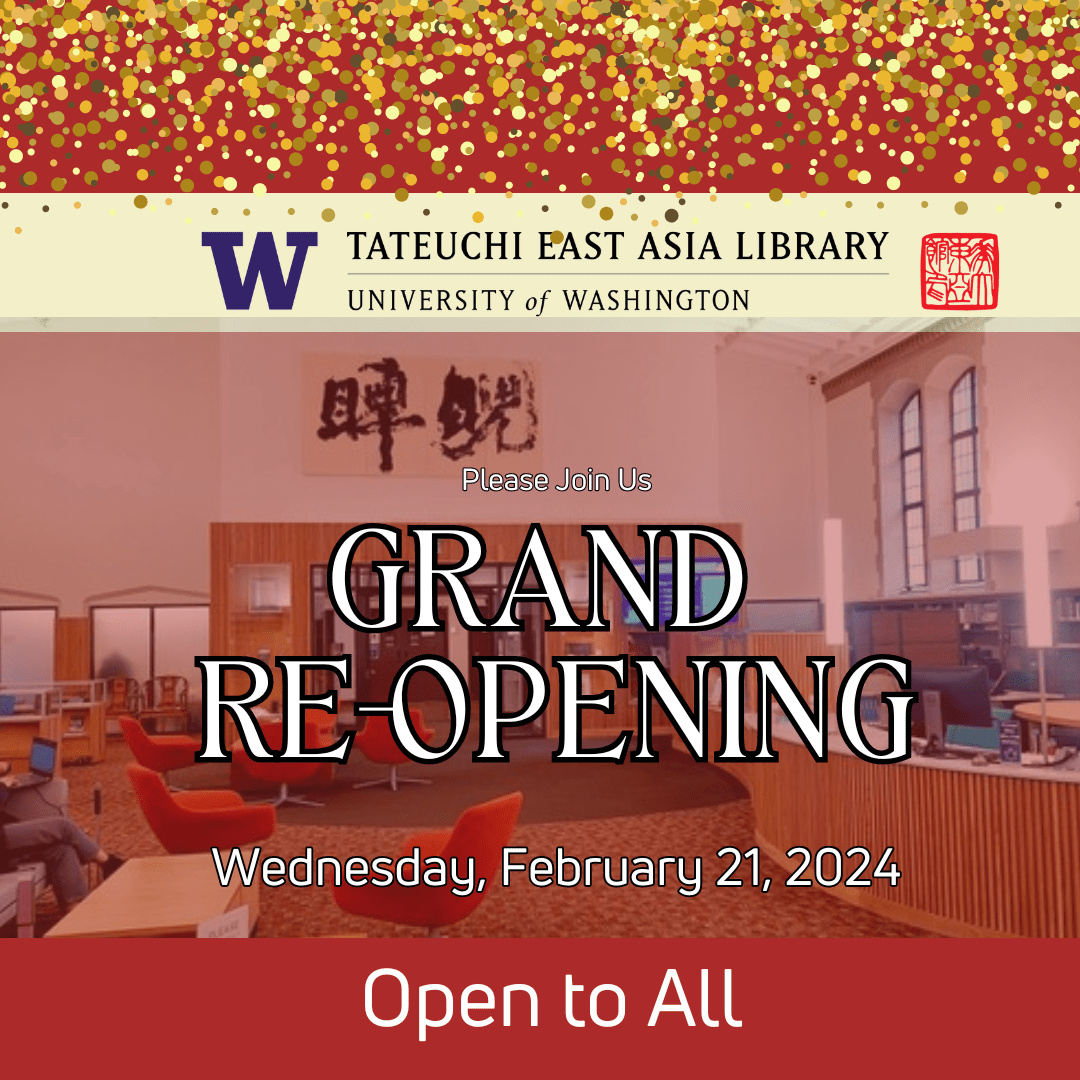
Tateuchi East Asia Library faculty display: As part of celebrating the reopening of the Tateuchi East Asia Library, a new display inside the library will showcase recent publications of East Asia Studies faculty and instructors. Come see the new space, learn about the library and all of the amazing research coming from our UW community!   Learn more.

Special Collections

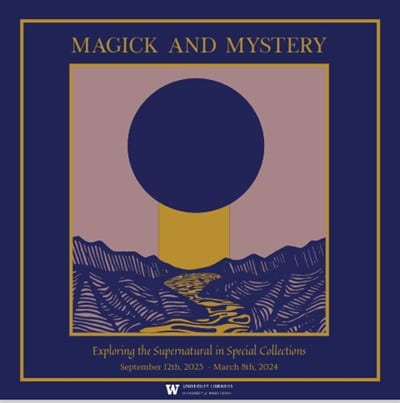
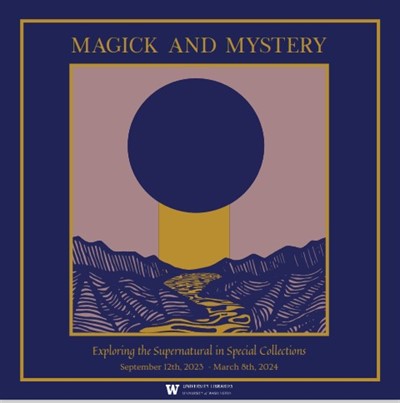
EXHIBIT: Magick and Mystery: Exploring the Supernatural in Special CollectionsEXHIBIT: Magick and Mystery: Exploring the Supernatural in Special Collections – Opens September 12. Explore the supernatural in this exhibit featuring all manner of magic and mischief. Opening in Fall 2023 and running until the end of Winter Quarter 2024, Magick and Mystery will feature items from Special Collections, in the UW Libraries, on topics ranging from local folklore and mysteries to 19th-century spiritualism, and even TikTok tarot trends. Learn more.
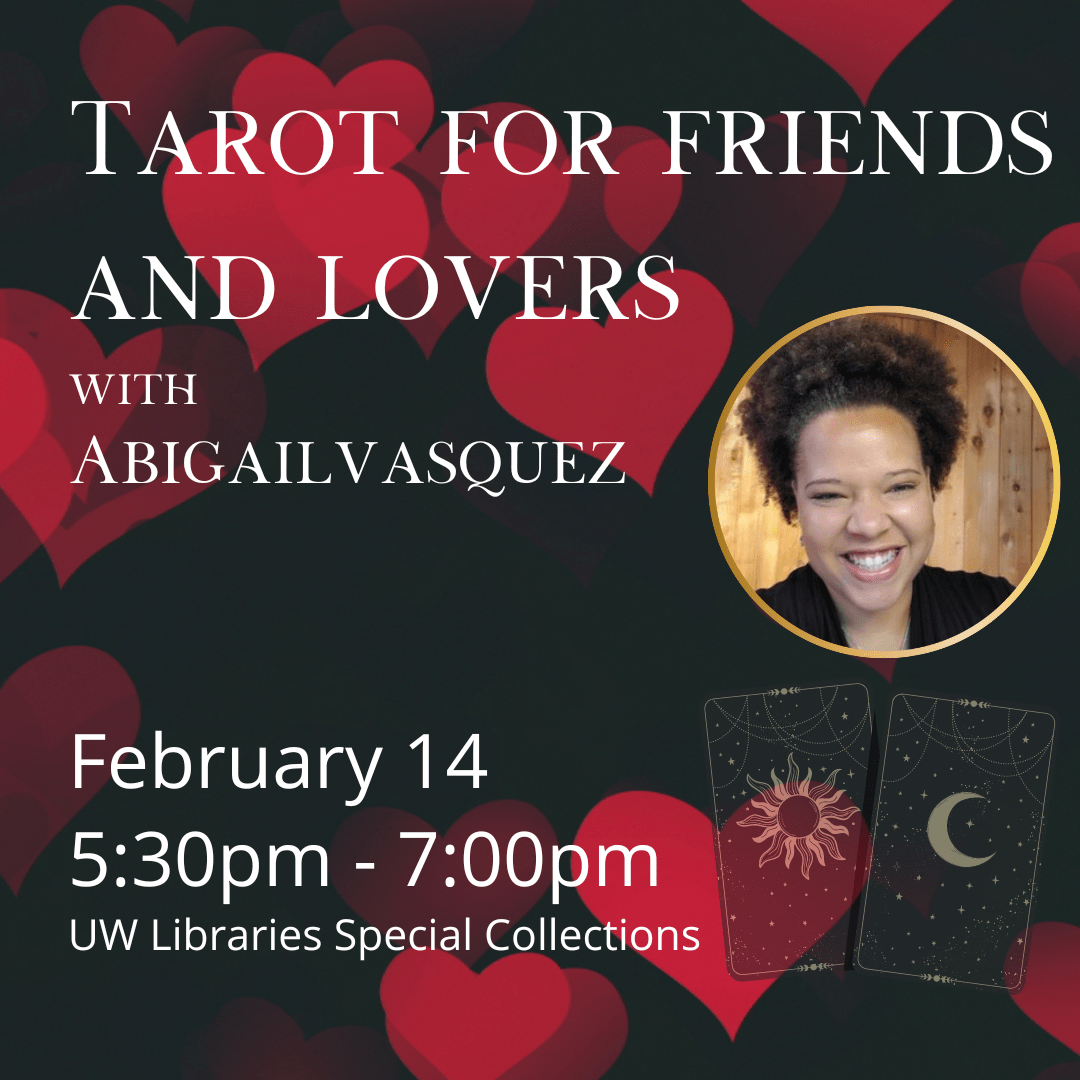
October 25 – Don’t Miss Tarot for Beginners with Abigail Vasquez – Join Abigail Vasquez, Named Best Psychic Reader in Seattle by PsychicReading.com and owner of AV Tarot Marketplace on Etsy, for an evening workshop of tarot reading basics. Learn more!

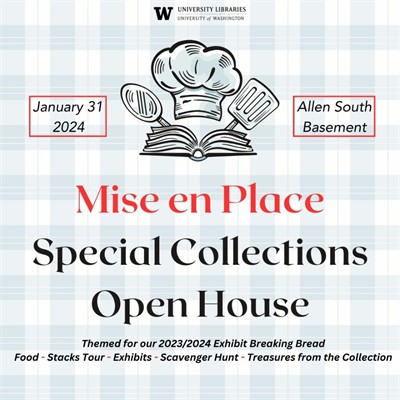
EXHIBIT: Breaking Bread: Foodways and Cuisine in PrintEXHIBIT: Breaking Bread: Foodways and Cuisine in Print – opening September 26 For the 2023-24 academic year, Special Collections is featuring items in our collections that connect to a multitude of different foodways and food cultures. With four rotations at the end of each quarter, the items from Special Collections demonstrate complex systems of cultural celebration, continuance, and suppression that are wrapped up in food systems. Learn more. 
 

Stories

Celebrating BIPOC Graduate Student Work

Negeen Aghassibake, Data Visualization Librarian and

Madeline Mundt, Head, Research Commons/Social Sciences Liaison Team Leader

The Research Communication and Equity Fellowship showcase at the UW Libraries’ Research Commons celebrates  the academic and creative work of Black, Indigenous, and People of Color (BIPOC) graduate students. 

The Research Communication and Equity Fellowship supports creativity, imagination, and excellence in conveying UW graduate student research to the public through a physical and virtual exhibit. The Fellowship began with the goal of creating a more equitable environment for all students and making space to celebrate the scholarship and community of BIPOC graduate students. To work toward this goal, each of the five Fellows created a physical artifact that visually communicates their research and the artifacts are exhibited in the Research Commons. While these artifacts are informed by Fellows’ graduate work, they have been created especially for this program which provides a unique opportunity to blend research communication and visual creativity.

the Fellowship gallery wall in the Research Commons

About their work, Fellow Sarah Nguyễn says: “I decided to create this multimedia collage to make my research more accessible to the community that I’m most concerned about, Vietnamese immigrants, refugees, and intergenerational communities within.”

The Fellowship artifacts are on display in the Research Commons, a library space for interdisciplinary, innovative, and collaborative student work. Components of this ethos, along with the UW Libraries’ strategic goals around advancing research for the public good and creating equitable environments, have informed the development of this fellowship. In particular, we highlight graduate students doing interdisciplinary and collaborative work, open work (for example, open access publishing or projects with public scholarship components), and digital scholarship methodologies/tools (for example, data analysis, mapping platforms, or digital humanities work).

Learn more about the 2023 Fellows and view their work in more detail:

Fellow Sarah Nguyễn shares some of her reflections on the program:

For the first 2.5 years of the PhD program, I have been blessed to focus my energy and research interests to better understand the world of mis- and disinformation, or what I prefer to call information disorder, particularly within the Vietnamese diaspora. In other words, I’ve been trying to understand why my elders have such stark political ideological perspectives from me and how we can communicate and share information with each other to better understand each other’s perspective. From there, I have centered community collaborations to explore information diet, trust, and both online and analog information transmission practices among Vietnamese peoples. While I’m proud of being able to co-author and publish multiple scholarly articles about this research, I knew I had to translate this work not just from English to Vietnamese language but also make the dense and theoretical research legible to people like my parents, aunts, uncles, and sisters who have no interest nor the capacity to read 30 page single-space scholarly text. This led to the visual imagery that we see in the poster I collaged.

Learn more about Sarah’s work and read the accompanying bilingual illustrated booklet

This Fellowship was funded by a “Friends of the Libraries Award” from the Friends of the UW Libraries, which covered awards for the Fellows, artifact printing costs, and reception refreshments.

Stories

Dawg Daze 2023 with UW Libraries

Dawg Daze

UW Libraries is hosting a wide variety of fun and informative events to introduce you to all of the amazing resources, programs and tools that can help you succeed your first year, and beyond!  Explore our spaces, meet our staff and connect with other students throughout the week including tours, special events for first generation and transfer students, trivia games, karaoke, a film screening, gift card prizes and more! The following is a list of all Libraries Dawg Daze events. You can also find and add these library events to your calendar on the Dawg Daze web site.

Welcome to the UW Libraries: Orientation and Tour

Online Orientation

Thursday, 9/21, 1:00 pm – 2:00 pm

A virtual library orientation open to all students. We’ll show you how to connect online, find course materials, start your own research, and more! In addition, you’ll have a chance to meet other students and ask librarians any questions you might have. Student attendees will be entered into a drawing for a $20 e-gift card.  Learn more. 

Journey through the UW Libraries: Self-guided Tour

Offered every day, 9/20- 9/29

Explore UW Libraries spaces, services, and resources via this online, self-guided tour. Visit popular UW Libraries including Odegaard Undergraduate Library and Suzzallo & Allen Libraries and learn about library resources and services available to UW students. Complete the tour during Dawg Daze and enter a drawing for a $20 e-gift card! Learn more.

Events for First Generation and Transfer Students

First Gen Students: Welcome to the UW Libraries!

Friday, 9/22,  11:00 am – 12:00 p.m.

Attend our library orientation for first generation students to find out how the UW Libraries can help you succeed at UW. We’ll show you how to navigate online resources, find course materials, start your own research, and more! In addition, you’ll have a chance to meet other students and ask any questions you might have. Student attendees will be entered into a drawing for a $20 e-gift card. Learn more.

Undergraduate Research for Transfer Students – Panel & Social

Tuesday 9/26,  3:00 – 4:30 p.m.

Are you an incoming transfer student interested in undergraduate research? Get a jump-start on research with this workshop intended for incoming transfer students in all disciplines to get up to speed on the resources and opportunities available for you to engage in faculty-mentored research and other key library resources and services that support all forms of undergraduate research. Join Undergraduate Research Program advisers, current undergraduate student researchers, and UW Libraries staff for this interactive, informational session. Learn More.

Meet Your Libraries – Individual Library Tours/ Open Houses

Did you know UW has thirteen libraries on the Seattle main campus?! Here’s your chance to visit and learn more in person and explore what makes these libraries so special– meet friendly library staff, pick up library swag and treats, learn about resources and get your questions answered!

Suzzallo Library Tour – Multiple days and hours starting September 20

Welcome to the Health Sciences Library and Meet Dubs! – 9/20, 12:00 pm – 3:00 pm

Welcome to Odegaard Library!– Monday, 9/25, 2:00 pm – 4:00 pm

Welcome to the Art Library and the Drama Library! – Monday, 9/25 – Friday 9/29, 11am-2pm

Social/Just for Fun

Sounds from the Vaults

09/29, 1pm–4pm
School of Music

Join curator DJ Vallier as he spins discs from UW’s historic Ethnomusicology Archives. From ethereal Japanese gagaku and filigreed Zambian kora, to overtone laden Afghan throat games and 70s funkified Seattle soul, listen to musics you’ve never heard and won’t find on Spotify. Drop in whenever, stay for as long as you want. Refreshments and snack will be on hand. Learn more.

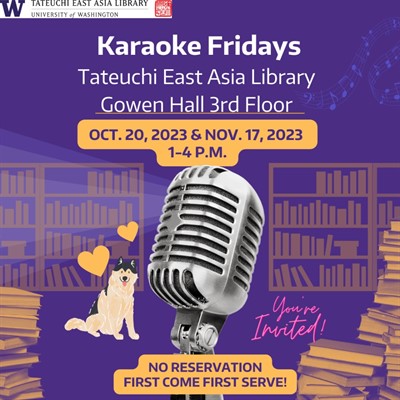
Karaoke at Tateuchi East Asia Library

Thursday, 9/21,  2 – 4 pm

Come enjoy free Karaoke time at our beautifully remodeled Tateuchi East Asia Library (TEAL) in Gowen Hall. We have a Karaoke music system ready for you or your group. First come first served via reservation. While you are here, please check out our space and amazing Chinese/Japanese/Korean collection too! Learn more.

Quizness as Usual: A STEM Trivia Game

Friday,9/22,  2-3:30 pm

Test your trivia skills with UW Libraries in this virtual trivia contest! We’ll have 7 rounds of fun questions covering science and technology, the UW, Seattle, and more! University Bookstore gift cards will be awarded to top finishers.  Learn More.

Board & Tabletop Game Night at Odegaard Library

Friday, 9/22 6 – 9 pm

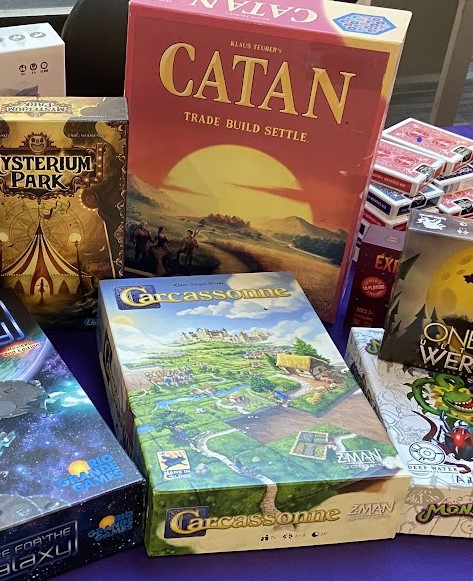
Join us at the library for a social evening of fun and friendly competition at our Board & Tabletop Game Night! Whether you’re a seasoned gamer or new to the world of board games, card games, and TTRPGs (tabletop role playing games), this event is the perfect opportunity to meet fellow students, bond over exciting games, and make lasting memories. Learn more.

Oh, the Humanities!: An Arts & Culture Trivia Game

Tuesday, 9/26,  2-3:30 pm

Test your trivia skills with UW Libraries in this virtual trivia contest! We’ll have 7 rounds of fun questions covering arts and culture, the UW, Seattle, and more! University Bookstore gift cards will be awarded to top finishers. Learn more.

Special Events from UW Libraries’ Special Collections

UW Libraries Special Collections (in the basement of Suzzallo and Allen Libraries) brings together the University of Washington Libraries’ most rare and unique resources that span history and the globe, offering boundless opportunities for exploration and discovery.

Magick and Mystery Exhibit Talk and Scavenger Hunt

September 20th and 25th

Indulge your inner wizard at the UW Libraries Special Collections Fall 2023 exhibit, Magick and Mystery: Exploring the Supernatural in Special Collections. From 11-1pm on September 20th and again on the 25th, participate in our scavenger hunt to learn more about the treasures on display. Bookmark and sticker prizes are available for those who complete this quest! Learn more.
Introduction to Special Collections + Book Making Craft

Friday, Sep 22, 2023, 11 a.m. – 1 p.m.

Informational presentations,  a book folding activity and the opportunity to  to see treasures from the collection on display! Learn more.

Old Books, New Technologies: UW Special Collections and the minor in Textual Studies and Digital Humanities

Monday, 9/25  10:30 am–12:30 pm

Come discover UW Libraries Special Collections and its extraordinary resources: medieval manuscripts; 15th-century books; an iron handpress; an unparalleled collection of artists books, and more all while learning about the new minor in Textual Studies and Digital Humanities. Learn more.

1999 Seattle WTO Protests Film Screening

Tuesday, 9/26 11:00 am – 2:00 pm

Although both Seattle and Washington State authorities expected some organized protest to the WTO ministerial meeting on November 30, 1999, few were prepared for the scale of the protest that occurred leading to tear gas, transportation shutdowns and intervention by President Clinton.  Stop by the Allen Auditorium to view a running collection of archival film documenting these historical protests. Learn More.

Break Bread at Special Collection + Exhibit Talk and Snacks

Friday, 9/29, 11 a.m. – 1 p.m.

Please join us in breaking bread for the new academic year! UW Special Collections Lobby Exhibit for 2023-2024 centers foodways, cultural cuisines, and the plethora of material exploring our relationship to food held in Special Collections. From 11-1 enjoy a variety of breads, coffee, and tea with a short exhibit talk from 12-12:15. Learn more.

Stories

Field Trip: Japan and Korea

UW Librarians share their  journey of discovery to acquire new, historic materials for East Asia studies.

Hyokyoung Yi, Interim Director of Tateuchi East Asia Library and Korea Studies Librarian 

Azusa Tanaka, Japan Studies Librarian

Through the advancement of technology and the historically close relationship among East Asia countries, academic research within the field of East Asian Studies is becoming more and more interdisciplinary. UW research within East Asia studies includes comparative literature, migration/mobility and political and economic relationships, to name a few.  As subject librarians for Korean and Japanese studies, we seek to support this growing interdisciplinary nature of research by learning about new topics and expanding our library collections to support teaching, learning and research across disciplines.

Hyokyoung and Azsusa in Kyoto, Japan

One of the most exciting aspects of our work is the opportunity to travel for acquisition and research on behalf of our subject areas. These acquisition (purchasing)  trips take place approximately every other year and are typically planned around a particular theme. Over the summer, we were thrilled to embark on a joint acquisition trip to Korea and Japan. While each of us has made these types of trips many times individually, this is the first acquisition trip that we took together.  The theme of our trip this year was the study of Korea-Japan relationships and collections that explore this dynamic. When developing collections that cover politics and other sensitive topics, it becomes even more important to do this work together, side-by-side with equity, diversity and inclusion in mind to ensure our collections support scholarship and research from all perspectives.

We made connections with international colleagues that will benefit our UW community for years to come.  

We had an incredible trip, visiting museums, research institutions and neighborhoods where the historical materials of Korean immigrants and their descendants in Japan can be acquired and researched. Traveling together was such a helpful advantage – to be able to rely on each other as communicators and interpreters helped us to deeply understand the experiences and stories of those we met, and the context of the materials we sought out. We made connections with international colleagues that will benefit our UW community for years to come.  

We are excited to share what we found and learned on our 2023 acquisition trip to Japan and Korea! While we don’t have the space in this blog to provide a complete account, we are sharing a few of our favorite experiences and “finds” that we hope you will enjoy!

Korea Highlights

Gaihozu = 外邦図 – Seoul National University

Azusa Tanaka (Japan Studies Librarian):  UW Libraries owns a large collection of Japanese Military maps (Gaihozu = 外邦図) which were produced by the former Japanese military, from the 1880s until the end of World War II (1945), and covering the areas of the former Japanese imperial territories (Gaiho = 外邦). I have been researching the provenance of our Gaihozu collection and ways to collaborate with other holding institutions to enhance the accessibility of the collection. The Korean peninsula was thoroughly surveyed to create these maps, many of which are kept at several institutions in Korea, and I was very interested to see how their maps are organized and accessed. 

Hyokyoung studies the maps at Seoul National University

One of the highlights of the Korea trip for me was the opportunity to see the Gaihozu maps at Seoul National University. The moment I touched the maps, I noticed the quality of paper is different from our UW Libraries collection of Gaihozu maps which were printed in Japan. The following week, in Tokyo, I shared this with a paper specialist. She explained to me that the Japanese military used the paper which was made locally in Korea, so it is natural that the texture is different from the ones printed in Japan because each region would use the local ingredients and paper making methods. This was an interesting fact that I can share with UW visitors and researchers who use these maps. 

Through our travels, we were able to see more than 460 maps in this particular collection…

Hyokyoung Yi (Korea Studies Librarian): I was well aware of our Gaihozu map collection via Azusa’s research and collection development, but through this trip, I gained a new understanding of their connection with Korean history and geography that will benefit my research and knowledge about maps produced in the colonial period of Korea. Through our travels, we were able to see more than 460 maps in this particular collection, all published by the Japanese colonial government preparing for colonization of the area. The maps were drawn carefully in great detail at the level of almost every city and village in the entire Korean peninsula. 

We learned unique features of map-specific metadata descriptions, representation of scanned maps and search and retrieval functions which we can apply to our own digitization process or potential collaboration…

While the collection was impressive as a topographic map itself, many holding libraries and institutions we visited in Korea have either finished digitizing or are near completion of digitization. We learned unique features of map-specific metadata descriptions, representation of scanned maps and search and retrieval functions which we can apply to our own digitization process or potential collaboration with them in the future. Identifying Korean holdings of these maps at various locations and their digital accessibility will be useful for me to guide students and scholars who will be looking for maps in this time period of Korea. 

National Museum of Korea 

Azusa Tanaka (Japan Studies Librarian): When I saw the exhibit of a movable metal type set at the National Museum of Korea, I was inspired with a new perspective on one of the most special items in UW Libraries Japanese collection —  a copy of the movable type publication Koetsu utai bon Tadanori (光悦謡本 忠度), a no play vocal book (a classical form of theater originating in the 14th century). 

the number of publications printed with this method is quite limited and challenging to find in the market…

The movable type printing technique was introduced to Japan in the late 16th century via the influence of western culture and Christianity, and also by Korea. In pre-modern Japan, the movable type was used only less than 100 years (between late 16th century and mid 17th century), so the number of publications printed with this method is quite limited and challenging to find in the market. It was quite a special moment that I was able to connect this special piece at UW and the Korean piece displayed at the museum. I look forward to sharing this experience and the knowledge I gained from the museum with our UW community and visitors. 

Rare Finds

At several of the institutions we visited, we purchased some publications about the history of Korean residents. These unique materials, published exclusively by these institutions,  are not available in the general book market, underscoring why these “field trip” visits are so valuable.

Japan Highlights

Hyokyoung Yi (Korea Studies Librarian): As librarians, having an in-depth understanding of emerging areas of study is essential to developing well-rounded collections.  Within both Korean society and academia, there has been an increased interest in learning more about the history of Korean migrants in Japan, including the history of discrimination as well as Korean migrant’s contributions to Japanese business, education and culture. This trip helped me to explore this topic in greater context and introduced valuable partners that will help expand our collection around these themes.

Jinbocho, and the book town tour with Prof. Sasaki

Azusa and Professor Sasaki in Jimbocho bookstore

I was as able to join a special tour of Jinbocho, the Japanese book town, guided by Prof. Takahiro Sasaki (the immediate former Director of the Keio Institute of Oriental Classics (Shido Bunko) at Keio University in Tokyo, Japan). He visited UW in October last year (2022), as part of the exchange program between the University of Washington and Keio University funded by a generous grant from the Tateuchi Foundation.

Each bookstore was crammed floor to ceiling with all kinds of books including rare and special materials

bookstore in Jinbocho

Jinbocho is the popular area for bibliophiles and book lovers as the town is filled with around 200 book stores within walking distance. Each bookstore was crammed floor to ceiling with all kinds of books including rare and special materials. It was fun to visit store after store where Prof. Sasaki introduced us to a myriad of pre-modern books. The full-day tour in Jinbocho provided an opportunity to explore older Japanese publications and book cultures, which East Asian and Korean materials share a lot in common. At the end of the tour, we found the one and only Korean bookstore in Jinbocho which sells mostly Korean diaspora materials published by Korean-Japanese authors, which were of particular interest for this trip. We came back with a purchase list full of interesting titles both in Korean and Japanese.  

Osaka Korea Town Museum 

Thanks to Azusa’s help, I was able to visit the brand new Osaka Korea Town Museum, located in the heart of Osaka’s Korea town. While the earliest Korean migrants go back to Paekche period (old Korea 18 BC-660 AD), the major influx of Korean came to this town during the colonial period (1910-1945). The town is a concentrated cultural and historical exchange space between the Korean peninsula and Japan. More recently, the town became popular due to Korean K-pop/drama/film culture’s positive influence in Japan. The museum has a wonderful exhibit and collection devoted to the history of Koreans in Osaka since the early 20th century, including the history of Zainichi Koreans’ life in Japan. 

Learning About the Zanichi

 Zainichi (“residents in Japan”) is the term specifically used for ethnic Korean permanent residents of Japan whose migration was originally before 1945 (and their descendants) during Japan’s colonial occupation in the Korean peninsula. Because of such history, these Zainichi are often discriminated against and not given the same level of social benefits even though they were born and raised in Japan just like any other Japanese. They formed their own communities and towns to be together, but some were determined to leave with a desire to more fully assimilate into Japanese society and the broader community.  While the Zainichi Korean towns seem to have been hidden or avoided by mainstream tourism in the past,  they are gaining more attention in recent years thanks to the K-pop culture boom whereas more Japanese people are interested in visiting the Zainichi Korean towns to appreciate and learn about their culture.
commemorative book of the Ikaino Korean School

Understanding the collection scale and the availability will guide my direction for immediate collection development with practical information like publishers and creators to follow up with…

My visits to various historical museums and neighborhoods of Zainichi Koreans in Japan help me understand what types of resources were published locally and collected by those museums’ libraries or special bookstores. For example, I was able to identify many local publications and archives in Japan including local newspapers, literary magazines, dissertations, historical archives and reference books of biography, etc. on this specific topic. Some were written in Korean while others were published in Japanese, so the coordination between me and Azusa will be essential to continue building the collection in this specific area. These marginalized resources in Japan are difficult to discover due to the nature of the minority publications, the language barrier and  lack of online publication information. Understanding the collection scale and the availability will guide my direction for immediate collection development with practical information like publishers and creators to follow up with.

We were lucky to meet a staff member and a museum board member who shared their personal stories of life living as Korean descendents in Japan fighting against discrimination and identity issues. We secured a copy of a commemorative book of the Ikaino Korean School in Osaka which was closed early this year after seventy-six years serving Korean students.  

More Rare Finds

Another amazing artifact coming back to UW with us is a set of annual Ise Jingu Shrine calendar publications from the 17th century, Ise goyomi (伊勢暦). Asuza purchased this at Jnbocho,  adding to the UW Libraries collection that includes another long run annual publication from the similar time period (17th century) Japan, Bukan (武鑑), Daimyo registry. These two are a good comparison when you study the time period—whether it is about the culture, politics, climate, or book-making history. Our collections (curated with Asuza’s expertise) include all kinds of different book binding formats, styles and papers that provide excellent primary sources for a variety of teaching and research needs. Using these two sets of annual publications that ran more than a hundred years, scholars might be able to discover how bookmaking methods change over time from one period to the other.

Acquisition trips like this are crucial to support teaching and research at a global scale.

Lasting Connections 

We are grateful for this travel opportunity.  Acquisition trips like this help build our collections, but also offer professional development for the area studies specialists to keep up with real time trends in the market and in localized business, culture and academia that are hard to grasp remotely, but crucial to support teaching and research at a global scale.

The joint trip gave us a better mutual understanding on what’s existing in the publishing markets of Japan and Korea, while creating many new connections with people and partners who will enhance project collaboration and knowledge exchanges. These connections and partnerships help us to better assist our students and faculty with richer reference services,  whether they are physical materials or human resources. As librarians, we can often act as a gateway to resources beyond geographical boundaries and the physical spaces of our libraries. These acquisition trips are invaluable for us to connect people with knowledge wherever and whenever opportunities arise and become available.

To learn more about these collections and to connect directly with Azusa or Hyokyoung: 

###

Stories

Bring Open Scholarship Impact to Your Classroom & Research

Free Digital Scholarship Open Hosting Platforms from UW Libraries

TIPS FOR FACULTY AND INSTRUCTORS

We are happy to explore options for sharing your research and scholarship with these tools, or working with you to incorporate them into your teaching! We can offer consultation and classroom instruction on considerations for open student work, Creative Commons and licensing your digital work, and best practices for data management and developing consistent descriptions for items included in your work. See specific contacts for all three campuses under “USE THESE TOOLS”  at the bottom of this post!

The UW Libraries wants to support you and your students in creating knowledge and sharing it openly through digital means! We’re offering access to open hosting platforms that include Manifold Publishing (digital book publishing), Digital Scholarship Hosting (one-click installs of Omeka, WordPress, SPLOTs and more), and UW Pressbooks (for creating and adapting Open Educational Resources) as part of the Libraries’ permanent service offerings! These tools are open for use by any current UW student, faculty, or staff member.

Explore 

How can YOU use these platforms to enhance your teaching and openly publish your research? Here are a few great examples highlighting the digital scholarship work of UW colleagues across all three campuses:

Manifold (Digital Book & Journal Publishing)

Explore additional UW Manifold projects (including University of Washington Press publications) or learn more about the nuts and bolts of digital book and journal publishing with Manifold.

Omeka (Digital Exhibits)

  • Entanglements: Mapping the History of Asian Migration onto Coast Salish Lands Interactive mapping project exploring migration and histories of Coast Salish and Asian American peoples created by former doctoral students Anna Nguyen and Madison Heslop.
  • Feminist Archive Exhibits
    Student-created exhibits highlighting artifacts in feminist archives that hold the histories of Black, Indigenous, and women of color, and marginalized women and LGBTQ+ people worldwide. Led by Dr. Julie Shayne, UW Bothell School of Interdisciplinary Studies.


  • Breathing in a Time of Disaster
    A neighborhood-mapped collection of improvised choral performance, installation and speculative writing focused on the unit of breath and developed from responses to crisis events. Led by Dr. Ching-In Chen, UW Bothell School of Interdisciplinary Arts and Sciences

WordPress (Digital Project Presentation)

  • Ocean Noise Explorer
    A research hub for Ocean Noise Explorer (ONE), a web-based interactive ocean soundscape platform that will enable users to visualize and explore a wide variety of underwater noise metrics and other related data products such as CTD and meteorology data. Hub includes documentation, visualization portal, and publications. Led by Dr. Shima Abadi, UW Bothell School of Science, Technology, Engineering, and Mathematics
  • Becoming a Learner
    A reflection space in an open learning environment for students in a Learning Strategies course to post media and thoughts about their growth as students and learners. Led by Deborah Hathaway, Director of Teaching and Learning, UW Bothell 
  • The Tacoma Belonging Project is the digital portfolio of student-created digital scholarship projects engaging the varied dimensions of belonging in Tacoma, and communities throughout the Puget Sound.  The TBP is the final project of the TURB 316: Cities and Belonging course within the School of Urban Studies at UW Tacoma led by assistant professor, Dr. Davon Woodard.
  • Toolkit for Student Success
    Analyses of local organizations that serve K-12 students, with student reviewers starting by acknowledging that individual positionalities and intersectionalities affect students’ learning chances.  Led by Dr. Sarita Shukla, UW Bothell School of Educational Studies 

Pressbooks (Open Book Publishing)

  • Black Lives Matter Collective Storytelling Project is a multimedia cross-course collaboration that brings together students from both the TSOC 265: Race and Ethnicity in the United States and TCOM 347: Television Criticism and Application courses at UW Tacoma. 
  • Jacob Lawrence in Seattle is a collection of essays researched and written by the participants in the Spring 2021 art history seminar “Art and Seattle: Jacob Lawrence” at the University of Washington School of Art + Art History + Design
  • Badass Womxn and Enbies in the Pacific Northwest, Volume 2
    A student-authored celebration of 21 individuals doing important work in their diverse fields. Led by Dr. Julie Shayne, UW Bothell School of Interdisciplinary Studies

Explore additional UW Pressbooks and learn how to get started

Survey previous Libraries’ blog posts on our digital scholarship infrastructure offerings:

Use These Tools

If you’re interested in learning more about these tools or working with them, please contact your campus digital scholarship lead:

###


Stories

New Positions Announced

A new role for UW Libraries and interim positions for Tateuchi East Asia Library

*Post updated August 14, 2023 

The UW Libraries has established a new position of Director, Global Engagement for UW Libraries. This position is responsible for international stakeholder engagement, helping to guide sponsored projects that increase the outreach and engagement efforts of the UW Libraries. This position reports to the Dean of Libraries and will work closely with colleagues across the libraries and UW including international studies and other departments to further global partnerships.  

We are pleased to announce that effective July 31, 2023, Dr. Zhijia Shen has been appointed to this new role. Dr. Shen’s experience working with donors and granting agencies, outreach to the broader community, as well as in fostering international partnerships, makes her an excellent fit for this position to help extend the reach and impact of the Libraries and of the university in supporting global research. 

We are also pleased to announce that Hyokyoung Yi, UW Libraries’ Korea studies librarian, will step in as interim director for the Tateuchi East Asia Library. Hyokyoung has over 20 years experience with the Tateuchi East Asia Library, including a decade of leading public services, and she brings extremely relevant experiences and skills as interim director.

Lucy Li has been appointed as the temporary China studies librarian and member of the UW Libraries Arts and Humanities Liaison Team. Lucy recently received dual Master’s degrees in China Studies and Library and Information Science from the University of Washington. She has worked in the Tateuchi East Asia Library as a student and as a staff member.

The international search for a new director will begin later this fall. The process of filling existing open positions is ongoing and will enable the library to resume its regular hours in the fall.  At this time, the Tateuchi East Asia Library. remains open following the existing summer  hours of operation.

For questions regarding research questions or operations, contact us. Subject and language-specific questions will be directed to the appropriate subject librarian.

###