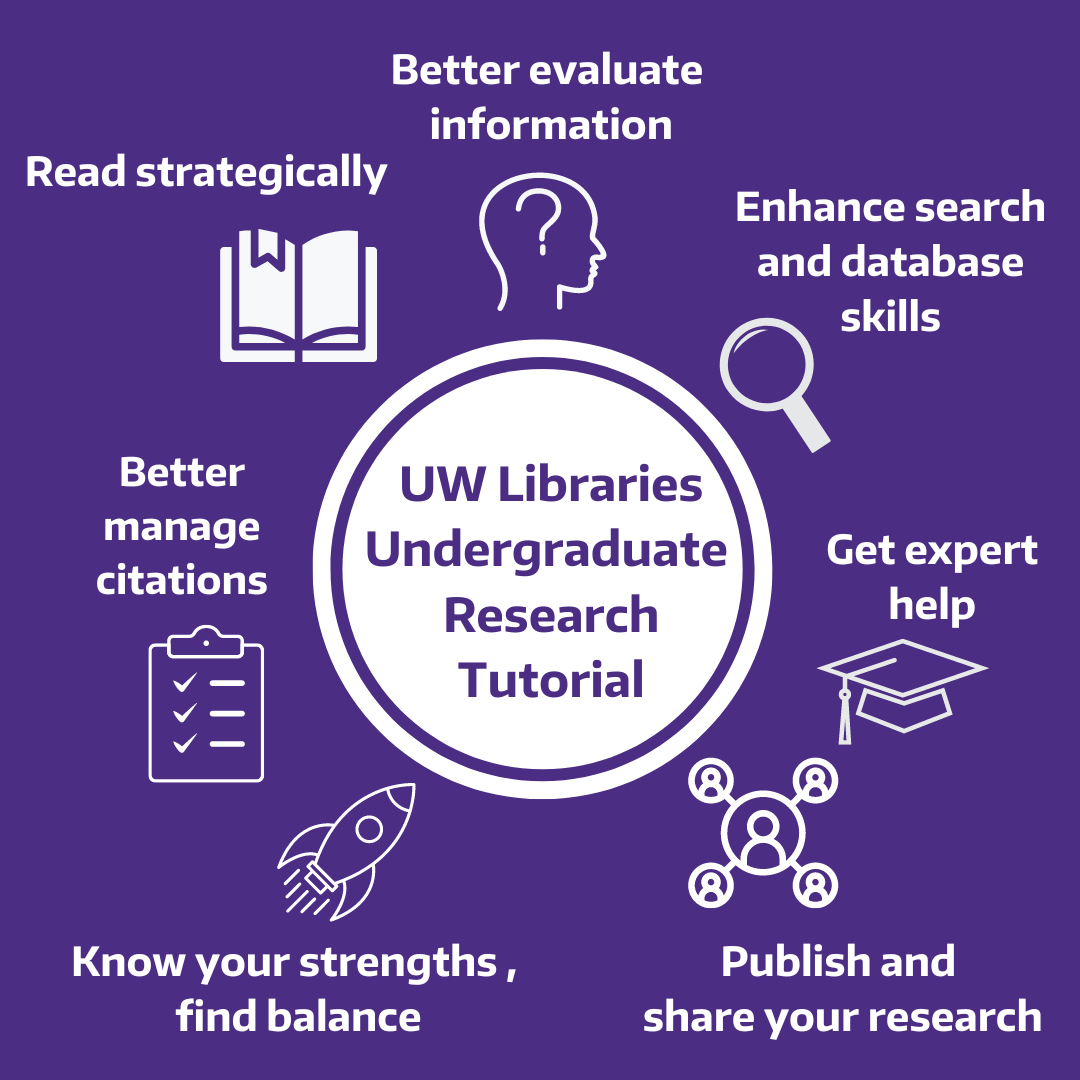
With so much information coming at you like a den of demogorgons* on the run, you may be feeling a little “upside down,” but not to worry–UW Libraries are here to make things a little less “strange” and a lot more stress-free! Like a trusted compass that will never let you down, the UW Libraries Student Guide is your gateway to the vast world of UW Libraries. Know where to get help at any hour of the day, hone your research skills, and learn about the many different kinds of services provided to you by the Libraries (including how to reserve study spaces and get help with your assignments)!
Bookmarkthe guideNOW to save yourself a ton of time, and you’ll be one step ahead for that first research project! Get the Guide.
(*a reference from the popular TV series Stranger Things)
The New York Times digital edition is now available for all current UW and Cascadia College students, staff and faculty via the UW Libraries university-wide subscription! Visit our New York Times page to learn more.
The Libraries Good Readsalways has great ideas for your next favorite book!
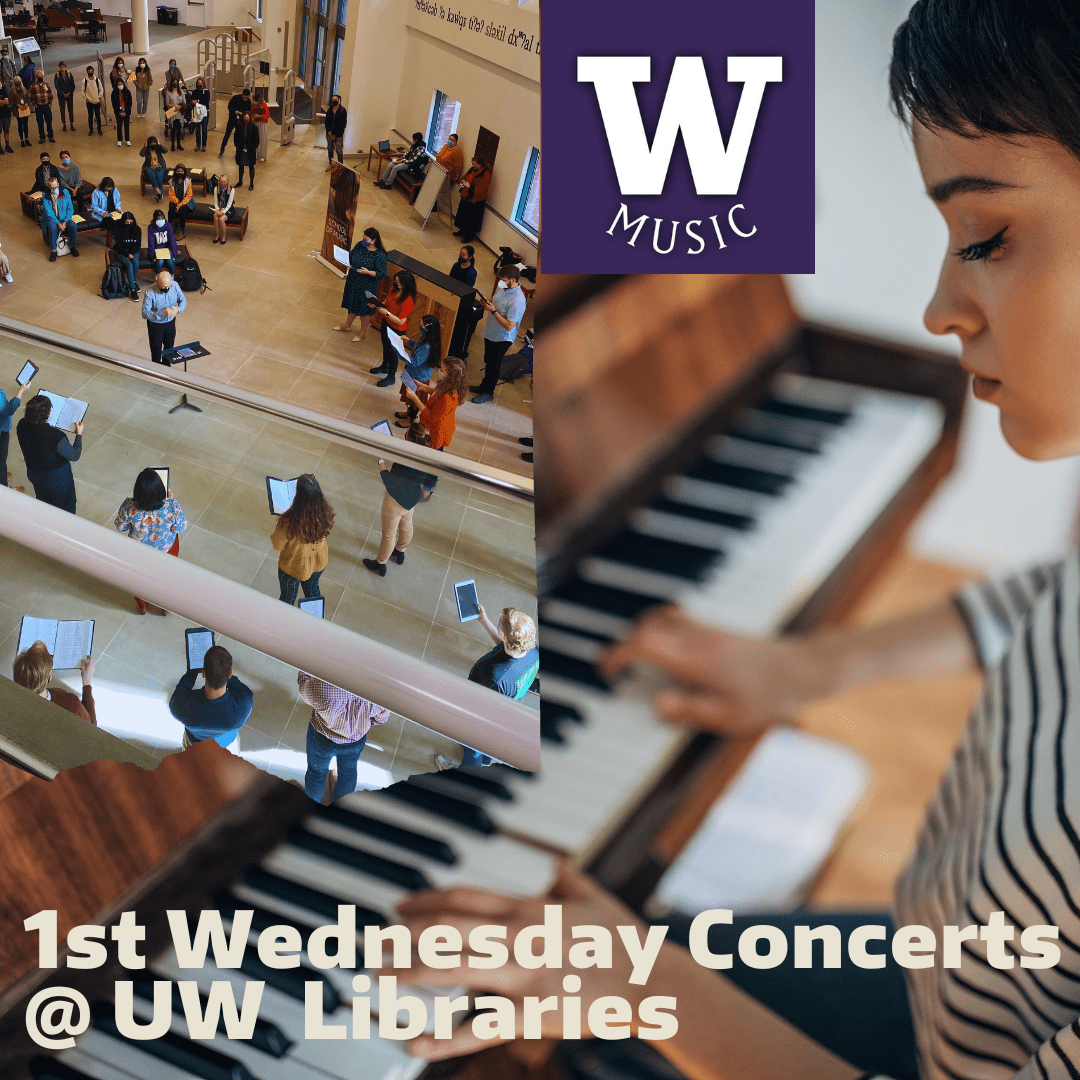
Monthly lunchtime concertstake place every first Wednesday in Allen Library North with performances from UW School of Music!
Stay Connected
The best way to learn about Library news and events is through our blog and social media. Subscribe (upper right corner) and follow us for the latest news on events, resources and updates to Library operations.
###
Stories
July/August Update
July 27, 2022
Updated 7/27
UW Libraries’ summer programs are a great way to build skills in between quarters. We offer a wide range of workshops for a variety of interests and experience levels including our Open Scholarship Summer Series, Graduate Student Research Institute, Research Data Management Workshop and more! Plus, some amazing summer reads, book clubs and more. Stay cool and enjoy the summer, huskies!
Operations
Fall quarter hours will be confirmed and posted mid-late August. See Libraries hours through August.
“Shelf Life”: You may notice some empty bookshelves and/or a lot of activity around shelves as we move and rotate collections in Allen Library. This is in preparation for a future project to integrate some iSchool programs and offices inside the Library; construction is scheduled to begin January 2023. Learn more.
Tateuchi East Asia Library (TEAL) closed for summer During closure, material not shelved in the TEAL reading room will be available for request and pick- up at other campus libraries. Faculty can also request delivery via campus mail to their offices. Learn more.
News and Stories
Oceanography students aboard a boat, Friday Harbor Laboratories, University of Washington, Friday Harbor, Washington, August 3, 1948,University of Washington Libraries, Special Collections, NIS(I)374b
Stories from the Salish Sea: Special Collections at the University of Washington. In a post for the International Commission of the History of Oceanography, UW Librarians Maureen Nolan and Lisa Oberg highlight the history of this important waterway, marine research at UW and selections from current and historical material relating to the Salish Sea including oceanology, oceanography, fisheries, and natural history across collecting areas.
Books, Book Clubs & Book Talks
“Katie Baird’s moving memoir about the people she worked with and the lessons she learned as a Peace Corps Volunteer brought me to tears. It reminded me how much our Peace Corps experiences made us citizens of the world.” — Donna Shalala, former Health and Human Services Secretary, former member of Congress, RPCV Iran 62-64
Growing Mangos in the Desert: a memoir of life in a Mauritanian Village — Author Katie Baird, Division of Politics, Philosophy and Public Affairs in the School of Interdisciplinary Arts & Sciences work was recently featured in UW Tacoma Libraries’ Publish and Flourish, an annual event that recognizes the accomplishments of faculty and staff who have published a book within the past year.
Real Lit[erature] Summer Book Club: open to anyone affiliated with UW: students, faculty, and staff, RealLit builds community, reduces isolation and enhances campus education. Join us for a great summer selection: Ophelia After All, by Racquel Marie. Brought to you by The UW Tacoma Library, in collaboration with the Center for Equity and Inclusion. Join us and learn more.
Featured Resources, Collections
Women and the Law presents congressional hearings, books, Supreme Court briefs and articles illustrating 200 years of the ongoing struggle for gender equality. Focusing mainly on the experiences of women in the United States, topics cover abortion, suffrage, education and employment. Women and the Law is part ofHein Online, brought to you by the UW Law Library.
“I was really impressed with this workshop. It had so many wonderful resources and I learned a lot. The tutors were fantastic … The materials were great and easy to understand as well. It was good to know I’m heading in the right direction with data management and know how to really improve my data management.”
– former RDM workshop attendee
Research Data Management Workshop – Mon. August 15th– Thurs. August 18: Looking for tips and tools to better help you manage your research data, and preserve it for long-term use? The UW Libraries is offering Research Data Management, an asynchronous online workshop that covers data management planning, funder requirements for data sharing, metadata, tips to help keep you organized, sharing, archiving and preservation, and an introduction to tools and on-campus support to aid researchers.
Graduate Student Research Institute #1– Mon. August 22nd – Fri. August 26: Join UW Libraries for this free and asynchronous 5-day online workshop for new and returning UW graduate students, aimed at helping students learn the tools and strategies they need to research with confidence and success.
Monthly Pressbooks Workshops
Pressbooks’ suite of products– offered through #YourUWLibrary– makes it easy to create, adapt, and share educational material. Learn how to create open textbooks, course materials and more.
Digital Scholarship Drop-In Help Hours (via Zoom) on Thursdays: We offer consultations for research and course-related projects. Examples include support for digital publishing, building digital exhibits, and more! We can help you find the right tools, resources and instruction whether you’re just getting started or are working on an ongoing project.
Last Chance: Exhibits and Displays ending in August
And Then She Said: Voices of Feminists Past and Present was sown from The Dead Feminists series, a collaboration between local artists in the form of a collection of 31 broadsides elevating voices of women throughout history. Featuring quotes by historical feminists, the broadsides are also tied to current political and social issues. Each limited-edition broadside is letterpress printed from hand-drawn lettering and illustrations. The exhibit augments the series with items from the Libraries’ collections as well as reflections from library staff about what the artwork means to them and how it resonates with their own experiences. Through August 19, 2022. Learn more.
The Pacific Northwest in the ‘70s This quarter’s theme is Workin’ for the Man– a look at the decade’s labor activities and how they shaped how we work today. May 9-August 19, 2022.
###
Stories
How UW Students Use GIS in their Research
June 21, 2022
Near the end of the academic year, UW Libraries virtually hosted the 6th annual GIS Symposium. The GIS Symposium highlights and celebrates the transformational role of Geographic Information Systems (GIS), remote sensing, and data visualization technologies at the UW and beyond. While there are other GIS-focused events on campus, the UW Libraries’ GIS Symposium features interdisciplinary presentations open to all departments at the university.
To those unfamiliar with GIS, UW Libraries Global Studies and Geography Librarian Kian Flynn describes it as “a system featuring geographic data that can be used to store, analyze, and visualize (often in the form of a map) that data.” GIS can be used in everything from urban planning to agriculture analysis, to telecom/network services optimization.
At UW, students across all disciplines learn how to use GIS resources in their research, and the GIS Symposium presents an opportunity to showcase their impressive work.
The schedule of the GIS Symposium featured a keynote speaker and short talks given by undergraduate students, graduate students, and faculty. This year, UW Bothell faculty Jin-Kyu Jung and Nora Kenworthy gave the keynote lecture, GoFundUS: A Critical and Creative GIS and Geovisualization Project to Unmap and Understand Inequalities in Medical Crowdfunding. This year’s contributors to the short talks come from all over the University and this year’s symposium featured work from the Seattle and Bothell campuses, as well as the Geography, Earth and Space Sciences, Human-Centered Design & Engineering (HCDE), History, French & Italian Studies, and Environmental Science & Resource Management departments.
This year’s contributors to the short talks come from all over the University.
At the 2022 GIS Symposium, topics covered an impressive range of content, all of which highlighted the crucial role that GIS plays in research at UW. Below is a list of the short talk topics given at the presentation:
Brett Halperin — Interactive Digital Story Mapping to Document Housing (In)justice through Community-Based Design
Anna Nguyen and Madison Heslop — Entanglements: Counter-Mapping the History of Asian Migration onto Coast Salish Lands
Graduate Students, History
Maya Smith — “Reclaiming Venus” through ArcGIS Story Maps
Faculty Member, French and Italian
Natalie Vaughan-Wynn — The Uneven Geographies of Digital Food Apartheid
Graduate Student, Geography
Xiaohan Yao — Earthquakes’ Influence on Populations and Land Cover in King County with GIS
Undergraduate Student, Earth and Space Sciences
Jessie Woldstad — Snow Coverage on Mount Rainier: 2001 vs. 2021
Undergraduate Student, Geography: Data Science
Mike Lang and Elizabeth Davis — The Disaster Response Exercise: Mapping a Post-Earthquake Environment from a Bicyclist’s Perspective
Undergraduate Student, Environmental Science & Resource Management and Graduate Student, Earth & Space Sciences
The UW Libraries GIS Symposium and the Proceedings of the GIS Symposium that will be published on the Manifold platform are both open and accessible to the general public. Through the Symposium, the Libraries provide a platform for students to present their projects and gain valuable presentation skills in front of an interdisciplinary audience. The Symposium provides a platform for the UW GIS community to work across disciplinary silos and learn from their colleagues in different disciplines.
Pride Month is celebrated each year in the month of June to honor the 1969 Stonewall Uprising in Manhattan. The Stonewall Uprising was a tipping point for the Gay Liberation Movement in the United States. The purpose of the commemorative month is to recognize the impact that lesbian, gay, bisexual and transgender individuals have had on history locally, nationally, and internationally. Learn more about the history of Pride Month, and thank you for joining UW Libraries in sharing these many interesting collections and UW-only resources in celebration of Pride Month!
View:
The new display in Odegaard Undergraduate Library; Pride: Power and Love
Read:
Underflows Queer Trans Ecologies and River Justice (UW Press, April 2022), by Cleo Wölfle Hazard, UW faculty, School of Marine and Environmental Affairs (SMEA). At the intersection of river sciences, queer and trans theory, and environmental justice, Underflows explores river cultures and politics at five sites of water conflict and restoration in California, Oregon, and Washington. The result is a deeply moving account of why rivers matter for queer and trans life, offering critical insights that point to innovative ways of doing science that disrupt settler colonialism and new visions for justice in river governance.
Recommendations from the recent book display in Odegaard Library, Queer Joy: a curated list of graphic novels, novels, poetry, manga, movies and TV, including trigger warnings along with keywords and descriptions.
Check out journals like Feminist Studies; GLQ: A Journal of Gay and Lesbian Studies; and Transgender Studies Quarterly available through UW Libraries with your UWNet ID! Learn more.
Rainbow Book Month LGBTQIA+ Book Awards and Bibliographies from the American Library Association
The American Library Association supports LGBTQIA+ literature through the Stonewall Book Awards (in Children’s and Young Adult, Non-Fiction, and Literature categories), as well as two bibliographies including the Rainbow Book List and Over the Rainbow Book List. These awards and lists serve to recognize the very best in contemporary literature and serve as invaluable tools for building quality LGBTQIA+ collections.
Stonewall Book Awards – The first and longest-enduring award for LGBTQIA+ literature
Good luck on finals, Huskies–and remember that UW Libraries has many resources to help you succeed! Congratulations to all of the #uwgrad22 graduates and all those who will be celebrating commencement this month. Please read the operations updates below for important information on Library closures and Library-wide system updates!
Operations
Looking for an institutional data-sharing option?
Don’t Miss our Demo on Dryad Digital Repository on June 7th! With the increasing requirements for research data sharing and publication, there has been an increase in the need for a robust data sharing option for UW researchers. Dryad is an option to consider, and your feedback is important as the Libraries evaluates this product’s potential. Learn more.
Commencement Hours:Suzzallo and Allen Libraries will be open on both days, Saturday June 11 and Sunday June 12, from 9am-1pm each day.
Starbucks inside Suzzallo will be closed on Sunday, June 12.
June 13th: Prepare and plan ahead for system updates and library closure:
All UW Library locations on all campuses (with the exception of Health Sciences and Friday Harbor) will be closed to accommodate the system-wide upgrade to the catalog/search software. Learn more.
Safeguard your links: If you have saved searches or permalinks in your course materials, (Canvas, syllabus, citations and other research materials) you will need to take action BEFORE June 13th. Learn more.
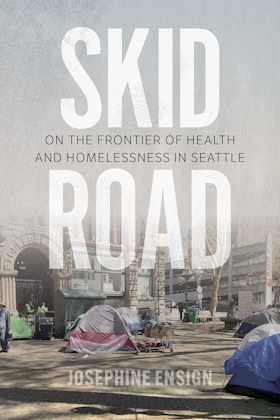
Featured UW Press Books:The River That Made Seattle: A Human and Natural History of the Duwamish by BJ Cummings. Using previously unpublished accounts by Indigenous people and settlers, Cummings’s compelling narrative restores the Duwamish River to its central place in Seattle and Pacific Northwest history. Cummings shares the river’s story as a call for action in aligning decisions about the river and its future with values of collaboration, respect, and justice.
Celebrate PrideMonth! From new works by UW authors, updated gender and sexuality resource guides, access to journals and unique UW-only collections and archives, explore and share all of the amazing content and resources available to you from UW Libraries. Learn more.
June 6 – Navigating Digital Scholarship Tools: Got an interesting idea for a digital scholarship project? Come join us for an exploration of digital scholarship tools available through YOUR UW Library!
June 7 – Demo: Dryad Digital Repository: With the increasing requirements for research data sharing and publication, there has been an increase in the need for a robust data sharing option for UW researchers. Join us for a demonstration of Dryad, a data repository with an institutional option.
Monthly Pressbooks Workshops: Pressbooks’ suite of products– offered through #YourUWLibrary– makes it easy to create, adapt, and share educational material. Learn how to create open textbooks, course materials and more.
Digital Scholarship Drop-In Help Hours (via Zoom) on Thursdays: We offer consultations for research and course-related projects. Examples include support for digital publishing, building digital exhibits, and more! We can help you find the right tools, resources and instruction whether you’re just getting started or are working on an ongoing project.
GIS Help Drop-In Hours:The GIS Lab is provided by the University Libraries to support the use of GIS for coursework and research by UW students, faculty, and staff. GIS Lab staff are available to assist lab users with locating geospatial data, integrating data into GIS projects, and basic ArcGIS functionality. Drop by Suzzallo Library on Mondays, Wednesdays, and Fridays from 10 am – 2 pm for assistance.
Exhibits and Displays
And Then She Said: Voices of Feminists Past and Present was sown from The Dead Feminists series, a collaboration between local artists in the form of a collection of 31 broadsides elevating voices of women throughout history. Featuring quotes by historical feminists, the broadsides are also tied to current political and social issues. Each limited-edition broadside is letterpress printed from hand-drawn lettering and illustrations. The exhibit augments the series with items from the Libraries’ collections as well as reflections from library staff about what the artwork means to them and how it resonates with their own experiences. Learn more.
The Pacific Northwest in the ‘70s This quarter’s theme is Workin’ for the Man– a look at the decade’s labor activities and how they shaped how we work today. May 9-August 19, 2022.
Stories
UW Libraries’ Negeen Aghassibake selected as 2022 LEADING Fellow
May 25, 2022
Helping UW researchers expand their impact through ORCID connections.
UW Libraries’ Data Visualization Librarian, Negeen Aghassibake
Negeen Aghassibake, a Data Visualization Librarian with UW Libraries, was selected as a 2022 LEADING Fellow, a program focused on data science in library & information studies. The program is part of the Laura Bush 21st Century Librarian (LB21) National Digital Infrastructures and Initiatives Project, supported by the Institute of Museum and Library Services (IMLS). During this one-year program, fellows will engage in data science education through Drexel University and undertake a data science project working with LEADING project mentors across the U.S.
“…I hope to not only strengthen my data skills, but also to bring those skills back to UW to implement in projects and programs that support students, researchers, faculty, and library staff.”
The fellowship is part of the LEADING project that seeks to scale-up the highly successful LEADS-4-NDP initiative to prepare a diverse, nation-wide cohort of 50 LIS doctoral students and early to mid-career librarians for data science endeavors.
ORCID stands for Open Researcher and Contributor ID, is a global, not-for-profit organization that aims to connect researchers, their contributions, and their affiliations by providing a unique, persistent identifier for individuals to use as they engage in research, scholarship, and innovation activities.
One of Negeen’s goals in working on this project is to better understand user needs in demonstrating the impact and dissemination of their research. ORCID (which stands for Open Researcher and Contributor ID) is a global organization that provides a unique persistent identifier for users as they conduct research and share their work. The ORCID US Community Data Visualization Project that Negeen will be working on seeks to better understand what collaborations have taken place between researchers at US institutions and globally as well as ORCID adoption across the United States using ORCID data.
This project will help develop a stronger understanding of collaboration between institutions, which is a critical part of diversifying approaches to research and breaking down knowledge and resource silos. As a part of this project, Negeen will also help develop documentation for libraries to be able to look at collaborations at their own institutions, which she hopes to implement at the UW to better understand user needs in collaboration and research dissemination.
Through this work, Negeen also hopes to develop stronger programming skills to better support users who have data science questions.
As a Data Visualization Librarian, Negeen’s role is to help researchers think critically about data visualization and how it might play a role in their work.
“I am excited to participate; as a LEADING fellow, I hope to not only strengthen my data skills, but also to bring those skills back to UW to implement in projects and programs that support students, researchers, faculty, and library staff,” says Negeen.
As a Data Visualization Librarian, Negeen’s role is to help researchers think critically about data visualization and how it might play a role in their work. Through this research, Negeen will gain valuable skills to strengthen UW Libraries’ data and research impact services.
UW Libraries (and Negeen) currently provide a wide range of data and research impact services, including data visualization, as well as data management and literacy support.
To schedule an appointment, or to learn more about these services, visit Negeen’s LibGuide, or check out all of the many Libraries data services through the Open Scholarship Commons.
Congratulations on this exciting fellowship, Negeen!
Inside and Out: Working with Vendors to Improve Accessibility
May 19, 2022
Co-authored by the UW Libraries Accessibility Working Group
Digital resources and services have become an integral part of library functions. While this increases access for many, it can present new barriers for some users with disabilities. To recognize Global Accessibility Awareness Day, we’re sharing more about accessibility audits to help increase digital access and inclusion at the UW Libraries and Press.
Projects involving accessibility audits are becoming increasingly common at the UW Libraries and University Press and help ensure we’re providing our core services in an equitable way.
“Libraries are all about providing access to information – and that’s physical access and electronic access,” said Collection Assessment Librarian Hana Levay, who helped evaluate if Libraries users could retrieve results using only their keyboards. The keyboard navigation project tested roughly 650 library products. Afterward, the team reached out to vendors of products that failed to talk about possible improvements and shared their results publicly so others can use the information in their own purchasing decisions.
Accessibility audits are a process to evaluate the usability of technologies for people with disabilities. They involve performing tests to make sure people with visual, hearing, motor, or cognitive disabilities can use web-based resources and services to the fullest, and can help inform prospective clients as to whether or not they should invest in certain products.
“…introducing a new technology without first vetting it for accessibility results in late, impartial and inequitable services”
Implementing these audits before a new technology is adopted helps organizations understand, improve, and plan accommodations for the products that will ensure all users can take advantage of it – rather than scrambling to accommodate disabled users after the fact or leaving the work of ensuring access entirely to the office of Disability Resources for Students.
“Accessibility is becoming the responsibility of those people who are selecting and implementing a new technology to campus,” said Hadi Rangin, IT Accessibility Specialist for Accessible Technology Services. He says when universities introduce a new technology without first vetting it for accessibility, it results in late, impartial and inequitable services for disabled members of our community.
Rangin works with other members of the accessibility team to perform audits of various technologies used at UW, including a number of software products offered by the Libraries. This process includes assessing resources to identify any problems and barriers the user may encounter, and then working with vendors to create a roadmap for improving. Manifold and Pressbooks, two digital book publishing platforms, are examples of resources that have received accessibility audits.
Other initiatives include work at the University Press to create more accessible ebooks for people who use assistive technologies and an effort to collect and assess Voluntary Product Accessibility Templates (VPATs) from library vendors before resources are adopted or renewed. This brings accessibility into the procurement process. These self-disclosed documents describe how the vendors feel they do or do not meet accessibility standards. New methods for assessing VPATs for accuracy and completeness can help with ranking vendors by their accessibility efforts, which brings more attention to those areas most in need of improvement. VPAT assessment gives the Libraries a starting point to have conversations with these vendors about the accessibility of their products and possible improvements.
“I think it’s really important for us as librarians to hold companies accountable for making accessible or more accessible products”
Beyond ensuring we’re serving the entire UW community more effectively, testing products and discussing possible improvements also helps other organizations become more accessible. Many of these audits have included working directly with vendors to identify problems and improve the accessibility of their software. Others have included sharing results publicly, so people considering adopting certain products have more robust information to work with before they decide.
“I think it’s really important for us as librarians to hold companies accountable for making accessible or more accessible products,” said Open Education Librarian Lauren Ray.
That said, the work can present challenges. Often it’s taken on by small or under-resourced groups who aren’t sure where to turn for training or support. In many cases the people initiating the work don’t identify as disabled themselves. And while some vendors and technology companies welcome the opportunity to make their products more accessible, others resist change. Even when they are receptive, the solutions can be complex and costly.
The reality is accessibility work is an ongoing process. “As long as you can test, it continues. I don’t think there’s anything that’s perfectly accessible,” said English Studies and Research Commons Librarian Elliott Stevens. “There will always be a new update to assess, a bug to fix, or an improvement to be made. “This is a long term project. It’s something that we’re going to be working on all the time,” said Collection Strategy and Licensing Librarian Faye Christenberry. “I don’t imagine it’s ever going to be 100% done. It’s about going back and continuing to push for improvement.”
That in and of itself can feel like a barrier – but it’s not insurmountable. “When we started thinking about this it just seemed absolutely overwhelming,” said Beth Fuget, who works with grants and digital projects at the UW Press. “It’s actually not as huge a challenge as it seems in order to get started.”
For those looking for a place to begin, one place to start is seeing if your organization offers training, support, or expertise to vet products and services for accessibility. Rangin also recommends including the expectation of accessibility in contracts – that is, specify that vendors must meet certain accessibility standards as part of the terms of adopting their product – and then hold them accountable for it.
Despite the challenges, it’s important to do some homework to determine how you might start making changes. “We do what we can with the time and resources that we have, but you have to do something,” Christenberry said. “You can make a difference.”
###
Stories
No Easy Answers: Big Data Vendors, Information Access and Libraries
The UW Libraries is monitoring these developments closely and stands in partnership with SPARCand other industry peers in expressing our strong opposition to any business practices that violate human rights and advocate for change of such practices by UW Library vendors that include Westlaw, and parent company, Thomson Reuters, and LexisNexis.
…”We stand in partnership with SPARC and other industry peers in expressing our strong opposition to any business practices that violate human rights and advocate for change of such practices by UW Library vendors that include Westlaw, and parent company, Thomson Reuters, and LexisNexis.”
At the same time, ensuring access to essential legal resources and information for our scholars and the community is a social responsibility of UW Libraries. When selecting resources, we must consider this great responsibility along with our institutional values, and how best to balance those ideals in the context of limited resources—both financial and physical.
UW Libraries shares the challenge of most major research library systems in that there is little choice in the marketplace but to purchase certain types of research products from these information monopolies.**
Unfortunately, for the specific information sources that our UW community needs and relies on, there are no viable replacement options at this time. Regardless of their cost, alternative databases do not have citators that provide critical context and essential information for performing legal research (Shepard’s for NexisUni and KeyCite for Westlaw). For UW’s non-Law School users, the unique citation content within this resource is the most popular in terms of usage rates. With a shared and unified desire to divest from vendors who do not align with our principles, a Libraries subcommittee spent the better part of the past year doing extensive research on alternative options and concluded that there is no alternative for this critical content that is only available from LexisNexis and Westlaw. Furthermore, lack of access to these resources would result in a greatly diminished ability to conduct legal research for all users.
With no other valid alternative to the primary providers of this data, UW Libraries chooses to maintain access to these resources for the public good (for students, faculty and staff on all campuses and the greater community) while we work in partnership with industry advocacy leaders (e.g. SPARC, ARL and others) who seek federal legislative and regulatory changes to further protect privacy and the sale of personal data from data brokers (the vendor) to third parties, including government agencies.
The Libraries decisions around collection management are guided by a set of specificCollection Management Principles and Strategies aligned with both our mission to accelerate learning for the public good and our core values of accessibility and sustainability. These principles provide a framework for evaluation and decision-making in collection management across all formats and disciplines. The Library has worked extensively in recent years with the Faculty Senate to adopt formal resolutions that further defineLicensing Principles and Expectations for Vendors, in alignment with our mission and values. Most recently the Faculty Senate approved a Class C resolution to support the UW Libraries’ Principles in Licensing Scholarly Resources, including discontinuing negotiations with vendors that conflict with these principles aimed at protecting the privacy of researchers and their data, equitable access, and support for new models of sharing (rather than limiting) the dissemination of knowledge.
If you have questions on this topic, please contact: [email protected]
This keynote talk for the Academic Surveillance and the Big Data Economy event given by Sarah Lamdan, Professor of Law at City University of New York. The event was co-sponsored by the UW Libraries Open Scholarship Commons and the Research Commons, and it took place on May 3rd, 2022.
This month’s update is packed with events and important news about summer operations. Undergraduates— there’s still time to apply for the UW Libraries Undergraduate Research Award for a chance to win up to $1,000! Existing or potential grad students— don’t miss the very helpful workshop on Finding Funding For Graduate School!
June 13th Closure/Catalog and Search System Down: All UW Library locations on all campuses (with the exception of Health Sciences) will be closed to accommodate a system-wide upgrade to the catalog/search software on Monday, June 13th.
If you have saved searches or permalinks in your course materials, you will need to take action BEFORE June 13th. Learn more.
“It’s a wonderful feeling to be holding a first edition of a book from the 1700s in your hands,” says student Mia Middleton, with Special Collections’ Sandra Kroupa, in her 53rd year with UW.
Libraries in the Classroom: From centuries-old French literature to a 1940s copy of Vogue magazine, go inside UW’s Textual Studies Program where students are working with UW Libraries Special Collections to explore how text is shaped by publication processes and technologies, and how it can be reinvented over time. Read the story from UW Arts and Sciences
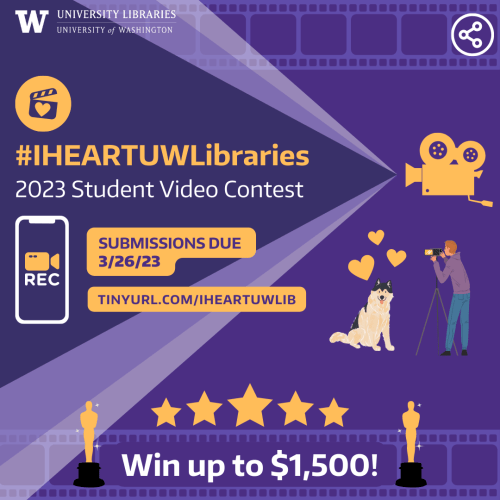
I HEART LIBRARIES Student Video Contest – 2022 winners announced! Congratulations to first place winner, undergraduate Phuong (Jolie) Tran who gave us a very memorable “dawg’s eye view” of UW Libraries’ resources – check out all the winners.
“Time heals”; A drawing submitted by Anna Barrera to the Community Reads online gallery. See the many beautiful and moving creations of art, poetry and more celebrating the theme of “well-being” in conjunction with this year’s text: Undrowned, by Alexis Pauline Gumbs.
Community Reads, hosted by UW Bothell and Cascadia College Campus Library, strives to build community through shared experiences and discussions around social justice, equity, and diversity centered on a quarterly theme and text. All are welcome to join in on the discussion/reflections/and contribute through the creative gallery. Participate/learn more.
REAL Lit – UW Tacoma Library’s Real Lit[erature]: Reading for Social Justice book club will be reading Jaquira Díaz’s Ordinary Girls. This book club is open to anyone within the UW Community. The club meets virtually, every Thursday from 12:30-1:20. Sign up and/or learn more.
The recently published Routledge Companion to Korean Literature is the most extensive collection to date of English-language articles on Korean literature, written by Associate Professor Heekyoung Cho with contributions from Asian L&L faculty member Dr. Ungsan Kim, UW Korean Studies Librarian Hyokyoung Yi, among many others. Learn more.
Special Events
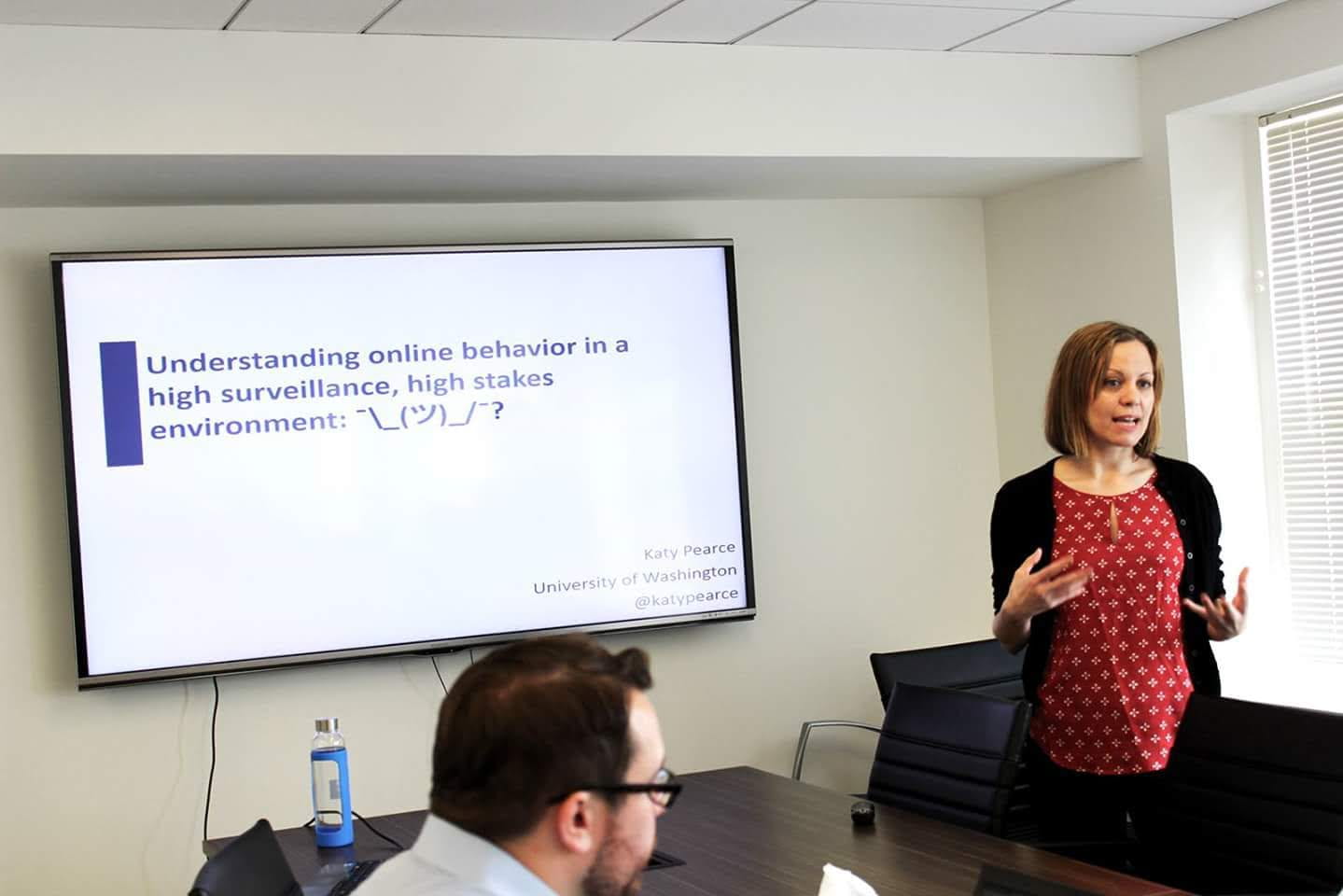
May 3 – Academic Surveillance and the Big Data Economy: Explore the topics of academic surveillance, data politics, and the economics of academia through a keynote talk and panel featuring CUNY Professor of Law Sarah Lamda, followed by a complimentary online session “‘Like Lesbians Walking the Perimeter’: Experiences of U.S. LGBTQ+ Folks with Online Security, Safety, and Privacy Advice”, brought to you by the UW Libraries Open Scholarship Commons.
May 10 – Poetry Storytelling Workshop: a poetry reading and workshop with Jamal Gabobe centered around his new book The Path of Difference.
Images and writings of Henrietta Woods, references from McDaniel’s book “Sweet Taste of Liberty: A True Story of Slavery and Restitution.” Image source.
May 23 – Discovering AI@UW: Join the conversation with AI (Artificial Intelligence) experts from across the University of Washington campus! Offered by the eScience Institute, a partner of the UW Libraries Open Scholarship Commons.
May 25 – 6th Annual GIS Symposium: The GIS Symposium highlights and celebrates the transformational role of Geographic Information Systems (GIS), remote sensing, and data visualization technologies at the UW and beyond. Submit a lightning talk proposal by 5/20 for a chance to present your research!
May 19 – Finding Funding For Graduate School: Join the Graduate Funding Information Service for an overview of funding types, search tools, and search strategies!
May 6 – Fast Fingers & Slow Fashion: Crafting Dissertation Research, researchers demonstrate how they incorporate textile craft practices into dissertation research in the fields of Anthropology/Education and English. Offered by the Simpson Center for the Humanities’ UW Textile Studies Graduate Research Cluster.
Monthly Pressbooks Workshops: Pressbooks’ suite of products– offered through #YourUWLibrary– makes it easy to create, adapt, and share educational material. Learn how to create open textbooks, course materials and more.
Digital Scholarship Drop-In Help Hours (via Zoom) on Thursdays: Through the Libraries Open Scholarship Commons, we offer consultations for research and course-related projects. Examples include support for digital publishing, building digital exhibits, and more! We can help you find the right tools, resources and instruction whether you’re just getting started or are working on an ongoing project.
GIS Help Drop-In Hours:The GIS Lab, provided by the University Libraries Open Scholarship Commons, assists users with locating geospatial data, integrating data into GIS projects, and basic ArcGIS functionality. Drop by Suzzallo Library on Mondays, Wednesdays, and Fridays from 10 am – 2 pm for assistance.
Open Writing Circles Tuesdays:virtual weekly meetings offering 90 minutes of quiet writing time and community with fellow writers from across campus, every Tuesday! Offered through the Odegaard Writing and Research Center through May 31st.
Featured Resources, Collections
UW Tacoma Libraries Relaunches Campus Meaningful Reads: Share your voice and help build a UW Tacoma collection that highlights the books, articles, or creative writings that have been meaningful to members of our campus community. Learn more.
If you have a question about any of the resources in this guide, ask Harry Murphy, American Ethnic (African American, American Indian, Asian American, Chicano) Studies Librarian
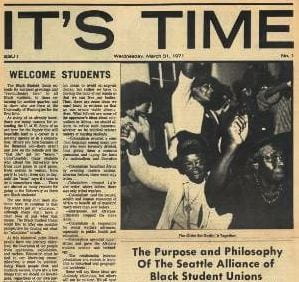
The Diversity Collection: Is one of the many resources you’ll find in UW Libraries’ American Ethnic Studies Research Guide. Learn about history, society, and politics from the perspective of communities and individuals who lived through it. In the Diversity Collection, you’ll have access to ethnic, minority, and native presses, grassroots newspapers and magazines, and newsletters focusing on gender and sexuality, from 1970 to the present day. This interdisciplinary full-text source is brought to you by UW Libraries.
Exhibits and Displays
“Oars Out, Roll Cameras” highlights the upcoming filming of Boys in the Boat in conjunction with the opening weekend of boating season/Windermere Cup May 6-7. On display in Allen North from April 6-May 31!
And Then She Said: Voices of Feminists Past and Present was sown from The Dead Feminists series, a collaboration between local artists in the form of a collection of 31 broadsides elevating voices of women throughout history. Learn more.
The Pacific Northwest in the ‘70s This quarter’s theme is Workin’ for the Man— a look at the decade’s labor activities and how they shaped how we work today. May 9-August 19, 2022
###
Stories
Community Reads
April 29, 2022
“We, too, on land are often navigating contexts that seem impossible for us to breathe in, and yet we must. The adaptations that marine mammals have made in relationship to breathing are some of the most relevant for us to observe, not only in relationship to our survival in an atmosphere we have polluted on a planet where we are causing the ocean to rise, but also in relationship to our intentional living, our mindful relation to each other.”
-Alexis Pauline Gumbs, Undrowned, p.21
UW Bothell and Cascadia College Campus Library’s Community Reads program strives to build community through shared intellectual experiences and discussions around social justice, equity, and diversity. The intention of the program is to choose readings/viewings/recordings to cultivate productive discussion, reflections and creativity in the campus community around these topics. Each quarter, the Community Reads team, made up of staff from the UWB/Cascadia Library, selects a guiding theme for participants to follow along with and reflect on over the quarter.
This academic year, the Community Reads program has focused on Undrowned: Black Feminist Lessons from Marine Mammalsby Alexis Pauline Gumbs. The book consists of a series of “meditations,” or chapters, encouraging readers to think about their wellbeing and presence in the world and community, inspired by the practices of marine mammals and Black feminist thought. Each quarter, Community Reads has focused on two meditations relating to a common theme:
Fall 2021: themes of self-care, breath, and reflection. Meditations: breathe and go deep.
Winter 2022: themes of community care and support. Meditations: collaborate and be vulnerable.
Spring 2022: individual and community practices in the face of systemic injustice. Meditations: practice and take care of your blessings.
“We Are All Connected” by Austin Picinich
Due to the ongoing pandemic, Community Reads has taken an asynchronous form this year, in the form of an online digital gallery of artwork. The Community Reads program is open to the entire UW community, and participation is encouraged at any time throughout the quarter. Community members are encouraged to reflect on the meditations or any of a series of prompts, to create some form of artwork in response to those reflections, and share their artwork with our online gallery as part of a community art piece. This gallery is viewable to anyone on the internet and is designed to highlight diverse and accessible means of story-telling and reflection. Examples of past contributions include poems, photographs, spoken word collections, collages, diagrams, and short stories.
Now in its seventh year, the Community Reads program has reached hundreds of students, faculty, and staff across all three UW campuses. As an integral part of the UWB/CC Library, this program has played a fundamental part in the library’s outreach during the pandemic, as it allowed for students, faculty, and staff to directly interact with library staff and collections from home. Here are some past testimonials from previous Community Reads participants:
“Everyone deserves to BREATHE” by Audrey Yang
“The Community Reads Program, and in particular, the online art exhibition enabled my class to explore course content in a public sphere increasing professional practice learning and providing students a public exhibition space for their work which we are lacking at UW Bothell. In freshman courses, this experience was particularly powerful in how they developed and resolved their work, and it was an incredible confidence-building experience for the students–many of whom were relatively new to the arts. In conjunction with the reading, the prompts for art contributions broadened the approaches my students were exploring and inspired a much deeper level of engagement with the content; it became a project with real-world implications rather than simply another assignment they needed to complete. This was an incredible addition to the learning experience.” – gary carpenter, artist/lecturer, UW Bothell
“When I think about my wellbeing in connection with community wellbeing, I act and am better with myself and all those around me—human and non-human alike. The occasional prompts I get from the Community Reads program are helping me make the connection between myself and my community (and I’m broadening the definition of ‘community’, too). I feel lucky that I got a physical copy of Undrowned, as I revisit it often and know that I’ll need to in the future!” – Je Salvador, library staff
How to participate in Community Reads during Spring Quarter:
Read the meditation(s) practice and/or take care of your blessings
View the online gallery of submissions community members have submitted in response to readings from Undrowned. Fall and Winter Quarter submissions are engaging and quite beautiful.
Submit to the gallery: We have provided a series of prompts developed to inspire a creative response to the readings. Submissions can be in any form of artistic expression (drawing, collage, writing, photography, audio, etc.). Submit on your own, or make this a team activity.
Develop a course assignment using these readings and gallery space. In the last two quarters, faculty at Cascadia and UWB have created course assignments centered around the selected readings in Undrowned and asked their students to submit them to the gallery. If you would like to consult with the Community Reads team on an assignment, we would be thrilled to hear from you (it is not necessary to consult with us, however, to use the readings and gallery in your classes).
“Climate Change” by Mercedes Ro
Community Reads is always looking to broaden its outreach to the greater UW Community by engaging directly with faculty and staff who teach in areas relevant to the program’s themes. If you would like to work with Community Reads, please contact theCommunity Reads team.
This program complements other EDI-based reading and collection work happening across our UW campus community such asRecommended Reads for Equity program and UW Tacoma’sREAL Lit[erature] Book Club, both of which are continuing as remote/online programs.