Skip to content

Tateuchi East Asia Library

About

The Tateuchi East Asia Library is a premier resource for China/Taiwan, Japan, and Korea studies at UW. Our librarians curate unique collections – including rare and archival materials – and provide expert research support, instruction, and outreach. As both an academic and cultural hub, the Tateuchi East Asia Library fosters scholarship, engagement, and community through its immersive collections, programs, and space.
Teal History

Tateuchi East Asia Library: Our History

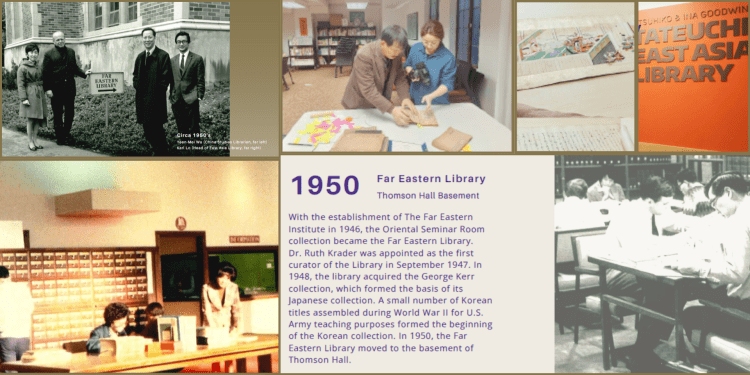
The official beginning of the Tateuchi East Asia Library at the University of Washington can be traced back to 1937, when the library received the first funding from the Rockefeller Foundation to purchase a small collection of Chinese literary works. During the 1940s, the holdings had increased to 20,800 volumes, including a gift of 2,000 volumes from Columbia University.  Additional purchases were made possible through more grants from the Rockefeller Foundation. This modest collection, unnamed, uncataloged, and untended was shelved in the “Oriental Seminar Room” in Suzzallo Library and was available to faculty and students only by request.

With the establishment of The Far Eastern Institute in 1946, the Oriental Seminar Room collection became the Far Eastern Library. Dr. Ruth Krader was appointed as the first curator of the Library in September 1947. In 1948, the library acquired the George Kerr collection, which formed the basis of its Japanese collection. A small number of Korean titles assembled during World War II for U.S. Army teaching purposes formed the beginning of the Korean collection. In 1950, the Far Eastern Library moved to the basement of Thomson Hall. In 1951, a Rockefeller Foundation grant enabled the library to purchase Japanese materials on China. The acquisition of the Joseph Rock and Herbert H. Gowen collections further enhanced the Library’s holdings on China and Inner Asia.

The 1960’s saw the addition of the Helmut Wilhelm collection of Chinese classics and the Robert Paine collection of Japanese art materials. In 1976, the Library moved to its new home in Gowen Hall, where it has remained to present, and was renamed the East Asia Library. The collection continued to grow rapidly throughout the 1980’s. Automation was also introduced during this period.

Strong growth of the collection took place in the first half of the 1990’s, especially in the acquisition of electronic resources about East Asia, both in online and CD-ROM formats. The library was the first institution outside China to acquire the Twenty-Five Dynastic Histories database and the first academic library in North America to establish a direct connection to the NACSIS-IR service in Japan.

The East Asia Library received a phenomenal gift of $6 million from the Atsuhiko and Ina Goodwin Tateuchi Foundation in February 2020. In recognition of this gift, the library was renamed the Atsuhiko and Ina Goodwin Tateuchi East Asia Library.

As of 2023, the library has nearly 800,000 volumes of materials on East Asia in Chinese, Japanese, Korean, Tibetan, Manchurian, Mongolian, and other languages.
Teal Celebration

Milestone Timeline

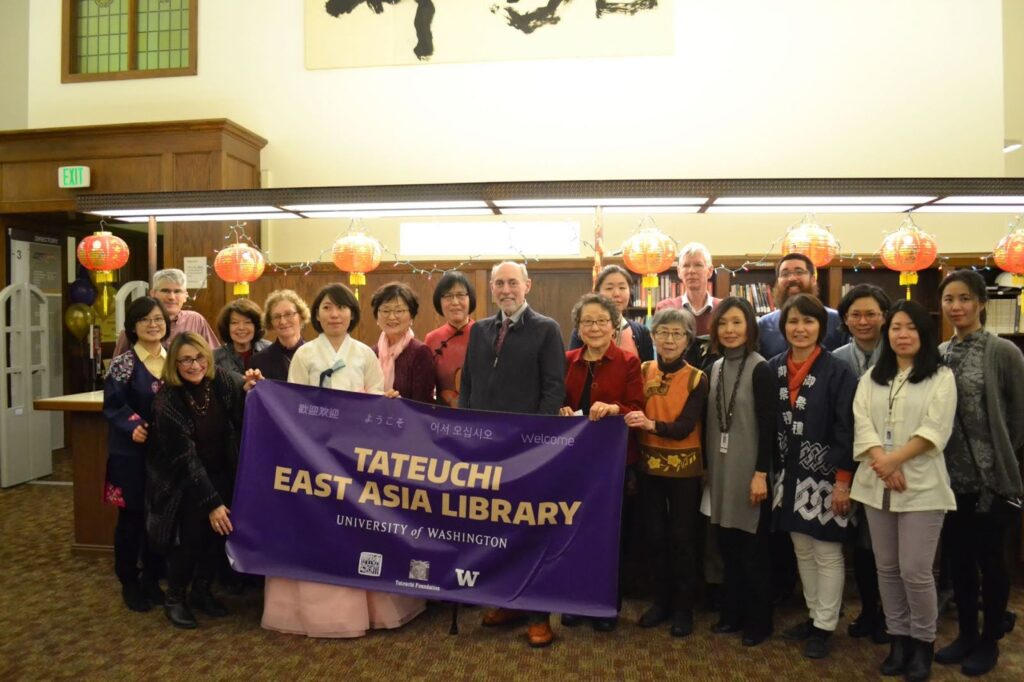
Learn more about the important milestones throughout the Library’s history and evolution over time.

Meet the Tateuchi East Asia Library Team

    Facilities & Events

    Libraries Facilities & Events supports the mission of UW Libraries and the University of Washington by providing specialized expertise and behind-the-scenes services that enhance the user experience for students, faculty, and staff.

    Ask Us!

    Get help from librarians by email, phone, 24/7 chat, or make an appointment with a subject expert

    Access Services

    Access Services supports the mission of the University of Washington Libraries by putting library materials into people’s hands.

    We are user centered and align our services with the needs of our research communities, striving to create spaces and provide resources in which a diverse group of people can successfully interact with the library.

    Ask Us!

    Get help from librarians by email, phone, 24/7 chat, or make an appointment with a subject expert

    What We Do

    Branch Operations Services runs the daily operations of the Art, Built Environments, Drama, Engineering, Foster Business, Math Research, Music, and Tateuchi East Asia Libraries. We can answer your questions about the libraries and its services, as well as help you find and check out materials, place requests, use library equipment, and reserve rooms.

    Central Circulation Services helps you locate and retrieve library materials in the Suzzallo & Allen Stacks, off-site storage, Government Publications, and Media collections. Our public desk is on the first floor of Suzzallo Library, and this is where you can check out and return books, pick up your requested items, and ask questions about loans and library policies.

    Interlibrary Loan serves the UW community on all three campuses for free by working with libraries around the world to obtain print or electronic materials for users when the UW Libraries doesn’t have what you need. We also serve the greater  research community by providing scanning services to non-UW users including Cascadia, UW alumni, businesses, and non-affiliated individuals for a fee. We also provide interlibrary loan services to libraries, archives, museums, and government agencies. 

    Library Account Services issues, renews, and manages library accounts for the University of Washington community, as well as off-campus borrowers, across all three campuses. Library Account Services is also responsible for collecting payments for library charges, notifying library borrowers of charges and sanctions, overseeing the UW Libraries appeals process for library charges, and issuing and renewing study carrels and spaces.

    Meet the Access Services Team

    Related Resources

    Interlibrary Loan


    Obtain materials that the UW does not own; scanning services for articles and book chapters owned by the UW Libraries; scanning services for course materials.

    Get UW Materials & Beyond >

    Accounts & Privileges


    Learn more about your library account and access privileges 

    Find  your account details >

    Requesting & Delivery


    Request and receive materials, have them delivered, or get scans from UW Libraries.

    Learn More About Requesting & Delivery >

    Information Technology Services & Digital Strategies

    Information Technology Services & Digital Strategies (ITSDS) partners with colleagues throughout the Libraries, across campuses, and beyond on projects and initiatives to support the University’s mission, which is the preservation, advancement, and dissemination of knowledge. We strongly identify with the Libraries’ values of user-centered approaches, collaboration, equity, creativity, and sustainability.

    Ask Us!

    Get help from librarians by email, phone, 24/7 chat, or make an appointment with a subject expert

    What We Do

    Staff in the department provide collaborative leadership and support for:

    ITSDS coordinates Student Technology Fund allocations and can support IT tool reviews. ITSDS can also provide best-effort consulting for other topics such as IT security.

    ITSDS maintains tools such as ArcGIS, InMagic, and CONTENTdm that support digital collections. ITSDS manages tools to support UW’s institutional repository, such as ResearchWorks and Dryad.

    ITSDS supports library employee computing, which includes supporting desktop machines, laptops, phones, scanners, and printers.

    ITSDS manages physical and virtual IT infrastructure for UW Libraries, including system architecture and system engineering. For example, we manage servers in UW-IT’s data center and networking for UW Libraries physical locations.

    ITSDS supports tools that ensure effective and efficient UW Libraries business operations. This includes tools such as listservs and the Libraries intranet.

    ITSDS manages tools for library resource management and discovery. These include ExLibris tools such as Alma and Primo, and also other tools such as ILLiad, EZproxy, and integrations with MyUW.

    ITSDS supports digital signage, room reservation forms, and public computers for patrons to use.

    ITSDS supports the libraries’ web site, web sites created with LibGuides, and other public website resources such as Google Analytics.

    ITSDS supports Open Journal Systems (OJS).

    ITSDS manages a network storage appliance with 116 TB of storage. ITSDS also supports other storage systems such as Google Drive, OneDrive, lolo, and libdocs. ITSDS also supports tools for archiving digital records such as Archivematica.

    ITSDS provides research, design, and testing to help improve the user experience.

    Our Values

    We hold paramount, the privacy and security of our staff and patron information.

    We do this by:

    • Continuously and iteratively refactoring our workflows and architecture to optimize the health of our systems
    • Keeping up-to-date with potential areas of ingress and egress
    • Creating and documenting security and privacy policies
    • Building a Libraries-wide understanding of the importance of data security

    We strive for 24/7 access to our online services.

    We do this by:

    • Continuously improving the monitoring, efficiency, and maintenance of our infrastructure and processes
    • Maintaining robust workstations and technology for staff and public use
    • Planning and scheduling service down times to minimize disruption to our staff and users

    We align our services and programs with the needs of our communities and strive to create shared ownership of the Libraries.

    We do this by:

    • Making User Experience (UX) improvements to systems, content, workflows, and/or processes
    • Understanding user (including staff as users) needs
    • Designing for accessibility
    • Basing decisions on research data

    With regard both to our users and to our staff members, we strive to examine our biases, and to acknowledge and improve our shortcomings in personal, work, and professional spheres.

    We do this by:

    • Striving to eliminate roadblocks by conducting accessibility audits, staff surveys, user research, environmental scans, and promoting universal design
    • Valuing diverse perspectives and expertise which leads to better end results
    • Repeatedly and iteratively examining our internal documentation, practices, and hiring and retention policies

    We seek clarity and openness in our communication within ITS & DS, within the Libraries, and with Libraries’ users.

    We do this by:

    • Timely posting of alerts, communication of planned outages, and notification of status in unplanned outages
    • Notifying external partners when projects/work plans are delayed
    • Recognizing and respecting different opinions and areas of expertise
    • Having thoughtful and deliberate discussions regarding various approaches to the technical solutions we are trying to deploy

    We strive to create a healthy work environment that facilitates the well-being of our staff. We hold true to the belief that a healthy workplace and work-life balance not only benefits individuals, but also optimizes the performance of our work.


    We do this by:

    • Actively identifying and reducing toil
    • Documenting tasks and procedures
    • Striving for redundancy of knowledge
    • Actively pursuing a healthy and enjoyable workplace environment
    • Building time into work schedules to learn new technologies
    • Respecting personal time and expertise
    • Recognizing that healthy, well-designed, and well implemented systems and policies contribute to a healthy staff

    Meet the Information Technology Services & Digital Strategies Team

    Who We Are

    Data Services, Sciences, and Health Sciences (DSSHS)

    The Data Services, Sciences, and Health Sciences (DSSHS) department provides leadership and support for departments associated with the Sciences and Health Sciences, as well as supporting open, public and emerging forms of scholarship, especially in response to changing data landscapes. The Health Sciences Library also supports and collaborates with users across Washington state and the Pacific Northwest.

    Ask Us!

    Get help from librarians by email, phone, 24/7 chat, or make an appointment with a subject expert

    International Studies

    About

    International Studies Librarians provide services to students, faculty and community members for teaching and research on Near East Studies, Russian, East European and Central Asian Studies and Southeast Asian Studies.  

    We also offer specialized assistance with foreign language sources.

    Services include class teaching, in-library instruction using specialized research tools for foreign language and non-roman script materials (e.g Cyrillic, Arabic, Thai etc).

    Meet the International Studies Team

    Related Resources

    Learning Services & Social Sciences

    About

    The Learning Services & Social Sciences Department advances the UW Libraries Mission & Vision through the lens of teaching, learning, and engagement. The department leads the UW Libraries in supporting students holistically by deepening their learning related to inquiry and the critical use of information both inside and outside of formal class settings.

    Ask Us!

    Get help from librarians by email, phone, 24/7 chat, or make an appointment with a subject expert

    Featured Learning Services

    • Research Help UW Libraries offers a variety of online and in-person options for individual users seeking help with research.
    • Student Programs UW Libraries regularly offers programs that help students build resilience, reduce stress, and create meaningful connections.
    • Teaching Support UW Libraries collaborates with instructors to support classroom-based opportunities for developing students’ research and critical thinking skills.

    News & Updates

    Meet the Learning Services & Social Sciences Team

    Open Scholarship & Publishing and Arts & Humanities Department (OSPAH)

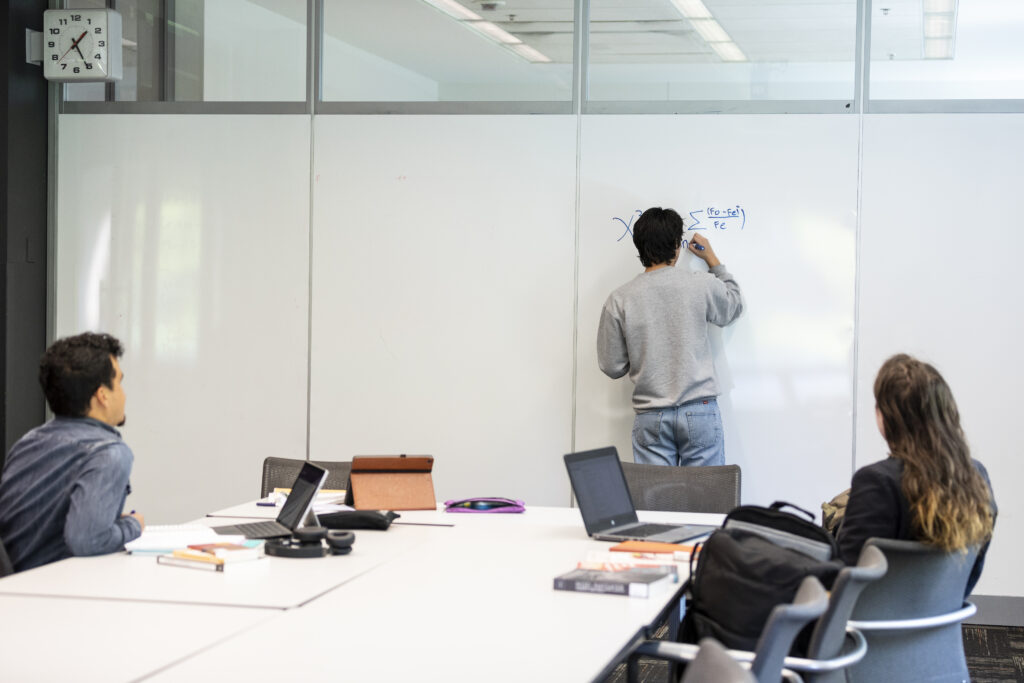
    Photo of a person writing on a whiteboard while two others look on in a collaborative learning or a study group session

    About

    Open Scholarship & Publishing and Arts & Humanities (OSPAH) Department is one of eight departments situated within the Research & Learning Services portfolio. OSPAH is comprised of: 

    • Government Publications, Maps, Microforms & Newspapers
    • Open & Interdisciplinary Research Support
    • Arts & Humanities liaison team

    Together, the department supports the entire research lifecycle from collecting and navigating primary source materials, supporting analysis and new knowledge creation, to publishing and sharing of research with broad audiences for the public good.

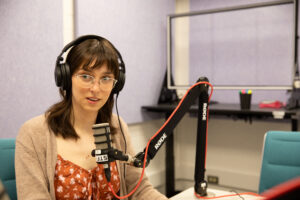
    A person wearing large headphones sits in a recording studio, speaking into a microphone mounted on an adjustable arm.

    Open Resources


    Openly sharing the work of the University and the region is important to us. Explore our work:

    A speaker at a podium addressing a seated audience, with interpreters and other participants nearby and individuals taking turns reading at a podium, many positioned beside American flags

    Featured Events & Exhibits


    As part of the Federal requirement to provide educational programming on the US Constitution, the UW Libraries holds an annual Constitution read aloud. We welcome students, faculty, staff and community members to join us in reading the Constitution and critically examining the historical and contemporary significance this document holds.

    Meet the Open Scholarship & Publishing and Arts & Humanities Department (OSPAH) Team

    News

    Cataloging and Metadata Services

    What We Do

    Cataloging and Metadata Services (CAMS) makes the University of Washington Libraries’ collection searchable so that students and researchers can quickly and efficiently find the resources they need. CAMS staff catalog print, audio, video, digital, archival, and other kinds of library materials in over 45 languages. Our staff creates standardized descriptions that help users discover and access millions of library items through UW Libraries Search and other systems.

    Ask Us!

    Get help from librarians by email, phone, 24/7 chat, or make an appointment with a subject expert

    Found a record that needs updating?

    Please use this form to report inaccuracies or issues with catalog records, digital collection records, or archival finding aids.

    UW Libraries Open Metadata Guidelines

    The University of Washington Libraries provides open access to the metadata we create, adding restrictions only when required by legal, ethical, or contractual obligations.

    Meet the Cataloging and Metadata Services (CAMS) Team

    The Secret Life of Student Catalogers

    Meet our students doing the behind-the-scenes work that makes finding library resources possible.

    Payne2025

    Nov 17, 2025


    Cypress Payne’s computer science background was helpful in her significant contributions to a global effort to map and transform of legacy MARC21 records to the more modern LRM/RDA/RDF format that allows for easier sharing of bibliographic data.

    Read about Cypress’ work >

    Fer 1

    August 19, 2025


    María Fernanda (Fer) Palomares Carranco simplified workflows for adding metadata profiles to local digital images and collaborated on a new data model and best practices for personal pronouns for Wikidata.

    Read about Fer’s work >

    Ally Okun

    Oct 1, 2024


    Ally Okun contributed to Homosaurus, an open, standardized vocabulary of LGBTQ+ terms.

    Read about Ally’s work >

    Valerie Rollins

    Mar 12. 2024


    Valerie Rollins contributed to Wikidata, a collaboratively edited multilingual knowledge graph.

    Read about Valerie’s work >

    Zhuo Pan

    Jan 22, 2024


    Zhuo Pan contributed to the MARC21 to LRM/RDA/RDF Mapping and Transformation Project.

    Read about Zhuo’s work >

    Odeegard Page (5)

    Oct 11, 2023


    Melissa Morgan worked on multiple projects involving linked data conversion. (no image available)

    Read about Melissa’s work > 

    Acquisitions and Rapid Cataloging Services

    About

    Acquisitions and Rapid Cataloging Services (ARCS) is the central library department responsible for acquiring, receiving, invoice processing, and simple copy cataloging of library resources. We work with English, Western European, Chinese, Japanese, and Korean languages.

    ARCS collaborates with vendors, suppliers, and other library departments to ensure its purchasing, processing, and invoicing activities align with University accounting rules and standards.