Skip to content

UW Tacoma Library

UW Tacoma Library Staff

Erika Bailey

Urban Studies, History, and Digital Scholarship Librarian

Jamal Gabobe

Media & Visual Resources Technician

Megan Gregory

Learning Commons and Access Services Manager

Wade Haddaway

Serials Technician

Marcia A Monroe

Access Services Supervisor

Kara Peters

Operations and Strategic Programs Assistant

Marisa Petrich

Instructional Design Librarian

Amanda Pirog

Business and User Experience Librarian

Crysta Rollison

Evening Access Services & Collection Maintenance Technician

Megan Watson

Head of Collections and Scholarship

D'Andre Q Williams

Website Coordinator and Computer Support Analyst

UW Bothell Library and Cascadia Library

UW Bothell Library and Cascadia Library Staff

Heidi Bachtel

Fiscal Specialist

Alyssa Berger

Education and Health Studies Librarian

Carina Bixby

Reserves Technician

Kayla Butler

Library Budget and Operations Manager

Tori Cisco

Collections and Circulation Technician

Sena Crow

DEIA and Student Engagement Librarian

Heather Cyre

Director of Public Services

Laura Dimmit Smyth

Fine Arts & Cultural Studies Librarian

Bryce Figueroa

Reserves Supervisor

Tamara Garrard

Head of Access Services

Nermina Halilovic

Program Coordinator, Library Facilities and Events

Denise Hattwig

Head of Digital Scholarship and Collections

Leslie Hurst

Director of Teaching and Learning Services

Nia Lam

Media Studies Librarian

Richard Lewis

Associate Dean of University Libraries, UW Bothell & Cascadia College

Armin Liedtke

Libraries Computer Specialist

Niclas E Loesch

Circulation Supervisor

Michael Mungin

Psychology & Sociology Librarian

Chelsea Nesvig

Global & Policy Studies Librarian

Suzan Parker

Director of Collections Strategy

Dani Rowland

Head of Undergraduate Instruction

Je Salvador

Computer Science and Engineering Librarian

Mary Schibig

Digital Collections Specialist

Cora Thomas

Circulation Technician Lead

Myra Waddell

Open Educational Resource Services Librarian

Penelope Wood

Gender, Women, and Sexuality Studies Librarian

Budget and Finance

Libraries Budget & Finance Team Services

The Libraries Budget & Finance Team (B&F) serves as the financial shared environment for the Seattle campus Libraries and University Press.  The local B&F team provides leadership and support for Workday Finance and Adaptive Planning activities, and serves as the initial point of contact for Libraries & Press financial questions.

What We Do

    • Expense and revenue transfers
    • Transaction corrections (worktags)
    • Check deposits
    • Invoicing for internal services (ISP/ISD)
    • Workday security roles
    • Grant support
    • Alma / Workday integration support
    • Invoicing external customers

  • Honorarium and similar miscellaneous payments
  • Ordering general and specialized supplies
  • Processing supplier invoices for payment

  • Staff support for travel pre-approval requests
  • Staff training & support for Workday Expense Reports
  • Guidance on travel policies & process

  • Central transaction review
  • Staff training & support for Workday reporting
  • Foundation Data Model (FDM) or worktag management

  • Support & training for Workday Adaptive
  • Coordination of annual budget planning
  • Adaptive security roles

Have a question?

Send an email to [email protected] or current staff can submit a general inquiry form (netid required).

Meet the Budget & Finance Team

Preservation Services

Preservation Services cares for, and enhances access to, the UW Libraries collections that advance research, teaching, and learning at the University of Washington. 

We accomplish this mission by:

  • providing expert and timely preservation services to all UW Libraries;
  • upholding established preservation and conservation ethics and standards;
  • advocating for the preservation needs of the UW Libraries collections as a whole;
  • offering preservation education, training, and outreach to our colleagues and regional partners; and
  • collaborating with our UW colleagues, as well as our broader preservation community, to establish priorities and manage resources effectively.

Ask Us!

Get help from librarians by email, phone, 24/7 chat, or make an appointment with a subject expert

What We Do

Since 2016, staff at the University of Washington have worked to expand conservation services to support the three major collecting institutions on campus: the UW Libraries, the Henry Art Gallery, and the Burke Museum of Natural History and Culture.
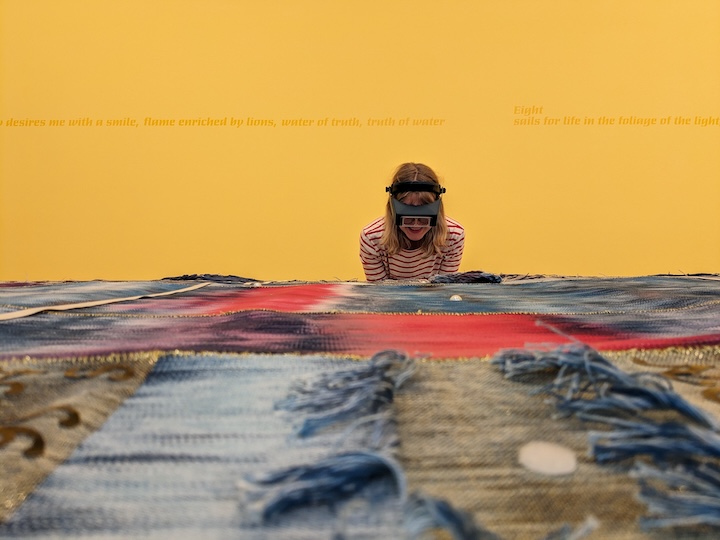
Photo of Textile Conservator Kate Clive-Powell assessing Josh Faught’s Sanctuary prior to exhibition at the Henry Art Gallery in 2025

Our shared conservation services model is an innovative and efficient way to provide conservation support across galleries, libraries, archives, and museums. Conservation expertise, equipment, supplies, and space are expensive. Pooling staff and resources is a more affordable and intentional way to provide conservation services and stewardship for the UW’s extensive and important collections.

Our impact:

  • conservation leadership and expertise have secured $4M+ in funding for UW collections conservation since 2012.
  • ongoing conservation assessments and/or treatment for more than 3,000 items.
  • ongoing education for UW students in the Museology and iSchool and training the next generation of conservators with our summer conservation internship.

Learn more about our work:

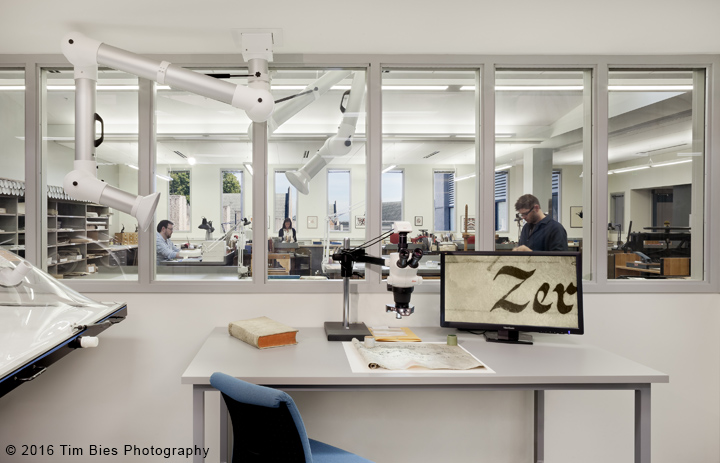
Our Conservation Center provides conservation assessment and treatment for books, papers, photographs, and works on paper for both general and special collections.
Photo of UW Libraries Conservation Center

We repair, bind, and make enclosures for more than 5,000 items in the UW Libraries each year. This care helps to preserve, stabilize, or restore the usability of book, paper, and photograph materials.

We prepare collections for use, digitization, exhibition, and loan to ensure that collections are stable and protected during handling and travel.

We collaborate with the PNW Conservation Science Consortium and help researchers to learn more about our collections by using magnification, ultraviolet light, and portable X-ray Fluorescence (pXRF).

Learn more about our work:

We lead the response to collections emergencies and coordinate collections emergency planning. Planning, preparation, and risk management help to minimize or prevent extensive damage to the UW Libraries’ irreplaceable collections.

See also UW Emergency Procedures and UW Emergency Management.

Photo of Preservation staff examining materials at the Music Library after a roof leak

We also participate in the Seattle Heritage Emergency Response Network and National Heritage Responders.

We create digital facsimiles of unique, rare, or fragile UW Libraries collections for preservation, access, and publication. By doing so, we expand access to the UW Libraries’ culturally and historically significant collections so they are more widely available. We work exclusively with the UW Libraries collections.

We work with vendors and use in-house imaging equipment to digitize materials to industry standards. UW Libraries digital collections can be found primarily in the UW Libraries Digital Collections, HathiTrust, and University of Washington Newspaper Archive.
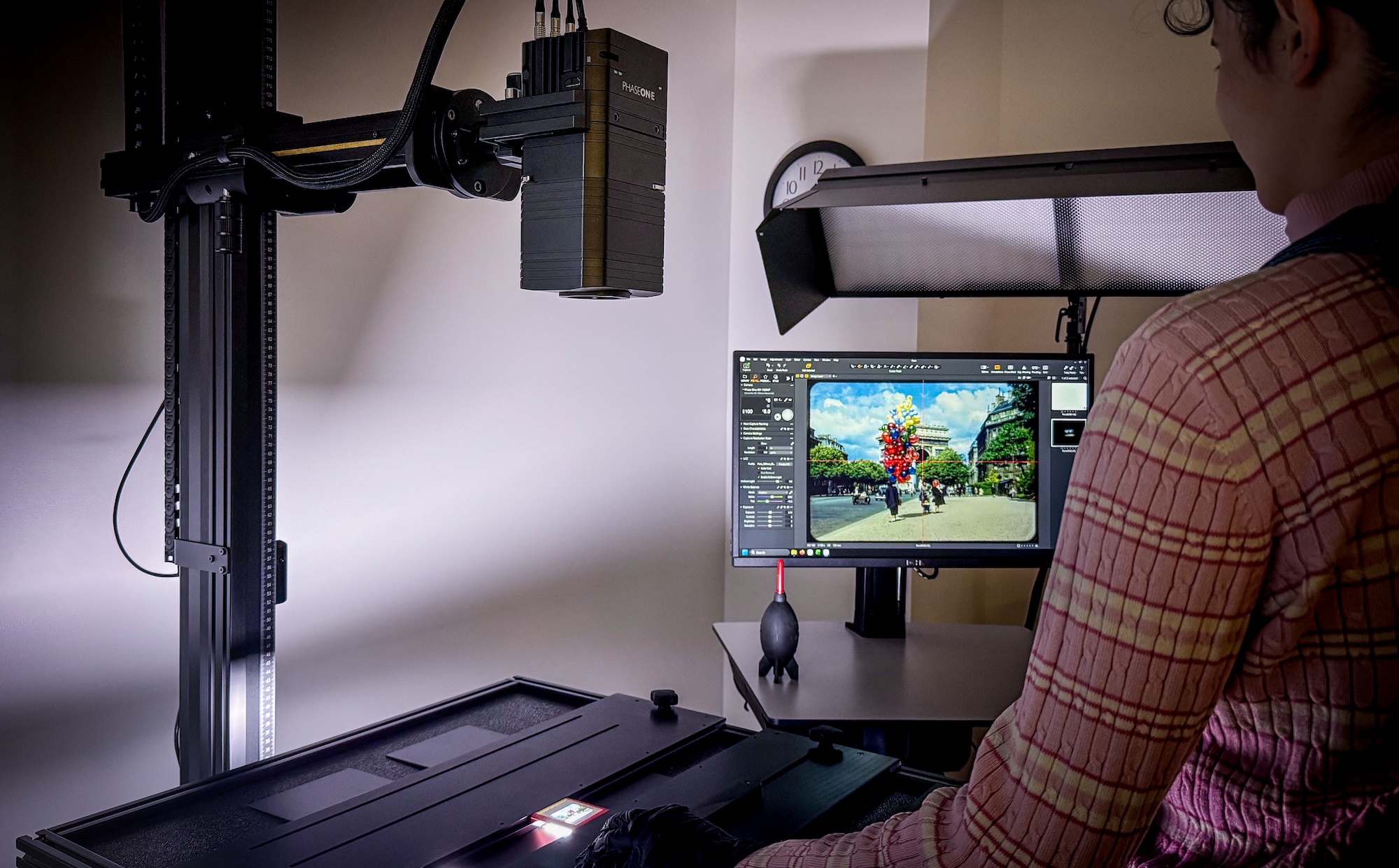
Photo of Preservation staff examining a digital image of a color slide of Paris

Learn more about our work:

We manage a digital preservation repository that ensures long-term accessibility and bit-level preservation of the UW Libraries’ digital content.  The repository currently has more than 100TB of content and 1 million individual digital files.

We use Archivematica and its microservices to prepare files for redundant, geographically dispersed storage in Amazon Web Services.
An image of binary code by MdeVicente, Creative Commons CC0 1.0 Universal Public Domain Dedication
We also support migration of data from UW Libraries obsolete media (e.g. from 3 ½ and 5 ¼ floppy disks).

See our Digital Preservation Policy and Recommended File Formats for more information.

We use more than 30 dataloggers to capture environmental data from collections storage and exhibition areas.
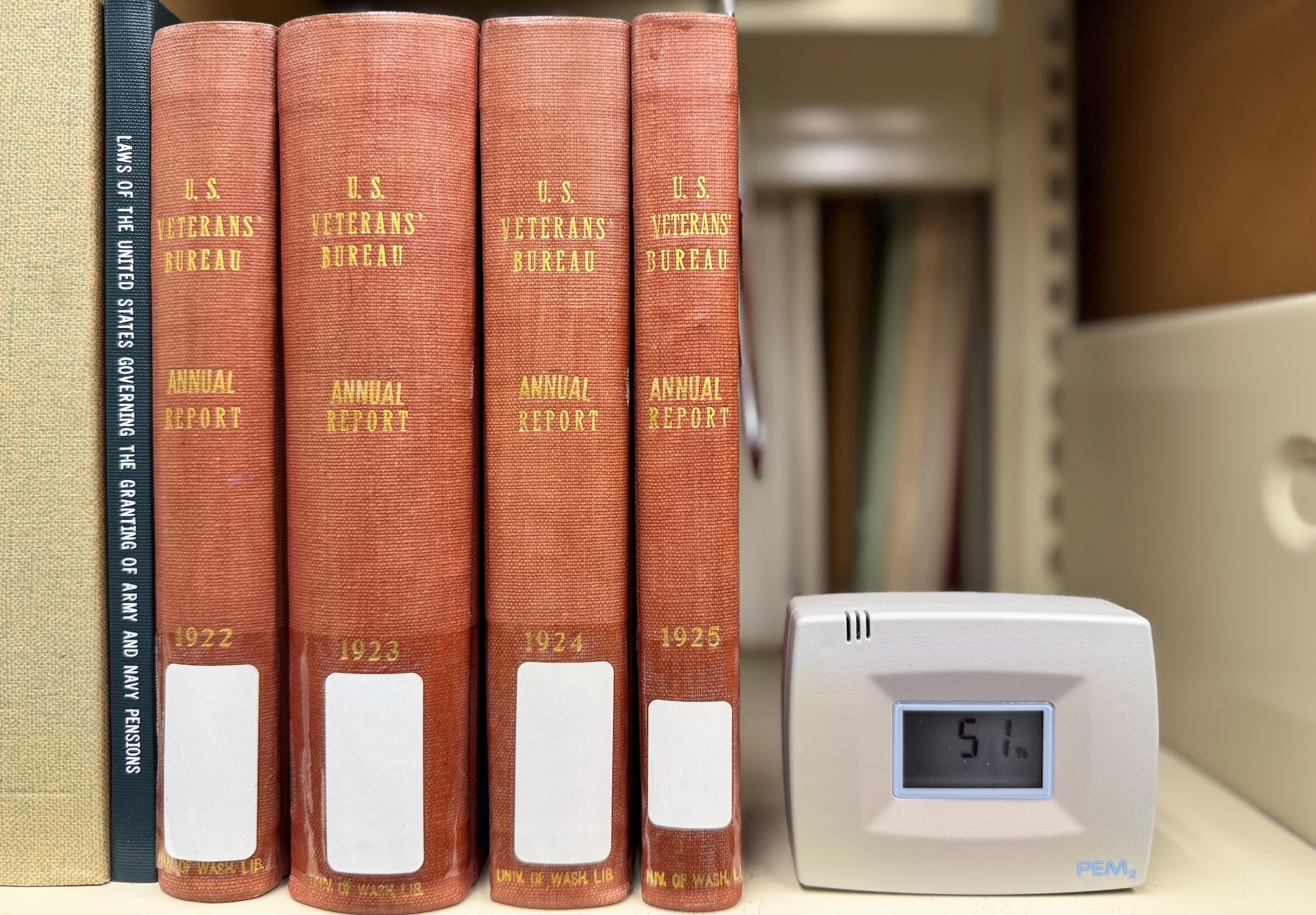
Photo of An image of a datalogger on a bookshelf next to some books

We use the data collected to document and to optimize these collection environments, and to advocate for improved environmental conditions. We do this to improve the long-term preservation of the UW Libraries’ collections.

We use eClimateNotebook to analyze our environmental data and a mix of PEM2 and HOBO dataloggers.

We support two internships each year:

  • James Leland Dirks, Jr. Preservation Intern
  • Rare Book and Library Materials Conservation Intern

James Leland Dirks, Jr. Library Preservation Intern

Established by James Leland Dirks, Jr. in July 2012, the James Leland Dirks, Jr. Library Preservation Endowed Fund provides students in the UW Information School with hands-on learning in preservation.  Applicants are expected to have a demonstrated interest in preservation and to be enrolled in the UW iSchool or Museology graduate programs.

Depending on the interests and strengths of the intern, they may contribute to a number of preservation initiatives including collections disaster planning, improving collections care, environmental monitoring, surveying or reformatting vulnerable collections, or preserving digital assets.

This is a part-time (10 hours per week) internship during the academic year (fall through spring quarter).  The position is typically advertised in late summer or early fall on the UW Libraries Library Jobs page.

Read about the 2025 Dirks Preservation Intern, Toni Heilman

Rare Book and Library Materials Conservation Internship

This internship is for an individual with a demonstrated interest in the conservation of books and archival materials.  The intern will have the opportunity to develop their conservation treatment skills and portfolio using diverse special collections from the UW Libraries working mainly under the supervision of the Senior Conservator of Books and Paper.

This is a full-time (40 hours per week) summer program.  The duration is 10 weeks, with exact dates to be arranged between June and September 2025.

We are looking for interns who:

  • Have good hand skills and attention to detail.
  • Are interested in pursuing a career in the conservation of library materials.
  • Have some previous experience with sewn book structures.
  • Have a portfolio of work to share that includes examples of bookbinding, artwork or other hand crafts, and/or other conservation experiences.

Affiliation with the University of Washington is not required, but please note that we are unable to sponsor a visa for this internship.

The position is typically advertised in late fall or early winter on the UW Libraries’ Library Jobs page and the American Institute for Conservation’s Global Conservation Forum.

Read about the 2025 Conservation Intern, Hadley Nelson

We prepare materials for library binding to extend the life of worn, damaged books and to provide support for materials that are not easily shelved without damage. In addition, binding thin journal issues together makes it easier for library users and staff to locate them, as the title and call number are clearly marked on the spine.
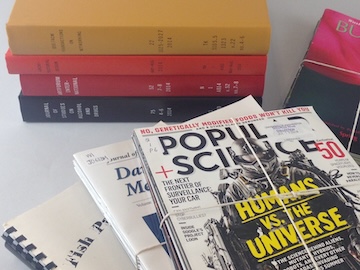
 

Photo of a stack of bound journals and some unbound journal issues tied together

We send about 6,000 volumes a year for library binding.

Library binding uses specific materials and methods to make sure the books last as long as possible and are easily used by readers. We follow the ANSI/NISO/LBC Z39.78-2000 (R2018) Library Binding Standard and Guide to the ANSI/NISO/LBI Library Binding Standard as much as possible although recent changes in cloth production have led to some changes in materials available.

We preserve more than 850 unique sound recordings, video tapes, and moving image films a year. These valuable research materials are often at high risk of loss due to the inherent instability of the recording media and the obsolescence of the playback equipment.
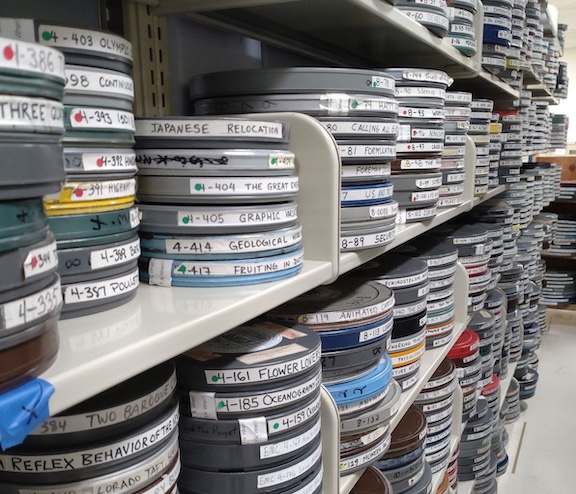
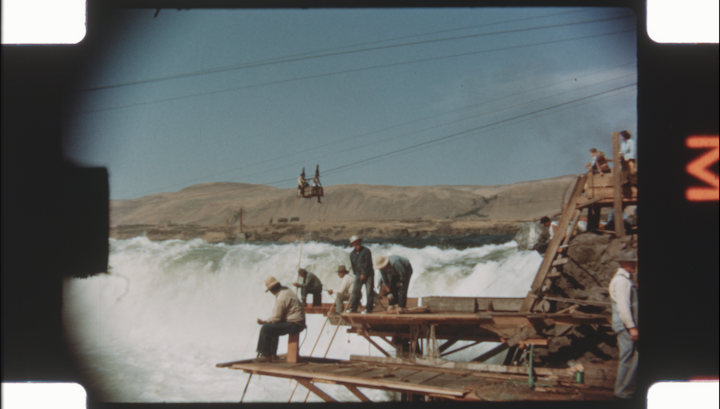
Photo of Film cans in collections storage


Moving image film frame showing people fishing at Celilo Falls from the  Conrad DeLateur family films, 1933-1964

We provide the expertise necessary to safely handle, store, and transfer a wide range of media formats using either in-house equipment or vendor services according to widely accepted standards and best practices.

Marking or Shelf Preparation prepares library materials for shelving and use by:
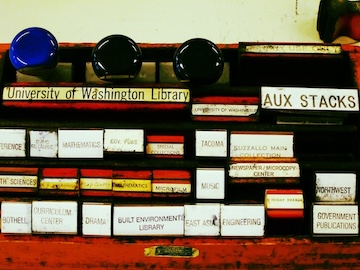
  • applying call number labels
  • marking library ownership and providing security tags
  • setting aside damaged or vulnerable items for repair or rehousing

Photo of a variety of UW Libraries property stamps, photo courtesy of Curtis Cronn

We use labels that conform to the Library of Congress Preservation Supply Specifications. This helps to ensure that labels do not fade or become illegible. It also ensures that labels stay adhered to library materials while causing minimal damage.

Preservation staff provide:

  • preservation education and tours
  • internships and directed fieldwork opportunities
  • care and handling training for UW Libraries staff

We also participate in:

Meet the Preservation Services Team

Caring for Your Belongings

  • Caring for Your Belongings
    How to care for your family photographs, documents, textiles, art and more from the American Institute for Conservation of Historic & Artistic Works.
  • Collections Care — Library of Congress
    Tips on storing, handling, and preserving personal collections from the Library of Congress Preservation Directorate.  Also, includes information on emergency preparedness and response as well as collections care.
  • How to Preserve Family Archives
    Frequently asked questions about family archives answered by the U.S. National Archives and Records Administration.
  • Home Film Preservation Guide
    Simple guidelines for preserving motion picture films with a focus on storage at home from the Association of Moving Image Archivists.
  • Care of objects and collections
    How to care for a variety of personal collections from the Canadian Conservation Institute.
  • Your Old Books
    A guide to frequently asked questions about rare books and rare book values published by the Rare Book and Manuscripts Section of the Association of College and Research Libraries.

  • Landry, Gregory J., et al. The Winterthur Guide to Caring for Your Collection. 2000.Covers a wide range of materials from books and  photographs to ceramics and metals to textiles, furniture, and gilded frames. Nicely illustrated.
  • Long, Jane S. and Richard W. Long, et al. Caring for Your Family Treasures. 2000.Also covers a wide range of materials including film and videotape, clocks and watches, toys, musical instruments, and tips on making new scrapbooks or albums. Nicely illustrated.
  • Williams, Don and Louisa Jaggar. Saving Stuff: How to Care for and Preserve Your Collectibles, Heirlooms, and Other Prized Possessions. 2005.From the Smithsonian’s Senior Conservator, this book takes a more irreverent approach and covers the widest range of materials (including how to preserve your child’s macaroni artwork) with sections on the “Museum of You,” “Saving Family Stuff,” “Pop Culture,” and “Preserving Really Valuable Stuff.”

News & Updates

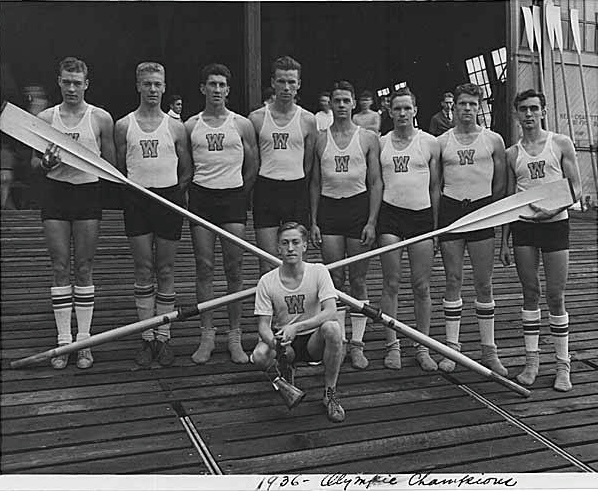
Photo of the 1936 UW Olympic Mens Rowing Team

Preserving UW and Olympic History


Textile Conservator Kate Clive-Powell conserves three crew uniforms from the 1936 Olympics.
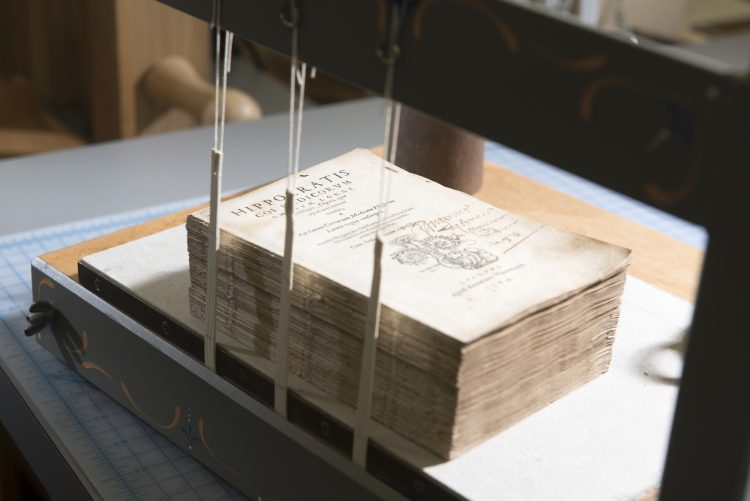
Photo of a book being repaired and readied for sewing

How the UW Libraries bring damaged, rare books back to life


University of Washington Magazine

Conservation Center

We love the digital world, but there’s nothing like an old-fashioned book


KUOW interview

Preservation Gift Fund

Contributions to support the preservation of the University of Washington Libraries’ collections are very welcome. Your gift is tax deductible as specified in IRS regulations. Contributions to the Preservation Gift Fund may be made online or by check made out to the University of Washington Foundation and mailed to:

Preservation
University of Washington Libraries
Box 352900
Seattle, WA 98195-2600

Collection Analysis and Strategy

Collection Analysis and Strategy (CAS) supports the distributed, three-campus collection development environment at the University of Washington Libraries. CAS collaborates with departments across the Libraries and the three campuses on selection, acquisition, and management of resources to support teaching, learning, and research at the University of Washington.

Ask Us!

Get help from librarians by email, phone, 24/7 chat, or make an appointment with a subject expert

What We Do

CAS coordinates the development and management of the Libraries’ collections and related guidelines, which include the Collection Development Guiding Principles, Subject Collection Guidelines, and Deaccessioning Guidelines.

CAS collaborates with Subject Librarians to provide central support for negotiation with vendors and licensing of resources for research and teaching.

CAS collaborates with Subject Librarians and other departments to negotiate and support Open Access publishing agreements with publishers and vendors.

CAS reviews licensed resources for accessibility and evaluates VPATs from vendors to ensure library resources are usable by all. Methodology and results from the accessibility reviews are available on the Library E-Resource Accessibility Testing page.

CAS collaborates with other departments to provide alternative access paths to resources not immediately available in UW Libraries. We also work to secure consortial partnerships that ensure fast, reliable access to research material via a network of libraries across the country and around the world.

Meet the Collection Analysis and Strategy (CAS) Team

Related Resources

Collection Development Guiding Principles

These guiding principles provide a framework for collection development strategies and decisions.

UW Libraries’ Principles in Licensing Scholarly Resources

Our goal is to develop scalable, strategic and sustainable models of collection development, preservation and stewardship.

Tateuchi East Asia Library

About

The Tateuchi East Asia Library is a premier resource for China/Taiwan, Japan, and Korea studies at UW. Our librarians curate unique collections – including rare and archival materials – and provide expert research support, instruction, and outreach. As both an academic and cultural hub, the Tateuchi East Asia Library fosters scholarship, engagement, and community through its immersive collections, programs, and space.

Teal History

Tateuchi East Asia Library: Our History

The official beginning of the Tateuchi East Asia Library at the University of Washington can be traced back to 1937, when the library received the first funding from the Rockefeller Foundation to purchase a small collection of Chinese literary works. During the 1940s, the holdings had increased to 20,800 volumes, including a gift of 2,000 volumes from Columbia University.  Additional purchases were made possible through more grants from the Rockefeller Foundation. This modest collection, unnamed, uncataloged, and untended was shelved in the “Oriental Seminar Room” in Suzzallo Library and was available to faculty and students only by request.

With the establishment of The Far Eastern Institute in 1946, the Oriental Seminar Room collection became the Far Eastern Library. Dr. Ruth Krader was appointed as the first curator of the Library in September 1947. In 1948, the library acquired the George Kerr collection, which formed the basis of its Japanese collection. A small number of Korean titles assembled during World War II for U.S. Army teaching purposes formed the beginning of the Korean collection. In 1950, the Far Eastern Library moved to the basement of Thomson Hall. In 1951, a Rockefeller Foundation grant enabled the library to purchase Japanese materials on China. The acquisition of the Joseph Rock and Herbert H. Gowen collections further enhanced the Library’s holdings on China and Inner Asia.

The 1960’s saw the addition of the Helmut Wilhelm collection of Chinese classics and the Robert Paine collection of Japanese art materials. In 1976, the Library moved to its new home in Gowen Hall, where it has remained to present, and was renamed the East Asia Library. The collection continued to grow rapidly throughout the 1980’s. Automation was also introduced during this period.

Strong growth of the collection took place in the first half of the 1990’s, especially in the acquisition of electronic resources about East Asia, both in online and CD-ROM formats. The library was the first institution outside China to acquire the Twenty-Five Dynastic Histories database and the first academic library in North America to establish a direct connection to the NACSIS-IR service in Japan.

The East Asia Library received a phenomenal gift of $6 million from the Atsuhiko and Ina Goodwin Tateuchi Foundation in February 2020. In recognition of this gift, the library was renamed the Atsuhiko and Ina Goodwin Tateuchi East Asia Library.

As of 2023, the library has nearly 800,000 volumes of materials on East Asia in Chinese, Japanese, Korean, Tibetan, Manchurian, Mongolian, and other languages.

Teal Celebration

Milestone Timeline

Learn more about the important milestones throughout the Library’s history and evolution over time.

Meet the Tateuchi East Asia Library Team

    Facilities & Events

    Libraries Facilities & Events supports the mission of UW Libraries and the University of Washington by providing specialized expertise and behind-the-scenes services that enhance the user experience for students, faculty, and staff.

    Ask Us!

    Get help from librarians by email, phone, 24/7 chat, or make an appointment with a subject expert