We are pleased to announce that the UW Libraries plans to open Individual Study Space @ Research Commons located on the ground floor of Allen South on the UW Seattle campus.
The space will open when preparations for COVID compliance are complete, no later than the start of spring quarter (March 29).
This space is intended to provide a clean, safe and quiet space for individual study with access to WIFI and equitable access through the LibSeats reservation system. Once the online reservation system is active, a link will be provided.
The libraries at UW Bothell and Tacoma are developing localized plans in coordination with campus administration.
Opening and maintaining Libraryspaces will be highly dependent on adherence to COVID safety guidelines, as noted in the Husky PackPledge.
New Publishing Agreement for UW Authors: The University of Washington and Cambridge University Press have entered into a transformative “read and publish” agreement, the first of its kind for UW, making UW scholarship more accessible to readers and researchers all over the world. Learn more.
UW Libraries Black History Month Challenge: read, listen and watch something new and then share it! Learn more.
#IHeartUWLibraries Student Video Contest is back!After more than ten months of remote learning,UW huskies are becoming experts in accessing the Libraries remote resources. Students can apply their 2020/2021 experience and creative talents for a chance to win cash awards worth up to $1,500! Learn more.
Wall Street Journal Pilot- All huskies now have access to the WSJ.com and other WSJ resources through a new two-year pilot.Learn more.
Community Reads 2021:Explore environmental justice topics and resources with something new to watch, read and listen to each quarter.Hosted by UW Bothell Libraries, open to all students and faculty; easily integrated into courses through Canvas!Learn more.
Budget updates:Updates on Libraries budget planning and impact on subscriptions and collections are posted regularly on our website. Current update.
Events, Workshops
Did you know that the UW Libraries provides hundreds of hours of FREE instruction and community events each year for UW students and faculty? Don’t miss out!
Manifold and Pressbooks Workshops:Learn how to create and publish a wide variety of materials (digital books, textbooks, monographs, and teaching materials)using Pressbooks and Manifoldplatforms.
Feb 12: Join us for avirtual Lunar New Year celebration with the Tateuchi East Asia Library– check out this and other TEAL events including Digital Scholarshipfor East Asia Studies (multiple events), Korean and Japanese Research Methods Workshopsand more! See all TEAL events.
Feb20: Digital Humanities Day Panel Discussion– Explore liberal arts studies and what can you do with a humanities or social sciences degree in a panel discussionswith UW Libraries Open Scholarship team, UW students and alumni. Learn more.
Feb 22: Research Data Management Workshop – Do you create or use data in your research? Looking for tips and tools to better help you manage your research data, and preserve it for long-term use? This asynchronous workshop may be for you! Learn More
No Reservations: Weekly Drop-In Help Sessions From UW Libraries: Digital Scholarship Project Help Office Hours:Get help finding and using tools and resources fordigital publishing, data research management, data visualization and more! dates and hours.
New Agreement Covers the Costs of Publishing in Open Access Cambridge University Press Journals for UW Authors
February 4, 2021
The University of Washington and Cambridge University Press have entered into a transformative “read and publish” agreement to promote Open Access publishing. Negotiated with our consortial partners in the Orbis Cascade Alliance, the agreement is designed to maintain UW’s access to Cambridge’s outstanding journals while also supporting the Libraries’ strategic goal of Advancing Research for the Public Good by making UW scholarship available to more readers and researchers all over the world. This is UW’s first read and publish agreement with a major publisher and runs for three years, from 2021 to 2023.
Why is it important?
Over the past decade, the growing adoption of Open Access (OA) publishing has changed the nature of the scholarly publishing ecosystem – for authors, readers, publishers, and libraries. A 2019 study estimated that 31% of all journal articles are available as OA and 52% of all article views are to OA articles, and that the trend toward more open scholarship will continue. There has been increased interest among research libraries to help accelerate the transition by moving away from traditional journal subscriptions to read and publish arrangements that help cover all or part of the costs to institutional authors for Open Access article publishing.
The corresponding author must be affiliated with the University of Washington and authors must indicate their UW institutional affiliation at the time of submission.
The agreement provides a complete waiver on all Article Processing Charges (APCs) for UW corresponding authors publishing in CUP journals with an Open Access publishing option.
Articles must be accepted for publication between January 1, 2021 and December 31, 2023. There’s no limit on the number of times an eligible UW author may request funding during the contract period.
Once an article has been accepted and submitted, authors select a Creative Commons License for their work. The CC license is widely used and accepted in OA publishing and allows authors to determine how readers can re-use and share their work.
As UW corresponding authors complete their Author Publishing Agreement, they’ll have the option to seek funding to pay for their article processing charges. UW will approve or deny the request and authors will receive an email confirming this decision.
We are excited about the new agreement and this opportunity to help support and promote UW open scholarship. If you have questions about the CUP agreement or Open Access publishing, please contact the Libraries’ Scholarly Communication and Publishing Department.
Gordon Aamot Director, Scholarly Communication and Publishing
Stories
Community Reads 2021: Environmental Justice
January 15, 2021
An image from this quarter’s Community Reads selection
UW Bothell and Cascadia College Campus Library’s Community Readsprogram strives to build community through shared intellectual experiences and discussions around social justice, equity, and diversity. With something new to read, watch, and listen to each quarter– participants get a variety of perspectives and mediums to engage with. Although this year’s digital interactions may look a little different from past years’ in-person events, the Community Reads 2020-21 committee has curated an interactive Canvas course that provides a variety of different resources for participants. It’s all hosted asynchronously and commenting/contributing to discussions is optional.
Each quarter we base discussions around a central theme. This year’s theme is environmental justice and during Winter quarter, we are exploring climate migration and climate refugees through three thought-provoking reflections on the topic:
Podcast: Climate Refugees from What Makes Us Human by Cornell College of Arts and Sciences
Plus a wide range of related resources including webinars, books, and more
Community Reads is open to all UW students, faculty, and staff. In addition to discussions on curated materials, participants can also contribute to our Community Reads Climate Zine. The Community Reads Zine is an opportunity for participants to share their voice on this quarter’s topic by submitting a piece of creative work inspired by the course’s materials and activities. The zine is then uploaded to the Canvas webpage and made available to all to read; you can find the previous quarter’s zines here.
Faculty and staffcan also integrate materials, thematic modules, and activities into their classes and programs. Ideas for classroom and departmental use include:
Invite students to participate in the entire course or specific modules for extra credit.
Import specific modules of the course into your own courses.
Assign the Zine activity as an assignment in your course or suggest staff submittals.
Invite the staff or student employees you supervise to engage with the resources of the course and participate in activities and discussion spaces.
We are excited to share these resources with you, and hope that you will join us this quarter for Community Reads! Enrolling in theCanvas course is easy and required for participation. Follow the link below to learn more!https://guides.lib.uw.edu/bothell/communityreads/w21
Stories
UW Libraries Launches Wall Street Journal Pilot
January 12, 2021
The UW Libraries has begun a two-year pilot partnership with The Wall Street Journal. Current students, faculty and staff may register now to get free access to WSJ.com, the WSJ mobile app, podcasts, and educator tools now through December 22, 2022. Recognized as a leading source for business and finance, The Wall Street Journal also covers U.S. and world news, politics, arts and culture.
What happens after the pilot?
During the two-year trial, UW Libraries will assess usage data to understand how this resource is used and if it serves specific user needs that are not able to be met with other resources. While we expect the WSJ will undoubtedly be a popular resource, the cost of access for this single source and other mainstream news websites like WSJ can be comparable to what a library might pay for access to hundreds of academic research journals or thousands of books and media.
Sustainability is always at the forefront of resource allocation. At the end of two years, the Libraries may continue with a paid subscription, or not — there are many variables to consider, and no guarantees. Therefore, it is important that users understand that this is a trial period and access is temporary. Robust usage data and a clearer picture of future UW budget priorities will provide guidance in the longer term.
News sources within libraries: changes and challenges
The prospect of a university-wide paid subscription to The Wall Street Journal is complicated and somewhat incompatible with traditional library collections economics.
For as long as libraries have preserved primary sources, library patrons have made use of relatively few formats to get access to news, from paging through current daily newspapers on a stick to browsing microform reproductions on specialized reading equipment. In recent decades, newspaper articles became searchable on CD-ROMs and, more conveniently, on website databases — now the standard method for finding and retrieving news articles. Long before this new pilot began, the UW Libraries has been providing access to full-text reproductions of the daily print edition of The Wall Street Journal through ProQuest, an aggregator of news and journal articles.
But as newspaper publishers have transformed the habit of news consumption from the printed page to dynamic and personalized digital content, news consumers have come to expect a higher level of richer and more interactive content that can’t be replicated by the text-only formats that most library databases provide.
While libraries are still best positioned to provide centralized access to archived news content, current library databases and budgets are not ideally situated for facilitating direct access to news publisher websites given their inherently high cost. Single-source subscriptions, including the New York TImes, Financial Times and other news websites have not been feasible for many academic Libraries. (To be clear, the Libraries does provide text-only access to FT and the Times through newspaper database aggregators, just not the websites.) But with the right partnership and involvement of campus stakeholders, a sustainable funding structure is conceivable.
The WSJ opportunity
Budgetary hurdles aside, the two-year WSJ pilot affords us a terrific opportunity to see what works and to understand the value of a direct subscription to a leading news source. As we begin monitoring WSJ usage and gathering user feedback, we will also communicate with UW departments and stakeholders to determine what funding sources may help to make the WSJ an affordable resource.
For now, though, I am encouraged by the already apparent enthusiasm for The Wall Street Journal at the UW. In just the first week of the program launch, more than 800 people registered for WSJ accounts. In the months and years ahead, library patrons in the Foster Business Library and in UW Libraries spanning the Seattle, Bothell and Tacoma campuses will have a unique opportunity to make the most of the free access to this major news source.
###
Stories
Libraries Monthly Update: December 2020
December 11, 2020
With the holidays upon us, we would like to echo the public health advice from UW Environmental Health and Safety to encourage all huskies in having a safe and healthy holiday.
The following is the latest news and updates from the Libraries:
UW Press Book Sale:Get 40% off books now through December 31st – local stories with global appeal for every reader on your list. Makes the perfect gift.
Libraries Operations: No change.
We anticipate very little change in operations between Fall and Winter quarter. Based on the protocols outlined within University of Washington COVID-19 Safe Start Phases*, Libraries will remain closed to the public during this Phase 2. We continue to work in partnership with centralized UW planning teams to evaluate any shift in operational plans, and will update the community through these monthly updates and in our centralized communications as new information arises.
Curbside pick-upwill be open regular hours during break with the exception of University holidays on 12/25/20 and 1/1/21. Thank you to our UW Libraries Access Services team who keep this vital service running for all huskies.
Virtual Library Study Room, Sunday, December 13th: Don’t study alone! All students are welcome! We’ll provide motivational tips, a variety of soundtracks to study to, and opportunities to meet and chat with other students.
Introduction to Business Library Research, Thursday, January 7th: an asynchronous workshop to build foundational and advanced skills using library databases hosted by Foster business Library.
Dr. Bo Zhao on geospatial analysis,Thursday January 7th: Part of the Tateuchi Research methods workshop series, UW’s Dr. Bo Zhao, will give a talk on research projects utilizing geospatial analysis techniques.
Please continue to share your questions andtell us how we can continue to support your teaching, learning and research needs. Our Libraries staff in Seattle, Tacoma and Bothell arehere to help.
Don’t forget to follow us on social media to get the latest news on Libraries events and resources!
Stay healthy, huskies!
Stories
Featured Resource: How to FOIA
December 4, 2020
In 2019, the UWCHR celebrated its 10th anniversary. As a part of the celebration, I facilitated a public FOIA training workshop, and rewrote the training manual to be relevant to a wider audience looking to do public interest research. The manual, How to FOIA, was published by UW Pressbooks and provides guidelines on how to file Freedom of Information Act (FOIA) requests, highlighting an important tool for human rights activists and anyone conducting research on the U.S. federal government. How to FOIA, is a free step-by-step guide for beginners about how to file FOIA requests, including examples. The guide traces the process from developing an idea, drafting, and submitting the request all the way through the appeal process.
What is the FOIA?
The FOIA is a law that was passed by congress in 1966 that allows any person (U.S. citizen or not) to request information from the United States federal government. The law says that anyone has a right to all government information, except for nine different reasons, or exemptions. The exemptions include, for example, a prohibition of releasing information that would threaten national security, violate the privacy of an individual, interfere with law enforcement investigations, divulge information about the U.S.’s nuclear facilities, or share trade secrets.
While the FOIA provides opportunity for broad access to government information, each presidential administration chooses to interpret the law in a more broad or narrow scope. For example, President Obama, upon his inauguration, passed an executive order that called for the adoption of a “presumption of disclosure,” so the default was to release the documents unless an exemption prohibited it. The more limited interpretation would encourage the withholding of all information unless it was required to be released.
Why is the FOIA important?
Even one of the most secretive of U.S. government agencies, the Central Intelligence Agency (CIA) declares on its website that public access to government information is necessary “to ensure an informed citizenry, vital to the functioning of a democratic society.” While the FOIA allows public oversight of the government and is a key tool in holding the government accountable, it only works if people use it. Through decades of every-day people requesting information and groups pursuing strategic litigation, the FOIA law strengthens, as does the rights of the people to access information through the law.
The FOIA can be used in many different ways to provide public oversight and hold the U.S. federal government accountable for what it does with our tax dollars. Here are some examples:
As an educational institution, the University of Washington—students, staff, and faculty—have an important opportunity and responsibility to submit FOIAs and provide analysis and public access to government records declassified through the FOIA. The use of the FOIA and publishing the results of requests is also an important opportunity for advancement of educational equity by serving the general public and making government information available to more people. One example is the University of Washington Center for Human Rights collection of records on El Salvador, obtained through the FOIA. Read more about this project and see the document collection here, housed in the UW Research Works platform.
One important benefit to publishing the How to FOIA book on UW Pressbooks is the use of the creative commons license which allows for free publishing and easy collaboration. Free access through Pressbooks ensures the knowledge created is accessible to more people and allows for the collaborative creation of new knowledge. How to FOIA is licensed under the Creative Commons license “attribution, non-commercial, share-alike,” which allows and encourages other people to rework and re-publish the guide for non-commercial purposes. The hope is that as others develop expertise in using the FOIA, they can also write more detailed guides for obtaining important information in their subject areas, such as environmentalism, human rights, racial justice, public health, international justice, immigration advocacy, and criminal justice reform, among others. By learning how to FOIA and sharing this knowledge with others, UW researchers can help increase transparency and access to information that is critical to advocacy and social justice efforts across all disciplines.
By learning how to FOIA and sharing this knowledge with others, UW researchers can help increase transparency and access to information that is critical to advocacy and social justice efforts across all disciplines.
How to FOIA is an excellent example of open scholarship in action. It not only sheds light on what has traditionally been a closed and complicated process but its open license allows it to be adapted and built upon as others work through the FOIA process and add their expertise, creating a rich resource. The UW Libraries is pleased offer support for the creation and open sharing of projects like How to FOIA. To learn more about how you might create an open project like this one, please visit the UW Libraries Open Scholarship Commons to see examples of open work, learn more about tools to publish your work openly, and to get support on creating your own project.
###
Stories
UW Libraries: November Update
November 10, 2020
We seek transparency in our planning processes during this time of constant change. Our monthly blog updates will outline the latest news on UW Libraries reopening plans and resources each month. These monthly blog posts will also be posted on the Libraries COVID-19 update page ongoing.
Here’s the latest news for November:
Operations
UW Libraries remains in a Phase 2 operational plan, and we do not anticipate any changes to operations in the coming month in terms of access to public spaces, including special collections and study areas. Please see UW Libraries response to the Governor’s updated guidance on Libraries. The health and safety of our staff and users remain central to our planning, andour current approach is accurately reflected in the Libraries’ phased re-opening chart.
Curbside pick-up service is operating successfully across all three UW campuses, with more than 2,500 items processed just in the past month! Make a request to pick up books here.
Resources
New this quarter:
The Open Scholarship Commons launched in October, provides a suite of services, tools, workshops and more in service of knowledge creation and open scholarship. Through the OSC, faculty and students can access a wide range of support and explore digital scholarship tools for publishing, copyright, data management, data visualization and more.
Academic Video Online(database) — over 70,000 documentaries, educational videos, award-winning content from the BBC, CNN, PBS, Sony Pictures Classics and more. Plenty of new content to use now, and over the Thanksgiving holiday!
Our Libraries Student FAQ and Teaching Support pages remain great resources for navigating online resources and support.
Libraries events, workshops and office hours provide connection, knowledge sharing, training and support for all UW community. Check out these upcoming November activities:
Please continue to share your questions and tell us how we can continue to support your teaching, learning and research needs. Our Libraries staff in Seattle, Tacoma and Bothell are here to help.
Don’t forget to follow us on social media to get the latest news on Libraries events and resources!
Stay healthy, huskies!
###
Stories
Labor Archives of Washington Spotlight: RIDGE Records Showcase Coalition-Building among Labor and Environmental Activists
November 5, 2020
“Save Roslyn RIDGE” postcard, RIDGE records, Accession No. 6295-001): A postcard from the RIDGE records Crystal Rodgers photographed during a visit to the archives.
This fall, I am working at the Labor Archives of Washington (LAW) in Special Collections at the University of Washington Libraries as their archivist-in-residence. Through a paid internship with Northwest Archivists, I have been processing the RIDGE records remotely from my home in Iowa. The newly-acquired collection documents land use activism in Kittitas County, WA. We selected this collection for processing because of its unique relationship to Washington State’s labor history. I was really drawn to working on this collection because of RIDGE’s model of coalition activism that united many different groups under the same banner: protecting land from development and over-extraction. We are excited to launch the updated collection here, in the RIDGE Records finding aid (Finding aids are research guides to archival collections).
About RIDGE and the RIDGE Records
RIDGE was a community organization formed in Roslyn, Washington in 1988 that engaged in activism centered on forestry and land use issues in Upper Kittitas County, Washington. Community members were concerned about the negative effects development and logging in the area would have on both the environment and economy. The group formally organized shortly before Plum Creek Timber Company (now Weyerhaeuser) announced plans to log approximately 15,000 acres of timber near Roslyn. Many residents in Roslyn were already familiar with the boom and bust cycle of extractive industries in small towns– Roslyn was a mining town that was hit hard when their last mine closed in 1963.
RIDGE’s efforts to support a sustainable economy and ecology in Upper Kittitas County took many forms. They participated in sustainable forestry groups and coalitions in Washington State, advocated for more protective zoning for forest lands, and fought to block the development of what is now the Suncadia Resort. RIDGE used strategies such as land use mapping, litigation, working with local and state government, and community meetings to fortify support and build their coalition. Once it was evident Suncadia was going to be built despite efforts to block the development, the coalition fought for and obtained a pledge for employing union workers in its construction– an important aspect of how the building trades were involved in RIDGE.
RIDGE’s most well-known project is perhaps their long legal battle with Suncadia Resort. RIDGE and the resort owners signed a Settlement Agreement in 2001 to mitigate the impact of the resort on the town of Roslyn and the surrounding environment– with several amendments added throughout the years for additional protections. However, the resort owners (which changed hands several times during the building of Suncadia) sought to dissolve the resolution in the courts and eventually succeeded. RIDGE dissolved in 2014 following the termination of the Settlement Agreement in 2013.
Records in the collection include litigation material related to the development of the Suncadia Resort, RIDGE office files, newspaper clippings documenting RIDGE’s projects and activism, land use maps, and RIDGE promotional material, such as pamphlets and newsletters. This collection is of high anticipated research value because of RIDGE’s coalition model of activism and the relative modernity of the collection– they were active into the 2010s! Students, faculty, researchers and organizers can use the primary sources in the collection to learn about topics related to land use, sustainable forestry, environmentalism, and labor union coalition-building.
RIDGE’s Connection to Labor
RIDGE brochure, RIDGE records, Accession No. 6295-001): A brochure from the RIDGE records Crystal Rodgers photographed during a visit to the archives. The image features RIDGE’s “sustainable ecology, sustainable economy” logo.
RIDGE’s connection to labor organizing is unique among other environmental groups of the time. Their alignment with the labor movement not only happened in practice through negotiating for union contracts, but through their philosophical positions. RIDGE challenged the notion that extractive economy workers and environmentalists have competing interests, and instead sought to harmonize the need for a sustainable forest economy among workers and those concerned with the environment. RIDGE’s motto, “Sustainable Ecology, Sustainable Economy”, is featured on material throughout the collection, including this pamphlet from RIDGE’s early years.
RIDGE challenged the notion that extractive economy workers and environmentalists have competing interests, and instead sought to harmonize the need for a sustainable forest economy among workers and those concerned with the environment.
The organization’s leaders also had strong ties with the labor movement. Doug Kilgore is connected to the labor movement in Washington State (he played a large role in brokering the involvement of labor groups), and Ellie Belew researched and authored several books in collaboration with labor unions and labor activists. We were fortunate enough to work with both Doug and Ellie during processing of the RIDGE collection! This was especially helpful because most of this work was done remotely, and access to the physical material was very limited due to COVID-19 restrictions.
Next Steps for the Collection
When staff members are able to safely return to work in the archives, the RIDGE records will receive more attention. They will be physically arranged to reflect the new series and subseries arrangement in the updated collection inventory of the finding aid, and some additional preservation concerns will be addressed, including better storage for the oversized maps and migrating and describing digital files stored on cd-roms that remain unprocessed. All of this work means increased access and longevity of these materials for use by future generations!
Once public operations resume, researchers can access these materials in the Special Collections Research Room located in the Allen Library South Basement. You can learn more about using the collections, including how to prepare for your research visit, on the Special Collections webpage.
About the Partnership
My position is funded as an “archivist in residence”, sponsored by the Northwest Archivists, a professional organization for archival workers in the Pacific Northwest that offers a paid internship for the applicant who jointly proposes a project with a sponsoring organization. The program is designed to offer early-career professionals a paid opportunity, tailored to their interests, while also working towards the long-term goal of eliminating unpaid work within the archival profession.
Given LAW’s strong commitment to ethical labor practices, we decided to collaborate on a project proposal for the pilot program, and we were very fortunate to have our proposal selected! In short, archival processing consists of tasks that help prepare the material in the collection for use by the public– including organizing the collection and creating descriptions. Though the collection was re-housed for long-term preservation in acid free folders and boxes and briefly described after donation to the Labor Archives in 2019, more processing was needed to make the collection more accessible to researchers. We selected RIDGE because of the size and scale of the project, but also because of the collections contents, and its relevance to current events and impact in the Pacific Northwest.
About the Author:
Abbey Maynard
Abbey Maynard (she/her) is a 2020 graduate from the University of Washington’s Masters of Library and Information Science program. She is Northwest Archivist’s 2020 Archivist-in-Residence at the Labor Archives of Washington. Abbey lives in Des Moines, Iowa.
###
Stories
The New Virtual Open Scholarship Commons
October 21, 2020
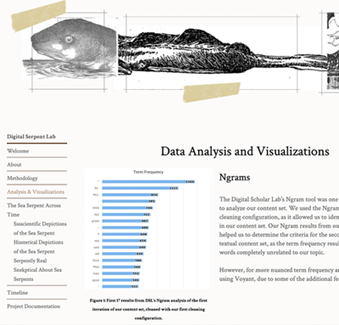
Screenshot of “Welcome to the Long Shadows of Seattle,” a podcast project exploring Seattle’s history of racial justice and political activism, supported by Libraries staff. OSC staff can help users find the right tools and support to effectively share stories waiting to be told within Libraries collections.
Research in the 21st century is based on interdisciplinary connections and relies on technology to create and share for the public good. We know that it can be challenging for students and faculty to connect across disciplines, access technology, learn relevant skills, and share research openly. We are excited to bring together a suite of services to more equitably support this work in the virtual Open Scholarship Commons (OSC). The OSC will provide a hub for cross-disciplinary knowledge creation and dissemination– supporting you in using digital tools to openly share your research and safely integrating new digital pedagogy techniques into your classroom.
The OSC will provide a hub for cross-disciplinary knowledge creation and dissemination–
use geospatial tools to create maps relating to your research;
integrate digital tools or methods into a classroom setting;
navigate rights for your own publications, your thesis and dissertation, or your born-digital work.
Screenshot of The Mill on the Floss, a digital edition created by students in English 440/529, hosted on Manifold. OSC staff can provide workshops and consultations to help develop projects like this.
This space will continue to grow and evolve throughout the coming year with the addition of campus partners joining us in the virtual space. We will modify services based on your feedback from OSC consultations, workshops, and events. Through participation, you will help shape the future of this virtual space that will eventually evolve into a new physical space within the Libraries when it is safe to be together again on campus.
We encourage you to explore OSC services and upcoming events on our website, including our OSC project page with many examples of how the OSC team is supporting open digital scholarship projects across UW. You’re helping create the OSC by using it!
graphic representing a web site accessibility checklist. Source:juiceboxinteractive
When UW Libraries buildings were closed at the start of the pandemic, our teams needed to respond quickly to adapt work for many employees whose jobs do not easily lend themselves to telework by identifying projects that could be completed remotely. At the start of the pandemic, we had multiple accessibility projects underway, but given the time-intensive nature of the work, progress was slow. With the increased availability of staff and student employees, there was an opportunity to tackle some of these accessibility projects, and we have made great progress since the spring. We developed workflows for efficiently testing our databases for accessibility, implemented PDF remediations of files on our websites and collections repositories, and created quality closed captions for the Libraries’ media collections.
Keyboard Navigation Testing
We started a pilot project in 2019 to do keyboard navigation testing of our subscribed third-party resources. We wanted to improve the accessibility of our subscribed electronic resources. Keyboard navigation testing would be a quick way to find the resources that are the least accessible. If a website is not keyboard navigable, it is nearly impossible to use with assistive technology. The pilot showed that the work was worth doing but would need more staff time than we had available to test the whole collection. When the shutdown occurred and student employees were unable to do their regular work, we quickly developed a training procedure so student employees could learn how to do the testing.
“After just nine weeks, we tested 555 resources, 86% of the total.”
After just nine weeks, we tested 555 resources, 86% of the total.
Surprisingly, 88% of the resources passed keyboard navigation testing. This is a higher percentage than we had been expecting; a more comprehensive accessibility review would surely result in a higher rate of failure. The remaining 66 resources failed our keyboard navigation testing. This means, 66 resources are basically unusable for many people with disabilities. These are the resources we will be prioritizing for improvement.
Now, we will enter phase two; working with our providers and vendors to improve accessibility of their products. We will identify and inform them of issues and request that improvements be made as part of new licensing contracts and renewals.
The third phase will proceed if the provider vendor is receptive. Not all providers will have the development resources to improve their products. On the other hand, some other vendors may simply be unaware of the issues and will be eager to improve their product. Not every company has accessibility experts on their staff. We can help them by pointing out what isn’t working and what we need. Ideally, we can work together on a timeline for improvements. At that time, depending on staffing and interest from the vendor, we can do a more comprehensive analysis of all accessibility issues that we can find beyond the basic keyboard accessibility. Building good working relationships is essential for this phase.
PDF Accessibility
Image source: 3PlayMedia
Academic libraries produce a lot of PDF files because they are an easy way to deliver digital versions of archival documents like newspapers, magazines, and other historical text. Libraries have been producing PDF versions of these documents for several decades now.
PDF files are great in that they provide access to items in our collections to folks all over the world, including those with disabilities. However, assistive technology such as screen readers and applications that can read text out loud can only do so much. Without proper remediation, access to a file isn’t very helpful if the assistive technology can’t efficiently interact with the file.
There is a significant number of legacy PDFs within the Libraries records, so we needed to prioritize our work. what we could work on. We ended up pulling 650 files from our library guides, and another 4,800 files from various special collections based on highest usage.
The remediation team consisted of four staff members and three student employees from the Seattle and Bothell campuses who volunteered to work on the project. About half the team had some experience in PDF remediation, while the other half had none. We created a training program for those less experienced to ensure everyone had the same basic skill level in the remediation process.
The team held weekly online meetings to go over any issues, observed demonstrations using assistive technology, and shared solutions we came up with for particularly tricky documents. We engaged a few outside PDF remediation experts from UW IT that were extremely helpful in providing troubleshooting tips that became part of our process guide.
The team spent a combined 600 hours on this project resulting in the remediation of 300 documents. We also identified 500 files for removal and replacement altogether within our library guides, and deferred another 200. Reasons for deferral included document language, page length, complicated image (map), or complex tables.
Moving forward, In the end we would like to reduce our PDF footprint wherever possible, since not all PDFs need to be PDFs. These files will be eventually converted into HTML or deleted entirely if the information they provide is no longer relevant.
Captioning Videos
The third project focused on captioning of videos from the Libraries’ Moving Image Collection that are available through CONTENTdm. There are currently hundreds of videos available in CONTENTdm, representing years of digitization efforts – and hours of materials that need to be made accessible. Adding closed captions to video content provides a wide range of benefits, for example, making content useful to users who have hearing loss, users who have trouble following spoken English dialog as well as users who simply are accessing materials in a situation where they have their sound off.
For the creation of the captions, we decided to take a hybrid approach of automated captioning to establish baseline transcripts and text timing, followed by several passes of proofreading. For this automated component, we decided to leverage the Microsoft Stream application which was already available through our University Office 365 accounts. MS Stream both functions as a platform for sharing media content among teams, as well as includes automated captioning capabilities, and thus was well suited for our work in a remote environment. Once the viability of the tool was established, Jesse Stanley, UW Libraries Preservation Supervisor, built a full workflow document to facilitate training and tracking the progress of student employees. In order to provide the highest possible results, the proofreaders are asked to start with the automated transcripts and then focus on specific tasks for each pass they give the captions – first correcting textual mistakes, then adding descriptions of sounds (such as music) and lastly, fixing timing errors.
Captioning is still an ongoing project, and to date over 70 videos have been completed and are now available in a more accessible format. Additionally, the workflow created within the Preservation department has been applied by individual curators to successfully caption videos in response to individual user requests. There is still a great deal of work to do, particularly due to the time-intensive nature of the process, but this captioning pilot has served as an important first step for increasing the accessibility of our time based media collections.
Together, these three projects implemented during the peak of the pandemic represented how quickly Libraries staff could adapt to our “new normal,” finding ways to engage student and staff workers across units with meaningful remote work, and most importantly, significantly improve the accessibility of hundreds of Libraries resources.
“…most importantly, (these projects) significantly improved the accessibility of hundreds of Libraries resources.
While these projects helped to clear some of the backlog of accessibility work we aspire to do, there is still more to be done. Accessibility of electronic resources has been built into the procurement process. We have included accessibility language in our license agreements and test new resources while we have trial access. We continue to remediate PDF documents. We have given emphasis to projects being “born accessible” — creating documents with accessibility built-in. We provide an ongoing series of staff trainings on how to accomplish this. Captioning work is ongoing, and has expanded to include items on the Libraries’ Internet Archive page. Additionally, plans are being made to integrate the captioning workflow in future audiovisual digitization projects thus ensuring that accessibility work and preservation work are coordinated and aligned.