Sustainable Scholarship: Libraries Collection as a Service
November 19, 2021
Authors: This is a collaborative post by Simon Neame, Dean of University Libraries; Denise Pan, Associate Dean for Collections & Content; and Corey Murata, Director, Collection Analysis & Strategy
Collections as a service in academic libraries represents the “shift to the incorporation and integration of more continuous, ongoing, flexible, and sustainable review of collections, and an increasing need to align collection development with institutional research and curricular requirements.” Through this Sustainable Scholarship blog series, we will share how the collection as a service model provides the framework for decision-making around all aspects of the collection. This includes planning for space, size, and locations for our physical materials, plans for our upcoming journal package negotiations, strategies for alternative access paths to resources, and our thinking around expanding open access to scholarship. All of this is built around the UW Libraries mission to advance discovery and enrich the quality of life by connecting people with knowledge.
The library is not just a building, it is a gateway. It is a gateway for discovery and access to knowledge preserved over time and available to scholars around the world. It is a gateway to resources that we hold close and resources in our vast reach. It is also a gateway for us to share the knowledge created at the University of Washington with the rest of the world through our Digital Collections, Open Educational Resources, and Open Access initiatives.
The Mission of the University of Washington Libraries is to “advance discovery and enrich the quality of life by connecting people with knowledge.” The Libraries has fulfilled this mission of connecting people with knowledge for over a hundred years by providing user-centered services and collections to support researchers in our UW communities, and researchers around the world. We do this through purchasing and licensing of resources for our researchers, and, critically, by being part of a network of shared collections in research libraries worldwide. This cooperation enables the UW Libraries to provide discovery and access to resources more vast and more diverse than any single library could possibly provide on its own. By doing so, the UW Libraries can maximize constrained budgets and existing staffing, and reaffirm our commitment to providing the UW community with timely access to the information they need. Our physical collection, our electronic collection, our network of libraries regionally and beyond are a purpose-built service “to accelerate inquiry, creativity, and learning for global impact and the public good.”
This cooperation (with the network) enables UW Libraries to provide discovery and access to resources more vast and more diverse than any single library could possibly provide on its own…and by doing so, maximize constrained budgets, staffing, and reaffirm our commitment to providing the UW community with timely access to the information they need.
Among libraries this idea of the network of shared collections is referred to as the “Collective Collection.” The Collective Collection guides us to define our “collection” not by what is contained in our walls, but by the reach of our partnerships in this network. The UW collection is more than the books on shelves at UW Libraries buildings, it is a service, built to provide our researchers access to what they need from anywhere across this network. We use this service model to help us make difficult decisions about allocation of our most scarce resources: time, space, and budget. These constraints demand we continually balance what we acquire for the most time-sensitive needs and where we locate materials to ensure the best access and preservation. This service model guides us in determining how we provide access to resources whether that is online, on the shelf, retrieved from another location on campus or across the three campuses, or from one of our partners in the Collective Collection around the country and the world.
The UW Libraries Strategic Plan lays as a foundation our values: User Centered, Collaboration, Equity, Creativity, and Sustainability. The “collection as a service” model grows out of these values of being user-centered and collaborative in our participation in the Collective Collection. It is based on equity in attention to researcher needs and creativity in meeting those needs.
Our goal in highlighting our approach for the collection is to increase understanding of the guiding principles for decision making, especially as we work collaboratively with faculty and leadership to navigate the challenges of budget and space constraints that all academic libraries contend with.
Collections as service provides a mindset that is critical in this process because it reinforces that our collections are not limited solely by the physical spaces at the University alone, and the importance of the network and our partnerships. Most of all collections as a service is grounded in sustainability and our responsibility to be good stewards of the cultural and scholarly record that we are committed to preserving, as well as the budgets and spaces that have been entrusted to us by the University.
For more information or questions about UW Libraries collection management, contact [email protected]
###
Stories
Catching Up with a Few McKinstry Fellows
November 5, 2021
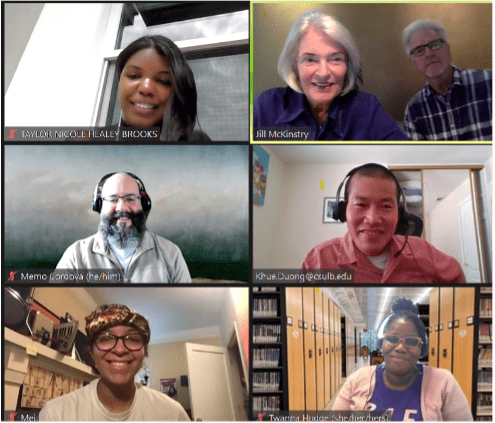
In celebration of the 20th anniversary of the Jill and Joseph McKinstry Libraries Endowed Fellowship, Taylor Healey Brooks, the outgoing McKinstry Fellow (2019-21), hosted a virtual gathering to celebrate the occasion. The endowed fellowship is awarded to an underrepresented MLIS student and includes a scholarship and a paid graduate student position at the UW Libraries. During the virtual gathering, McKinstry Fellows shared professional and personal updates—and it is abundantly clear that McKinstry Fellows are making an impact on the communities they serve.
Memo Cordova, the inaugural (2001) McKinstry Fellow, is now an Associate Professor and Librarian at Boise State University’s Albertsons Library. In his role, he works closely with Boise State’s McNair Scholars program, a federal program supporting undergraduate students who show academic promise, are interested in pursuing their PhD, and are a first-generation college student and/or a student underrepresented in doctoral programs. Memo teaches the Library Lab to each cohort, which usually ranges from 10-15 third-year undergrads, to guide and offer research support and one-on-one research consultations. “Working with the McNair Scholars is what I love most about my work. Not only am I fortunate enough to work with inspiring students, but the research the students conduct oftentimes address concerns facing marginalized populations.” In recognition of his outstanding work with students, Memo received the Boise State McNair Scholars Distinguished Service Award in 2009.
Khue Duong, 2008 McKinstry Fellow, is a Science Librarian at the California State University, Long Beach, a competitive position he secured at the height of the financial crisis. He supports all of the physical sciences departments in the College of Natural Sciences and Mathematics: Chemistry & Biochemistry, Environmental Science & Policy, Geology, Mathematics & Statistics, and Physics, as well as Asian and Asian American Studies.
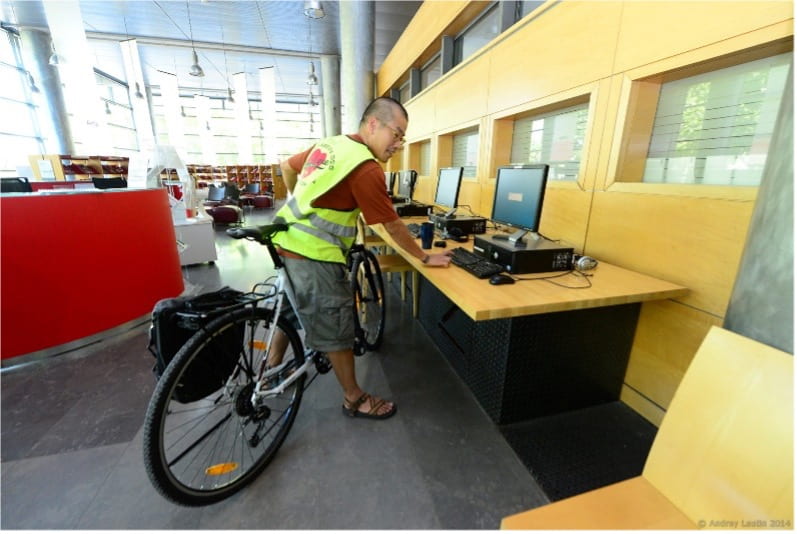
Khue Duong at a library in Lyon, France
Khue has taken his love of libraries to a whole new level, cycling in Europe (Montpelier to Lyon, France in 2014 and Oslo, Norway to Aarhus, Denmark in 2015) with the Cycling for Libraries program. The group visited libraries, museums, cultural centers, and city halls along their journey, ending the tour at the renowned DOKK1 in Aarhus, a brand new, state-of-the-art public library and community-cultural center.
Khue enjoys following and experimenting with new trends in the field. He helped organize a 4-day CSU Library Carpentry Workshop last year to teach foundational computational software and data science skills to his peers. Khue is also active within Special Libraries Association (SLA) Physics Astronomy and Math Division, and recently served as co-chair of the mentoring committee.
A leader in the field, Twanna Hodge, 2013-15 McKinstry Fellow, is the inaugural Diversity, Equity, and Inclusion Librarian at the University of Florida George A. Smathers Libraries. Google her name, and you will find a treasure trove of information on her research interests: diversity, equity, inclusion and accessibility issues and efforts in the LIS curriculum and workplace; library residencies and fellowships; cultural humility in librarianship; and the retention of minority library staff in librarianship. (Seriously, check out her work—it is time well spent. Links are below.)
In fact, Taylor, the most recent McKinstry Fellow alum, became interested in pursuing her MLIS at UW after coming across Twanna’s research online and connecting with her. While Twanna is now a mentor to her, Taylor’s work stands on its own.
As a student, Taylor split her time at UW Libraries between Research and Learning Services, as well as working on the Assessment and Planning team. She co-authored an assessment report synthesizing data on the undergraduate student experience during the initial COVID-19 shutdowns and summer 2020 Black Lives Matter movement. This work helped inform her capstone, Celebrating Black Faculty and Student Scholarship: A Framework for UW Libraries Programming and Outreach. One of Taylor’s capstone recommendations was to showcase research by Black faculty and students, which inspired this UW Libraries Blog post featuring Associate Professor Maya Smith’s research.
Taylor also co-founded and co-chaired the Students of Color in Library and Information Science Student Organization (SoCLIS), where she co-hosted an intimate conversation with UW iSchool alumna Tracie Hall, Executive Director of the American Library Association.
Taylor is currently participating in a residency at the Library of Congress, in the Latin America, Caribbean and European Division.
Mei’lani Eyre, is the latest McKinstry Fellow and is honored to be in the company of the others. “It was a pivotal moment for me, when I found out I was named a McKinstry Fellow. Until that point, I had been at a crossroads in my life, not sure if I could fully pursue grad school and my dream of librarianship. Once I received that email headlined ‘congratulations’, I saw my dreams begin to manifest before my eyes.” Mei just started their internship at Odegaard Undergraduate Library.
Underscoring the importance of opportunities like the McKinstry Fellowship, Twanna explains, “paid internships and fellowships focused on combatting structural inequities in the profession are more than financial investments; they instill the belief that people are committed to seeing your dream a reality and helping you do so. To me, that is one of the best feelings to experience.”
Worth the time—a selection of work from Twanna Hodge:
Puente, M. A., Hodge, T., Kumaran, M. and Jeff Witt. (2021). How a Global Pandemic and Racial Unrest Are Impacting Diversity, Equity, and Inclusion Work in Research Libraries. Research Library Issues, no. 301: 26–42. https://doi.org/10.29242/rli.301.3.
If you are interested in creating opportunities for students through philanthropy, please feel free to reach out to me, Shelby Williford with UW Libraries Advancement at [email protected] or 206-616-6521.
Stories
Special Collections Reopening Update
November 3, 2021
A popular new virtual reading room, why appointments are better for users, new exhibits and more.
UW Libraries Special Collections is one of the busiest places in the UW Libraries system. With people seeking access to materials from on campus and off, the Special Collections team has adapted services to meet the demand for virtual and remote services and maximize health and safety for all staff and visitors. We caught up with Allee Monheim, Public Services Librarian in Special Collections to learn more.
What is the virtual reading room and how does it work?
Special camera equipment allows for virtual visits to the Special Collections reading room.
The virtual reading room, launched in September, enables users to look at Special Collections materials from anywhere using Zoom and a document camera. Staff handle books, archival collections, and photographs for users while they examine the material on camera. We can also zoom in and zoom out on different parts of a document or book so that users can get a closer look at things like signatures or illustrations. Appointments are 55 minutes long, and they can view one archival box or up to 5 books per appointment. Users are limited to one appointment at a time to give everyone a chance to use the service.
How is the virtual reading room helpful?/ Who is it for?
The virtual reading room is for anyone who wants to view our material but can’t come to campus for whatever reason. UW Special Collections is nationally and internationally known as a repository for incredible unique and rare material, and while some people do travel from all over the world to use our collections, not everyone can! This makes the collection more available to more people at no cost (for travel, etc).
For example, we recently had viewing of a rare book that required a special set-up with book supports and the user was able to get a really good view of the pages because of how we could angle the camera – possibly even better than they would have been able to do in person!
How many people are using it, and what has been the response so far?
We offer 11 sessions per week and we’ve been booked at 90%-100% capacity every week. We’re hoping to be able to start offering more in the future! This was originally intended to be a pilot project, but the response has been so overwhelmingly positive, we expect that it will become a more permanent service moving forward. Everyone is so happy to be able to access materials this way.
How common is this technology in libraries?
There are a few other places doing variations of this service, but it’s not widely used as far as I know. I was inspired by a presentation from colleagues at the Huntington Library on their use of document cameras to provide access to users during COVID. I think remote/virtual services will only continue to gain popularity and be more necessary in the future.
What types of requests are better served in person?
People can look at one box per 55 minute appointment, so if you’re someone who needs to go through a lot of boxes really quickly, it may be best to come in person. But you could also use the Virtual Reading Room to get an idea of what’s in a collection so you can decide if you want to visit!
It’s structured this way because it’s technically still a pilot program – so we only have the equipment for one Virtual Reading Room set up and only 3 people working on it (me and two graduate students). We’re hoping that once we hire and train more student workers we can start offering more appointments!
Why do I have to make an appointment to visit special collections now? How far in advance do I need to schedule?
Special Collections is operating by appointment for two reasons:
First, COVID safety protocols and staffing. Most of our users are actually “general public” – meaning they’re not UW students, faculty, or staff. This means that they’re not held to the same vaccination requirements as those of us who are members of the UW community. In order to keep everyone safe, we’re limiting the number of people in the reading room at any one time. This allows us to better observe social distancing. We also have a buffer at the end of each appointment to give us time to disinfect workspaces and any shared equipment (such as the scanner in the reading room)
Second, as noted in recent communication, the Libraries are all facing unprecedented staffing shortages. In Special Collections, we’ve had several retirements and graduations since closing for COVID in 2020, adding to the shortage. We don’t have enough people to support retrieving material on demand, so the appointment system gives us the chance to prepare for research visits ahead of time.
Appointments should be scheduled at a minimum of 3 business days in advance so we have enough time to retrieve material and arrange delivery from our offsite storage facility if it’s not on campus.
When will special collections open back up to drop-in in person visits? Will the virtual visits continue when that happens?
It isn’t possible to accurately predict when staffing will return to a level that would facilitate any major change in hours or operations. That said, the appointment system is working so well, it is definitely something we are considering keeping because it has proven to be more efficient and productive for our users. For example, in a drop-in scenario, if someone requested an item that was offsite or had to be screened before it could be used, we were pretty limited in what we could do. They may have to wait for a long time, or we may not have been able to get them the material at all resulting in a wasted trip (we always try to find alternatives, but that isn’t ideal). Having people plan their visits and requests in advance lets us handle these logistics ahead of time so people can focus on what they came here to do: research!
Once we have the staff to expand our hours and it’s safe to allow more people in the room, we’ll revisit things like our requesting process, appointment limits (currently users can only have two at a time), and how long the appointments last. We’ll keep adapting the process to expand access as soon as it is feasible to do so.
As for if virtual visits will continue – yes! As we hire and train more staff we’ll revisit how we provide this service, possibly even expanding it. It’s clear that this is filling a need for our users, so we don’t want to stop doing something that’s been so obviously helpful to people.
What else should people know about Special Collections right now?
Exhibits are back! For the first time in almost two years, our exhibit and showcase spaces are full, which is really great to see. While the And Then She Said: Voices of Feminists Past and Present exhibit in the reading room requires an appointment, others are open to anyone during business hours:
And Then She Said: Voices of Feminists Past and Presentwas sown from The Dead Feminists series, a collaboration between local artists Chandler O’Leary and Jessica Spring in the form of a collection of 31 broadsides elevating voices of women throughout history. The exhibiting is on display through March 11, 2022.Viewing is currently by appointment only. Use our Contact Us form to schedule a visit!
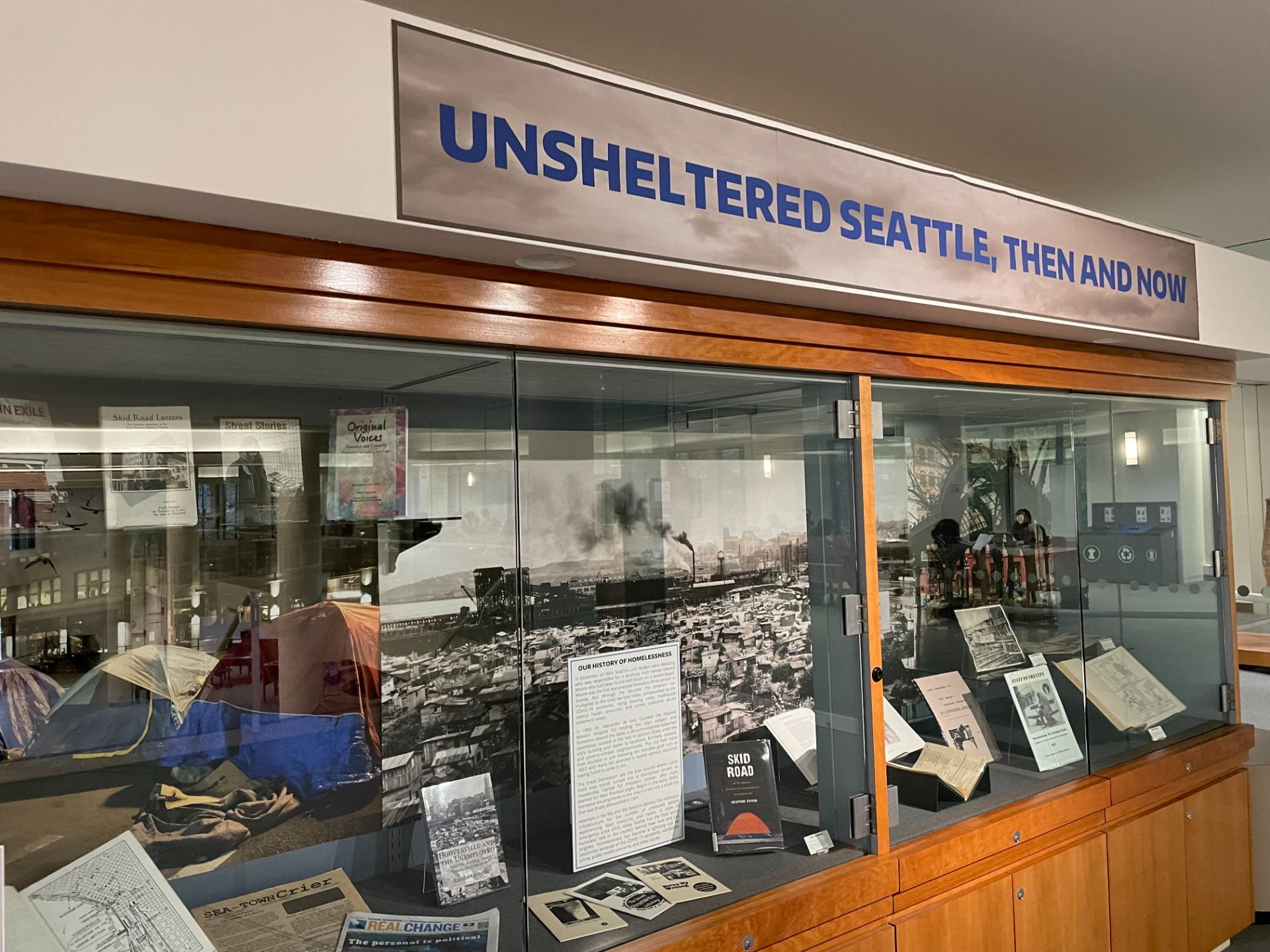
Unsheltered Seattle, Then and Now: In conjunction with National Homeless Awareness Month, this showcase highlights primary sources documenting the history of Seattle’s unhoused–from Hooverville to the original Skid Road, these images, books and pamphlets illustrate the increasing and unmet needs our city continues to grapple with. Allen Library first floor display case. Listening to Seattle’s Skid Row: Testimony from the Edge on 11/18 is an online program weaving together voices from all sides of the homeless epidemic, from unhoused individuals to caregivers.
The Pacific Northwest in the ‘70s – Power to the People: October 25, 2021-Jan 28, 2022. Groove through the ‘70s in this exhibit of photos, ephemera, and publications from the University of Washington Libraries Special Collections. Each quarter will feature different aspects of the pivotal decade that brought the end of the postwar economic boom, an increase in social progressive values, greater political awareness and expanding liberties for women. Special Collections Lobby, Allen Library South Basement (no appointment needed). Learn More.
Stories
November Update
November 2, 2021
We are almost half-way through the autumn quarter! As the countdown to final exams begins, take some time out this Wednesday to relax and enjoy the First Wednesday Lunchtime Concert Series in Allen Library’s north lobby, featuring Students of the UW Strings Program, presented by UW Libraries and UW School of Music. This month is packed with free workshops and events for all students, faculty and staff; check them out!
When will UW Libraries expand hours? Our goal is to expand hours as soon as possible. Libraries staff have been working diligently since summer quarter to fill vacant positions, and we thank you for your patience and understanding as we work to address labor challenges that impact the Libraries as well as other campus and public institutions at this time. Learn more.
Special Collections Update: A look at the popular new virtual reading room, why appointments are better (and required) for users, future operations and new exhibits. Learn more.
Study Space Survey – Calling all students! The UW Libraries needs your input on campus study spaces. Complete this 2 minute survey and you can enter a raffle for a $10 gift card to the UW Bookstore. Your input will help us to improve the UW student experience! Take the Survey.
Stay informed: The best source for Libraries operational updates and information is the Libraries Operations Update page.
News and Stories
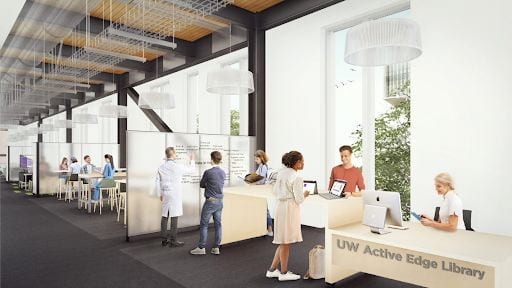
A New Library for UW Health Sciences! The Active Edge Library (AEL) will be part of the new state-of-the-art UW health sciences education building, currently under construction and scheduled to open in May 2022. Learn more.
Maya Angela Smith
Faculty Feature: Maya Angela Smith. The first of a series of UW Libraries features celebrating Black faculty and student scholarship. Get to know more about the intersectional work of Maya Angela Smith, Associate Professor of French and the Interim Chair for the African Studies Program, Jackson School of International Studies. Read the profile.
Who is #YourUWLibrary superhero? Please consider nominating a Librarian for the annual Distinguished Librarian Award. Finding that essential primary source for your thesis, teaching support for your classes, navigating online resources and answering your digital publishing and copyright questions — UW Librarians are always here for you, Huskies! Now is the time to show your appreciation and support by nominating an outstanding Librarian for the Distinguished Librarian Award, part of the UW’s annual Awards of Excellence program. Anyone may nominate a librarian for the award and Librarians at UW Seattle, Bothell/Cascadia, Tacoma, and the M.G. Gallagher Law Library are eligible. Learn more and nominate your Librarian by December 31, 2021! Learn more.
Announcing the 2021-2022, Community Reads program With Wellbeing as the topic for this year, we hope to offer opportunities for grounding, connection, and reflection amid ongoing traumas experienced by so many in recent months. We will dive into Undrowned by Alexis Pauline Gumbs, a collection of meditations inspired by marine mammals, to seek ways we can all breathe easier, individually and together. Learn more.
New Exhibits/Spotlights
Unsheltered Seattle, Then and Now: In conjunction with National Homeless Awareness Month, this showcase highlights primary sources documenting the history of Seattle’s unhoused–from Hooverville to the original Skid Road, these images, books and pamphlets illustrate the increasing and unmet needs our city continues to grapple with. Allen Library first floor display case. See also Listening to Seattle’s Skid Row: Testimony from the Edge on 11/18.
The Pacific Northwest in the ‘70s – Power to the People: October 25, 2021-Jan 28, 2022. Groove through the ‘70s in this exhibit of photos, ephemera, and publications from the University of Washington Libraries Special Collections. Each quarter will feature different aspects of the pivotal decade that brought the end of the postwar economic boom, an increase in social progressive values, greater political awareness and expanding liberties for women. Special Collections Lobby, Allen Library South Basement (no appointment needed).Learn More.
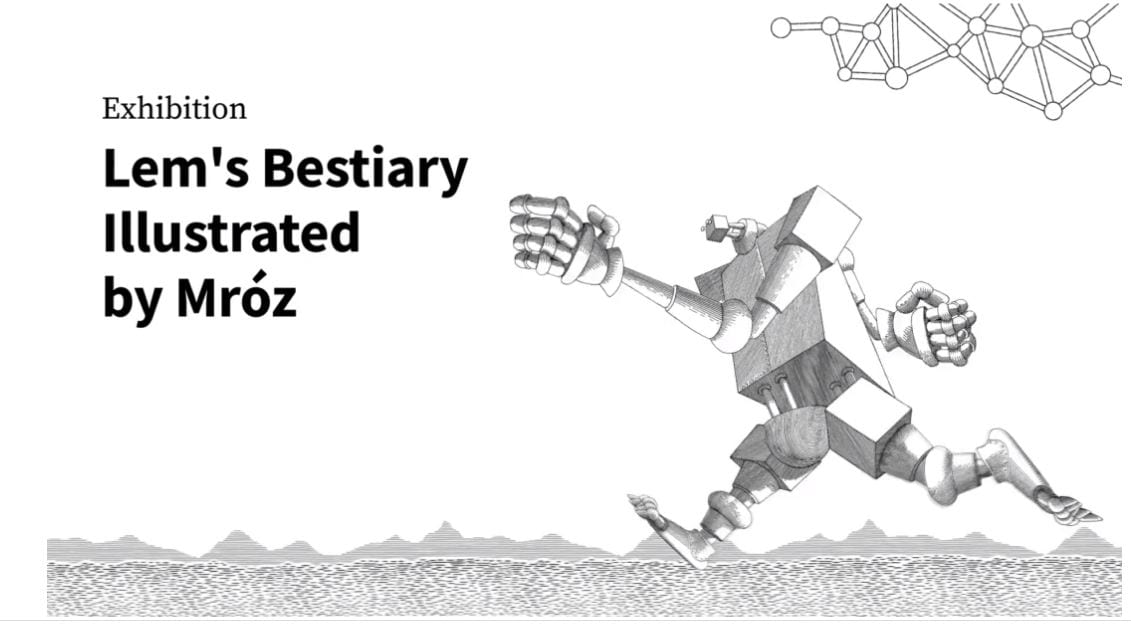
Lem’s Bestiary Illustrated by Mróz: On the 100th anniversary of Stanisław Lem’s birth, UW Libraries present an exhibit of drawings created by Daniel Mróz, illustrator of Lem’s science fiction books. The exhibit is accompanied by videos and a display of Lem’s books from the UW Libraries’ Slavic collection. The exhibit is co-presented by Seattle Gdynia Sister City Association, the producer of Seattle Polish Film Festival, and the UW Polish Studies Endowment Committee. Learn more.
Featured Resources, Collections, and UW Press
November is Native American Heritage Month. Check out the North American Indian Drama database that contains 256 plays by 49 playwrights representing the stories and creative energies of American Indian and First Nation playwrights of the twentieth century. Browse published and previously unpublished works with a diversity of tribal traditions and approaches to drama.
UW Press featuring David Williams’ Homewaters: Hear from naturalist David B. Williams at two upcoming events to celebrate his latest book Homewaters. Witty, graceful, and deeply informed, Homewaters weaves history and science into a fascinating and hopeful narrative, one that will introduce newcomers to the astonishing life that inhabits the Sound and offers longtime residents new insight into and appreciation of the waters they call home.
Wednesday, Nov. 3, 6 – 7 p.m. with University Bookstore learn more
Monday, Nov. 8, 7 – 8 p.m. at Brick & Mortar Books learn more
November Workshops and Events
Community Events
Open Writing Circles Tuesdays 1:30-3:00pm PST: Are you a PHD or grad student working on a long-term writing project? Join us for weekly meetings on Zoom for 90 minutes of quiet writing time and community with fellow UW writers from across campus! Learn more.
11/7- Readings from the Heart of Europe: A Conversation on Antanas Škėma’s “White Shroud,” widely acclaimed as Lithuania’s great modernist novel, we’ll discuss this book with special guest Prof. Violeta Kelertas (U. of Illinois-Chicago), one of America’s leading experts on Lithuanian literature. Readings from the Heart of Europe is a book club led in part by UW Libraries’ Slavic Studies Librarian, Michael Biggins, the American Romanian Cultural Society and Ethnic Heritage Council. Sign up.
11/18 – Virtual Scholar’s Studio. Scholars’ Studio is an excellent opportunity for grad students looking to make connections and build presentation skills. Hosted by the UW Libraries Research Commons and Core Programs in the Graduate School, Scholars’ Studio is a quarterly event featuring up to 10 short presentations (5 minutes each) by UW graduate students and postdocs to encourage the cross-disciplinary sharing of research. Hosted virtually this quarter, presenters receive feedback on their presentations and participate in Q and A. Anyone interested is welcome to attend. Faculty, instructors encouraged to attend! Learn more.
11/18 – Listening to Seattle’s Skid Row: Testimony from the Edge. Join us for a Reader’s Theater performance and hear the voices of unhoused individuals, caregivers, and more, as we consider the toll that homelessness takes on our community as well as effective interventions. Based on interviews conducted by Josephine Ensign with people working—and living—at the intersection of health and homelessness in Seattle, Listening to Seattle’s Skid Road: Testimony from the Edge was written by Josephine Ensign, DrPH, professor, UW School of Nursing; and Lorraine McConaghy, PhD, public historian; with assistance from Lisa Oberg, librarian, UW Special Collections. See also the corresponding showcase in Allen Library’s 1st floor: Unsheltered Seattle, Then and Now (note above).
Join us on 11/10 for Finding Your Balance: Balancing Research, Coursework, and Life. As a UW first-generation student, there are a lot of things – whether they are exciting opportunities or necessary obligations – on your plate! This session, open to undergrad and grad students, is all about balancing your busy school, work, and personal lives, as well as navigating a large university system. We will feature interactive activities and conversations led by first-generation students to explore topics like: self-care, time management, goal setting, library research, communicating with UW faculty and staff, and more. Leave the session with a plan and support.
11/4 – Hacking the Academy: Simpson Center Showcase. Back by popular demand, come learn about funding opportunities for faculty and graduate students available through the Simpson Center and hear about the projects developed by recent recipients of this Simpson Center Fellowships.
Pressbooks Workshops: Want to develop your Pressbooks skills or need a refresher? RSVP for one of our upcoming online trainings
11/10 – Fair Use Workshop. Where does copyright protection end and your right to use someone else’s work begin? Join us for an overview of fair use, which is perhaps the most consequential and dynamic copyright doctrine for education and research.
11/17 – Profiles and Publishing Workshop. Learn the basics of establishing your online presence with author profiles, and discuss the aspects of the publishing process you can control to make it more or less likely to be able to share your work widely.
11/30 – Introduction to Omeka Workshop.Learn how this tool can help you build a digital exhibition with your images and media?
Save the Date
11/22-1/4 The exhibit Climate Justice for All will be on view in the Allen Library North Lobby. The exhibit will explore the effects of climate change on disadvantaged populations and communities of color and will discuss solutions through an equity lens. Book displays will be included in the exhibit, and a virtual panel discussion on climate anxiety will be held in mid-December.
Missed it?
Watch October’s Constitution Read-Aloud with more than 90 community readers and the corresponding panel discussion exploring different perspectives on viewing this historical document in a modern context. You can view both viathis YouTube playlist. And check outthis list of critical readings prepared by the Gallagher Law Library.
And Then She Said: Voices of Feminists Past and Present was sown from The Dead Feminists series, a collaboration between local artists Chandler O’Leary and Jessica Spring in the form of a collection of 31 broadsides elevating voices of women throughout history. Viewing is currently by appointment only. Use our Contact Us form to schedule a visit!
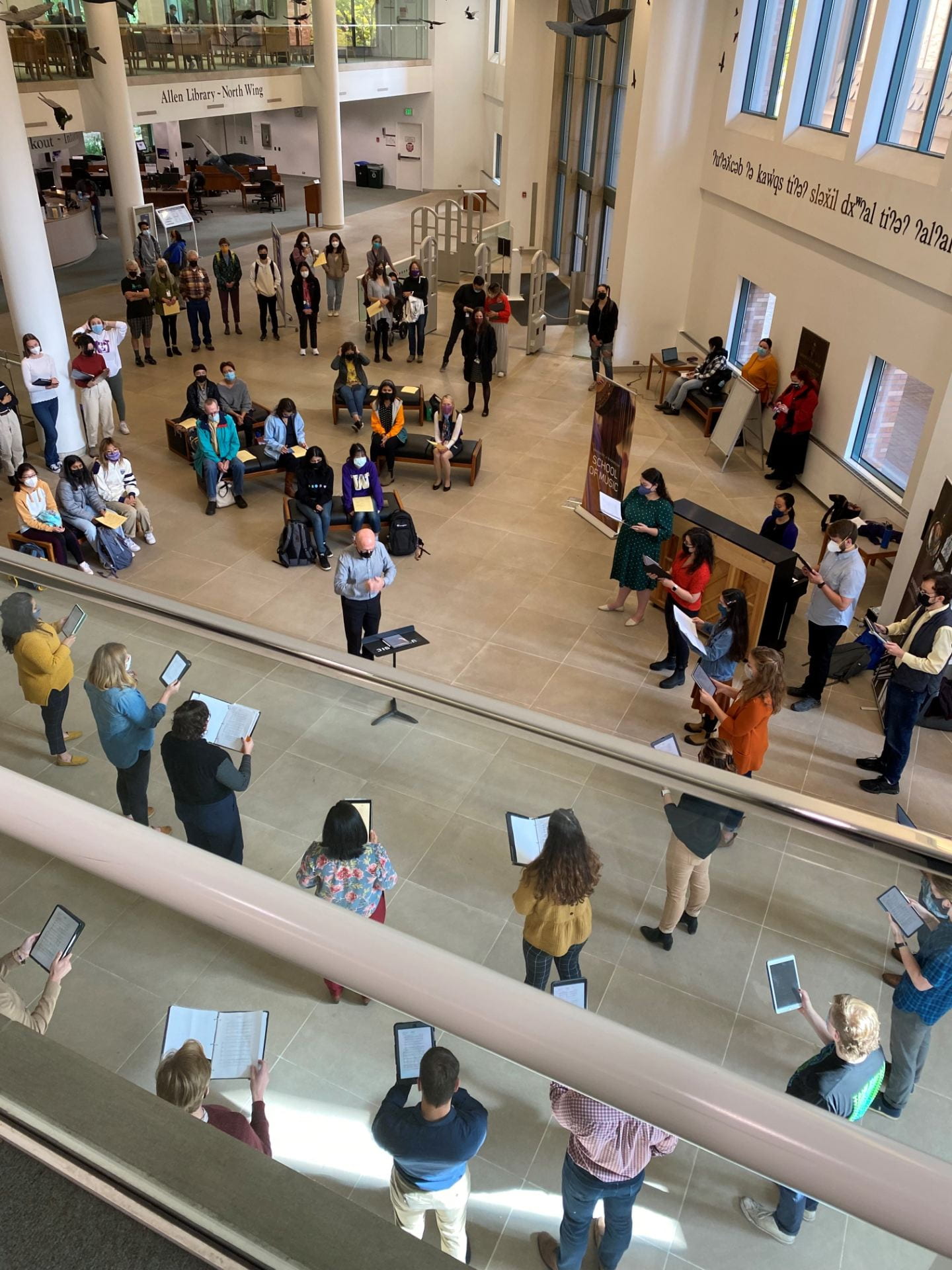
Listen to the First “First Wednesday” concert in Allen Library last month featuring the beautiful voices of the UW Choral Groups!
Don’t miss out on important Library news and updates: Get the UW Libraries monthly news directly to your inbox– Sign up for our blog under the Subscribe By Email link at the top right of this post.
###
Stories
A New Library for UW Health Sciences
November 2, 2021
Updated 5/31/22
Today’s health sciences curriculum emphasizes the importance of cross-disciplinary collaboration, and tomorrow’s healthcare professionals require a range of flexible spaces and access to expertise and resources purpose-built for integrated learning. Digital resources provide the majority of research and reference information, and in turn, libraries have long been evolving to adapt and meet the needs of the healthcare community.
The Li Lu Library is an open concept space with 6 zoned areas including group and quiet study areas, reservable offices for faculty or students, digital video and presentation technology, and a staffed service desk. The entire space is flooded with natural light from the floor-to-ceiling windows facing out onto Pacific Avenue. Image credit: Miller Hull Partnership, Lease Crutcher Lewis, GGN, S/L/A/M Collaborative)
The ability to work effectively in teams, particularly in the healthcare setting, is the foundation of Interprofessional Education (IPE) and the design of both the new health sciences education building (HSEB), including a new UW Library; the Li Lu Library. Named after the donor who gave the first major philanthropic gift toward the new HSEB, the Li Lu Library will provide students with flexible, innovative and connected spaces for accessing information and working in teams.
Currently in construction and scheduled to open in May 2022, the new building will be one of the State’s first integrated training facilities, where students studying to become nurses, dentists, social workers, physicians, pharmacists and public health professionals train and learn together.
As health care evolves toward an interprofessional approach, training for this integrated model must also evolve. Such learning requires more than a classroom — it requires a learning ecosystem with robust library resources that will prepare students to communicate, work and lead in an integrated, collaborative environment.
The Li Lu Library is centrally located on the third floor, just steps away from lecture halls. The new library is an extension of the services provided through the existing Health Sciences Library. The location represents an intentional effort to integrate libraries into learning environments — meeting students where they are, and providing interactive and collaborative space to make connections and support active learning. The building’s focus is on modern active learning pedagogy, creating a space for gathering and interacting, enhanced by a design that enables high visibility from Pacific Avenue, revealing the inner activity and life from the street.
With more than 98% of health sciences library resources already online/digital, the Library prioritizes innovative study spaces over physical materials, facilitating the type of interactive study opportunities that students want and need in today’s academic setting.
The UW Health Sciences Library (HSL) facilitates research and learning support at the local, regional, national and international level through its partnerships with IHME, UW Medical School’s WWAMI program, and as the virtual Regional Medical Library for Region 5 of the Network of the National Library of Medicine. Through these partnerships, UW Health Sciences Library facilitates distance-learning and access to critical clinical resources for students and clinicians alike in nine states and U.S. Territories throughout the region (WA, AK, OR, NV, CA, MT, WY, ID, HI), including many rural and underserved communities. The new library is an extension of this work, making HSL support and resources more accessible to all health sciences students and faculty.
“Knowing how to access and utilize the most current health science research and reference tools is an essential skill for any medical professional, and especially for those in resource-poor settings where the ability to get critical diagnostic information on-demand may be challenging,” says Tania Bardyn, Associate Dean for Health Sciences and Director, Network of the National Library of Medicine, Region 5. “UW Health Sciences Library has always been integral to training UW health sciences students with best-in-class information literacy programming, tools and resources, including spaces for active learning and collaboration. Through the new Li Lu Library, an extension of the UW Health Sciences Library, UW students and faculty will have even greater access to the spaces, tools and expertise that are essential to train tomorrow’s health science leaders.”
“UW Health Sciences Library has always been integral to training UW health sciences students with best-in-class information literacy programming, tools and resources, including spaces for active learning and collaboration.”
While the final design for the Library is still being developed, preliminary concepts feature a multi-faceted space with areas for group work, resource sharing and information gathering as well as space for self-reflection and connecting with other students before or after classes. The library will also offer several tech-enabled spaces with multiple LCD screens and digital video equipment to support remote learning and presentations. Adjacent to several classrooms and a food service area, the library offers convenient access to study, connect, learn and reflect. With a dedicated service desk staffed by Health Sciences staff, students from all health sciences disciplines will have access to resources, tools and support to build the cross-discipline collaboration skills required to succeed in today’s healthcare environment.
Initial planning for the new health sciences education building began in 2014. UW Health Sciences Library staff have been closely involved since the beginning, helping to inform the design for the library based on assessment data and faculty focus groups that indicated a clear need for interdisciplinary collaboration space and resources.
The Washington State Legislature committed to provide $70 million toward the $100 million building project. The University is seeking an additional $30 million in private support from community members and foundations.
To learn more about the Li Lu Library and/or to inquire about a tour of the building site, please contact:
Julie Knorr, UW Project Manager
Tania Bardyn, Associate Dean for Health Sciences Director, Network of the National Library of Medicine, Region 5
Sheryl Stiefel, Assistant Dean of University Libraries for Advancement
About UW Health Sciences Library
The mission of the Health Sciences Library (HSL) at University of Washington (UW) is to advance scholarship, research, education and healthcare by anticipating information needs; providing essential resources and services; and facilitating learning for the greater health sciences community. HSL staff support and collaborate with a wide set of users from inside and outside UW — students, faculty, researchers, librarians, health professionals and community members throughout the state of Washington and the Pacific Northwest. HSL supports all six health sciences schools at the university as well as the 25,000 employees of UW Medicine including 4,683 faculty across the Washington, Wyoming, Alaska, Montana and Idaho (WWAMI) region and over 4,700 medical students and trainees. Learn more.
###
Stories
Fall Faculty Feature: Maya Angela Smith
October 21, 2021
Maya Angela Smith is an associate professor of French and Italian studies as well as the Interim Chair of the African Studies Program, Jackson School of International Studies at the University of Washington.
In the summer of 2021, UW iSchool graduate students Dillon Baker and Taylor Healey Brooks partnered with UW Libraries Open Scholarship Commons, the Research Commons, and the Assessment and Planning department on their capstone project: Celebrating Black Faculty and Student Scholarship: A Framework for UW Libraries Programming and Outreach, generating new ideas for programming and outreach methods to support and celebrate Black scholarship and research at the University of Washington. This post is the first in a series of recurring features the Libraries plans to host. For this inaugural feature, we are excited to talk with Maya Angela Smith, Associate Professor of French as well as the Interim Chair for the African Studies Program, Jackson School of International Studies. Smith’s scholarship broadly focuses on the intersection of racial and linguistic identity formations among marginalized groups in the African diaspora, particularly in the postcolonial francophone world such as in her bookSenegal Abroad. She received her PHD in Romance Languages and Linguistics from the University of California, Berkeley in 2013, and has been teaching at UW since then.
What are some short-term and long-term goals you hope to achieve through your research and teaching?
In general, I want to bring my expertise in language, race, and identity to a wider audience as well as engage with fields outside of my primary disciplines. In the short term, I am working on several public-facing projects that intersect with music studies. For instance, I am currently trying to publish an ethnographic memoir titledReclaiming Venus, which chronicles the experience of Alvenia Bridges, a Black woman who made her mark behind-the-scenes in the white and male dominated music industry. As a companion piece, I have created an ArcGIS story map* walking tour to bring some of her stories and memorabilia alive.
I am also writing a book for Duke University Press’sSingles Seriesabout the French-language song “Ne Me Quitte Pas.” In addition to analyzing Jacques Brel’s masterpiece, this book will focus on Nina Simone’s version to explore the racialized and gendered dimensions of her performance, the musical and textual modifications of the song itself, and the affective experience of both performer and audience. My long-term career goals are to continue expanding how I convey knowledge both intellectually and creatively such as through children’s book writing.
What is one “little known” fact or interesting aspect of your work that you think people may find surprising or unexpected?
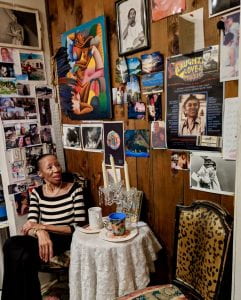
Smith is currently working on Reclaiming Venus, a multimodal project that tells the extraordinary story of Alvenia Bridges (pictured here) through an ethnographic memoir and a story map walking tour.
I try really hard to make my work accessible to everyone by writing in a way that is inviting, legible and personal. I use my own experiences and those of others to delve into larger societal issues. I think this helps students and readers connect better to the material.
How does the UW Community support your work/research? What has been most helpful?
The UW Community has been supportive through funding opportunities, mentorship, and feedback. I have been fortunate to have been awarded various Simpson Center grants as well as funding through the Research Royalty Fund. Without their support, I would not have been able to complete some of my work since funding in the humanities is hard to come by. My colleagues across campus have also been great in reading drafts of fellowship applications, articles, book chapters, and everything in between.
How does the UW Library support your research? What experience have you had working with Libraries to advance your research/teaching?
UW Library has been instrumental in supporting my research and teaching. I keep Interlibrary loan on their toes. I feel like I have them finding articles all the time. I invite librarian Deb Raftus regularly to my courses to help students with their research projects. She also creates research guides for them and training modules I can embed in Canvas. Librarian Verletta Kern was one of my collaborators during my 2021 Digital Humanities Summer Fellowship when I worked on my ArcGIS story map walking tour. She helped me navigate all the digital tools and resources available to UW students and faculty. She also assigned graduate student Hayley Park to my project, who did an amazing job constructing the map tour. Meanwhile, librarian Maryam Fakouri answered my questions about copyright issues. All the librarians are very approachable and always helpful.
What advice would you give to new faculty coming to campus for the first time this fall?
Do not hesitate to reach out to the UW Libraries for whatever your research and teaching needs may be. I have grown as a scholar because of them, and they make my life so much easier.
In fall quarter, Smith is teaching French 448: Cultures of Franco-America, which highlights the linguistic and cultural diversity of Francophone groups within North America (e.g., American Indigenous populations, Creole and Cajun cultures in Louisiana, African Americans in Interwar Paris) as well as how these groups were racially and socially constructed in these various contexts. She is also teaching a graduate seminar on Qualitative Research Methods where students design and implement a small-scale qualitative study based on a particular cultural or social issue by collecting different forms of qualitative data (field notes, interviews, participant observation), performing data analysis, and learning how to code data.
Students, faculty, staff and community members from diverse backgrounds thrive when we create and maintain inclusive research, learning and working environments. As part of our strategic commitments, UW Libraries seeks to elevate the voices of historically underrepresented communities at UW and in the Pacific Northwest by partnering to create, preserve and increase access to culturally-relevant information resources.
If you would like to submit/suggest ideas for a future spotlights highlighting the work of Black students and faculty, please contact [email protected] or [email protected].
Learn more about the ArcGIS platform available to all faculty, staff and students, and how UW Libraries can provide in-person help either through an appointment with the UW Libraries’ GIS staff or during the Suzzallo Library GIS Lab hours. Learn more.
Stories
Why researchers need ORCID: Tips from UW Libraries
October 20, 2021
Have you ever wondered how researchers distinguish themselves from others with the same name?
In a given field or institution, there may be several researchers with a similar, or even the same exact name. Perhaps the researcher has changed their first, last, or preferred name over time. Or perhaps the researcher’s name is spelled differently in certain languages. These potential possibilities may make it challenging for potential research partners, curious scholars, institutions, or funding agencies to correctly identify the specific researcher they are looking for. Certain agencies and institutions may ask a researcher to list all previous names, works, institutions, and funding history in order to distinguish that researcher from others; however, this process may take a significant amount of time and effort for the prolific researcher.
Luckily, there is an easy way to streamline this process – enter ORCID.
ORCID, or Open Researcher and Contributor Identifier, is a type of persistent identifier – a long-lasting reference to a digital resource – that allows for specific identification of an individual through the combination of a unique ID and the ability to locate that reference over time (Digital Preservation Coalition). In the case of ORCID, the unique ID is a string of 16 numbers; for example, 0000-0001-2345-6789. You may be familiar with other forms of persistent identifiers, such as Digital Object Identifiers (DOI) on research articles, or Persistent Uniform Resource Locators (PURL) for web addresses.
Benefits
Creating an ORCID allows for researchers to increase the visibility and reach of their work, as many services, such as SciENcv or ResearchGate, allow integration with ORCID. PubMed even allows individuals to search for specific authors from their ORCID. Additionally, certain funders such as the NIH now require ORCID in certain circumstances, and certain journals may request an author’s ORCID during submission.
Adding works that you’ve previously contributed to is very simple, allowing for a researcher to add works manually, via a trusted institution, or even through BibTeX files. ORCID also has a function that automatically updates your profile with new works. If you’re not quite ready to share your work, you can also utilize ORCID’s visibility settings to curate who is able to see certain information and works on your profile.
Even for a new researcher, or someone who is just starting to consider publishing, ORCID can ensure that their works will be attributed correctly in the future.
Where can I learn more?
For questions about ORCID or other forms of persistent identifiers, contact the Scholarly Communications and Publishing (SCP) team at [email protected]! We are always happy to provide assistance on any of your needs.
Our next presentation on persistent identifiers is on October 27th, 2021, at 1 p.m. PST. Can’t make it? We also offer regular workshops on this topic and many more topics, which you can find on the UW Libraries Calendar.
Stories
When will UW Libraries expand hours?
October 19, 2021
We hear you. Our entire UW community is working hard to return to operations that look and feel more like pre-COVID times, including expanding evening and weekend hours for the Libraries; but this will take some additional time, and we appreciate your patience and understanding as we work collectively to increase services and hours.
Increasing hours requires additional staff
Hours of operation for all Libraries (including evenings and weekends for Suzzallo and Allen Libraries) will be limited until sufficient staff are hired and trained to fill the number of open positions required to expand hours. Like many public-facing service organizations, the pandemic caused a monumental reduction to human resources in the Libraries as well as many other units across campus. Libraries staff and UW administration alike understand the need for expanded services and spaces, and how essential these services are to in-person learning. Hiring is a critical priority right now, and teams are focused on filling open positions as quickly as possible.
Hiring is a critical priority right now, and teams are focused on filling open positions as quickly as possible.
The importance of student workers
Hiring efforts have been well underway since early summer; however, in addition to many permanent staff and Librarian positions that need to be filled, there is an unprecedented number of student positions that we are filling to expand operations and hours.
Since students have returned to campus just over one month ago (September 29th), student applications for positions have gradually started to increase. While it isn’t feasible to pinpoint exactly how long it will take to complete this hiring cycle, reduced staff and reduced hours are a temporary situation.
Find study space
In the interim, please consider the following options to help find available study space on campus:
Odegaard Library is open on weekdays until 10 p.m., and many hours on weekends. You do not need to be an undergraduate student to use this library — it is open to all UW students, faculty, and staff with a current valid Husky Card.
SCOUTis an online campus-wide tool that identifies study spaces inside and outside the Libraries based on chosen criteria. While some spaces may not be available on weekends and evenings, you may find some new and interesting study spaces in other buildings on campus, especially when Libraries spaces are busy.
The Research Commons: if you prefer to study independently, the Research Commons in Allen Library offers quiet individual study space and one group study area by reservation. Check it out.
UW Seattle Branch Libraries are currently open during weekdays to all students, regardless of discipline! If you are on the Seattle campus, check out a library you haven’t been to such as Music,Art, Drama,Tateuchi East Asia, Built Environments, Engineering and Math Libraries. (Be sure check hours first as not all libraries have the same hours and some are operating on a half-day schedule)
24/7 help – If you are just looking for research help (not study space), remember that all UW Libraries continue to provide online help and access to online collections 24 hours a day, 7 days a week. Just ASK US.
UW Libraries will expand hours as soon as possible, and we thank you for your patience and understanding as we continue to work through these temporary hiring challenges and reopening logistics.
###
Stories
UW Libraries Observes International Open Access Week: October 25-29th, 2021
October 15, 2021
Join us in celebrating OA Week this month by attending events and discovering services offered by the UW Libraries. Schedule of events below.
“Open Science should play a significant role in ensuring equity among researchers from developed and developing countries, enabling fair and reciprocal sharing of scientific inputs and outputs and equal access to scientific knowledge to both producers and consumers of knowledge regardless of location, nationality, race, age, gender, income, socio-economic circumstances, career stage, discipline, language, religion, disability, ethnicity or migratory status or any other grounds.”
International Open Access Week (OA Week) is an annual week of organized action that advocates for increased access to research for all people around the world. This year’s theme, It Matters How We Open Knowledge: Building Structural Equity, intentionally highlights the significance of centering equity in these efforts to make research open to all.
In our 2018-2023 Strategic Plan, the UW Libraries committed to advancing research for the public good on our campus by:
Increasing access to and improving dissemination of UW scholarship by leading the development of institutional open access publishing, resources and technologies.
Advancing digital and interdisciplinary scholarship by collaboratively investing in infrastructure and leveraging expertise in new areas of research support.
Four years into our Strategic Plan, the UW Libraries have taken significant steps in supporting that strategic direction. Last fall, the UW Libraries launched the Open Scholarship Commons (OSC), a central hub where everyone, regardless of disciplinary home, can come together to learn new concepts and technology skills, create new knowledge, and share it openly with others. The OSC is centered on the values of equity, experimentation, flexibility, openness, and technology. Learn more about the work of the OSC and how UW Libraries are supporting students and faculty
The UW Libraries believes that the University’s “research attains its greatest impact on our most pressing global challenges when we advocate for open, public, and emerging forms of scholarship,” and we invite you to join us in celebrating OA Week this month by attending events and discovering services offered by the UW Libraries and our OSC that can help us all work more openly. See below for a schedule of UW Libraries-sponsored events that will be taking place virtually during OA Week. These events will not be recorded.
Supported by a UW Global Innovation Fund grant, librarians partnered with faculty at the School of Dentistry and DeRouen Center to instruct 10 phd recipients in turning their dissertations into a publishable manuscript. Through a 10 week course, the instructors aimed to increase competencies and knowledge of the publishing system, covering how to do a lit review, the publishing ecosystem, open access, journal impact factor, submission guidelines, working with an editor, using a citation manager, copyright and contracts, and creating an author profile. Three of the students are close to being finished, and a few more are not far behind. A grant of $10,000 will supply approximately four students with APC fees to publish open access.
ResearchWorks: An Introduction to UW Libraries’ Institutional Repository- Tuesday, 10/26/21, 2:00 – 3:00 pm
ResearchWorks is the University of Washington Libraries’ Institutional Repository, which is used to house theses, dissertations, articles, data, and other digital materials that are created by UW faculty and researchers. This workshop will explain what ResearchWorks is used for, how to deposit your materials, and how using ResearchWorks for manuscripts and data can meet publishing requirements by funders and publishers. A demonstration will be included, and there will be time for questions.
Introduction to Persistent Identifiers- Wednesday, 10/27/21, 1:00 – 2:00 pm
Learn about three tools the UW Libraries provides to help researchers provide persistent identification for publications, digital objects, and themselves.
DataCite creates a persistent web address (called a digital object identifier, or DOI) for a web resource. Even if you need to move the storage location for the object, the address will not change. Many publishers require DOIs upon article and data submission.
Perma.cc is used to take a snapshot and store a version of a web resource. If you’re writing an article and want to reference a page as it existed on a specific date, such as a newspaper front page, this tool will provide the link and the storage.
ORCiD provides a persistent digital ID that distinguishes you from every other researcher and, through integration in key research workflows such as manuscript and grant submission, supports automated linkages between you and your professional activities ensuring that your work is recognized. Some publishers require authors to have an ORCiD.
Introduction to Open Science Framework: Online Collaboration, Organization and Sharing- Thursday, 10/28/21, 10:00 – 11:00 am
Join the Scholarly Communications and Publishing staff for an introduction to the online collaborative tool Open Science Framework. OSF is a tool that promotes open, centralized workflows by enabling capture of different aspects and products of the research lifecycle, including developing a research idea, designing a study, storing and analyzing collected data, and writing and publishing reports or papers. It can be used for collaboration or individual work, and allows for sharing of all or parts of a project. The workshop will include a short presentation of OSF, with hands-on time to create an OSF profile and see first-hand how useful this tool can be.
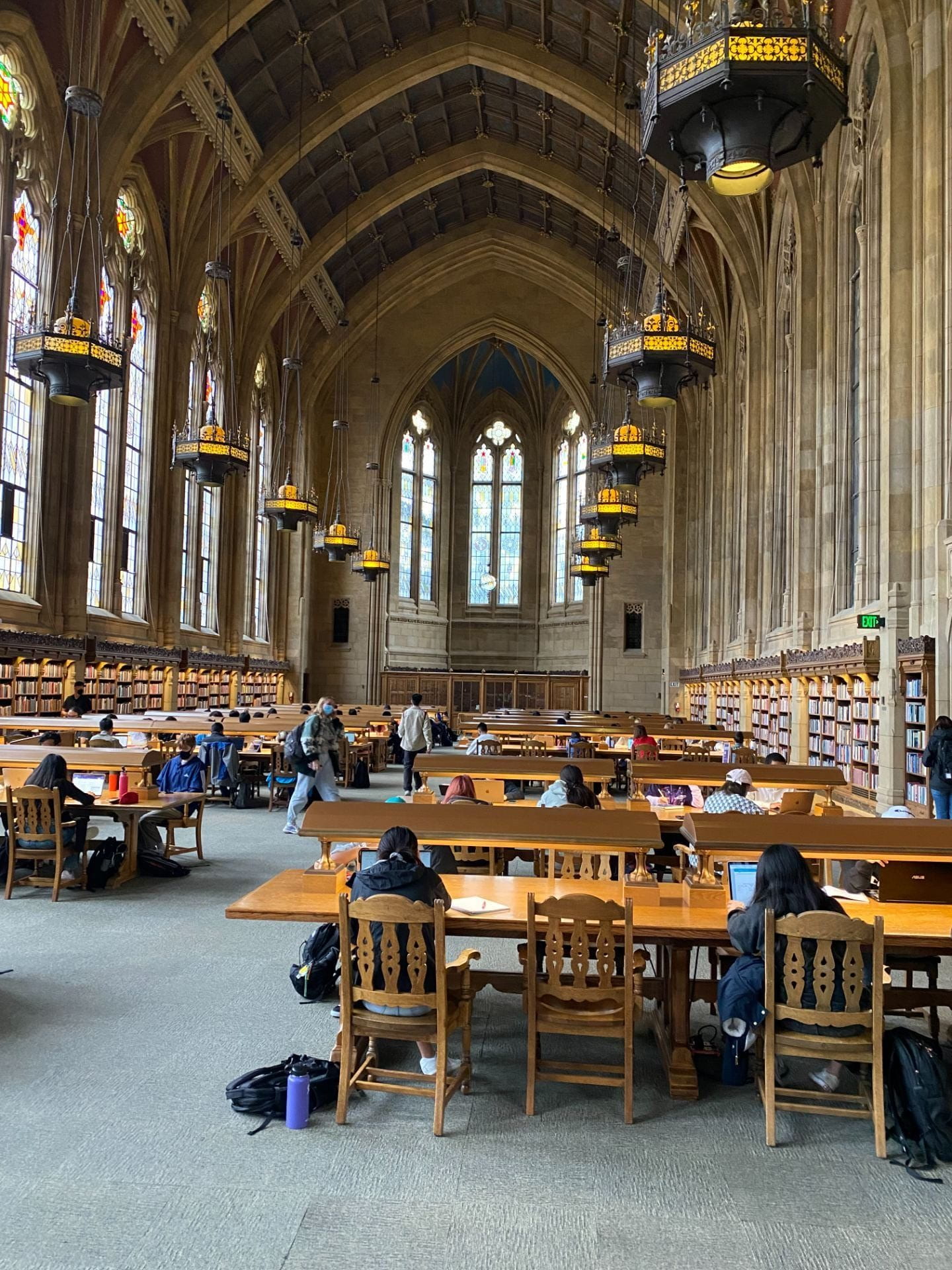
The Reading Room in Suzzallo Library is once again full of students.
Welcome back, Huskies!
It’s AWESOMEto have students back in our spaces again! We missed you! Thanks to all of our visitors who have been doing a great job keeping our Libraries safe (wearing your mask, not eating inside the Libraries, etc.) our staff, your fellow students and visitors appreciate it. We are just getting started, so our hours will be limited to start, especially on weekends. Be sure to check hours and what to Know Before You Go. We will expand hours as staffing permits. Thank you for your patience and understanding.
Services Updates
Spaces for Zoom and online classes?: Bookmark SCOUT to find study places across campus, OR see the Libraries study space pages for information on Library rooms and zoom-friendly spaces. Tip: The Research Commons Red C room can be reserved for interactive classes (talking permitted).
From the Open Scholarship Commons (OSC)
Media Services: This fall, media services (audio, visual, imaging production and tech support) will be integrated into the suite of services offered by theOpen Scholarship Commons (OSC) and the Media Arcade that was formerly in Suzzallo Library will be closed as a staffed service point. OSC services, including media, will remain online-only fall quarter while we plan for a physical presence in the Suzzallo-Allen Libraries. Questions? ASK US or email [email protected].
Stay informed: the best source for Libraries status and operational changes is the Libraries COVID-19 update page.
News and Stories
Reflections on the US Constitution. Watch the Libraries annual Constitutional Read Aloud from October 8th with more than 90 community readers, and/or listen to the corresponding discussion to explore different perspectives on viewing this historical document through a modern context. Learn More
Open Access Week October 25-31: The theme of 2021 International Open Access Week is It Matters How We Open Knowledge: Building Structural Equity. See how the work of the UW Libraries Open Scholarship Commons (OSC) and recent work from students and faculty reflect this theme and learn about new OSC programming designed to help you track, expand, and document the impact of your research. Learn more.
Scholars’ Studio: Graduate Student Call for Proposals:Submit a proposal by October 29) | Virtual event on November 18–Open to all graduate students across UW tri-campus, Scholars’ Studio is an opportunity to talk about your research, practice, or pedagogy. Presentation format is a 5 minute “lightening talk” in front of a supportive, smart and interdisciplinary audience. Hosted in partnership with Core Programs—Office of Graduate Student Affairs in The Graduate School and the UW Libraries Research Commons. Learn more.
New Exhibits (in person!)
Promotional poster for the exhibit And then She Said: Voices of Feminists Past and Present featuring select broadsides by artists Chandler O’Leary and Jessica Spring.
And Then She Said: Voices of Feminists Past and Present was sown from The Dead Feminists series, a collaboration between local artists Chandler O’Leary and Jessica Spring in the form of a collection of 31 broadsides elevating voices of women throughout history. Featuring quotes by historical feminists, the broadsides are also tied to current political and social issues. Each limited-edition broadside is letterpress printed from hand-drawn lettering and illustrations. The exhibit augments the series with items from the Libraries’ collections as well as reflections from library staff about what the artwork means to them and how it resonates with their own experiences.
Viewing is currently by appointment only. Use our Contact Us form to schedule a visit! Exhibit hours are Monday through Friday, 10am – 1pm. Please submit requests 5 business days in advance.
one panel of “Pen and Politics” now on display
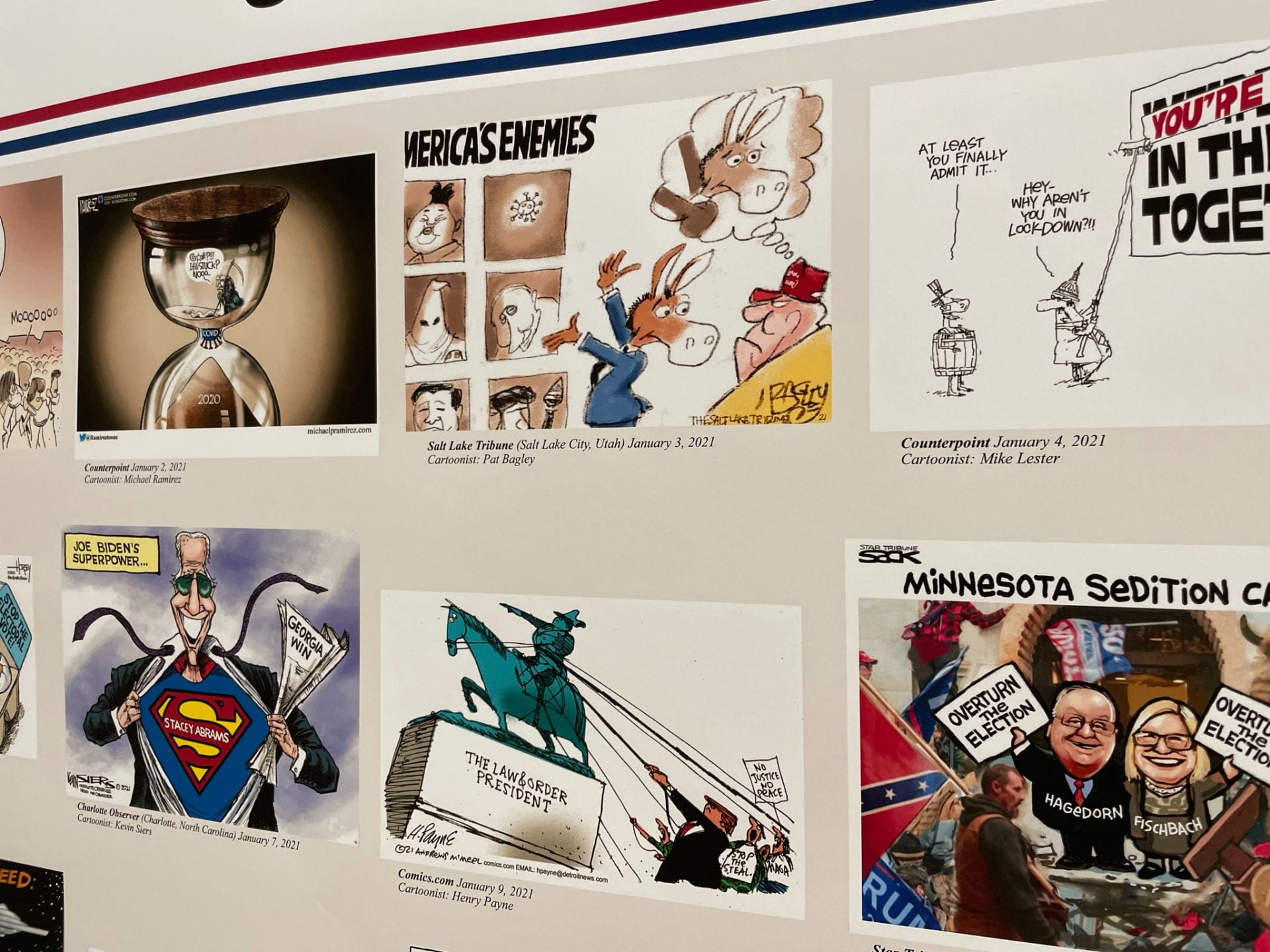
Pen & Ink Politics: Polarization and the pandemic is an exhibition of editorial cartoons illustrating the different perspectives on the COVID-19 pandemic and the 2020 Presidential Election. Featuring the work of cartoonists from around the country and the world, its purpose is to emphasize the intensity of the discourse on these issues while providing a forum for open discussion. Venture through this self-guided exhibit and explore our timeline of cartoons starting with the emergence of a mysterious virus in January 2020 through the January 6 insurrection at the U.S. Capitol. Take a moment to leave your mark, sharing your reactions to the exhibit and the events of 2020. Sponsored by and located in Government Publications, Maps, Microforms & Newspapers, University Libraries on the ground floor of Suzzallo Library.
Help UW Libraries choose new online resources: Fifty resources, covering topics from anthropology to World War I, are available to try out until June 30, 2022. At the end of the trial period, based partially on usage, three to five resources will be permanently added to the UW Libraries. Soexplore these trial resources and help the UW Libraries to select the resources YOU want most.
Open Writing Circles:virtual weekly meetings offering 90 minutes of quiet writing time and community with fellow writers from across campus, every Tuesday!
October Learning Workshops
10/14 Inclusive Data Visualization Data visualization design “best practices” often do not prioritize (or outright reject) efforts to be inclusive. This workshop will suggest new “best practices” and provide an opportunity to speak with other attendees on this topic. Data visualization experience is not required.
10/19 Korea Research Methods: Quick Overview of Korean Resources including major electronic databases for e-journals, e-books, e-news, etc. If you are new to Korean resources or need a refresh on what’s available at UW for Korean studies, you will find this beginner’s session useful brought to you by the Tateuchi East Asia Library.
10/20- Advanced Pressbooks Publishing Webinar open to all users on hosted PressbooksEDU networks (including the University of Washington) and is designed for users who have some familiarity with Pressbooks and are ready to engage in more complex activities, like adding interactive elements or integrating Pressbooks with supported third-party tools. A more detailed description of webinar topics can be found in our guide: networkmanagerguide.pressbooks.com
10/26- ResearchWorks: An Introduction to UW Libraries’ Institutional Repository This workshop will explain what ResearchWorks is used for, how to deposit your materials, and how using ResearchWorks for manuscripts and data can meet publishing requirements by funders and publishers. A demonstration will be included, and there will be time for questions.
10/28 Introduction to Open Science Framework (OSF): Online Collaboration, Organization and Sharing Learn about OSF, a tool that promotes open, centralized workflows by enabling capture of different aspects and products of the research lifecycle, including developing a research idea, designing a study, storing and analyzing collected data, and writing and publishing reports or papers. Learn more.
Community Events
10/12 – Fear No Man: A conversation with author Mike Gastineau and Don Borst Join us UW Libraries and UW Press for a conversation with author Mike Gastineau and sports journalist Don Gorst as they discuss the newly published book: Fear No Man: Don James, the ’91 Huskies, and the Seven-Year Quest for a National Football Championship.In Fear No Man, Mike Gastineau recounts the riveting story of Don James and the national champion team he built. A brilliant examination of one of college football’s greatest coaches and teams, Fear No Man is the inspirational story of an improbable journey that led to one classic and unforgettable season.
Juan Alonso-Rodríguez
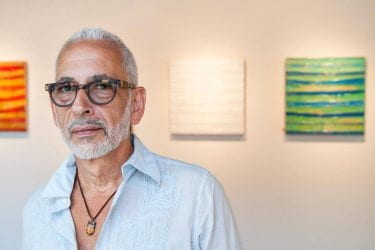
10/28 – 2021 Artist Images: Juan Alonso-Rodríguz Join us for an insightful conversation with artist Juan Alonso-Rodríguez. A Cuban-born, self-taught artist whose transition from music to visual arts coincided with his move to Seattle in 1982, Juan is a former Seattle Arts Commissioner and served four years on the Public Art Advisory Committee for the City of Seattle. His work has been exhibited throughout the US, Canada and Latin America. This FREE, virtual discussion will explore the artist’s influences past and present, COVID-era impacts and perspective on the future. The discussion will be facilitated by Seattle Arts Commissioner, Vivian Phillipsand UW Libraries’ Anne Jenner, with remarks from UW President, Ana Marie Cauce and the new dean of UW Libraries, Simon Neame. Sign up and learn more.
Save the Date
First Wednesday UW Choral Group performance in Allen Library North


 the first time in almost two years, our exhibit and showcase spaces are full, which is really great to see. While the And Then She Said: Voices of Feminists Past and Present exhibit in the reading room requires an appointment, others are open to anyone during business hours:
 A New Library for UW Health Sciences!
 Announcing the 2021-2022,
  Unsheltered Seattle, Then and Now: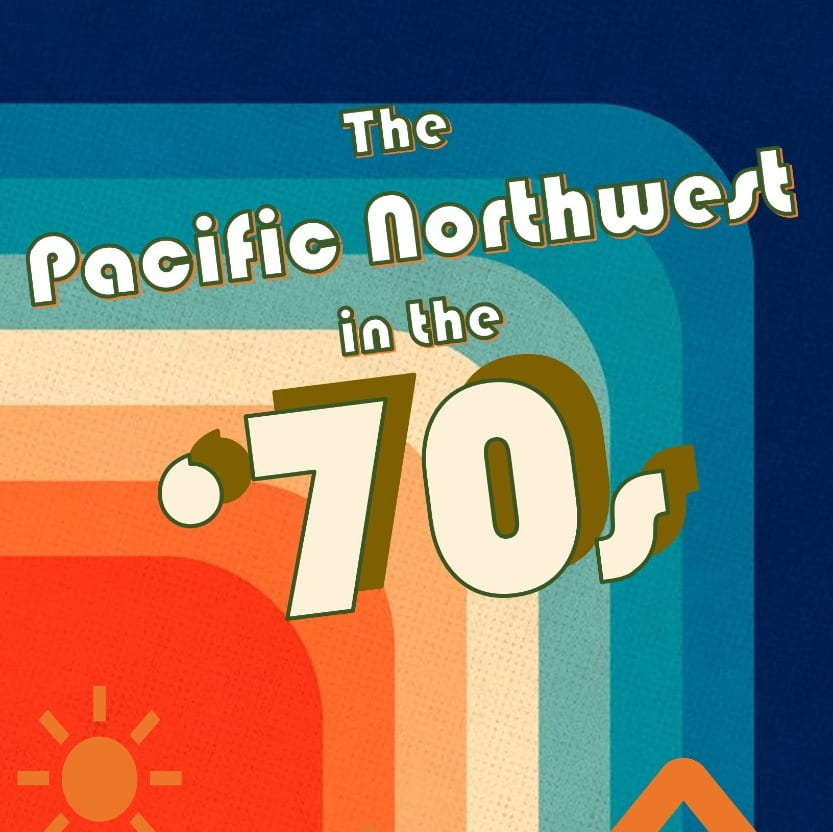
 Lem’s Bestiary Illustrated by Mróz: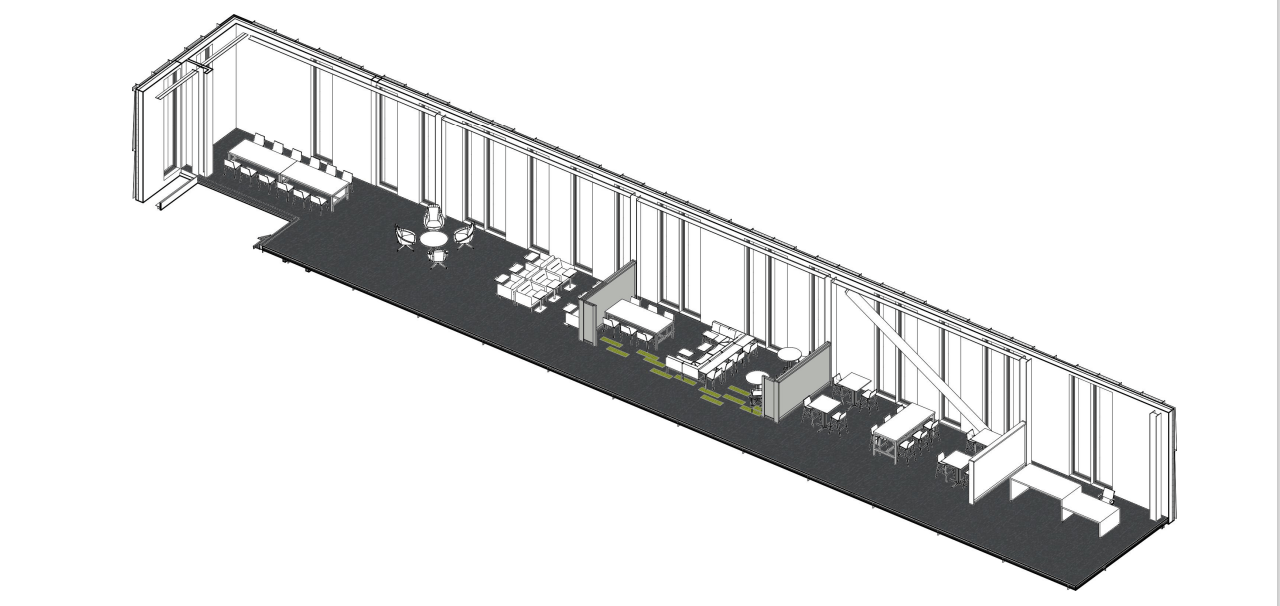
 Scholars’ Studio: Graduate Student Call for Proposals: