Congratulations, you’ve made it through the year! Here are some answers to some frequently asked questions for graduating students, people who are not studying during summer quarter, or whose student status may be changing in summer quarter. As most UW Libraries physical buildings remain closed due to COVID-19, all of the information here has been updated to reflect current operational changes.
Can I access stuff over the summer if I’m not enrolled in classes?
Research Commons: Your Husky ID can still provide access to individual study space at the Research Commons – until it closes for fall preparation on August 20th.
Our online collections, databases, and more can all still be accessed from off-campus during the summer using Husky OnNet or the off-campus proxy. But if you do not continue taking classes in the fall, these library privileges will expire during Winter 2021. See Accounts and Privileges (choose your affiliation and then scroll to the bottom section “Activation/Expiration of Online Services”) for details.
Keep up on the latest research in your field withEMAIL or RSS ALERTS, and social media.
I’m graduating! Anything I should know or do before I go?
YES!Alumni and visitors can also use most of our materials and databases while ON CAMPUS when we re-open; off-campus access is only available to current UW faculty, staff, and students.
*borrowing privileges does not include theMiller Horticulture Library or off-campus access to electronic resources.
When does my off-campus access to library resources expire?
If you are graduating this quarter, some NetID services, like off-campus access, will expire during winter quarter (2022). See Accounts and Privileges (choose your affiliation and then scroll to the bottom section “Activation/Expiration of Online Services”) for details. You can always access resources from on-campus once we re-open.
For more information on Remote/Online resources and answers to common questions about access and services, please see:
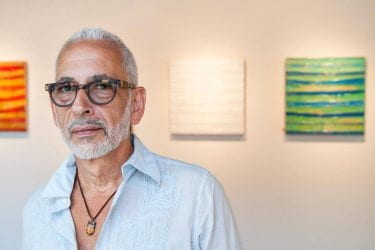
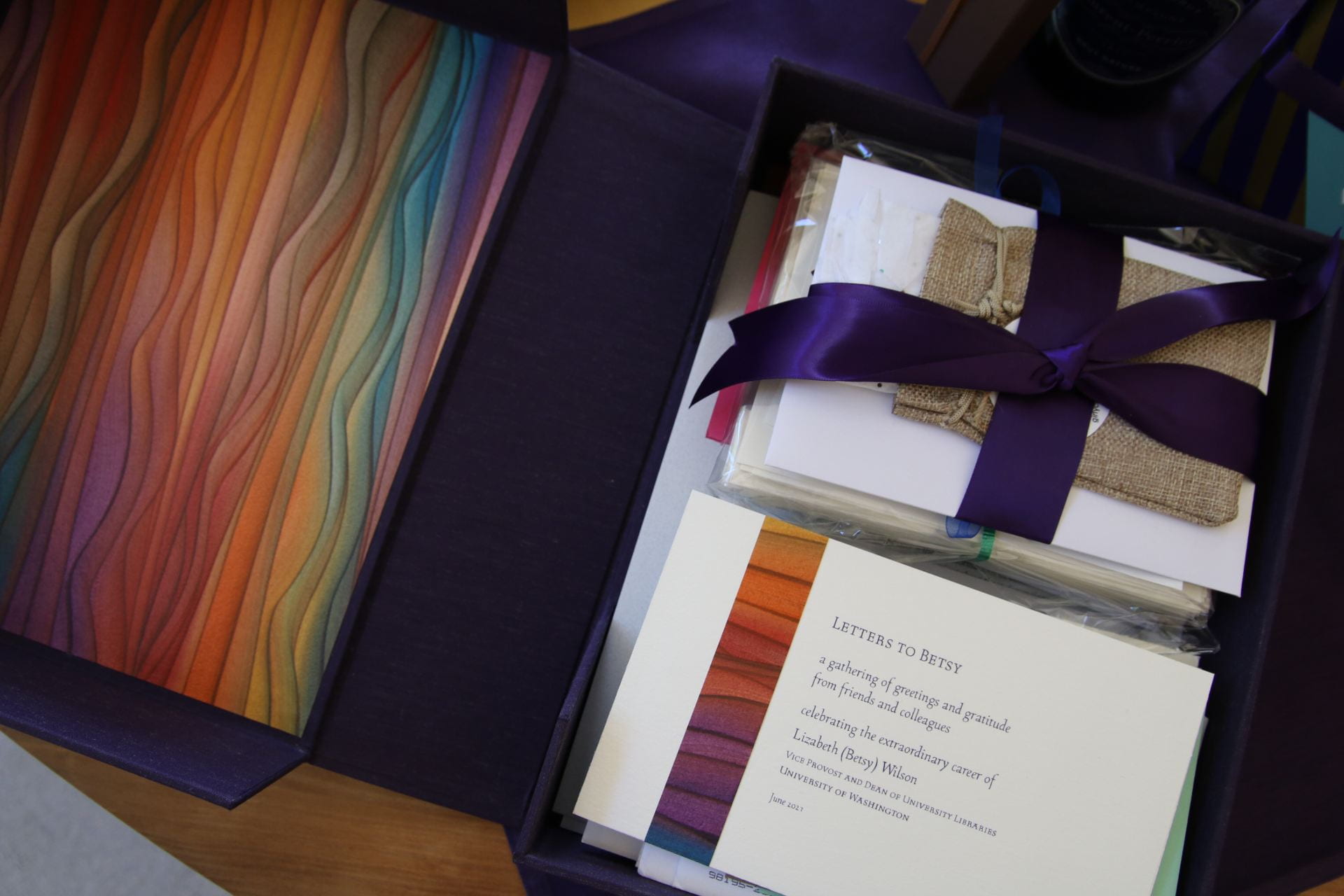
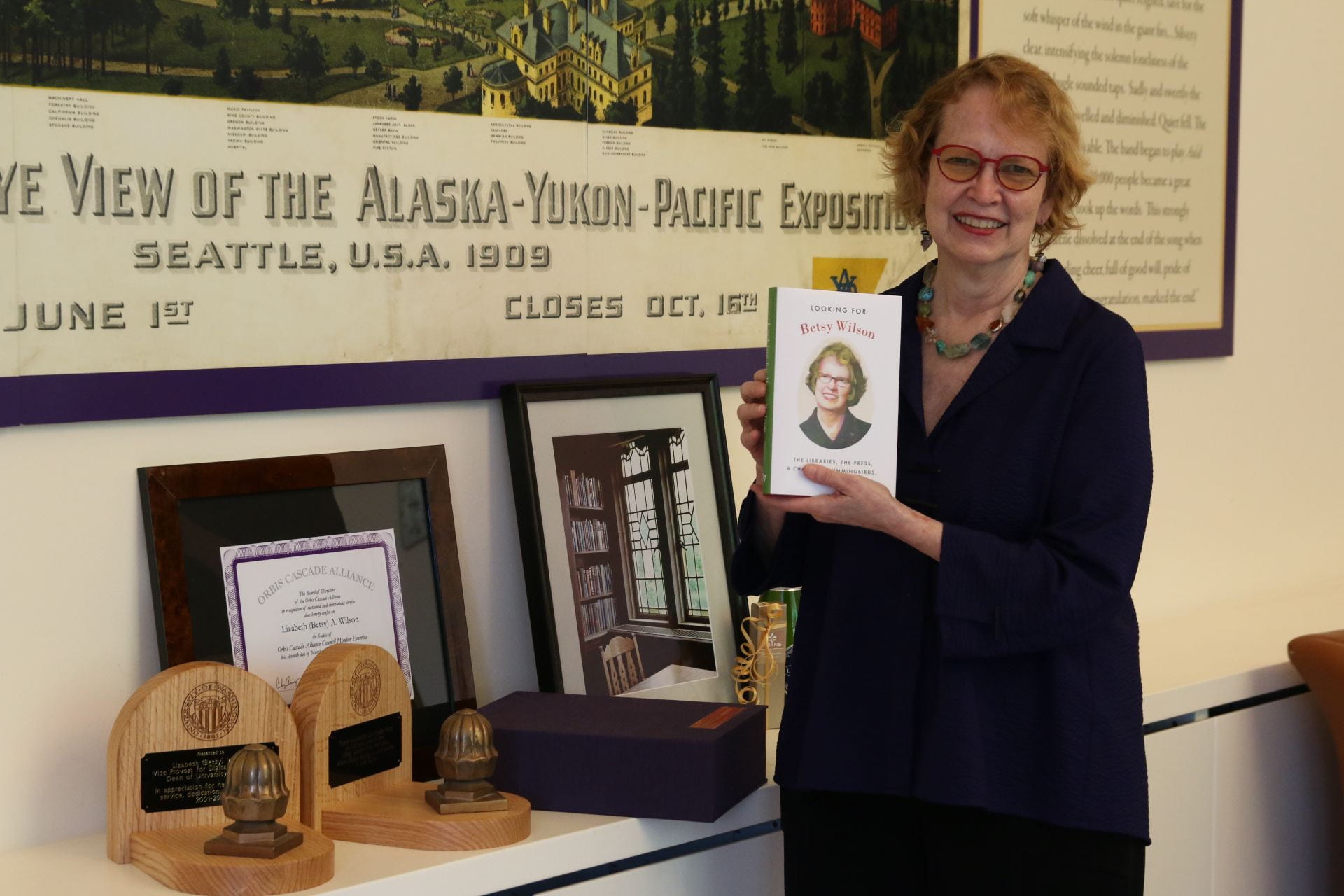
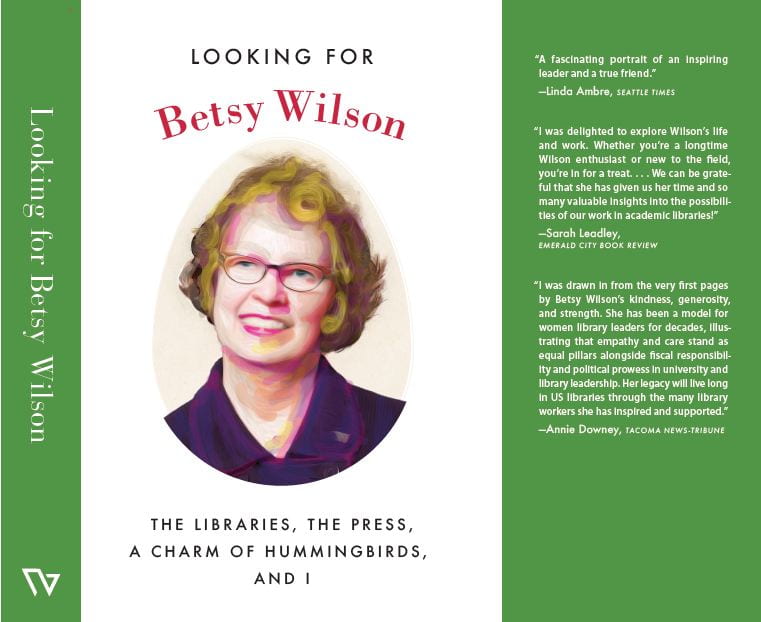
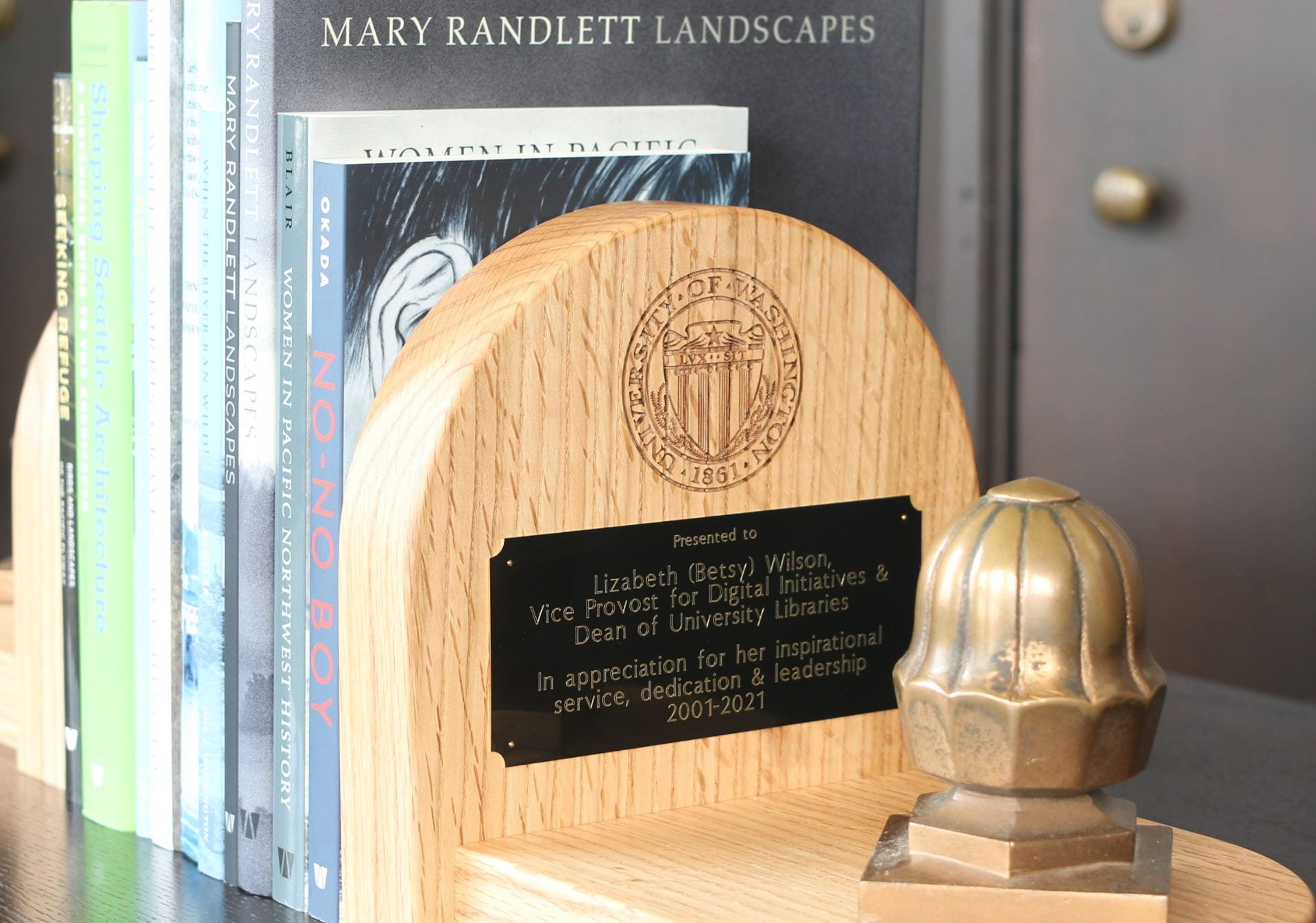
Betsy Wilson, Vice Provost of Digital Initiatives and Dean of University Libraries at the University of Washington plans to retire July 1, 2021, after a nearly 30-year career with UW Libraries, 20- years as Dean. As dean, Betsy leads a network of 16 academic research libraries across all three UW campuses, and the UW Press. She took on the additional role of vice provost for digital initiatives in 2013, a role in which she developed an overall strategy on digital issues, including open access and open science. From 1992 through 2000, Betsy was the associate director of the UW’s Libraries for Research and Instructional Services. Prior to that, she was the assistant director of libraries for Undergraduate and Instructional Services at the University of Illinois at Urbana Champaign. Betsy has served on numerous industry committees and working groups, including:
President of the Association of College & Research Libraries (ACRL) in 2000–2001
ARL Board of Directors in 2003–2006
chair of the OCLC Board of Trustees in 2003–2007
chair of the Transforming Research Libraries Steering Committee in 2005–2007
chair of the Orbis Cascade Alliance Board of Directors in 2011–2012
chair of the Fair Use and Related Exemptions 2013–2015
ARL’s Kaylyn Groves interviewed Betsy via videoconference in March 2021. The interview follows.
Why and how did you get started in librarianship?
When I was an undergrad at Northwestern, my mother suggested that I get a work-study position in the library. I did, as a circulation assistant. Now my whole family jokes that my mother didn’t think I’d stay in the library for 47 years. It was interesting to see the library go through an automation project, and working at the circ desk was useful because I learned how to use the library. I even taught my friends how to use the library—original peer-to-peer instruction. My interest in the library was piqued even more as a result of my senior honors project. I was a double major in German and art history, researching the Der Sturm group of artists.
The card catalog directed me to Special Collections, which had ephemera of that group. I went to Deering Library and asked the head of Special Collections, Russell Malone, if I could see those materials. He was so excited because I was the first person who had ever asked to see those things. They were wonderful little booklets the artists distributed on the streets of Berlin, manifestos about their beliefs regarding art and politics. So, when thinking about what to do after graduation, the question formed in the back of my mind, “What’s this library science thing?” I asked at the reference desk for information about grad school in library science. They told me not to make my choice based on rankings solely. I ignored that advice and applied to the University of Illinois at Urbana-Champaign. They gave me a full scholarship, which was a gift because I had worked since I was twelve. Moving to Illinois was also appealing because I was ready to end my college romance and that would provide an easy way to sever ties.
Ironically, in library school, I avoided every class that had “automation” or “data processing” in the title. My career goal was to be a rare book librarian at the Newberry Library, which I never even got near. I wound up being a VP for digital initiatives. When I started, I had a romanticized view of librarianship. I was very fortunate to have great mentors who trusted me to learn and grow as I went along. Forty years later it’s a completely different world.
What are the highlights of your career?
My overall impact has been to cultivate an environment of collaboration, partnerships, inclusion, and innovation at the University of Washington. Twenty years gives you enough time to shape culture. First, I focused on developing a user-centered library, which we did through assessment.
Then we created the anytime/anyplace digital library and strengthened our Special Collections. All of those accomplishments were predicated on the fabulous staff. As the roles of libraries and librarians evolved, I also helped put the library where it needs to be—integrated throughout the
whole institution.
I’ve overseen a few large capital projects. In my first year as dean, we retrofitted the iconic main library building to make it seismically safe while maintaining its look, even with an earthquake occurring halfway through the project. We’ve won several architectural and library awards. We built an environmentally sound storage facility, and we built a state-of-the-art conservation center and program aided by funding from the Mellon Foundation and others.
That last project is just one example of our now-diversified funding sources. The library used to rely on state and university funding. I branched out. When I started, we had a $10 million
endowment that has grown to $60 million and gives us flexibility to do new projects. We also just finished a capital campaign for the university; the library brought in 148 percent of its goal.
Something I discovered over the course of my career is that I have a propensity for bringing people and organizations together. I was one of the prime architects of the merger of OCLC and Research Libraries Group (RLG) as well as that of the Orbis and Cascade consortia. The combined organizations provide greater value than they did as individual competitors. I also helped bring the Digital Library Federation (DLF) into the Council on Library and Information Resources (CLIR).
Early on, I had incredible mentors so I have tried to do the same for others.
Early on, I had incredible mentors so I have tried to do the same for others. Hugh Atkinson at Illinois was one of my mentors—he was fabulous. He always used to say “there’s room for everyone to succeed” and “the whole is greater than the sum of its parts.” When I was in my mid-20s he asked me, “How would you like to be in charge of training the whole state in using the new online catalog?” I said, “Oh, sure.” What did I know? Looking back, I wondered how he trusted me to do that. It was a stretch assignment. When I was done training everyone, he asked me, “What will happen to libraries when the mainframe is on everyone’s desk?” This was a few years before the first personal computer was available. He was prescient. He taught me so much—to trust others and give them opportunities to explore and expand.
…the staff I work with are amazing. They are the brightest highlight of my career.
Finally, the staff I work with are amazing. They are the brightest highlight of my career. I have complete confidence that the next generation of leaders will help us solve looming problems, such as issues in scholarly communication and sustainability. We’ve had some success with open access but I wish we were farther along.
Were there goals that you set as a director that you have not yet reached?
I thought this last year would be a really fun year—and then came the pandemic. We’ve learned a lot and done great work. We pivoted quickly to remote learning and research, which we couldn’t have done without the past 20 years of preparation. Many things are underway now that my successor will have to finish, including building the second phase of our remote-shelving facility and renovating the Tateuchi East Asia Library, which will be a thrill for the next person. We launched our Open Scholarship Commons online in 2020 and will open the physical manifestation of it as soon as we can re-enter the building. Terrific staff and planning will see these efforts through.
I wish we had a sustainable publishing model that would benefit the public good and open research. In the fall of 2000, our then provost Lee Huntsman and I talked about scholarly
publishing. He said, “It’s an economic model that will collapse on itself.” I asked him how long we thought that would take. He said, “Oh, I don’t know, eight to ten years.” But it’s still one issue our field needs to keep working on. And we need to ensure that knowledge can work its way into all of society, not just academia.
(Developing sustainable publishing models) is still one issue our field needs to keep working on. And we need to ensure that knowledge can work its way into all of society, not just academia.
On a related note, two to three years ago, the library assumed responsibility for the UW Press. We are just now starting to see the fruits of that consolidation with open access publishing and joint projects. I wish we were further along. And compensation for people who work in our libraries is still much lower than it should be, given the value they bring to the whole enterprise. This is especially true in places like Seattle where it is so expensive to live. It is troubling because it affects everyone individually and affects what they can contribute.
What advice do you have for individuals who aspire to leadership positions/roles in libraries?
It’s funny, I recently met with a group of students from the iSchool who asked me the same question. I felt like saying, “You’re asking me? My career has been so happenstance.” But when I reflected on it I was able to come up with a few pieces of advice:
• Know what your values are. They will get you through hard times as well as easy ones.
• Do the work. You can’t be a dean right away. You need time and experience to learn and
become humble.
• Find work-life balance. If you don’t do this, you will collapse in on yourself.
• Build your network of personal connections and influence. The ARL Leadership Fellows program, which I helped start, is a great opportunity for this. Fellows build the network they depend on for the rest of their career. Your cohort will always be there for you and will respond quickly when you call on them.
• Cultivate curiosity and optimism. These qualities are key in leadership roles.
• Get out and about on campus and in the field, take inspiration wherever you find it, and
communicate that to your staff.
What key issues do you think research libraries will face in the next five years?
There are so many unknowns about how we re-enter the post-pandemic world. How should we take teleworking forward? What is the role of the physical place? It is a powerful convening
mechanism for people. But there will be more demand for digital delivery of services and expertise as well as collections and knowledge. It will take a while for us to figure out what the library will be in the post-pandemic era, just as it will take time to figure out what the university will be. James Duderstadt used to say, “The future of the library predicts the future of the university.” We have the opportunity to rethink so many things. We need to be courageous about what we stop doing—what we didn’t do this year that no one noticed because remote capabilities are so superior now. That opportunity will enable us to take on new things.
James Duderstadt used to say, “The future of the library predicts the future of the university.” We have the opportunity to rethink so many things.
Pre-pandemic issues that will continue to be important include developing sustainable publishing and scholarly communication; advocating for public policy related to who owns the knowledge and research—all parts of it, from data to publications; and advancing from a piecemeal approach to digital infrastructure toward a shared and holistic approach.
Learning what an anti-racist organization is and how we get there will be critical. We need to move past the phase of reading books and having discussions. We also need to figure out how we measure the progress we make.
What still inspires you about librarianship?
I’ve stayed as long as I have because it is a mission-driven field, and I’ll be able to continue contributing (in retirement). It has inspired me to see library employees coming together to do amazing things, especially through a pandemic. I love the interconnectedness of the field around the globe. My husband used to say, “Marry a librarian and see the world.” We truly have the ability to solve worldwide problems.
This is also a lifelong enterprise. People I met through my first job are lifelong friends and colleagues. My first conference roommate is my current conference roommate, now solely because we enjoy each other’s company. This is a huge gift.
What do you look forward to in the next phase of your life?
I look forward to re-tapping into things I used to do that got lost in the traveling and professional work and intensity of the day-to-day, particularly the arts. I recently joined the Seattle Opera Board, which is a way of bringing my fiduciary and governance experience to something I care about. The opera has been very challenged this year but has done imaginative things, such as recording partially staged operas to stream online. I also want to see if I can still do printmaking and painting. I want to learn how to box. I have Parkinson’s—boxing is one of the best things you can do for it. All the boxing classes are during work hours. Now that won’t matter! I am moving to Louisville, Kentucky, where my sister, nephew, and niece live. It will be hard to leave Seattle after 29 years—I will miss the mountains and cool marine air—but my new home will be walking distance from my sister’s. My husband died two years ago and the pandemic made me realize how important it is to be close to family. Apparently, Louisville is the place for ARL directors to land. David Carlson is retiring there too and Hannelore Rader still lives there. Poor Bob Fox will have more advice than he wants.
From afar, I will be cheering on the next dean and supporting the UW Libraries as it soars to the next level.
###
Stories
Beyond the Pilot: Digital Scholarship Open Hosting Platforms Are Here to Stay
May 27, 2021
The UW Libraries wants to support you in creating knowledge and sharing it openly through digital means! We’ve been piloting open hosting platforms over the past few years and we are pleased to announce that Manifold Publishing(digital book publishing), Digital Scholarship Hosting (Omeka, WordPress, Scalar, and more), and UW Pressbooks (for creating and adapting Open Educational Resources) are now part of the Libraries’ permanent service offerings!
Explore
How can YOU use these platforms to enhance your teaching and openly publish your research? Here are a few great examples highlighting the digital scholarship work of UW colleagues across all three campuses:
Manifold (Digital Book Publishing)
We Are History Keepers Workshop Guidebook created by UW Libraries’ Special Collections for community members to organize and preserve documents, photos, and recordings of the facts of their experiences to create concrete records of Northwest history.
A digital edition of the Mill on the Floss prepared by students in Dr. Jesse Oak Taylor’s English 440/529 course, Spring 2020. Watch this video to hear more from Dr. Taylor and how he used Manifold with his class:
“The ability to add images to your work, and play around with their form, is enabling to the student’s learning as it allows us to mimic the real world” – Dr. Jess Oak Taylor
Omeka (Digital Exhibits)
Students in Dr. Sarah Ketchley’s LIS 598 explored concepts and methodologies of using digital tools for dataset creation, curation, and analysis, to answer research questions based on primary source documents and shared their findings in Omeka. In this video, Dr. Ketchley share more about how she used Omeka in her class:
“I was delighted with the opportunity to work with Omeka. It provided the granularity and support I needed to teach.” – Dr. Sarah Ketchley
WordPress (Digital Project Presentation)
Overall, I have been most impressed by the ability to create upon the SPLOT format, and I believe other students would benefit greatly from its relatable nature as well. -Monica, UWT undergraduate student
Community Engaged Webdesign class at UWT. This is a community-engaged project with two UWT courses in collaboration with Catherine Place, a local Pierce County organization.
Becoming a Learner. Students in a BCUSP 100 learning strategies class at UWB used a SPLOT WordPress template to bring artifacts and reflections together in an open site. The course explores themes such as engaged learning, communication, and time management; students were encouraged to share media that demonstrated their personal connections to these themes.
Pressbooks (Open Educational Resources)
Designing Tech Policy. The University of Washington Tech Policy Lab’s Instructional Case Studies bridge engineering, technology, policy and ethics, and prompts participants to consider the socio-technical aspects of a setting and to engage in a design activity that involves both technical and policy design.
Black Lives Matter Collective Storytelling Project. A collaboration between two UW Tacoma courses where students participated in collective group discussions and produced written stories, videos, and other forms of creative work to explore their experiences as they related to race, racism, and racial justice.
Persistence is Resistance. A collection celebrating 50 years of Gender, Women & Sexuality Studies. Contributors are a diverse group of scholars, from undergraduate students to emeritus, representing twenty-two institutions. Essays cover GWSS’s history, praxis, and implementation. Developed and edited by Dr. Julie Shayne, UWB. Includes a contribution by Dr. Judith Howard, UWS.
“I wanted inviting, no paywall and an audience way bigger than those who wander book exhibits at academic conferences.”– Dr. Julie Shayne, “Celebrating 50 Years of Gender, Women and Sexuality Studies: ‘Damn Straight, We Persisted,” Ms. Magazine, 8/17/2020.
Learn More
Survey previous Libraries’ blog posts on our digital scholarship infrastructure offerings:
We are happy to explore options for sharing your scholarship with these tools or working with you to incorporate these tools into your teaching!
Stories
By the Numbers: UW Libraries During the Pandemic
May 25, 2021
While many of our buildings have been closed since March 2020, Libraries staff have continued to serve our users through remote instruction, programming, research and clinical support, services, and collections. Thousands of students have utilized new services via the Open Scholarship Commons and Undergraduate Researcher Tutorials, and record numbers of grad students participated in online services and events – even more than pre-pandemic times. Throughout the pandemic, the UW Libraries remains critical support for our UW Community, connecting our users to the tools and information they need… check it out:
93,500
items delivered via InterLibrary Loan
50,000
electronic items checked out via the Libraries HathiTrust partnership
32,500
Canvas views of the UW Libraries Undergraduate Researcher Tutorial since Fall quarter 2020
If you love data as much as we do, check out our Libraries data dashboard that gives you a monthly snapshot of key Libraries metrics. We use this data along with surveys and other assessment tools to continually gain insights into user needs so that we can adapt services to better serve our community of users.
“Every user deserves a first-rate digital experience on the web. Someone with a disability must be able to experience web-based services, content and other digital products with the same successful outcome as those without disabilities. This awareness and commitment to inclusion is the goal of Global Accessibility Awareness Day (GAAD), a global event that shines a light on digital access and inclusion for people with disabilities.” -GAAD
To recognize Global Accessibility Awareness Day, May 20, 2021, we wanted to highlight some of the accessibility projects and improvements the University of Washington Libraries has made in the past year. From testing to training, we made a lot of progress in 2020. The pandemic has brought to light many accessibility issues that we can ameliorate.
E-Resource Testing: The UW Libraries has completed a project to test 598 subscribed databases for basic accessibility. We tested the resources to see if we could perform a search, select a search result, and interact with the search result all using only the keyboard. This workflow-based testing does not find all accessibility issues but does highlight where major problems occur. We found that 538 (90%) of resources passed the testing. We now move into a second phase where we will contact those vendors whose products did not pass our testing to ask about timelines for improvement. We also plan to retest each resource annually to keep up with interface changes over time. This work has helped us identify where work remains to be done to improve the accessibility of all products offered by the libraries.
Library Staff Training Opportunities:
Quick Workshops: In 2020-2021, we developed a “quick workshop” format to support colleagues as they learn and develop skills to improve accessibility in their day-to-day work. We successfully hosted eight quick workshops with positive feedback from attendees. We plan to continue providing this short-format training in the future. Workshops are presented in two styles:
Quick Tips, a format where members of Accessibility Working Group training subcommittee provide context and background to the workshop topic and lead participants through a short demonstration of skills and tools
Quick Conversations, an open conversation format where facilitators provide prompts based on the workshop topic and ask participants to engage in open discussion and Q&A for the majority of the session
Quick workshops are 30-minute sessions supplemented with a topic-specific job aid (called a cheat sheet for workshop purposes) and a variety of resource links for self-directed learners and users engaging in the content asynchronously. Workshop topics have included:
Creating accessible emails, documents and presentations
Video captioning
Accessible social media
Hosting accessible online instruction sessions, research consultations and events and programming
Creating and sustaining accessible research guides
Study location improvements:
Accessibility Toolkits: The AWG received a Friends of the Libraries award to create accessibility toolkits. These toolkits will be available in all branch locations once they reopen, including Tacoma and Bothell. The kits include trackball mice, pocket hearing loops, 2x magnification bars, lapboards, and other supports. We hope to add more items to the tool kits in the future.
Increased the number of powered height adjustable workstations by 33%, with another 17 to be added by the start of fall 2021.
The Accessibility and Data Visualization workshop was the #4 post for faculty in the UW INSIDER last month!
Data visualization best practices and tools do not always discuss accessibility, which can exclude many groups of people. We responded to a need for accessibility and data visualization support by hosting two workshops through the Open Scholarship Commons, guided by our values of accessibility, equity, and inclusion. The workshops consisted of both conceptual material and a practice Excel workbook for attendees to follow along and make a visualization more accessible in the moment. The workshops were received well and had 100 attendees overall.
Video captioning: In 2020-2021 We designed and implemented a workflow for the creation of high-quality closed captions for online streaming videos of archival Special Collections material. This process is built around a combination of automated transcription combined with several layers of human quality control and description. It utilizes existing resources (the Microsoft Stream application) and has proven an effective model for an internal workflow designed to enhance accessibility of archival materials. As of writing, we have completed closed captions for over 165 videos, including all videos that were identified as the highest use across both our CONTENTdm and Internet Archive access points.
Cross-campus collaboration: A librarian at the Bothell campus was helping a student using a screen reader do research in EBSCOhost Academic Source Complete. When they attempted to access the full-text article by activating the “Check for Full-Text” button, they discovered that the screen reader did not recognize the button because it had no alt-text description. The screen reader just skipped over the option. The student mentioned this had happened before when they were doing research and did not realize they could find a full text article in this way. The librarian shared this discovery with multiple people at Bothell, Cascadia, and Seattle campuses who work with accessibility. Together, we determined the issue and found a setting in the administrative interface to enter alt-text for the button. Since this problem was occurring in a heavily used resource, this improvement will likely help many others access this resource in the future. Thankfully, with the raised awareness of accessibility and communication channels, this instance led to a quick solution.
This post touches on some of the work we have done in the past year to improve accessibility — and there is still much to do — but we are making progress. As we move back to campus, we will resume work on improving the accessibility of our buildings and other projects.
Peer Learning in the Libraries: Piloting the Peer Educator Program
May 18, 2021
“I think I wanted to be a PRC because it seamlessly combined my interests and experiences as a student with my passion for research and accessibility in the library. By helping my peers with their own projects, I really hope to support an inclusive and helpful research experience.” — Eva, PRC Consultant
updated 9/17/2021
What is a Peer Research Consultant?
Peer Research Consultants (PRCs) are student employees who work through the Odegaard Writing and Research Center team to provide beginning-level library research help online. They contribute to student development through teaching, learning and training, including classroom visits and other student outreach activities.
So, what can a Peer Research Consultant do for you and your students?
Our spectacular Peer Research Consultants can help students:
Decipher and understand assignment goals
Focus a research topic
Search article databases and UW Libraries Search effectively
Develop research skills such as building search strategies and evaluating information
Research and Libraries data tells us that new students are often intimidated or feel unsure about how to start their research and how best to utilize the Libraries resources and services. We also know that peer education and mentorship is a successful strategy to help reduce common barriers that limit access to services and support. Building off of successful peer education models implemented by our peers (UW Academic Success Programs, the Undergraduate Research Program, First Year Programs, the Office of Minority Affairs & Diversity, and others), UW Libraries Learning Services department launched the Peer Educator Program, or PEP! PEP is a pilot program to enhance professional growth and development for Library student employees while also helping other students to learn about and use Libraries resources and services.
The first iteration of the program launched spring quarter with Peer Research Consultants (PRCs). PRCs are student employees who work through the Odegaard Writing and Research Center team to provide beginning-level library research help online. They contribute to student development through teaching, learning and training, including classroom visits and other student outreach activities.
PRCs develop their skills and build their resumes by going through in-depth training in inquiry, metacognition, information literacy, and building an inclusive learning environment for their fellow peers. PRCs also assess student needs and offer referrals to subject librarians for specialized consultations or to other campus resources as needed. Research suggests that this model is an effective strategy for student engagement.
“By reconceptualizing library student employment as a learning opportunity, students can feel valued, challenged, and supported, and the library can directly contribute to campus efforts to increase student retention and success.” — Erin Rinto, Rosan Mitola & Kate Otto (2019) Reframing library student employment as a high-impact practice: Implications from case studies, College & Undergraduate Libraries, 26:4, 260-277, DOI: 10.1080/10691316.2019.1692747
As we learn from the implementation of the PRC pilot, we will consider additional ways to improve and grow the Libraries Peer Educator Program. This is the first step.
Thank you for helping to raise awareness of this new service by sharing this information with your community of students and faculty.
In June 2001, a group of donors from the Taiwanese community in Seattle worked in a very short time to establish and provide basic funding for the Taiwan Collection Endowed Fund at the UW Libraries’ East Asia Library (today’s Tateuchi East Asia Library). Ms. Yeen-Mei Wu, then Chinese Studies Librarian at the East Asia Library, was the driving force behind this effort. This was the first endowment in an American library dedicated to collecting materials from or about Taiwan. In the same year, Yeen-Mei retired after a forty-year career in East Asian librarianship, working as Chinese studies librarian at UC Berkeley (1962-67) and UW (1969-2001).
Almost two decades later, in 2020, Yeen-Mei created yet another endowment to support Taiwan studies collections and activities: the Wu Yeen-Mei Taiwan Studies Endowed Fund at the Tateuchi East Asia Library 吳燕美華大東亞圖書館台灣研究基金. This marks the first time the UW has allowed vernacular script to feature an endowment name.
Yeen-Mei Wu at the Taiwan Collection Endowed Fund reception, 2001Yeen-Mei Wu
Yeen-Mei’s dedication and deep passion for building a strong Taiwan studies collection at the UW Libraries stem from her own roots in, and love for, Taiwan. Yeen-Mei’s father was a diplomat, beginning his career in the Ministry of Foreign Affairs of the Republic of China in Nanjing in 1931. Born in Taiwan in 1935, Yeen-Mei grew up in an extremely turbulent period in the history of Taiwan and China. She has five siblings: a sister and four brothers. As the family moved with her father’s diplomatic postings, by the age of eleven she had lived in many different countries. In her interview for Tateuchi EAL’s oral history project, Yeen-Mei commented that for Taiwanese during those times, life was full of bitterness and hardship. In 1946, following World War II, her family moved back to Taiwan, where her father settled as a businessman.
Yeen-Mei Wu (front row, first right) and her family, 1941Yeen-Mei Wu
Yeen-Mei came to the US in 1959 to study business at the University of Michigan. She was part of the second wave of Chinese immigrants to the country, many of whom were from Taiwan. On her way to Ann Arbor, she stopped by San Francisco, and ended up staying. With the help of friends, Yeen-Mei enrolled in the School of Information at San Jose State College and worked at Stanford University Library in the summer. The next year, she enrolled in the School of Librarianship at UC Berkeley.
While studying for her Master of Library Science degree, Yeen-Mei worked part-time jobs in three libraries at UCB. One of these, the Center for Chinese Studies Library (CCS), offered her a librarian’s position before she even graduated. It was thus at CCS that Yeen-Mei began her career as a professional librarian in 1962. In 1967, Yeen-Mei moved with her husband and two young children to Seattle, where he worked for Boeing and Yeen-Mei was hired in 1969 as the Chinese Studies Librarian at UW’s Far Eastern Library, as it was then named. Yeen-Mei has lived in Seattle ever since, 54 years and counting. During this time, she has dedicated her professional life to developing an excellent Chinese studies collection, while building a Taiwan studies collection from scratch.
In the 1980s, most East Asian libraries in the United States moved their catalogs online. EALUW played a leading role in such moves towards library automation.
During her tenure at UW’s East Asia Library (EALUW), from October 1969 to August 2001, Yeen-Mei made many important contributions. In the 1980s, most East Asian libraries in the United States moved their catalogs online. EALUW played a leading role in such moves towards library automation. For example, it collaborated with Academia Sinica’s Computation Center in developing the Twenty-Five Dynastic Histories database, providing full-text searchable versions of key traditional Chinese histories. After the departure of EALUW director Karl Lo, Yeen-Mei took over and completed this important project, which had a significant impact on libraries and users worldwide.
As Chinese Studies Librarian, Yeen-Mei was responsible for collection development, user consultation, and reference. Following the normalization of diplomatic relations between the US and the People’s Republic of China in 1979, EALUW expanded its book acquisition network from Taiwan and Hong Kong to include mainland China. In 1989 Yeen-Mei visited Beijing for the first time, to present a paper at an international conference—held at Beijing Library, which later became the National Library of China—on Chinese library collections. That was only two months after the Tiananmen Incident.
Yeen-Mei Wu speaking at an international conference on Chinese collections, Beijing Library, August 1989Yeen-Mei Wu
At the beginning of 1987, Yeen-Mei spent three months as an exchange librarian at the National Central Library in Taiwan. Her hard work helped develop a collaborative relationship between UW Libraries and NCL. In the 1990s, when EALUW launched a rapid development of electronic resources, Yeen-Mei enthusiastically expanded her involvement in professional organizations and was elected chair of the Committee on Chinese Materials (1996-1999) of the Council on East Asia Libraries.
Yeen-Mei actively involved herself in local Taiwanese communities. In 1970, she was part of a group that founded the Taiwanese Association of Greater Seattle. In 1985 and 1986, she was elected chair of the Association. She brought in speakers for talks in local communities and on the UW campus, and introduced Taiwanese culture. One outstanding example was a joint exhibition of arts and crafts in June 1986.
Yeen-Mei’s election as Chair of the Taiwanese Association led to her blacklisting by the Kuomintang (KMT) government in Taiwan, but that did not stop her.
Yeen-Mei’s election as Chair of the Taiwanese Association led to her blacklisting by the Kuomintang (KMT) government in Taiwan, but that did not stop her. She joined the Greater Seattle Taiwanese Women’s Club when it was first formed in 1987 and served as its Chair from 2006 to 2008. She wrote a history of the club, compiled a video of its past activities, and was an active writer for its publication Funü yuandi 婦女園地 (Women’s Corner). In 1994, Yeen-Mei served as Head of the Taiwan Chorus. She led and performed at a series of successful events that brought significant visibility, including a Centennial of Washington State concert at the Seattle Center, the Festival of Music at Bellevue Square, and a performance in Portland. She was elected chair of the Taiwanese Culture Promotion Society (1985-90) in 1989. During her tenure, the organization hosted many lectures, including five on Taiwan studies.
Yeen-Mei Wu at the Taiwanese Association of Greater Seattle arts exhibition, 1986Yeen-Mei Wu
Yeen-Mei is an excellent archivist, and carefully documents significant events. Items from her collections relating to Taiwanese organizations in Seattle were included in the digital project Historical Sources on the Taiwan Democratic Movement Overseas at Taiwan’s National Chengchi University (2013-14).
Recently she has been working hard to organize materials relating to the Taiwanese Association of Greater Seattle, which she plans to donate to Tateuchi EAL to establish an archive of local Chinese/Taiwanese-American history. She is also busy scanning her photo albums and adding captions.
Since I became Director of Tateuchi EAL in 2006, Yeen-Mei has been a strong supporter of my work. She introduced me to local Taiwanese communities and community leaders, and provided helpful advice to me in our community outreach programs. She generously shares information and documentation regarding our library. She has been actively involved in our library’s Oral History Project and served on its advisory committee. She herself has interviewed several community members, and donated time and money to the project.
Yeen-Mei Wu (fourth right) at a Library Staff Association Christmas party, 1980Yeen-Mei Wu
Yeen-Mei has dedicated her new endowment fund to the collection of primary sources and scholarship relating to local Taiwanese history, focusing on Taiwan studies at the grassroots level. She especially encourages us to collect archival and other primary sources from the county level and below. She also promotes the collection of resources relating to Taiwanese communities in America, particularly in the greater Seattle area. As Bill Lavely, Chair of UW’s Taiwan Studies Program, has commented, “Building the TEAL collection of Taiwan local materials is a great project that will complement our program and help to build it into a research organization.”
“Building the TEAL collection of Taiwan local materials is a great project that will complement our program and help to build it into a research organization.”
Tateuchi EAL is blessed to have such wonderful retirees and friends as Yeen-Mei, who has dedicated her life-long work, love and professionalism to our library and its users through her exemplary actions.
LIS 598 Applied Digital Humanities: Winter Quarter 2021 Digital Scholarship librarians at University of Washington Libraries offered synchronous training in Omeka, teaching students the importance of describing digital objects through metadata, identifying copyright compliant materials, and using these skills to create digital exhibits. Learn more.
In fall of 2020, the Libraries launched a new virtual space–the Open Scholarship Commons (OSC) a hub for cross-disciplinary knowledge creation and dissemination– supporting students and faculty in the use of digital tools to openly share research and safely integrate new digital pedagogy techniques into the classroom. From data visualization to text mining to open publishing and scholarly communication, we have been so excited by the interest in our virtual services. With nearly 700 sign-ups across 9 different events, the OSC’s programs have been a great success during remote learning!
What’s New?
We recently added Open Education & Open Pedagogy services, offering easy access to information for those interested in creating course materials that are free for students and/or are interested in engaging students as creators of information.
Through the Tateuchi East Asia Library, the OSC is supporting Digital Scholarship for East Asian Studiesintroducing digital resources and methodologies relevant to scholars across East Asian studies fields. This quarter we are exploring Creative Geovisualization and creating Geo Documents with ATLAS.ti.
Welcome: eScience Institute and the Walter Chapin Simpson Center for the Humanities
We’re also pleased to announce that eScience Institute and the Walter Chapin Simpson Center for the Humanities have joined the Libraries as partners of the OSC! We are excited to bring eScience’s expertise as a hub of data-intensive discovery to the OSC as we explore avenues to support data creation and open data sharing. The Simpson Center has long been a strong leader in supporting cross-disciplinary open digital public work and we look forward to complimenting their efforts in this realm. The OSC will continue to add additional campus partners to our space in the coming year as we move towards our goal of becoming a campus destination for connection, supporting and offering services in new knowledge creation and dissemination with those interested in creating and sharing research and teaching these skills to our future global citizens.
Be sure to follow the OSC event’s calendar and Libraries social media as new events and workshops are added for spring quarter or become inspired by open pedagogy ideas and open projects created by colleagues on the UW Seattle campus. Your participation with the virtual OSC will help shape future offerings and the eventual physical space that will be designed once campus re-opens.
Stories
Libraries May Update
April 29, 2021
This blog was updated on 5/14/21 with additional news and events!
Want to get this update each month straight to your inbox? Subscribe to our blog>>>>>>
Services Update
Contactless pick-up hours at Allen North are expanding! Drop by on Tuesday, Friday, and Saturday from 10am – 4pm weekly to grab your requests.
Research Commons Extended Hours:
Starting Monday, May 3rd, the Research Commons will extend reservation time limits from 2 to 3 hours.
Bow Down to Washington: Washington’s fight song has a storied and unique history. Learn all about it in a new digital exhibit from the UW Music Library.
Going Public: Advocacy, Activism, and Building Trust – May 19th and 20th : With an amazing lineup of keynote speakers, you won’t want to miss the Libraries 2021 Going Public, two days of talks with community leaders and researchers, plus practical workshops that will help you build skills to create social change through advocacy, engage with a broader audience, and showcase the importance of community-engaged research. FREE and open to all: faculty, staff, graduate and undergraduate students, and community members from outside the university! Sign up and learn more
Professor Tiya Miles
Stephanie M.H. Camp Lecture | Tiya Miles (Harvard), “A Tattered Dress”: Materiality and Memory in the Lives of Enslaved Women- May 19th: Professor Tiya Miles has written widely on history and memory, Black culture, women’s history, and Black and Indigenous interrelated experience. Join us for a talk that explores aspects of her her current project, All That She Carried: The Journey of Ashley’s Sack, A Black Family Keepsake, forthcoming from Random House. Co-sponsored with the UW History Department. Sign up and learn more.
NEW! Disruption: What’s New (And Not) About Work During The Pandemic Era – May 25thCOVID-19 has changed our work-life in dramatic ways: blurring distinctions between home and work, casting low-wage workers on the frontlines as “essential” without safety measures, and highlighting existing racial and gender disparities in our work. Join us for a panel conversation featuring the experiences of front-line workers, labor advocates, and historical researchers who together will help us reconsider the role that work plays in our lives. This program is co-presented by MOHAI and the Labor Archives of Washington. Learn more.
NEW! Author Talk With Mason Deavers- May 27th: Join The Center for Equity and Inclusion and the UW Tacoma Library for a talk with award-nominated and bestselling author and designer Mason Deaver, author of I Wish You All the Best. Deaver will talk about their novel and their writing process, and then answer questions. ALL ARE WELCOME: students, faculty, staff from all three campuses, and community members.
SAVE THE DATE:
GIS Symposium June 2nd! Connect with others working on Geographic Information Systems (GIS) research and learn about GIS-related resources available to the UW community. The GIS Symposium highlights and celebrates the transformational role of (GIS), remote sensing, and data visualization technologies at the UW and beyond. Learn more.
NEW! The Jews in Kaifeng: Yesterday and Today | Live Webinar By Rabbi Anson Laytner- June 3: Explore the new digital exhibit and the history of the Jewish communities who have lived in China since the Song Dynasty (960-1279) with Rabbi Layter, the coeditor of the scholarly collection “The Chinese Jews of Kaifeng: A Millennium of Adaptation and Endurance”. Sponsored by the Friends of the Library. Learn More
Workshops/ Help Hours
NEW! TEAL Digital Scholarship for East Asian Studies: Community Coffee Hour – May 24th This community gathering aims to bring together students, faculty, and library staff to share digital scholarship projects and research ideas and offer advice and support. Learn more.
Copyright and the Creative Commons May 26th: Not sure if you can use that piece of music, art, film or other copyright questions? Creative Commons can help you manage rights, share your work and use other people’s work freely and legally. Learn more.
For Current and Future Grad students:
Thesis and Dissertations – May 18th: In this webinar, students will have an opportunity think through options for how and when to share their work through an introductory overview of various copyright and publishing issues that can impact submissions and discoverability. Learn more.
Enhance Your Data Visualization Skills:
Math & Data Visualization Basics – May 27th: Join the UW Libraries to learn about basic mathematical concepts as they relate to data analysis and visualization. This workshop will teach these concepts using Tableau, although you are welcome to observe only and not use Tableau. Learn more.
Weekly Drop-In Help – No Appointment Necessary:
NEW! Open Writing Circles Returns! a semi-formal (mostly informal) meeting time for groups of writers working on long term projects. Current participants are primarily Ph.D. students working on dissertations, though other writers are welcome! Tuesdays: 1:30-3:00pm PST, through June 1st. Learn More
Media Arcade: Get help with audio, video, and related digital media projects. We can also assist with any technical troubleshooting and hardware issues! See calendar
Foster Business Help Desk: Get help from the Foster Business librarians: All business research questions welcome! No appointment necessary, daily sessions M-F 12:30-1:30. See calendar.
Digital Scholarship Project Help Office Hours: Open to faculty and students, UW Libraries offers weekly office hours to advise on digital scholarship for research and course related projects. Examples include digital publishing, building digital exhibits, data research management, and more! Office hours are most Fridays 2:30-3:30. See calendar.
Statista: From an in-depth report on migration in Germany to a chart tracking increased Facebook use — Statista can help you find data quickly on industries, countries, and global social and political topics. This resource brought to you by UW Libraries gathers information from market researchers, trade organizations, scientific publications, and government sources, all in one place.
For Faculty
Did you miss the Subscription Review Update 4/26? As we begin the the review process to identify potential subscription cancellations, please note the deadline for preliminary review of the Libraries initial list of proposed cancellations and comments is Friday August 13, 2021. The last day for all comments is October 12, 2021. Learn More.
Missed it?
If you missed these May events – contact us to learn more about these groups and how our staff can guide you to helpful resources and support on these topics.
Make Your Research More Accessible – May 3rd: Data visualization best practices and tools do not always discuss accessibility, which can exclude many groups of people. This workshop will review ways to make your visualizations more accessible. Learn More
“Show Me the Money”: Don’t miss the Finding Funding for Graduate School on Tuesday, May 4th Learn more about how you can fund your graduate education. Join the Graduate Funding Information Service for an overview of funding types, search tools, and search strategies.
Community Reads Food Justice Panel May 5th: In addition to our asynchronous programming over Canvas, UW Bothell and Cascadia Libraries’ Community Reads program will also be hosting a panel of local farmers, community activists, and campus representatives to talk about different aspects of food justice and how it relates to their work. Open to all! Learn more.
QUAL Atlas.TI Qualitative Data Analysis: If you have some basic knowledge of Atlas.TI, this free, one-day, hands-on tutorial is for you! Workshops are open to all UW students interested in deepening their qualitative multi-method data analysis skills. Learn more.
Your Article, Your Contracts, Your Future: Understanding Your Rights in Publishing Agreements. May 12th Learn what key provisions of journal publishing contracts really mean and how they affect your rights as an author. We’ll also discuss negotiation and how to use your article content beyond its publication, for example in your dissertation. Learn more.
###
Stories
In your words: students and faculty ‘HEART’ UW Libraries
April 21, 2021
UW Libraries just announced the winners of the 2021 I HEART UW Libraries Student Video Contest! First place winner, undergraduate student Jillian Templeton shows us that no matter what – the Libraries are always here to help!
Thanks to all the students for your creative ideas, highlighting the many ways UW Libraries supports students, especially during remote and hybrid learning. You can view all the winners here on the Libraries YOU TUBE channel including these additional award winners:
AND because April includes National Libraries Week AND National Libraries Worker Day, we’d like to take the opportunity to continue to celebrate the contributions of Libraries staff through the words and stories of students and faculty. Thanks to everyone who shares their experience and input with us through email, interviews, surveys and social media—we love hearing from you! We appreciate your time and effort to acknowledge the Libraries’ contributions to your work and to UW excellence!
“ILL remains a lifesaver. This morning, while I was running errands on campus with a toddler (after dropping off two kids at school and leaving the other home on Zoom), circulation staff brought out a book outside of pick-up hours. This is a wonderful example of their flexibility, diligence, and kindness. The pick-up service is outstanding. I love it. Both my Spring and Autumn Quarter classes were remote. I want to recognize the Libraries’ outstanding efforts – and outstanding success – at securing a huge range of electronic materials.
“I want to recognize the Libraries’ outstanding efforts – and outstanding success – at securing a huge range of electronic materials…The range of electronic resources is huge and opens up so many new possibilities – and has kept my own research going.
I’d particularly like to call out staff for quickly securing a book I wished to assign that was part of Oxford online when I composed my syllabus, and was then dropped from the Oxford online catalogue during the course. I don’t know if students recognize what an amazing service you provided to everyone teaching – and learning – at the UW. We are a long way from badly photocopied course readers! The range of electronic resources is huge and opens up so many new possibilities – and has kept my own research going. Finally, I just want to say thanks to you and all library staff. You do so much on an ever-shrinking budget. A university without a library would be a wretched place indeed.” – Tyler Lange, Affiliate Assistant Professor UW History Department
“Shout out to @uwlibraries, especially Elliott Stevens! I emailed last night with a request for an e-book that isn’t technically within English. By 10:50am today, Elliott, our subject librarian, had already connected with other librarians, and the book was ordered! Thank you!!! – Belgian PhD candidate @UW Engl dept
“Librarians and library staff were central to the successes of Spring 2020 instruction. Fortunately for UW students, faculty, & staff, the UW Libraries has been a global and local leader in digital initiatives, including online teaching and learning, for many years before pandemic. Librarians always partner with departments and faculty to support student learning, achievement, & engagement. Those existing partnerships were key to instruction in Spring 2020. At the start of pandemic, UW Libraries web sites were already robust & interactive, with research guides specific to particular courses & topics, and a full range of ways that faculty members & students could contact librarians for help. Librarians at UW have always done more than visit classes for ten minutes to talk about databases or how to use the libraries. They often partner with faculty members and provide a team-based approach to instruction, which provides students with even better, more seamless instruction. Librarians offer sessions and workshops year-round for faculty. They are especially valuable when collaborating on assignment design. This expertise was core to teaching & learning in Spring 2020. – Beth Kalikoff – Director, UW Seattle Center for Teaching and Learning
“Libraries expertise was core to teaching & learning in Spring 2020.”
“I’ve taken two online workshops offered by the Libraries staff – Data Management, and the Graduate Student Research Institute. These have been incredible resources and the format is perfect – free, online, on our own pace. I’m grateful for all the work and insight provided by the Libraries in these events. They’ve helped me develop better research practices and opened my eyes to new ideas and resources that are invaluable to success in graduate school and beyond.” –UW Seattle graduate student
“I am reaching out to let you know about the fabulous experience I am having collaborating with Librarian Teresa Jewell. I am a PhD student in the Department of Epidemiology and recently reached out to the Health Sciences Library seeking assistance with a literature review that my colleague and I are performing. Teresa responded to our request and has been doing a stellar job ever since. We have learned a lot from Teresa so far, and I suspect we will continue learning throughout our collaboration. Teresa’s proactivity, responsiveness, and skill are much appreciated. I hope her excellence in this project is recognized…We are very lucky to have access to such talented library scientists!”
“[My librarian’s] help in devising manageable undergrad research projects integrated into my courses, a few years ago, revolutionized how I teach. These small research projects have also broadened my own knowledge of my area of expertise and have fed into my own research and publications. – UW Seattle Faculty
[A librarian] gave an excellent presentation on research skills for my senior seminar History 498. The information she presented helped me find the books I needed to prepare my research papers. The most important information was about using advanced search options and reading research guides. – UW Seattle Undergraduate
“The libraries, or those who work in them, already do a terrific job helping devise and plan research sessions for my students. Unstinting with their time, responsive to student learning, and willing to tackle new subject areas or issues, UW librarians consistently demonstrate an unimpeachable standard of service and care.” – UW Seattle Faculty
“Experience with data librarians, those working around open data and open science have all been great in promoting our work and making resources available for larger community.” – UW Seattle Associate Professor
“I was searching for an article and could not find it ANYWHERE. I used the online chat function to ask a librarian for help. They sent me the article in 5 minutes!” – UW Seattle Graduate Student
“Being able to get whatever paper I need from anywhere is really important for my grant submissions, thank you for all your hard work!” – UW Seattle Professor
“I appreciate all the help I continue to receive when I need it from librarians. I needed help to find a source for my research topic about maternal health in Yemen, and my online chat with a librarian was so helpful and I ended up getting full points on my work! So thank you!” – UW Seattle Graduate Student
“Our librarian has been a wonderful asset to [our department’s] faculty and students. She contributes in multiple unexpected ways, including helping us to understand and choose impact metrics for RPT, gathering faculty publications and sharing titles quarterly with the school community, educating us about how to negotiate with journals to be able to deposit work in the UW repository.” – UW Seattle Assistant Professor
Has a UW Librarian supported your teaching, learning and research in a meaningful way? Let us know—send us an email or a note on social media #IHeartUWLibs!