Skip to content
Stories

October Update

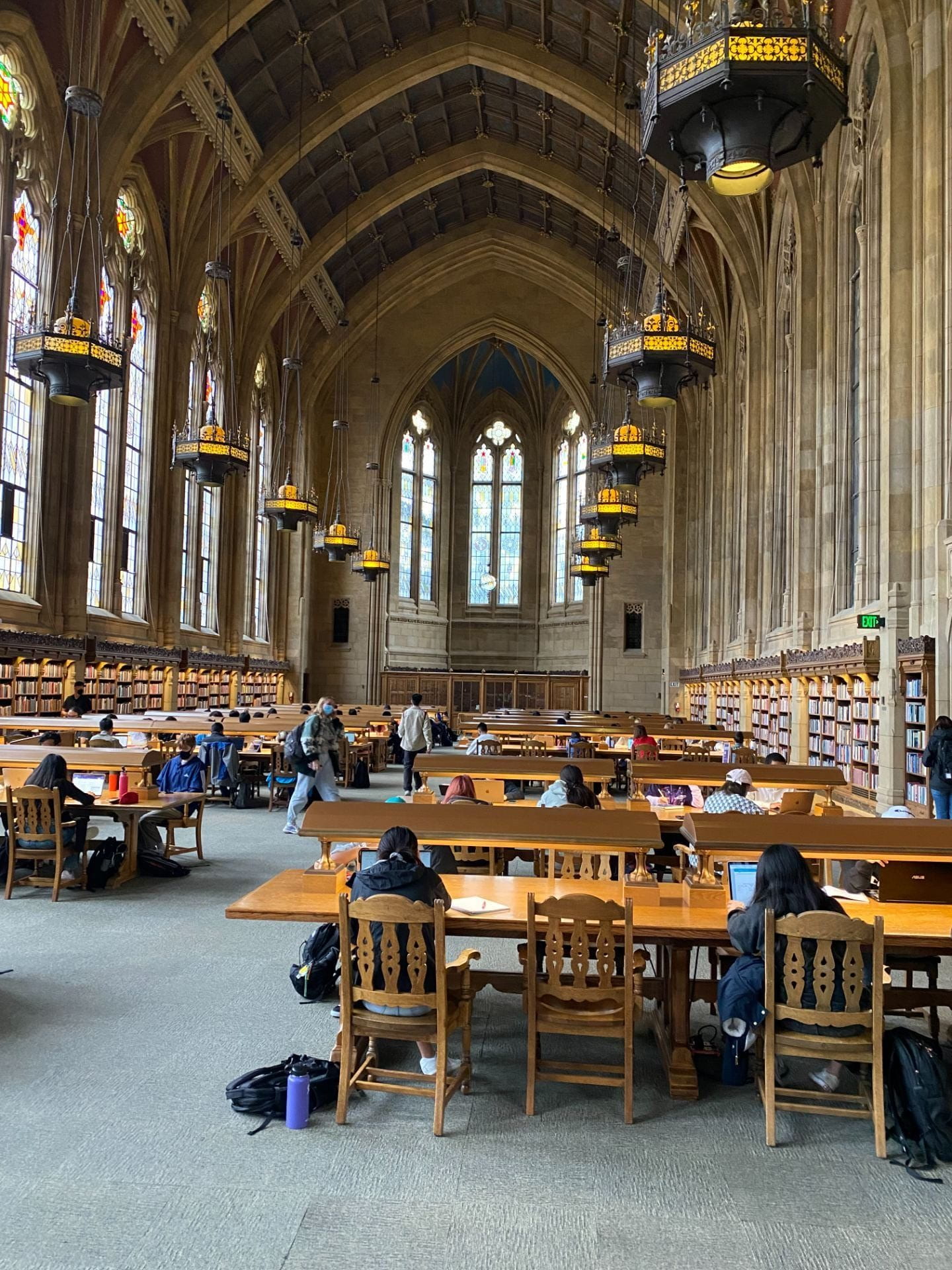
The Reading Room in Suzzallo Library is once again full of students.

Welcome back, Huskies!

It’s AWESOME to have students back in our spaces again!  We missed you! Thanks to all of our visitors who have been doing a great job keeping our Libraries safe (wearing your mask, not eating inside the Libraries, etc.) our staff, your fellow students and visitors appreciate it.  We are just getting started, so our hours will be limited to start, especially on weekends. Be sure to check hours and what to Know Before You Go. We will expand hours as staffing permits. Thank you for your patience and understanding.

Services Updates

  • Spaces for Zoom and online classes?: Bookmark  SCOUT to find study places across campus, OR see the Libraries study space pages for information on Library rooms and zoom-friendly spaces.  Tip: The Research Commons Red C room  can be reserved for interactive classes (talking  permitted).
  • From the Open Scholarship Commons (OSC)
    • Media Services: This fall, media services (audio, visual, imaging production and tech support) will be integrated into the suite of services offered by the Open Scholarship Commons (OSC) and the Media Arcade that was formerly in Suzzallo Library will be closed as a staffed service point. OSC services, including media, will remain online-only fall quarter while we plan for a physical presence in the Suzzallo-Allen Libraries. Questions? ASK US or email [email protected]
    • New: Metadata Support , Research Impact services AND  Text Mining consultations are here!
  • Stay informed: the best source for  Libraries status and operational changes is the Libraries COVID-19 update page.

News and Stories

Reflections on the US Constitution. Watch the Libraries annual Constitutional Read Aloud from October 8th with more than 90 community readers, and/or listen to the corresponding discussion to explore different perspectives on viewing this historical document through a modern context.  Learn More 

Open Access Week October 25-31: The theme of 2021 International Open Access Week is It Matters How We Open Knowledge: Building Structural Equity.  See how the work of the UW Libraries Open Scholarship Commons (OSC) and recent work from students and faculty reflect this theme and learn about new OSC programming designed to help you track, expand, and document the impact of your research. Learn more. 

How to Prepare for a Presentation in College | BestCollegesScholars’ Studio: Graduate Student Call for Proposals: Submit a proposal by October 29) | Virtual event on November 18–Open to all graduate students across UW tri-campus, Scholars’ Studio is an opportunity to talk about your research, practice, or pedagogy. Presentation format is a 5 minute “lightening talk” in front of a supportive, smart and interdisciplinary audience. Hosted in partnership with Core Programs—Office of Graduate Student Affairs in The Graduate School and the UW Libraries Research Commons. Learn more.

New Exhibits (in person!)

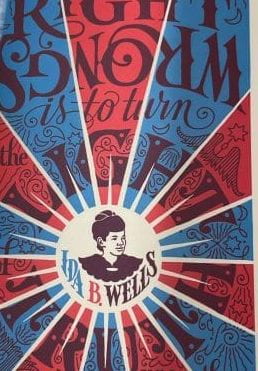
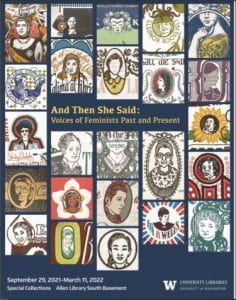
Promotional poster for the exhibit And then She Said: Voices of Feminists Past and Present featuring select broadsides by artists Chandler O’Leary and Jessica Spring.

And Then She Said: Voices of Feminists Past and Present was sown from The Dead Feminists series, a collaboration between local artists Chandler O’Leary and Jessica Spring in the form of a collection of 31 broadsides elevating voices of women throughout history. Featuring quotes by historical feminists, the broadsides are also tied to current political and social issues. Each limited-edition broadside is letterpress printed from hand-drawn lettering and illustrations. The exhibit augments the series with items from the Libraries’ collections as well as reflections from library staff about what the artwork means to them and how it resonates with their own experiences.

Viewing is currently by appointment only. Use our Contact Us form to schedule a visit! Exhibit hours are Monday through Friday, 10am – 1pm. Please submit requests 5 business days in advance.


political cartoons of 2020
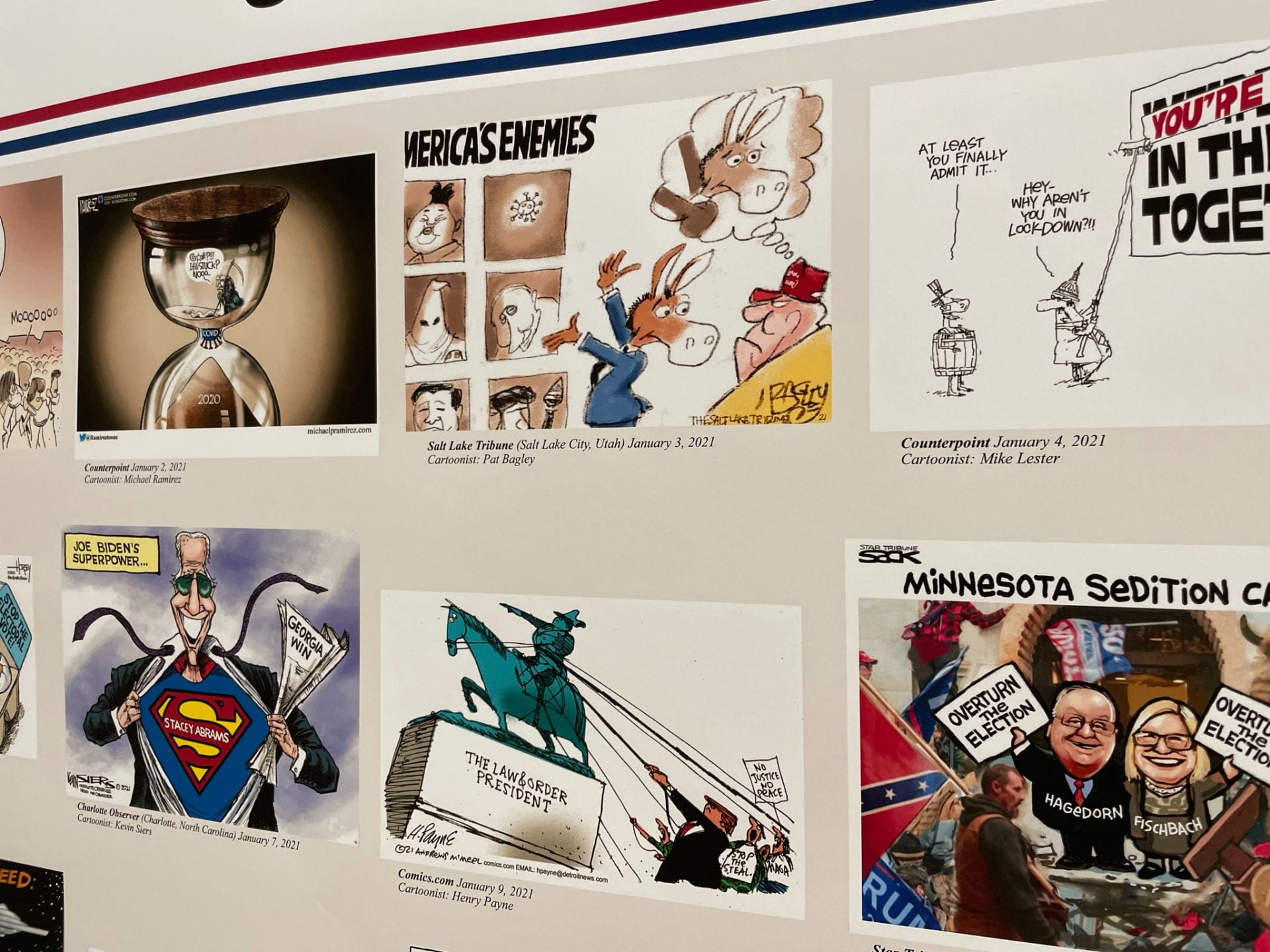
one panel of “Pen and Politics” now on display

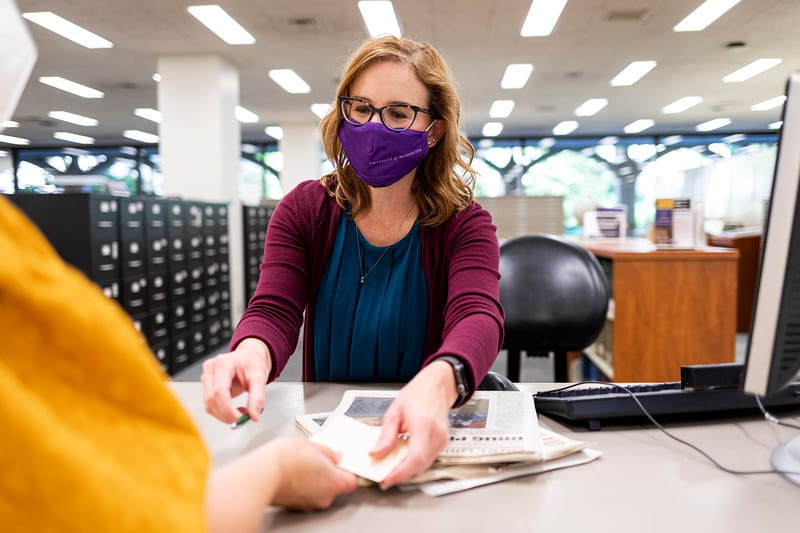
Pen & Ink Politics: Polarization and the pandemic is an exhibition  of editorial cartoons illustrating the different perspectives on the COVID-19 pandemic and the 2020 Presidential Election. Featuring the work of cartoonists from around the country and the world, its purpose is to emphasize the intensity of the discourse on these issues while providing a forum for open discussion. Venture through this self-guided exhibit and explore our timeline of cartoons starting with the emergence of a mysterious virus in January 2020 through the January 6 insurrection at the U.S. Capitol. Take a moment to leave your mark, sharing your reactions to the exhibit and the events of 2020.  Sponsored by and located in Government Publications, Maps, Microforms & Newspapers, University Libraries on the ground floor of Suzzallo Library.

Featured Resources, Collections 

Journey Through the UW Libraries–Self-Guided Tour: This is a great way to explore and learn about UW Libraries spaces, services, and resources– virtually or in person!

Help UW Libraries choose new online resources: Fifty resources, covering topics from anthropology to World War I, are available to try out until June 30, 2022. At the end of the trial period, based partially on usage, three to five resources will be permanently added to the UW Libraries. So explore these trial resources and help the UW Libraries to select the resources YOU want most.

Workshops and Events

Recurring 

October Learning Workshops 

10/14 Inclusive Data Visualization Data visualization design “best practices” often do not prioritize (or outright reject) efforts to be inclusive. This workshop will suggest new “best practices” and provide an opportunity to speak with other attendees on this topic. Data visualization experience is not required.

10/19 Korea Research Methods: Quick Overview of Korean Resources including major electronic databases for e-journals, e-books, e-news, etc. If you are new to Korean resources or need a refresh on what’s available at UW for Korean studies, you will find this beginner’s session useful brought to you by the Tateuchi East Asia Library.

10/20- Advanced Pressbooks Publishing Webinar open to all users on hosted PressbooksEDU networks (including the University of Washington) and is designed for users who have some familiarity with Pressbooks and are ready to engage in more complex activities, like adding interactive elements or integrating Pressbooks with supported third-party tools. A more detailed description of webinar topics can be found in our guide: networkmanagerguide.pressbooks.com

10/26- ResearchWorks: An Introduction to UW Libraries’ Institutional Repository This workshop will explain what ResearchWorks is used for, how to deposit your materials, and how using ResearchWorks for manuscripts and data can meet publishing requirements by funders and publishers. A demonstration will be included, and there will be time for questions.

10/27- Introduction to Persistent Identifiers Learn about three tools the UW Libraries provides to help researchers provide persistent identification for publications, digital objects, and themselves including DataCite,Perma.cc,and ORCiD. 

10/28 Introduction to Open Science Framework (OSF): Online Collaboration, Organization and Sharing Learn about OSF, a tool that promotes open, centralized workflows by enabling capture of different aspects and products of the research lifecycle, including developing a research idea, designing a study, storing and analyzing collected data, and writing and publishing reports or papers. Learn more.

Community Events 

10/12 – Fear No Man: A conversation with author Mike Gastineau and Don Borst
Join us UW Libraries and UW Press  for a conversation with author Mike Gastineau and sports journalist Don Gorst as they discuss the newly published book: Fear No Man: Don James, the ’91 Huskies, and the Seven-Year Quest for a National Football Championship.In Fear No Man, Mike Gastineau recounts the riveting story of Don James and the national champion team he built. A brilliant examination of one of college football’s greatest coaches and teams, Fear No Man is the inspirational story of an improbable journey that led to one classic and unforgettable season.

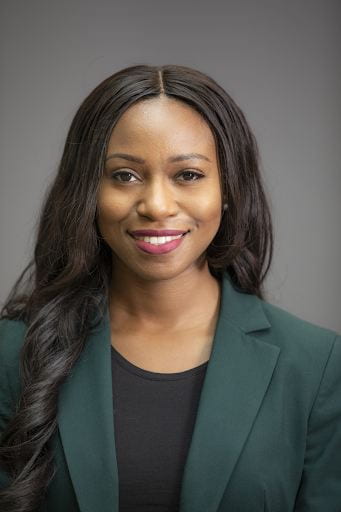
Juan Alonso-Rodríguez

10/28 – 2021 Artist Images: Juan Alonso-Rodríguz
Join us for an insightful conversation with artist Juan Alonso-Rodríguez.  A Cuban-born, self-taught artist whose transition from music to visual arts coincided with his move to Seattle in 1982, Juan is a former Seattle Arts Commissioner and served four years on the Public Art Advisory Committee for the City of Seattle. His work has been exhibited throughout the US, Canada and Latin America. This FREE, virtual discussion will explore the artist’s influences past and present, COVID-era impacts and perspective on the future. The discussion will be facilitated by Seattle Arts Commissioner, Vivian Phillips and UW Libraries’ Anne Jenner, with remarks from UW President, Ana Marie Cauce and the new dean of UW Libraries, Simon Neame. Sign up and learn more.

Save the Date

First Wednesday UW Choral Group performance in Allen Library North

11/3 – First Wednesday Concert Series: UW Choral Groups. If you missed this week’s amazing performance, be sure to mark your calendars for the next UW Libraries and UW Music Choral Group lunch-time concert series on the first Wednesday of the month in the North Allen Library Lobby for a free concert! 


Don’t miss out on important Library news and updates:

Get the UW Libraries monthly news directly to your inbox.

Sign up for our blog.

###


Stories

It Matters How We Open Knowledge: Building Structural Equity with UW Libraries Open Scholarship Commons

One year ago, the UW Libraries opened the Open Scholarship Commons (OSC).  Built on the values of equity, experimentation, flexibility, openness and technology, the OSC is designed to be a central HUB where everyone, regardless of disciplinary home, can come together and learn new concepts and technology skills to create knowledge and share it openly with others. While we plan to open a physical space in Suzzallo/Allen Libraries, the virtual OSC has had an incredible first virtual year, helping students and faculty to learn new technology and knowledge creation skills like how to publish online, create online exhibits, data visualization, mapping and much more.  We host workshops, events and provide one-on-one consults to enhance any research project. We also work with faculty to offer ideas and support for incorporating open student work into the classroom.

In celebration of Open Access Week October 25-31, where the world celebrates the open sharing of knowledge, we reflect on the OSC’s work thus far, plans for the future, and invite you to join us in helping to build structural equity by creating an open future.

OSC Events

In the past year, nearly 1,000 people attended OSC events that explored trends and perspectives around various facets of open scholarship and its importance to research for the public good, including:

  • Going Public: Advocacy, Activism, and Building Trust: keynote speaker Nikita Oliver delivered a powerful and memorable keynote address along with UW faculty, staff and students who shared wide range of perspectives on equity in the production of and access to scholarship.
  • Hacking the Academy: this series looks at the new ways research is produced, shared, archived, and reused. A few highlights from this series include:
    • New Platforms for Engagement looked at creative ways faculty are sharing research through podcasts, blogs, twitter, and other partnerships including even consulting with Sesame Street to develop a puppet character!
    • Open Democracy, Accessibility & Data Visualization—this cross-disciplinary panel explored how we can build equitable systems of sharing knowledge to further democratic processes.
  • Supporting First Generation Students Online: campus partners from the Office of Minority Affairs & Diversity, Core Programs, first generation students came together to share ideas and best practices to support first generation college student success in the online classroom. 

Featured Projects

Alvenia Bridges, 2018

We also worked collaboratively with students and faculty to create and share new open digital research and creative works, including these outstanding project:

Embracing the ethos of our values, the OSC continues to evolve, including new Libraries services such as Open Education and Open Pedagogy, Metadata Support, and Research Impact, designed to help you track, expand, and document the impact of your research. We have also been fortunate enough to bring campus partners such as eScience Institute and the Walter Chapin Simpson Center for the Humanities into the OSC as we work toward our aspirational goal of being a HUB for new knowledge creation and mobilization for the UW Seattle campus community. While we remain virtual (for now), we look forward to connecting with the campus community through our events, workshops, and consultations in a variety of service areas

Explore OSC services:

data viz

Data Visualization

Data preparation & visualization design support More…

GIS

Geographic Information Services

GIS software, StoryMap, & data-finding support
More…

media

Media Production

Audio, visual, & imaging technical support
More…

Metadata Support

Metadata Support

Metadata support for digital collections and open scholarship at UW
More…

GIS

Geographic Information Services

GIS software, StoryMap, & data-finding support
More…

scholarly publishing

Online Publishing Platforms

Workshops & tools to support sharing your work with wider publics
More…

OERclass

Open Education & Open Pedagogy

Help finding & creating free, openly licensed course materials
More…

data management

Research Data Management

Help finding/accessing, managing, reusing, sharing, storing, & citing data
More…

Research Impact

Research Impact

Support for tracking, expanding, & documenting your research impact
More…

copyright

Scholarly Publishing & Copyright

Help with publishing, sharing research, project & data management
More…

text mining

Text Mining

Help identifying patterns in texts & analyzing textual data
More…

thesis

Thesis & Dissertation Publishing

Information about publishing & copyright for UW’s ETD program
More…

###

Stories

Know Before You Go: 10 important things to know before you visit Seattle UW Libraries

Welcome back, Huskies! The Libraries are re-opening this month (see our COVID Update page for hours and dates)*.  Some things will be a little different than before the pandemic, so thanks for taking a minute to review this important information to help you prepare for your first visit. Understanding these new requirements will save you time and help keep our UW community safe! 

Masks are required everywhere at all times.

  • Please put a mask on before entering the building (not inside the entryway).
  • Masks need to be worn in group study rooms, even if the door is closed.


Eating and drinking: UW Libraries are following UW EH&S policy for eating and drinking inside. Adjusting your mask to hydrate for a few seconds is ok, however, the Libraries are not designated eating spaces, and removing a mask to actively eat or drink is not permitted. See these designated locations for indoor eating options on campus. (Note: Starbucks plans to open inside Suzzallo Library, hours, policies and details to be confirmed). 

Most Libraries will have reduced hours/days initially, and some will not be open on weekends to start, so be sure to check the hours for your library FIRST before visiting. Hours will expand as staffing permits.


Odegaard Undergraduate Library and Health Sciences Library will be open to UW only.  A current, valid husky card will be required for entry.


The Research Commons will remain a space for quiet, individual study.  See our September update for more information.


You’ll need to make an appointment for most services. While information desks will be open with staff,  most services inside the libraries including visiting Special Collections, media and digital scholarship services will require an appointment. You can also make appointments for the new virtual reading room in Special Collections! 


You can get help with just about ANYTHING through our online services – we have expanded our online help capabilities, so whether you need help with writing, research strategies, or search – just ASK US. 


Need to do Zoom class/call? We got you covered. There will be designated spaces for active calls (where talking is required) as well as dedicated quiet areas. Look for new signs throughout the library that indicate noise guidance within different spaces.


Cleaning supplies and sanitation stations will be available in all public spaces.

      • Remember to wash your hands and/or use sanitizer before and after touching “high touch” equipment like public computers, and after touching your mask.
      • Students can clean computer keyboards with Libraries-provided alcohol wipes–please only use the supplies provided by the Library as other types of cleaning products (i.e. your own personal wipes/cleaners) could damage computers.


It is time to return books!  Due dates will stop being extended when Libraries open, so if you’ve been keeping books for the past 18+ months, make sure to renew items in your online library account, or return overdue items that cannot be renewed (recalled items, Summit, Interlibrary Loan, and equipment).

Thank you for doing your part to #ProtectYourPack by keeping our spaces safe (and open)!  We are excited to see you!


PS: Check out this awesome blog post: Top Ten Things I Wish I Knew My First Year . UW Libraries are so much more than study space and books! Students often tell us they wish they had known more about Libraries’ services at the start of their UW journey. Be sure to bookmark these helpful tips!


*UW Bothell and UW Tacoma Libraries may have different rules based on localized guidance and  requirements.

Stories

September 2021 Update

Hello, Huskies! 

A message from our new dean, Simon Neame

“September 1st marked my very first day as the Dean of UW Libraries. I am so excited to start this new journey in Seattle, and I am energized by the amazing UW community that has already been so welcoming and supportive. While this year is again different than most, I know that all of the hard work and dedication of the Libraries’ staff throughout the pandemic has prepared us for a safe and successful fall quarter and reopening…” Read full message 

Services Updates

  • Opening dates and fall hours for ALL Libraries are posted online. Before visiting us, please check the Library hours FIRST to plan accordingly.
    • Hours for all Libraries (especially on weekends) will be limited to start and will expand as staffing permits.
  • Know Before You Go: Learn what to expect and how to prepare for your first visit back to the Libraries new services, policies and more.  Remember: Odegaard and Health Sciences Libraries will now require a valid Husky Card for entry.
  • Curbside pick-up will close on 9/17.  Pick-up inside the building will resume on 9/22 when Suzzallo and Allen Libraries open.
Special camera equipment allows for virtual visits to the Special Collections reading room.

Special Collections is launching a virtual reading room! In addition to in-person appointments, Special Collections is launching a virtual reading room starting 9/29 to allow users to view materials live with a Librarian on site using a special camera designed for remote consultations. Learn more/make an appointment.  


  •  Research Commons update: During fall quarter, the Research Commons will remain a space for individual, quiet study with reservations required. Given the abundance of open study space across all Libraries, both in common areas and in dedicated rooms by reservation; and to provide options for those who need and would prefer a more predictable experience regarding distancing and distraction, the Research Commons will remain a space for individual quiet study, with all desks spaced 6 feet apart.  Rooms for interactive online classes/calls will also be available in this space. Thank you to all students who demonstrated excellence in maintaining health and safety standards in the Research Commons over the past year, proving that this model continues to work well in serving student needs for varied types of study space, especially during this unpredictable time.
  • Media Arcade Transition: This drop-in audio/video makerspace within Suzzallo Library is closing as an independent service location, and digital media and related services will be integrated into the Libraries’ Open Scholarship Commons (OSC). OSC services, including media, will remain online-only fall quarter while we start to plan for a new physical OSC space in Suzzallo Library. This transition will bring all support related to digital scholarship and media services in one place, providing for a more connected and accessible experience for our users. Questions about services can be directed to Ask Us or [email protected].
  • Stay informed: In this very fluid and every-changing environment, the best source for Libraries updates is the Libraries COVID-19 update page. 

News and Stories

STUDENTS: Don’t miss What I wish I Knew My First Year: UW Libraries are so much more than study space and books! Students often tell us they wish they had known more about Libraries’ services at the start of their UW journey. You’ll want to be sure to bookmark these helpful tips!


Readers Wanted for the October 8th- Community Constitutional Read Aloud!! As part of the Federal requirement to provide educational programming on the US Constitution aligned with the national Constitution Day, the UW Libraries holds an annual Constitution read aloud event. This community-led reading allows us to critically examine the historical and contemporary significance this document holds within our society.  We welcome students, faculty, staff and community members to join us in reading the full text of the Constitution, including some very special guest speakers! Learn More 

Special Collections Annual Report: During Libraries closure, the staff of Special Collections carried on behind the scenes, facilitating classes, collecting, and archiving of new materials, and connecting with the community through digital exhibits and more. Read the report. 

I just want to thank you for all your invaluable assistance in my classes over the past year or so. Even the unfortunately necessary switch to the remote format didn’t stop you! [T]his collection is very special. It needs your passionate and knowledgeable guidance. In every case, whether you need to visit my class or over Zoom, or my students get the chance to visit Special Collections, it is literally impossible for me to teach these classes without your help.

Maya Sonenberg, Prof. English and Creative Writing (see page 13 of UW Libraries Annual Report)

Words Matter: Critical Cataloging and Archival Description at the University of Washington Libraries.  UW Libraries is committed to anti-racist work in sustaining diversity, creating an inclusive experience for our users, and confronting institutional bias and structural racism as demonstrated by our recent work to create change within our cataloging and archival descriptions. Learn more about our work in this area, and please share this blog post with your students and teams.

September Workshops

  •  UW Libraries Dawg Daze Events : Not just for freshman! For many students, fall 2021 will be the first time students visit campus and the Libraries in person. This year’s Dawg Daze events have something for everyone – including dedicated events for transfer students and first-generation students. From Libraries tours, online workshops and more—don’t miss Libraries during Dog Daze! See all Libraries events. 

Featured Resources, Digital Collections, & UW Press 

  • UW Libraries Student FAQ is updated for fall quarter. Check out this “go to” resource to learn about academic resources and collections the Libraries offers, information about accessing the Libraries, and academic and wellness support services offered by campus partners. 
  • New  from UW Press: Marriage and Intimacy in Qing China by Weijing Lu. Although commonly associated with patriarchal oppression, arranged marriages have adapted over the centuries to changing cultural norms and the lived experiences of men and women. Arranged Companions raises provocative questions about the cultural construction of intimacy and the meaning of a “happy marriage.” Learn more.

Save the Date

Juan Alonso-Rodríguez

October 28th- 2021 Artist Images: Juan Alonso-Rodríguez: For the 2021 edition, we’ll talk with artist Juan Alonso-Rodríguez. A Cuban-born, self-taught artist whose transition from music to visual arts coincided with his move to Seattle in 1982, his work has been exhibited throughout the US, Canada and Latin America. This FREE, virtual discussion will explore the artist’s influences past and present, COVID-era impacts and perspective on the future. The discussion will be facilitated by Seattle Arts Commissioner, Vivian Phillips and UW Libraries’ Anne Jenner, with remarks from UW President, Ana Marie Cauce and the new dean of UW Libraries, Simon Neame. This event is made possible through the support of the Anne Gould Hauberg Endowed Library Fund. Learn more.

Stories

UW Libraries’ Dawg Daze Events

Welcome back to campus Huskies! UW Libraries is so excited to welcome all of the UW Community safely back into our buildings this Fall! In preparation for reopening, check out our Dawg Daze calendar events. There is something for everyone here, whether you’re a freshman, transfer student, or simply seeking a refresher on all of the libraries’ resources. You can find these events listed on the main UW Libraries calendar, in this blog post, or by keeping up with us on our social media pages. 

Welcome to UW Libraries (Online via Zoom)
9/23/21, 2:00 p.m. – 3:00 p.m. PST

Attend our virtual library orientation for first-year and second-year students to find out how the UW Libraries can help you succeed at UW. We’ll show you how to connect online, find course materials, start your own research, and more! In addition, you’ll have a chance to meet other students and ask any questions you might have. Student attendees will be entered into a drawing for a $20 e-gift card.

Pen and Ink Politics: Polarization & the Pandemic (In-Person)
9/23/21, 9:00 a.m. – 5:00 p.m. PST

Pen & Ink Politics is an exhibition of editorial cartoons illustrating the different perspectives on the COVID-19 pandemic and the 2020 Presidential Election. Featuring the work of cartoonists from around the country and the world, its purpose is to emphasize the intensity of the discourse on these issues while providing a forum for open discussion. Venture through this self-guided exhibit and explore our timeline of cartoons starting with the emergence of a mysterious virus in January 2020 through the January 6 insurrection at the U.S. Capitol. Take a moment to leave your mark, sharing your reactions to the exhibit and the events of 2020.

Journey Through the UW Libraries: Self-Guided Tour (Hybrid)
9/23/21 – 10/3/21, multiple times

Explore UW Libraries’ spaces, services, and resources via this virtual or in-person self-guided tour. Visit popular UW Libraries including Odegaard Undergraduate Library and Suzzallo & Allen Libraries and learn about library resources and services available to UW students. Complete the tour and enter yourself into a drawing for a $20 e-gift card.

First-Generation Students: Welcome to UW Libraries (Online via Zoom)
9/24/21, 11:00 a.m. – 12:00 p.m. PST

Attend our virtual library orientation specifically aimed at First-Generation students to find out how the UW Libraries can help you succeed at UW. We’ll show you how to connect online, find course materials, start your own research, and more! In addition, you’ll have a chance to meet other students and ask any questions you might have. Student attendees will be entered into a drawing for a $20 e-gift card.

Welcome to Odegaard Library (In-Person)
9/24/21 & 9/27/21, 2:00 p.m. – 4:00 p.m. PST

Whether you are joining us for the first time or returning again to Odegaard Library, we welcome you! Meet friendly library staff, pick up library swag, learn about online and in-building resources for undergraduate students, and get your questions answered. Odegaard Library staff will be outside the main entrance welcoming new and returning students to campus.

Undergraduate Research for Community College Transfer Students (Online via Zoom)
9/27/21, 1:00 p.m. – 2:00 p.m.  PST

Are you an incoming community college transfer student interested in undergraduate research? Get a jump-start on research with this workshop intended for incoming transfer students in all disciplines to get up to speed on the resources and opportunities available for you to engage in faculty-mentored research at UW! In addition, learn about key library resources and services that support all forms of undergraduate research. Join Undergraduate Research Program advisers, current undergraduate student researchers, and UW Libraries staff for this interactive, informational session

Transfer Students: Welcome to UW Libraries (Online via Zoom)
9/28/21, 10:00 a.m. – 11:00 a.m. PST

Attend our virtual library orientation specifically aimed at transfer students to find out how the UW Libraries can help you succeed at UW. We’ll show you how to connect online, find course materials, start your research, and more! In addition, you’ll have a chance to meet other students and ask any questions you might have. Student attendees will be entered into a drawing for a $20 e-gift card.

Trivial Matter: A STEM Trivia Game (Online via Zoom)
10/1/21, 3:00 p.m. – 4:00 p.m. PST

Test your science knowledge and compete for University Bookstore gift cards, as our UW science librarians try to stump you with fun and challenging STEM trivia questions!

UW Dubs welcoming students back to campus

 “Top 10 Things I Wish I Knew My First Year” Check out UW Libraries’ recent blog post for more helpful information! And don’t forget, your libraries are always here for you. No matter your timezone or location, our 24/7 chat is always available online, and you can always stay up-to-date on the most relevant information on hours and operations by checking out our website.

Stories

Words Matter: Critical Cataloging and Archival Description at the University of Washington Libraries 

Authors: Conor M. Casey, Erin Grant, Keiko Hill, Kat Lewis, Crystal Rodgers 

In August of 2021, catalogers, metadata specialists, and archivists at the University of Washington Libraries published a statement on Critical Cataloging and Archival Description to the Equity, Diversity, Inclusion, and Anti-Racism hub on the UW Libraries website. This statement is a road map to the actions UW metadata specialists are taking in support of the UW Libraries’ commitment to anti-racist work and in creating welcoming, informative, and transparent information describing library resources. The Critical Cataloging and Archival Description statement aligns with the values, ethics, and best practices of our profession.

What is Critical Librarianship?

In brief… Critical librarianship acknowledges that libraries and archives are impacted by society and culture. We strive to make our professional practice more transparent and accountable to change. We do this by: 

  • Acknowledging that libraries and archives are not neutral
  • Surfacing and interrogating the ways power, privilege, and oppression impact all dimensions of our work
  • Understanding that no two librarians or library users have the same background or experience 
  • Acknowledging the historic biases in privileging certain research and scholarship styles and questions over others  
  • Believing that librarians and archivists have the power to effect social change

Librarians and archivists, in general, focus on collecting, ordering and classifying, describing, making accessible, and preserving materials for use. What critical librarianship adds is the understanding that libraries and archives are not neutral spaces and that we must consider this implication in the way we approach all aspects of our work.

Libraries, like other institutions, are produced in systems marked by racism, patriarchy, and other forms of cultural bias. Contemporary libraries are like all Enlightenment-era projects of dominant order and aim to collect, display, and assign a classification scheme to every piece of knowable information. Critical librarianship and archival practice seek to uncover to ourselves and the users of our collections how library structures codify cultural norms, and in doing so, have immense power in upholding or disrupting systems of oppression. Our catalog records, finding aids, and classification structures are themselves technologies of power by privileging certain ways of knowing over others. Our goal in implementing critical librarianship and archival practice is to be more transparent and accountable. It is a way for you to see past stickered spines; grey, acid-free boxes; and databases to the complex, imperfect humans who made these records. If we can see intention, process, and historical context, we can identify where to innovate and grow. We want your library and archives based research to be as replicable and observable as any other type of research.  

What is Critical Cataloging and Archival Description?

Cataloging and archival description involves the creation of metadata, data that describes library resources, by following local and professional standards to make these materials searchable and discoverable in library catalog records, archival finding aids, digital collections, and other descriptive resources. Metadata standards guide librarians and archivists in determining what kinds of information to include within these descriptive resources, how to format this information, and even specific data elements to use, such as the Library of Congress Subject Headings. Unfortunately, these guidelines can be inflexible and exist within the context of structural inequities that can introduce conscious or unconscious bias. 

Critical cataloging and archival description is an essential subset of critical librarianship and archival practice. Taking a critical approach to these descriptive practices means questioning the status quo and seeking alternative controlled vocabularies and ways of organizing knowledge to be more inclusive and equitable. This also means being more transparent when we decide to retain outdated terminology within archival description or digital collections metadata to preserve the historical context necessary for fully understanding that resource.  

Publishing the Critical Cataloging and Archival Description statement and providing a mechanism for users to alert us to biased and/or harmful language in library descriptive resources is our first step in being transparent and accountable in how we describe our materials. We are actively looking to update, change, and implement critical analysis of the language and organizational systems we use when describing our library resources in catalog records, archival finding aids, and digital collections metadata going forward. Especially as this relates to or is created by marginalized communities, including BIPOC (Black, Indigenous, People of Color); LGBTQIA+; women; and working-class communities. To demystify our metadata creation process, the statement explains cataloging practice and systems, Library of Congress Subject Headings (LCSH), archival collection description, and what we are doing to remediate harmful language in these processes.

The way we talk about cultural phenomena changes constantly and we cannot escape the need to organize and describe library and archival material. However, we can analyze, discuss, and teach cataloging and classification as well as archival description critically. Our efforts will not be perfect, but we are committed to compassionately describing our resources, increasing access to information from and about marginalized communities, and getting our community members the information they need. 

How You Can Help

If you encounter language in UW Libraries catalog records, archival finding aids, or digital collections that you find outdated, offensive or harmful, or if you have questions about the statement or our work, we welcome your feedback via this form or [email protected]. Your feedback will assist us in the process of tracking, reviewing, and updating our descriptive resources to be more accurate and inclusive. Keep in mind that this work takes time, and we may not be able to address every issue immediately. We are committed to updating descriptive language to the best of our ability and critically examining and improving our practices into the future. 

Resources 

Admin. “Core Values of Librarianship.” Advocacy, Legislation & Issues, American Library Association, 28 Sept. 2020, www.ala.org/advocacy/intfreedom/corevalues

American University. “Antiracist Praxis: Critical Cataloging and Classification.” Subject Guides. 

Drabinski, Emily. “What Is Critical about Critical Librarianship?” CUNY Academic Works, Apr. 2019.

Ford, Anne. “Conscientious Cataloging.” American Libraries Magazine, 27 Aug. 2020.

Hines, Samantha Schmehl. “Critical Librarianship.” Google Books, Emerald Group Publishing, 17 Aug. 2020.

“SAA Core Values Statement and Code of Ethics.” SAA Core Values Statement and Code of Ethics | Society of American Archivists, Society of American Archivists, www2.archivists.org/statements/saa-core-values-statement-and-code-of-ethics.

Stories

UW Libraries 2021 High School Internship Program

The UW Libraries High School Internship Program is a fun, project-based program for students thinking about college and is one of the only paid internships of its kind in US academic libraries. Students learn how to use various tools to produce digital storytelling, mapping, and information science projects. They leave the program with a portfolio of completed work and make meaningful connections with UW students, faculty, and Libraries staff. UW librarians Elliott Stevens and Kian Flynn developed the program in 2017 in partnership with Seattle Public Library (SPL) librarian Nancy Garrett, who has extensive experience working with youth in the public library setting. This summer session was the fourth iteration of the program. The 2020 session was cancelled due to the pandemic, and this year’s session was 100% virtual via Zoom.

The internship focuses on reaching first-generation college students and groups underrepresented in higher education and librarianship. The goals are to build experience and confidence in the academic setting, learn about librarianship and libraries, and connect young people with academic resources that will help them prepare for college.

The virtual 8-day program ran from July 12th-22nd with nine participants from area high schools — Nathan Hale High School, Shorecrest High School, Rainier Beach High School, and one homeschooled student. Applicants are recruited in partnership with SPL and the Seattle Housing Authority, and they receive a $530 stipend at the end of the program. SPL is an integral partner, providing funding, equipment, and staff support; Librarians Nancy Garrett and Josie Watanabe worked alongside UW Libraries staff as facilitators of the program.

“Nancy Garrett is the most brilliant Youth Services Librarian you’ll ever meet. She is based at the Lake City Public Library and she’s known many of the students since they were kindergartners. Nancy has been instrumental in identifying students. She has provided tons of support during each iteration of the program and  helped us to revise it over the years, including advocating for funding.The program would not exist at all without her,” says Stevens.

Libraries staff and volunteers* also contributed many hours to help plan and support the program, including UW Information School grad student Joanna Chern and two former interns who came back as mentors. 

The program has three main elements: panel-based discussions, project-based learning, and a final showcase of student work. Panelists included UW undergraduates, UW researchers, and UW librarians. The students learned about the college application process, college life, college research, college libraries, and college librarianship. The project-based work focused on digital scholarship and learning how to use tools like StoryMaps and WeVideo to create digital stories, maps, and podcasts. The Showcase was the culmination of the program. During the Showcase, students talked about their experiences in the internship and shared their maps, podcasts, and videos. While the 2021 projects are not publicly available, past internship projects are viewable online.

“During the Showcase, I really appreciated hearing that the students not only learned from the program staff, but also from one another,” said Stevens.

Students have reported drawing from their internship experience and using their maps and videos to apply for other internships, in college applications, and in classes. The students have also said that the internship has helped them navigate and feel comfortable in college libraries, based on Libraries assessment. 

 “I loved every single thing (about) this internship. I am so thankful to be a part of such a valuable…experience.” – student participant

And… Many of the interns become UW students! 

“This upcoming year, we’ll have three former interns–who are now UW Seattle students–working at the UW Libraries  Information Desk at the Research Commons,” says Stevens.

Thanks to the continued partnership with SPL, plans are in the works to continue the program next summer, with the application process starting in April. 

*Special thanks to all of the Libraries staff and volunteers who made this year’s high school internship a great success: Nancy Huling, Madeline Mundt, Jessica Albano, Lauren Pressley, Betsy Wilson, Nan Holmes, Stephanie Guerrero, Kathleen Larson, Lauren Duong, Emilie Vrbancic, Michael Mungin, Negeen Aghassibake, and AC Petersen.

See also:

###

Stories

August Update

Last updated 8/9

Services Updates

  • Special Collections and Seattle branch Libraries will open September 29th.
    • Special Collections: 
      • Access will be by appointment only Monday-Friday 1:00 PM – 4:45 PM during fall quarter for both UW affiliates and the public.
      • Special Collections staff are available to answer research questions via ASK US and the online question form.(i.e. available services prior to opening, confirming materials, citations).Services will expand as staffing permits. 
    • Seattle branch Libraries and Tateuchi East Asia Library:
      • See the Libraries COVID Update page “Reopening Dates” for planned hours of operations for ALL Libraries, including Suzzallo and Allen Libraries and Odegaard Undergraduate Library.
    • Hours for all Libraries will expand as staffing permits. 
  • Be Prepared: HathiTrust Emergency Temporary Access Service (ETAS) Deactivation – Why does it matter?
    • The HathiTrust Emergency Temporary Access Service provides access to over 1 millions online resources while Libraries are closed, but when the UW Libraries reopens, that access will be turned off, per HathiTrust requirements. 
    • Between August 20th and September 20th UW Libraries will be deactivating ETAS, a process that requires multiple changes to over 1.7 million records. During this time, ETAS resources that were previously findable in Libraries Search may not show up in results. Users should instead search for ETAS materials via the Hathi Trust Digital Library (requires login with UW NetID); not Libraries Search.
    • Starting September 20, 2021, UW access to ETAS will end. If you are planning to use ETAS materials for a course or research, know that you will not have access to some online only materials starting September 20th.  Physical books and journals that are part of ETAS will be available to borrow. You can check now (before 8/20) to see if titles are part of ETAS via UW Libraries Search, noted under “View ItSee example.
    • For more information, view the Libraries HathiTrust guide. 
  • For up-to-date information on all Libraries’ reopening plans, please see the Libraries COVID-19 update page.

book cover

News and Stories

  • UW Libraries Faculty Guidance for 2021/2022 has been updated – get information on course reserves and other resources to help plan your courses.

Workshops

  • Open Scholarship Summer Series (OSSS) – August 9-13: The Open Scholarship Summer Series is an opportunity for students to explore concepts relating to open source tools and digital publishing. Learn More.
  • Data Visualization Track 1 – August 913: Learn about the fundamentals of collecting, cleaning, and visualizing data and create your own visualizations using open source, in browser data visualization tools. Learn More. 
  • Story Maps Track 2 – August 16-20: Learn about the basics of creating your first story map as well as how to use the open source platform StoryMaps JS to tell stories with geospatial content. Learn More. 
  • Pressbooks
    • Getting Started with Pressbooks – Wednesday, August 11: Designed for users who are new to Pressbooks. Attendees will learn how to get started — from creating a new book to publishing and exporting offline versions of the text. Learn More.  
    • Pressbooks in Progress: Share Your Work + Ask Questions – Friday, August 13: Have you been wanting to take your UW Libraries Pressbooks projects to the next stage?  Feel like you need some inspiration for your book?  This is an open time for UW Pressbooks users to bring their projects to share and ask questions. Learn More. 
    • Advanced Pressbooks Publishing – Monday, August 23: Designed for users who have some familiarity with Pressbooks and are ready to engage in more complex activities, like adding interactive elements or integrating Pressbooks with supported third-party tools. Learn More.
  • Research Data Management Workshop – August 16-19: Join UW Libraries for an asynchronous workshop centered around Research Data Management Planning. Topics will include getting started with data management planning, funder requirements for data sharing, metadata, tips to help keep you organized, sharing, archiving and preservation, and an introduction to tools and on-campus support to aid researchers. Learn More. 
  • Graduate Student Research Institute (GSRI) – August 23-27: Join UW Libraries for a free asynchronous five-day online workshop for new and returning UW graduate students. This workshop is aimed at helping students learn the tools and strategies they need to research smarter, not harder. Learn More. 

Features: Digital Collections, Resources & UW Press

  • Black Studies Center (BSC) is a multidisciplinary gateway to current scholarly and historical material related to Black experience in the United States, wider African diaspora, and the continent. The current version (available through June 30, 2022) includes an expanded collection of historic African American newspapers and the Black Abolitionist Papers. BSC is brought to you by your UW Libraries.

###


Stories

Jacob Lawrence in Seattle: UW Students and Libraries Create New Book

This post was updated September 16, 2022


UPDATE:

In July 2022, UW’s Jacob Lawrence in Seattle was selected as Pressbooks’  featured Book of the Month, displayed on the front page of the international Pressbooks Directory !    Learn more about the making of this book in our recorded webinar: Student Authored: UW Open Pedagogy and Publishing [youtube.com].


Jacob Lawrence in his studio in 1979. UW Special Collections

Jacob Lawrence (1917-2000) is widely recognized as one of the most important American artists of the 20th century. Although he is best known for his multi-panel narratives that he completed whilst living in New York City, the second half of Lawrence’s career was spent at the University of Washington as a Professor of Art from 1971 – 1986. For the first time since his retirement from UW, Lawrence’s work and teaching are now the subjects of a new course at the UW School of Art + Art History + Design, taught by Assistant Professor of Art History Juliet Sperling

book cover

The creation and implementation of this course represent a partnership between UW Libraries and faculty at UW. Students in ART H 400 worked alongside librarians from a variety of specialties*, such as open educational resources, art history, and digital scholarship, to create a class book about the meaning of Lawrence’s work in Seattle. Using the Pressbooks digital publishing tool, students compiled original essays analyzing Lawrence’s artwork that they had created over the quarter into one comprehensive book, Jacob Lawrence in Seattle, that was published at the end of the course. For many students in Art H 400, this was their first excursion into the world of publishing. While there were of course obstacles, student Sam Seaver noted that “everyone involved in guiding us through the Pressbooks process made it feel doable and removed the intimidation for our class.” This course was one of the first-of-its-kind at UW, creating a blueprint for future collaboration with open publishing platforms and digital scholarship within UW Libraries. One student in Art H 400 noted that “this was such a fun, inspiring opportunity! I would have never published a paper on my own, had I not taken this course.” 

“this was such a fun, inspiring opportunity! I would have never published a paper on my own, had I not taken this course.”

Building the Collection
UW Libraries Special Collections recently acquired a rare signed copy of Jacob Lawrence’s Book of Genesis, 1989-90. See Nicholas Staley’s piece “Creating Genesis” in the class Pressbook. UW Libraries Fine and Performing Arts Librarian, Madison Sullivan, will be working with Dr. Sperling over the next year to purchase and collect all printed works related to Jacob Lawrence as budget allows. Their goal is to create one of the strongest collections around Jacob Lawrence’s art and work — including growing the collection and tracing Lawrence’s influence across African American art and Black art in the US.

To support this effort, donors can contribute to the

Spieseke/Hatchett Endowed Art Library fund.**

In an effort to expand access to open educational resources, the University of Washington has opened access to Pressbooks software for all students, faculty, and staff. This tool, piloted primarily in use by UW Librarians and faculty, has allowed for students and faculty to independently publish their research free of charge, on an accessible digital platform. In reflection of the importance of Pressbooks in the course, student Kira Sue wrote; “it seems like a moral responsibility to share your research if you are doing work on a project that has been historically under-researched…the promise of publication served as a great motivator throughout the quarter.”

“I loved getting to work with and learn from the UW Library staff. From the very beginning, they were so supportive…”

Students in Art H 400 not only learned how to navigate open educational resource platforms, such as Pressbooks, but they also learned how to efficiently use library resources. From research guides to the online chat with UW Librarians, students in Art H 400 were able to advantageously use campus resources to further their course objectives. Elizabeth Xiong, one of Prof. Sperling’s students in this course, expressed her appreciation of UW libraries in this course by sharing that “I loved getting to work with and learn from the UW Library staff. From the very beginning, they were so supportive of our project, and it was really encouraging. The librarians are all so knowledgeable and graciously took extra time to answer all our questions which stood out to me!”

“I think more classes would benefit from a final project that is collaborative in nature and ends in a publication.”

Art H 400 is set to become a recurring course in UW Art History, with each iteration highlighting a different topic related to Seattle’s vibrant history. Not only will the enduring legacy of Jacob Lawrence be carried forward through the work of Prof. Sperling’s course, but the students in the class are now equipped with knowledge of open educational platforms, such as Pressbooks. In reflection of her work during the past quarter Art H 400 student Monica Ionescu noted; “I think more classes would benefit from a final project that is collaborative in nature and ends in a publication.” As we move into a post-pandemic life, the importance of online tools is only becoming more recognized, as students, staff, and faculty navigate innovative digital worlds. UW Libraries looks forward to continue collaborating with the UW community to make these resources more available and accessible to all. 

Not only is Pressbooks free to use for UW students, but anyone (UW affiliated or not) can read Pressbooks online! Learn more about how you can use Pressbooks and other open hosting platforms to enhance your teaching and openly publish your research.

*Contact the Librarians who worked with the class to develop this project:

**Learn more about the Libraries’ Arts, Drama and Music Funds, including the Spieseke/Hatchett Endowed Art Library Fund.  If you are interested in learning more about how your gift is a catalyst for student success, contact Shelby Williford, Associate Director of Libraries Advancement ([email protected] | 206-616-6521.

Stories

UW Libraries Reopening Status Update

updated 8/31

We very much look forward to reopening Libraries spaces in the fall, and our teams are hard at work to make that happen. After being closed for nearly 18 months, there is A LOT happening behind the scenes at the UW Libraries- both remotely and on site to ensure the Libraries are ready to reopen this fall. 

Staffing and hiring: Like many public-facing service organizations, the pandemic caused a monumental reduction to Libraries human resources. In addition to many staff and Librarian positions that need to be filled, the Libraries can’t open in any capacity without a significant student workforce.   We are actively recruiting now; however staffing back up to pre-covid levels will take time and some services/hours of operation will be limited until we can adequately hire and train new employees for these open positions.  This time period leading up to fall quarter is critical for hiring, onboarding and training while also maintaining curbside pick-up, interlibrary loan and facilitating space preparation for fall. 

Maintaining HathiTrust Emergency Temporary Access Service (ETAS) has been essential for hybrid and remote learning during the past academic year. On August 20th, when summer quarter is done, our staff will immediately begin the complex process of deactivating ETAS, involving multiple changes to over 1.7 million records in the Libraries Search.  Libraries staff will be working non-stop (including weekends!) to complete this process in time for fall quarter reopening.  The Libraries check-out process will not function properly until this transition is 100% complete.

Access: While we transition these records, ETAS will remain “turned on”, which allows our UW community to have maximum access to materials (online resources and physical items via curbside and ILL lending) during this time.  After summer quarter ends, the majority of students will still be off campus, therefore this remote access remains essential and will deliver the best possible access to materials until the Libraries reopens. With curbside check-out, interlibrary loan,  individual study at the Research Commons, and support from subject librarians for all units, the Libraries is able to facilitate requests for the majority of our users. 

While Libraries staff manage the ETAS transition, they will simultaneously be working to hire and train new staff and student employees in order to prepare all 16 UW Libraries for reopening in the fall. 

Preparing spaces: Bringing students, faculty and the public back into spaces that haven’t been used for such a long time–takes time.  While our Libraries facilities teams have done an amazing job maintaining thousands of square feet of spaces across campuses throughout the pandemic (thank you!), there is still a lot to be done for example, moving furniture; cleaning staff and public areas and updating and testing computing equipment. This is happening in nearly every space across the Libraries in order to create the best possible experience come fall. 

Not the same Library (better!) – While most Library employees have been and will continue to work remotely through September 10 (per UW telework policy), we have been continually working to design new programs, teach online classes, and bring the best of online & hybrid learning to the UW user community. Thanks to this investment in trying out new models and approaches, we are looking to make changes that allow us to provide more equitable, open and accessible multimodal services. From our physical spaces to our virtual services– expect to experience the Libraries in new ways this fall. 

Our Libraries staff is a community within a community. Our employees are students, teachers, caregivers and counselors of all kinds – together forming one Library across three campuses (and an island). Our teams have worked tirelessly over the pandemic to provide our users a continuum of service while learning how to navigate remote work from home and all of the challenges of the past year.  Along with our entire UW community, the experience of teaching and learning online has encouraged new ways of working that will bring innovative solutions to our research and learning services for the future. 

Thank you for your patience, understanding and support as we continue preparation for fall. We know you miss the Libraries, and we miss you, too. We are excited to see you in September! 

Until then, continue to ASK US if you need help or have any questions. 

###